• Home
  • Latest
  • Fortune 500
  • Finance
  • Tech
  • Leadership
  • Lifestyle
  • Rankings
  • Multimedia

Trendingnow

1

After forcing workers back to the office, Goldman Sachs and JPMorgan Chase are now letting their staff work remotely—but only for the World Cup

2

Markets tumble worldwide as Fed resets expectations: $400 billion wiped off SpaceX stock

3

Current price of oil as of June 23, 2026

1

After forcing workers back to the office, Goldman Sachs and JPMorgan Chase are now letting their staff work remotely—but only for the World Cup

2

Markets tumble worldwide as Fed resets expectations: $400 billion wiped off SpaceX stock

3

Current price of oil as of June 23, 2026
China

U.S. military called China on a crisis hotline during the spy balloon crisis but Chinese officials refused to talk: ‘That’s really dangerous’

By
Ellen Knickmeyer
Ellen Knickmeyer
and
The Associated Press
Down Arrow Button Icon
By
Ellen Knickmeyer
Ellen Knickmeyer
and
The Associated Press
Down Arrow Button Icon
February 10, 2023, 8:15 PM ET
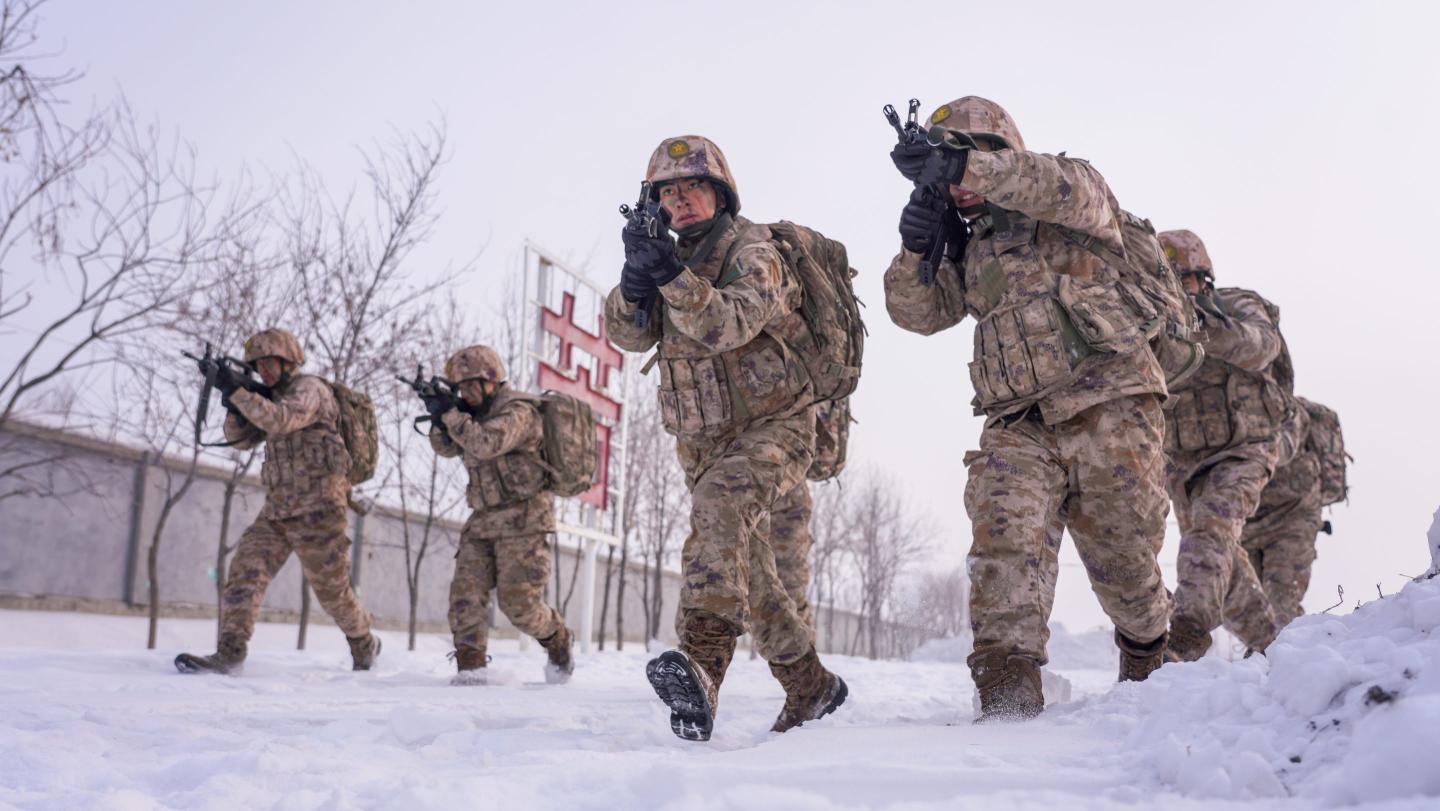
A regiment under the Xinjiang Military Region conducts a quick sorties exercise.
U.S. military officials are having trouble getting their counterparts in China on a crisis telephone line. CFOTO/Future Publishing/Getty Images
Add Fortune on Google for similar content.

Within hours of an Air Force F-22 downing a giant Chinese balloon that had crossed the United States, Defense Secretary Lloyd Austin reached out to his Chinese counterpart via a special crisis line, aiming for a quick general-to-general talk that could explain things and ease tensions.

But Austin’s effort Saturday fell flat, when Chinese Defense Minister Wei Fenghe declined to get on the line, the Pentagon says.

China’s Defense Ministry says it refused the call from Austin after the balloon was shot down because the U.S. had “not created the proper atmosphere” for dialogue and exchange. The U.S. action had “seriously violated international norms and set a pernicious precedent,” a ministry spokesperson was quoted as saying in a statement issued late Thursday.

It’s been an experience that’s frustrated U.S. commanders for decades, when it comes to getting their Chinese counterparts on a phone or video line as some flaring crisis is sending tensions between the two nations climbing.

From Americans’ perspective, the lack of the kind of reliable crisis communications that helped get the U.S. and Soviet Union through the Cold War without an armed nuclear exchange is raising the dangers of the U.S.-China relationship now, at a time when China’s military strength is growing and tensions with the U.S. are on the rise.

Without that ability for generals in opposing capitals to clear things up in a hurry, Americans worry that misunderstandings, false reports or accidental collisions could cause a minor confrontation to spiral into greater hostilities.

And it’s not about any technical shortfall with the communication equipment, said Bonnie Glaser, managing director of Indo-Pacific studies at the German Marshall Fund think tank. The issue is a fundamental difference in the way China and the U.S. view the value and purpose of military-to-military hotlines.

U.S. military leaders’ faith in Washington-to-Beijing hotlines as a way to defuse flare-ups with China’s military has been butting up against a sharply different take — a Chinese political system that runs on slow deliberative consultation by political leaders and makes no room for individually directed, real-time talk between rival generals.

And Chinese leaders are suspicious of the whole U.S. notion of a hotline — seeing it as an American channel for trying to talk their way out of repercussions for a U.S. provocation.

“That’s really dangerous,” Assistant Secretary for Defense Ely Ratner said Thursday of the difficulty of military-to-military crisis communications with China, when Democratic Sen. Jeff Merkley pressed him about China’s latest rebuff on Beijing’s and Washington’s hotline setup.

U.S. generals are persisting in their efforts to open more lines of communication with Chinese counterparts, the defense official said, testifying before the Senate Foreign Relations Committee. “And unfortunately, to date, the PLA is not answering that call,” Ratner said, referring to China’s People’s Liberation Army.

Ratner accused China of using vital channels of communication simply as a blunter messaging tool, shutting them down or opening them up again to underscore China’s displeasure or pleasure with the U.S.

China’s resistance to military hotlines as tensions increase puts more urgency on efforts by President Joe Biden and his top civilian diplomats and security aides to build up their own communication channels with President Xi Jinping and other top Chinese political officials, for situations where military hotlines may go unanswered, U.S. officials and China experts say.

Both U.S. and Chinese militaries are building up for a possible confrontation over U.S.-backed self-ruled Taiwan, which China claims as its territory. The next flare-up seems only a matter of time. It could happen with an expected event, such as House Speaker Kevin McCarthy’s promised visit to Taiwan, or something unexpected, like the 2001 collision between a Chinese fighter and a U.S. Navy EP-3 reconnaissance plane over the South China Sea. Without commanders talking in real-time, Americans and Chinese would have one less way of averting greater conflict..

“My worry is that the EP-3 type incident will happen again,” said Lyle Morris, a country director for China for the Office of the Secretary of Defense from 2019 to 2021, now a senior fellow at the Asia Society Policy Institute. “And we will be in much different political environments of hostility and mistrust, where that could go wrong in a hurry.”

Biden has emphasized building lines of communications with China to “responsibly manage” their differences. A November meeting between Xi and Biden yielded an announcement the two governments would resume a range of dialogues that China had shut down after an August Taiwan visit by then-House Speaker Nancy Pelosi.

Last weekend, the U.S. canceled what would have been a relationship-building visit by Secretary of State Antony Blinken after the transit of the Chinese balloon, which the U.S. says was for espionage. China claims it was a civilian balloon used for meteorological research.

The same week that China’s balloon flew over the U.S., Austin was in the Philippines to announce an expanded U.S. military footprint there, neighboring China, noted Tiehlin Yen, director of the Taiwan Center for Security Studies, a think tank. “America is also very nationalistic these days,” Yen said.

“From a regional security perspective, this dialogue is necessary,” Yen said.

What passes for military and civilian hotlines between China and the U.S. aren’t the classic red phones on a desk.

Under a 2008 agreement, the China-U.S. military hotline amounts to a multistep process by which one capital relays a request to the other for a joint call or videoconference between top officials on encrypted lines. The pact gives the other side 48 hours and up to respond, although nothing in the pact stops top officials from talking immediately.

Sometimes when the U.S. calls, current and former U.S. officials say, Chinese officials don’t even pick up.

“No one answered. It just rang,” recounted Kristen Gunness, a senior policy analyst at the Rand Corporation. Gunness was speaking about a March 2009 incident when she was working as an adviser to the Pentagon’s chief of naval operations. Chinese navy vessels at the time surrounded a U.S. surveillance ship in the South China Sea and demanded the American leave. U.S. and Chinese military officials eventually talked – but some 24 hours later.

It took decades of Washington pushing to get Beijing to agree to the current system of military crisis communications, said David Sedney, a former deputy assistant secretary of defense who negotiated it.

“And then once we had it in place, it was clear that they were very reluctant to use it in any substantive purpose,” Sedney said.

Americans’ test calls on the hotline would get picked up, he said. And when Americans called to give congratulations on some Chinese holiday, Chinese officials would pick up and say thanks, he said.

Anything more sensitive, Sedney said, the staffers answering the phone “would say, ‘We’ll check. As soon as our leadership is ready to talk, we’ll get back to you.’ Nothing would happen.”

Learn how to navigate and strengthen trust in your business with The Trust Factor, a weekly newsletter examining what leaders need to succeed. Sign up here.

About the Authors
By Ellen Knickmeyer
See full bioRight Arrow Button Icon
By The Associated Press
See full bioRight Arrow Button Icon
Add Fortune on Google for similar content.

Latest in

Finance
Lorem ipsum dolor sit amet, consectetur adipiscing elit, sed do eiusmod tempor incididunt ut labore et dolore magna aliqua. Ut enim ad minim veniam
By Fortune Editors
October 20, 2025
Finance
Lorem ipsum dolor sit amet, consectetur adipiscing elit, sed do eiusmod tempor incididunt ut labore et dolore magna aliqua. Ut enim ad minim veniam
By Fortune Editors
October 20, 2025
Finance
Lorem ipsum dolor sit amet, consectetur adipiscing elit, sed do eiusmod tempor incididunt ut labore et dolore magna aliqua. Ut enim ad minim veniam
By Fortune Editors
October 20, 2025
Finance
Lorem ipsum dolor sit amet, consectetur adipiscing elit, sed do eiusmod tempor incididunt ut labore et dolore magna aliqua. Ut enim ad minim veniam
By Fortune Editors
October 20, 2025
Finance
Lorem ipsum dolor sit amet, consectetur adipiscing elit, sed do eiusmod tempor incididunt ut labore et dolore magna aliqua. Ut enim ad minim veniam
By Fortune Editors
October 20, 2025
Finance
Lorem ipsum dolor sit amet, consectetur adipiscing elit, sed do eiusmod tempor incididunt ut labore et dolore magna aliqua. Ut enim ad minim veniam
By Fortune Editors
October 20, 2025

Most Popular

Finance
Lorem ipsum dolor sit amet, consectetur adipiscing elit, sed do eiusmod tempor incididunt ut labore et dolore magna aliqua. Ut enim ad minim veniam
By Fortune Editors
October 20, 2025
Finance
Lorem ipsum dolor sit amet, consectetur adipiscing elit, sed do eiusmod tempor incididunt ut labore et dolore magna aliqua. Ut enim ad minim veniam
By Fortune Editors
October 20, 2025
Finance
Lorem ipsum dolor sit amet, consectetur adipiscing elit, sed do eiusmod tempor incididunt ut labore et dolore magna aliqua. Ut enim ad minim veniam
By Fortune Editors
October 20, 2025
Finance
Lorem ipsum dolor sit amet, consectetur adipiscing elit, sed do eiusmod tempor incididunt ut labore et dolore magna aliqua. Ut enim ad minim veniam
By Fortune Editors
October 20, 2025
Finance
Lorem ipsum dolor sit amet, consectetur adipiscing elit, sed do eiusmod tempor incididunt ut labore et dolore magna aliqua. Ut enim ad minim veniam
By Fortune Editors
October 20, 2025
Finance
Lorem ipsum dolor sit amet, consectetur adipiscing elit, sed do eiusmod tempor incididunt ut labore et dolore magna aliqua. Ut enim ad minim veniam
By Fortune Editors
October 20, 2025
Fortune Secondary Logo
Rankings
  • 100 Best Companies
  • Fortune 500
  • Global 500
  • Fortune 500 Europe
  • Most Powerful Women
  • World's Most Admired Companies
  • See All Rankings
  • Lists Calendar
Sections
  • Finance
  • Fortune Crypto
  • Features
  • Leadership
  • Health
  • Commentary
  • Success
  • Retail
  • Mpw
  • Tech
  • Lifestyle
  • CEO Initiative
  • Asia
  • Politics
  • Conferences
  • Europe
  • Newsletters
  • Personal Finance
  • Environment
  • Magazine
  • Education
Customer Support
  • Frequently Asked Questions
  • Customer Service Portal
  • Privacy Policy
  • Terms Of Use
  • Single Issues For Purchase
  • International Print
Commercial Services
  • Advertising
  • Fortune Brand Studio
  • Fortune Analytics
  • Fortune Conferences
  • Business Development
  • Group Subscriptions
About Us
  • About Us
  • Press Center
  • Work At Fortune
  • Terms And Conditions
  • Site Map
  • About Us
  • Press Center
  • Work At Fortune
  • Terms And Conditions
  • Site Map
  • Facebook icon
  • Twitter icon
  • LinkedIn icon
  • Instagram icon
  • Pinterest icon

Latest in

Taktile cofounders Maik Taro Wehmeyer (left) and Maximilian Eber (right) stand side by side, smiling at the camera.
Startups & VentureVenture Capital
Exclusive: Taktile raises $110 million from Goldman Sachs, Tiger Global to automate high-stakes financial decisions 
By Camila Grigera NaónJune 24, 2026
23 minutes ago
price-of-oil-06-23-2026
Personal FinanceOil
Current price of oil as of June 24, 2026
By Joseph HostetlerJune 24, 2026
36 minutes ago
Sarah Youngwood, EVP and CFO at Nasdaq.
AICFO Daily
Nasdaq’s CFO says leaders must learn AI—not just their teams
By Sheryl EstradaJune 24, 2026
38 minutes ago
Current price of silver as of Wednesday, June 24, 2026
Personal Financesilver
Current price of silver as of Wednesday, June 24, 2026
By Joseph HostetlerJune 24, 2026
42 minutes ago
steve
Commentary250 Years of Innovation
Steve Case: America was built by entrepreneurs. Here’s how we keep that edge for the next 250 years
By Steve CaseJune 24, 2026
53 minutes ago
(left to right) Andrew Berman, Tal Peretz, and Vitor Balocco
AIVenture Capital
Exclusive: Vinod Khosla wanted ‘every available dollar’ of Runlayer’s funding round. It just raised $30 million to govern the agent workforce
By Lily Mae LazarusJune 24, 2026
1 hour ago

Most Popular

After forcing workers back to the office, Goldman Sachs and JPMorgan Chase are now letting their staff work remotely—but only for the World Cup
Success
After forcing workers back to the office, Goldman Sachs and JPMorgan Chase are now letting their staff work remotely—but only for the World Cup
By Orianna Rosa RoyleJune 23, 2026
1 day ago
Markets tumble worldwide as Fed resets expectations: $400 billion wiped off SpaceX stock
Banking
Markets tumble worldwide as Fed resets expectations: $400 billion wiped off SpaceX stock
By Jim EdwardsJune 23, 2026
1 day ago
Current price of oil as of June 23, 2026
Personal Finance
Current price of oil as of June 23, 2026
By Joseph HostetlerJune 23, 2026
1 day ago
The Pentagon said Iran War costs $29 billion,but the real cost is closer to $200 billion—and counting
Economy
The Pentagon said Iran War costs $29 billion,but the real cost is closer to $200 billion—and counting
By Jacqueline MunisJune 24, 2026
6 hours ago
Texas and Charlotte used to build huge McMansions—now they're copying the California design tricks they once mocked
Real Estate
Texas and Charlotte used to build huge McMansions—now they're copying the California design tricks they once mocked
By Sydney LakeJune 22, 2026
2 days ago
Meet the 2 men putting New York's $300 billion pension fund in play for the first time in 20 years
Investing
Meet the 2 men putting New York's $300 billion pension fund in play for the first time in 20 years
By Nick LichtenbergJune 22, 2026
2 days ago

© 2026 Fortune Media IP Limited. All Rights Reserved. Use of this site constitutes acceptance of our Terms of Use and Privacy Policy | CA Notice at Collection and Privacy Notice | Do Not Sell/Share My Personal Information
FORTUNE is a trademark of Fortune Media IP Limited, registered in the U.S. and other countries. FORTUNE may receive compensation for some links to products and services on this website. Offers may be subject to change without notice.