• Home
  • Latest
  • Fortune 500
  • Finance
  • Tech
  • Leadership
  • Lifestyle
  • Rankings
  • Multimedia

Trendingnow

1

After forcing workers back to the office, Goldman Sachs and JPMorgan Chase are now letting their staff work remotely—but only for the World Cup

2

Markets tumble worldwide as Fed resets expectations: $400 billion wiped off SpaceX stock

3

Current price of oil as of June 23, 2026

1

After forcing workers back to the office, Goldman Sachs and JPMorgan Chase are now letting their staff work remotely—but only for the World Cup

2

Markets tumble worldwide as Fed resets expectations: $400 billion wiped off SpaceX stock

3

Current price of oil as of June 23, 2026
Techspying

An aerospace professor breaks down everything you ever wanted to know about spy balloons

By
Iain Boyd
Iain Boyd
and
The Conversation
The Conversation
Down Arrow Button Icon
By
Iain Boyd
Iain Boyd
and
The Conversation
The Conversation
Down Arrow Button Icon
February 6, 2023, 12:02 PM ET
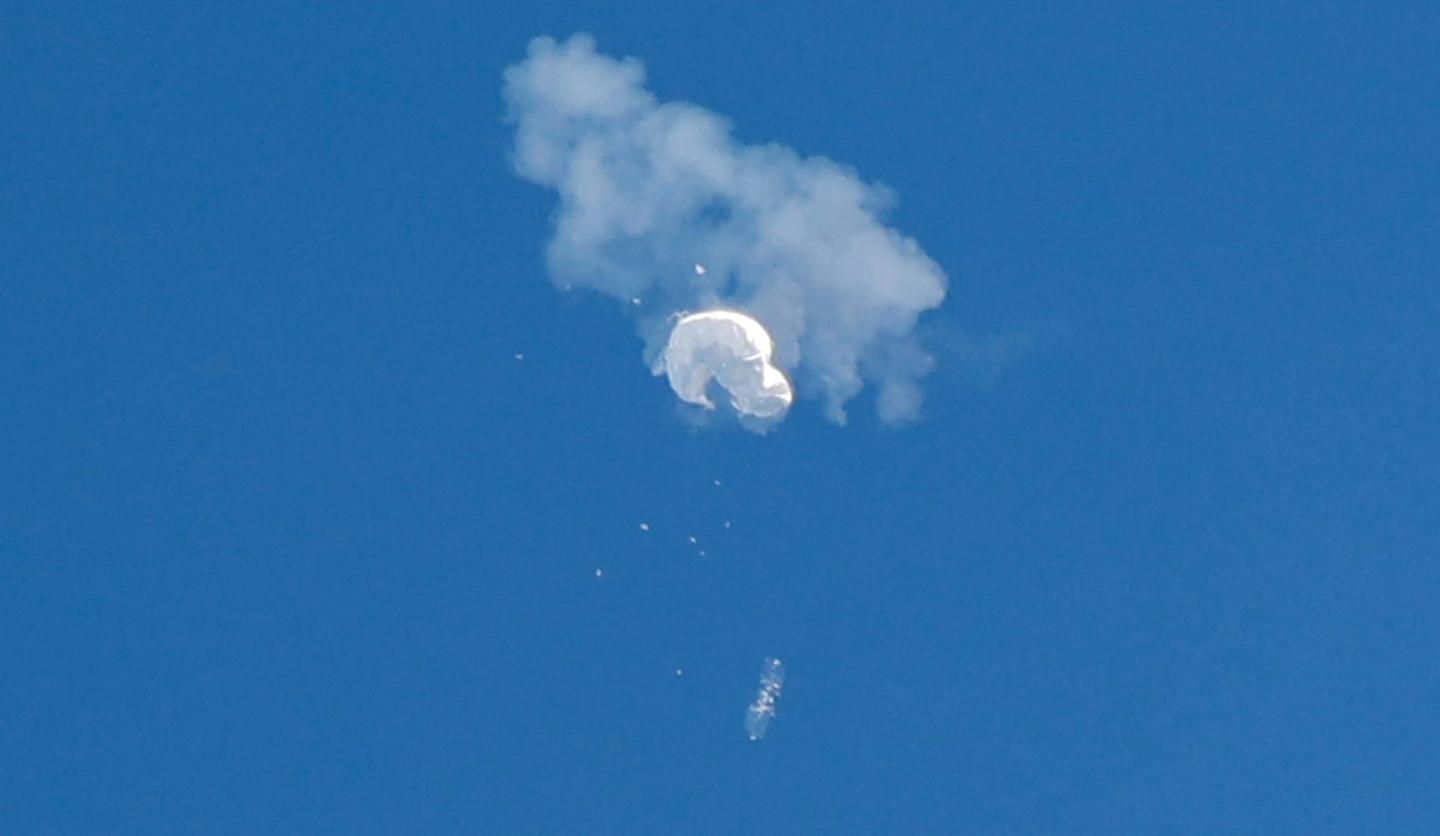
The suspected Chinese spy balloon drifts to the ocean after being shot down off the coast in Surfside Beach, South Carolina on February 4th.
The suspected Chinese spy balloon drifts to the ocean after being shot down off the coast in Surfside Beach, South Carolina on February 4th.Randall Hill—Reuters
Add Fortune on Google for similar content.

The U.S. military shot down what U.S. officials called a Chinese surveillance balloon off the coast of South Carolina on Feb. 4, 2023. Officials said that the U.S. Navy planned to recover the debris, which is in shallow water.

The U.S. and Canada tracked the balloon as it crossed the Aleutian Islands, passed over Western Canada and entered U.S. airspace over Idaho. Officials of the U.S. Department of Defense confirmed on Feb. 2, 2023, that the military was tracking the balloon as it flew over the continental U.S. at an altitude of about 60,000 feet, including over Malmstrom Air Force Base in Montana. The base houses the 341st Missile Wing, which operates nuclear intercontinental ballistic missiles.

The next day, Chinese officials acknowledged that the balloon was theirs but denied it was intended for spying or meant to enter U.S. airspace. U.S. Secretary of State Antony Blinken said that the balloon’s incursion led him to cancel his trip to Beijing. He had been scheduled to meet with Chinese Foreign Minister Qin Gang on Feb. 5 and 6.

The Pentagon has reported that a second suspected Chinese balloon was seen over Latin America. On Feb. 4, officials told reporters that a third Chinese surveillance balloon was operating somewhere else in the world, and that the balloons are part of a Chinese military surveillance program.

Monitoring an adversary from a balloon dates back to 1794, when the French used a hot air balloon to track Austrian and Dutch troops in the Battle of Fleurus. We asked aerospace engineer Iain Boyd of the University of Colorado Boulder to explain how spy balloons work and why anyone would use one in the 21st century.

What is a spy balloon?

A spy balloon is literally a gas-filled balloon that is flying quite high in the sky, more or less where we fly commercial airplanes. It has some sophisticated cameras and imaging technology on it, and it’s pointing all of those instruments down at the ground. It’s collecting information through photography and other imaging of whatever is going on down on the ground below it.

Why would someone want to use a spy balloon instead of just using spy satellites?

Satellites are the preferred method of spying from overhead. Spy satellites are above us today, typically at one of two different types of orbit.

The first is called low Earth orbit, and, as the name suggests, those satellites are relatively close to the ground. But they’re still several hundred miles above us. For imaging and taking photographs, the closer you are to something, the more clearly you can see it, and this applies to spying as well. The satellites that are in low Earth orbit have the advantage that they’re closer to the Earth so they’re able to see things more clearly than satellites that are farther away.

The disadvantage these low Earth orbit satellites have is that they are continually moving around the Earth. It takes them about 90 minutes to do one orbit around the Earth. That turns out to be pretty fast in terms of taking clear photographs of what’s going on below.

The second type of satellite orbit is called geosynchronous orbit, and that’s much farther away. It has the disadvantage that it’s harder to see things clearly when you’re very, very far away. But they have the advantage of what we call persistence, allowing satellites to capture images continuously. In those orbits, you’re essentially overlooking the exact same piece of ground on the Earth’s surface all the time because the satellite moves in exactly the same way the earth rotates – it rotates at the exact same speed.

A balloon in some ways gets the best of those. These balloons are much, much closer to the ground than any of the satellites, so they can see even more clearly. And then, of course, balloons are moving, but they’re moving relatively slowly, so they also have a degree of persistence. However, spying is not usually done these days with balloons because they are a relatively easy target and are not completely controllable.

What types of surveillance are spy balloons capable of?

I don’t know what’s on this particular spy balloon, but it’s likely to be different kinds of cameras collecting different types of information.

These days, imaging is conducted across different regions of the electromagnetic spectrum. Humans see in a certain range of this spectrum, the visible spectrum. And so if you have a camera and you take a photograph of your dog, that’s a visible photograph. That’s one of the things spy aircraft do. They take regular photographs, although they have very good zoom capabilities to be able to magnify what they’re seeing quite a lot.

But you can also gather different kinds of information in other parts of the electromagnetic spectrum. Another fairly well-known one is infrared. If it’s nighttime, a camera operating in the visible part of the spectrum is not going to show you anything. It’s all going to be dark. But an infrared camera can pick up things from heat in the dark.

How do these balloons navigate?

Most of these balloons literally go where the wind blows. There can be a little bit of navigation, but there are certainly not people aboard them. They are at the mercy of whatever the weather is. They sometimes have guiding apparatus on them that change a balloon’s altitude to catch winds going in particular directions. According to reports, U.S. officials said the Chinese surveillance balloon had propellers to help steer it. If this is confirmed, it means that its operator would have much more control over the path of the balloon.

What are the limits to a nation’s airspace? At what altitude does it become space and anybody’s right to be there?

There is an internationally accepted boundary called the Kármán Line at 62 miles (100 kilometers) altitude. This balloon is well below that, so it is absolutely, definitely in U.S. airspace.

Which countries are known to be using spy balloons?

The Pentagon has had programs over the last few decades studying what can be done with balloons that couldn’t be done in the past. Maybe they’re bigger, maybe they can go higher in the atmosphere so they’re more difficult to shoot down or disable. Maybe they could be more persistent.

The broad interest in this incident illustrates its unusual nature. Few people would expect any country to be actively using spy balloons these days.

The U.S. flew many balloons over the Soviet Union in the 1940s and 1950s, and those were eventually replaced by the high-altitude spy airplanes, the U-2s, and they were subsequently replaced by satellites.

I’m sure a number of countries around the world have periodically gone back to reevaluate: Are there other things we could do now with balloons that we couldn’t do before? Do they close some gaps we have from satellites and airplanes?

What does that say about the nature of this balloon, which China confirmed is theirs?

China has complained for many years about the U.S. spying on China through satellites, through ships. And China is also well known for engaging in somewhat provocative behavior, like in the South China Sea, sailing close to other nations’ boundaries and saber-rattling. I think it falls into that category.

The balloon doesn’t pose any real threat to the U.S. I think sometimes China is just experimenting to see how far they can push things. This isn’t really very advanced technology. It’s not serving any real military purpose. I think it’s much more likely some kind of political message.

Iain Boyd is a professor of Aerospace Engineering Sciences at the University of Colorado Boulder.


Learn how to navigate and strengthen trust in your business with The Trust Factor, a weekly newsletter examining what leaders need to succeed. Sign up here.
About the Authors
By Iain Boyd
See full bioRight Arrow Button Icon
By The Conversation
See full bioRight Arrow Button Icon
Add Fortune on Google for similar content.

Latest in Tech

Finance
Lorem ipsum dolor sit amet, consectetur adipiscing elit, sed do eiusmod tempor incididunt ut labore et dolore magna aliqua. Ut enim ad minim veniam
By Fortune Editors
October 20, 2025
Finance
Lorem ipsum dolor sit amet, consectetur adipiscing elit, sed do eiusmod tempor incididunt ut labore et dolore magna aliqua. Ut enim ad minim veniam
By Fortune Editors
October 20, 2025
Finance
Lorem ipsum dolor sit amet, consectetur adipiscing elit, sed do eiusmod tempor incididunt ut labore et dolore magna aliqua. Ut enim ad minim veniam
By Fortune Editors
October 20, 2025
Finance
Lorem ipsum dolor sit amet, consectetur adipiscing elit, sed do eiusmod tempor incididunt ut labore et dolore magna aliqua. Ut enim ad minim veniam
By Fortune Editors
October 20, 2025
Finance
Lorem ipsum dolor sit amet, consectetur adipiscing elit, sed do eiusmod tempor incididunt ut labore et dolore magna aliqua. Ut enim ad minim veniam
By Fortune Editors
October 20, 2025
Finance
Lorem ipsum dolor sit amet, consectetur adipiscing elit, sed do eiusmod tempor incididunt ut labore et dolore magna aliqua. Ut enim ad minim veniam
By Fortune Editors
October 20, 2025

Most Popular

Finance
Lorem ipsum dolor sit amet, consectetur adipiscing elit, sed do eiusmod tempor incididunt ut labore et dolore magna aliqua. Ut enim ad minim veniam
By Fortune Editors
October 20, 2025
Finance
Lorem ipsum dolor sit amet, consectetur adipiscing elit, sed do eiusmod tempor incididunt ut labore et dolore magna aliqua. Ut enim ad minim veniam
By Fortune Editors
October 20, 2025
Finance
Lorem ipsum dolor sit amet, consectetur adipiscing elit, sed do eiusmod tempor incididunt ut labore et dolore magna aliqua. Ut enim ad minim veniam
By Fortune Editors
October 20, 2025
Finance
Lorem ipsum dolor sit amet, consectetur adipiscing elit, sed do eiusmod tempor incididunt ut labore et dolore magna aliqua. Ut enim ad minim veniam
By Fortune Editors
October 20, 2025
Finance
Lorem ipsum dolor sit amet, consectetur adipiscing elit, sed do eiusmod tempor incididunt ut labore et dolore magna aliqua. Ut enim ad minim veniam
By Fortune Editors
October 20, 2025
Finance
Lorem ipsum dolor sit amet, consectetur adipiscing elit, sed do eiusmod tempor incididunt ut labore et dolore magna aliqua. Ut enim ad minim veniam
By Fortune Editors
October 20, 2025
Fortune Secondary Logo
Rankings
  • 100 Best Companies
  • Fortune 500
  • Global 500
  • Fortune 500 Europe
  • Most Powerful Women
  • World's Most Admired Companies
  • See All Rankings
  • Lists Calendar
Sections
  • Finance
  • Fortune Crypto
  • Features
  • Leadership
  • Health
  • Commentary
  • Success
  • Retail
  • Mpw
  • Tech
  • Lifestyle
  • CEO Initiative
  • Asia
  • Politics
  • Conferences
  • Europe
  • Newsletters
  • Personal Finance
  • Environment
  • Magazine
  • Education
Customer Support
  • Frequently Asked Questions
  • Customer Service Portal
  • Privacy Policy
  • Terms Of Use
  • Single Issues For Purchase
  • International Print
Commercial Services
  • Advertising
  • Fortune Brand Studio
  • Fortune Analytics
  • Fortune Conferences
  • Business Development
  • Group Subscriptions
About Us
  • About Us
  • Press Center
  • Work At Fortune
  • Terms And Conditions
  • Site Map
  • About Us
  • Press Center
  • Work At Fortune
  • Terms And Conditions
  • Site Map
  • Facebook icon
  • Twitter icon
  • LinkedIn icon
  • Instagram icon
  • Pinterest icon

Latest in Tech

rh
AIReid Hoffman
Reid Hoffman says SpaceX is ‘not an AI company’ and xAI is a ‘complete train wreck’—and there’s room for both OpenAI and Anthropic
By Nick LichtenbergJune 24, 2026
1 hour ago
Tesla cofounder JB Straubel’s first pitch to Elon Musk failed. Then he turned his ‘hobby’ into a $1.3 trillion success
SuccessBrainstorm Tech
Tesla cofounder JB Straubel’s first pitch to Elon Musk failed. Then he turned his ‘hobby’ into a $1.3 trillion success
By Rachel VentrescaJune 24, 2026
3 hours ago
Amazon Prime Day isn’t a midsummer shopping event anymore. Here’s what changed in 2026
RetailAmazon
Amazon Prime Day isn’t a midsummer shopping event anymore. Here’s what changed in 2026
By Vidhi Choudhary and Retail BrewJune 23, 2026
13 hours ago
The hidden cost of your AI rollout: burning out the high performers running it
Workplace Cultureburnout
The hidden cost of your AI rollout: burning out the high performers running it
By Mikaela Cohen and HR BrewJune 23, 2026
13 hours ago
Quantum computing stocks surge after Trump signed executive orders backing the sector
Investingquantum computing
Quantum computing stocks surge after Trump signed executive orders backing the sector
By Marco Quiroz-GutierrezJune 23, 2026
14 hours ago
Alan Greenspan testifying before the Senate Banking Committee.
BankingFederal Reserve
The man who invented the Fed’s magic trick just died. His successor is about to try it again
By Eva RoytburgJune 23, 2026
16 hours ago

Most Popular

After forcing workers back to the office, Goldman Sachs and JPMorgan Chase are now letting their staff work remotely—but only for the World Cup
Success
After forcing workers back to the office, Goldman Sachs and JPMorgan Chase are now letting their staff work remotely—but only for the World Cup
By Orianna Rosa RoyleJune 23, 2026
22 hours ago
Markets tumble worldwide as Fed resets expectations: $400 billion wiped off SpaceX stock
Banking
Markets tumble worldwide as Fed resets expectations: $400 billion wiped off SpaceX stock
By Jim EdwardsJune 23, 2026
1 day ago
Current price of oil as of June 23, 2026
Personal Finance
Current price of oil as of June 23, 2026
By Joseph HostetlerJune 23, 2026
22 hours ago
Meet the 2 men putting New York's $300 billion pension fund in play for the first time in 20 years
Investing
Meet the 2 men putting New York's $300 billion pension fund in play for the first time in 20 years
By Nick LichtenbergJune 22, 2026
2 days ago
Former U.S. Secret Service agent says bringing your authentic self to work stifles teamwork: 'You don’t get high performers, you get sloppiness'
Success
Former U.S. Secret Service agent says bringing your authentic self to work stifles teamwork: 'You don’t get high performers, you get sloppiness'
By Sydney LakeJune 21, 2026
3 days ago
Texas and Charlotte used to build huge McMansions—now they're copying the California design tricks they once mocked
Real Estate
Texas and Charlotte used to build huge McMansions—now they're copying the California design tricks they once mocked
By Sydney LakeJune 22, 2026
2 days ago

© 2026 Fortune Media IP Limited. All Rights Reserved. Use of this site constitutes acceptance of our Terms of Use and Privacy Policy | CA Notice at Collection and Privacy Notice | Do Not Sell/Share My Personal Information
FORTUNE is a trademark of Fortune Media IP Limited, registered in the U.S. and other countries. FORTUNE may receive compensation for some links to products and services on this website. Offers may be subject to change without notice.