• Home
  • Latest
  • Fortune 500
  • Finance
  • Tech
  • Leadership
  • Lifestyle
  • Rankings
  • Multimedia

Trendingnow

1

The Pentagon said Iran War costs $29 billion, but the real cost is closer to $200 billion—and counting

2

After forcing workers back to the office, Goldman Sachs and JPMorgan Chase are now letting their staff work remotely—but only for the World Cup

3

Now worth $200 million, Sarah Jessica Parker credits being ‘one of eight kids that struggled financially’ for her hunger, ambition, and work ethic

1

The Pentagon said Iran War costs $29 billion, but the real cost is closer to $200 billion—and counting

2

After forcing workers back to the office, Goldman Sachs and JPMorgan Chase are now letting their staff work remotely—but only for the World Cup

3

Now worth $200 million, Sarah Jessica Parker credits being ‘one of eight kids that struggled financially’ for her hunger, ambition, and work ethic
CommentaryNASA

The secret ingredient for Artemis I’s success: How small businesses are taking us to the moon

By
Frank Slazer
Frank Slazer
Down Arrow Button Icon
By
Frank Slazer
Frank Slazer
Down Arrow Button Icon
December 13, 2022, 11:45 AM ET
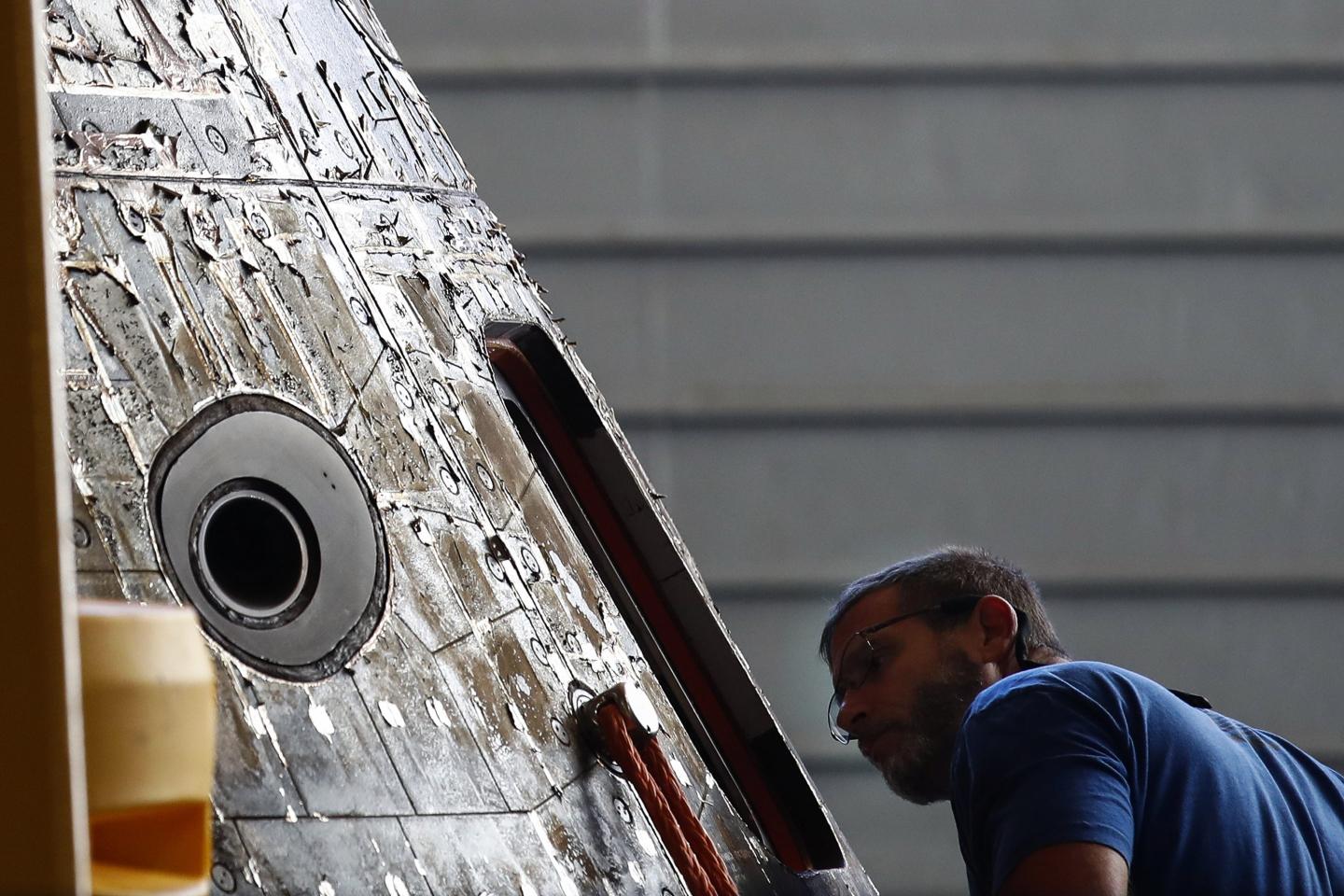
A NASA engineer inspects the Orion capsule after its successful splashdown in the Pacific Ocean.
A NASA engineer inspects the Orion capsule after its successful splashdown in the Pacific Ocean.Caroline Brehman-Pool-Getty Images
Add Fortune on Google for similar content.

NASA has once again set human beings on course to walk the moon. The space agency’s successful launch of the Artemis I mission on Nov. 16 and the Orion spacecraft splashdown over the weekend will position us to bring the first woman and person of color to the lunar surface by 2025. That represents a “giant leap” not only in terms of technological prowess but also in championing human diversity.

This huge success follows the release earlier this year of astounding images of star-forming nebulas and faraway galaxies from the James Webb Space Telescope.

These mammoth space achievements are not just the handiwork of NASA and our great scientific community–they have also been made possible through the contributions of our nation’s small businesses.

While some may think NASA programs are largely executed by big aerospace contractors, roughly 90% of aerospace companies are small businesses. NASA contracts with a surprising number of them. In 2021, the agency spent more than $3.5 billion on contracts with small firms.

Of the more than 3,800 suppliers providing parts for the Artemis rocket, the overwhelming majority are small businesses.

One reason NASA and its prime contractors use so many small firms is that SMEs can often devote more time and energy to unique projects than larger enterprises can. Plus, they can often do so at a lower cost.

For example, there’s a firm focused on developing thermal systems that would allow rovers to travel to the cold depths of the moon’s craters for the first time. Another small firm is perfecting technology that can clear debris in space without a human crew’s help. Another business is focused on creating a rocket propulsion system that uses electricity rather than fuel.

On its own, a single small firm’s innovation might not make or break a mission. However, by synthesizing the cutting-edge technology of so many specialists, NASA can create end products that are truly revolutionary.

Small firms deliver an outsized economic impact

In South Carolina alone, aerospace companies contribute $19 billion to the economy and employ roughly 100,000 people. Small businesses–many with fewer than five employees–make up the majority of these firms. In Washington, small companies help fuel a $4.6 billion aerospace economy that supports 13,000 jobs.

Additionally, small aerospace businesses have a hand in educating their communities about space programs. And since many small firms are women-, minority-, or veteran-owned, they play an outsized role in diversifying the entire aerospace industry.

Despite the critical part these firms play in space exploration, they face a number of barriers.

One is access to capital. Small aerospace firms typically rely on just a few products–or even a sole product–to drive revenue. They may be pre-revenue–and thus reliant on private investment or government contracts for the funding they need.

To cut costs, NASA is increasingly using fixed-price contracts that offer a business a set amount of money for a job, even if the scope of that job increases or if inflation rises. That strategy is forcing small firms to take on more financial risk every time they partner with the government.

Meanwhile, small firms without the resources or name recognition of larger enterprises are grappling with a shortage of roughly 50,000 workers–from engineers and scientists to technicians and manufacturing workers–in the aerospace and defense sector, according to August data.

It’s imperative for the future of U.S. space exploration, the economy, and the pursuit of equity that the government recognizes these challenges.              

NASA can diversify the supply chain and support a more inclusive industry by avoiding a one-size-fits-all contracting approach. The agency should issue fixed-price contracts only when the scope of the project in question is certain.

In any other scenario, NASA should use appropriate contracting mechanisms, which require the government to reimburse the company for the full cost of the project, plus a profit. NASA should also continue to use contract requirements to ensure that a reasonable percentage of work (historically, around 10%) goes to women-, minority- or veteran-owned firms.

Government organizations like the National Space Council and the Department of Labor can bolster the aerospace workforce by facilitating partnerships between companies and the academic institutions that are training the next generation of workers. A more direct connection between government, industry, and academia could ensure students have sufficient exposure to the aerospace sector and the skills needed to succeed and support the industry.

The government could go a step further by offering economic incentives to help small businesses attract new talent.

Making such investments wouldn’t just help small aerospace businesses maintain their rapid pace of innovation–it could, quite literally, propel us to the moon.

Frank Slazer is president and CEO of the Coalition for Deep Space Exploration.

The opinions expressed in Fortune.com commentary pieces are solely the views of their authors and do not necessarily reflect the opinions and beliefs of Fortune.

More must-read commentary published by Fortune:

  • Elon Musk knows what he’s doing. Here’s the real value he sees in Twitter
  • Americans think wages should rise to match inflation–and they’re right. It’s time to dispel the wage-price spiral myth
  • It’s not the jobs, stupid
  • Biden crowned world energy czar as diplomacy triumphs over Putin’s tantrums

Our new weekly Impact Report newsletter examines how ESG news and trends are shaping the roles and responsibilities of today's executives. Subscribe here.

About the Author
By Frank Slazer
See full bioRight Arrow Button Icon
Add Fortune on Google for similar content.

Latest in Commentary

Finance
Lorem ipsum dolor sit amet, consectetur adipiscing elit, sed do eiusmod tempor incididunt ut labore et dolore magna aliqua. Ut enim ad minim veniam
By Fortune Editors
October 20, 2025
Finance
Lorem ipsum dolor sit amet, consectetur adipiscing elit, sed do eiusmod tempor incididunt ut labore et dolore magna aliqua. Ut enim ad minim veniam
By Fortune Editors
October 20, 2025
Finance
Lorem ipsum dolor sit amet, consectetur adipiscing elit, sed do eiusmod tempor incididunt ut labore et dolore magna aliqua. Ut enim ad minim veniam
By Fortune Editors
October 20, 2025
Finance
Lorem ipsum dolor sit amet, consectetur adipiscing elit, sed do eiusmod tempor incididunt ut labore et dolore magna aliqua. Ut enim ad minim veniam
By Fortune Editors
October 20, 2025
Finance
Lorem ipsum dolor sit amet, consectetur adipiscing elit, sed do eiusmod tempor incididunt ut labore et dolore magna aliqua. Ut enim ad minim veniam
By Fortune Editors
October 20, 2025
Finance
Lorem ipsum dolor sit amet, consectetur adipiscing elit, sed do eiusmod tempor incididunt ut labore et dolore magna aliqua. Ut enim ad minim veniam
By Fortune Editors
October 20, 2025

Most Popular

Finance
Lorem ipsum dolor sit amet, consectetur adipiscing elit, sed do eiusmod tempor incididunt ut labore et dolore magna aliqua. Ut enim ad minim veniam
By Fortune Editors
October 20, 2025
Finance
Lorem ipsum dolor sit amet, consectetur adipiscing elit, sed do eiusmod tempor incididunt ut labore et dolore magna aliqua. Ut enim ad minim veniam
By Fortune Editors
October 20, 2025
Finance
Lorem ipsum dolor sit amet, consectetur adipiscing elit, sed do eiusmod tempor incididunt ut labore et dolore magna aliqua. Ut enim ad minim veniam
By Fortune Editors
October 20, 2025
Finance
Lorem ipsum dolor sit amet, consectetur adipiscing elit, sed do eiusmod tempor incididunt ut labore et dolore magna aliqua. Ut enim ad minim veniam
By Fortune Editors
October 20, 2025
Finance
Lorem ipsum dolor sit amet, consectetur adipiscing elit, sed do eiusmod tempor incididunt ut labore et dolore magna aliqua. Ut enim ad minim veniam
By Fortune Editors
October 20, 2025
Finance
Lorem ipsum dolor sit amet, consectetur adipiscing elit, sed do eiusmod tempor incididunt ut labore et dolore magna aliqua. Ut enim ad minim veniam
By Fortune Editors
October 20, 2025
Fortune Secondary Logo
Rankings
  • 100 Best Companies
  • Fortune 500
  • Global 500
  • Fortune 500 Europe
  • Most Powerful Women
  • World's Most Admired Companies
  • See All Rankings
  • Lists Calendar
Sections
  • Finance
  • Fortune Crypto
  • Features
  • Leadership
  • Health
  • Commentary
  • Success
  • Retail
  • Mpw
  • Tech
  • Lifestyle
  • CEO Initiative
  • Asia
  • Politics
  • Conferences
  • Europe
  • Newsletters
  • Personal Finance
  • Environment
  • Magazine
  • Education
Customer Support
  • Frequently Asked Questions
  • Customer Service Portal
  • Privacy Policy
  • Terms Of Use
  • Single Issues For Purchase
  • International Print
Commercial Services
  • Advertising
  • Fortune Brand Studio
  • Fortune Analytics
  • Fortune Conferences
  • Business Development
  • Group Subscriptions
About Us
  • About Us
  • Press Center
  • Work At Fortune
  • Terms And Conditions
  • Site Map
  • About Us
  • Press Center
  • Work At Fortune
  • Terms And Conditions
  • Site Map
  • Facebook icon
  • Twitter icon
  • LinkedIn icon
  • Instagram icon
  • Pinterest icon

Latest in Commentary

Asia’s defense boom is rewiring the global arms supply chain
Commentaryarms, weapons, and defense
Asia’s defense boom is rewiring the global arms supply chain
By Chris OberoiJune 24, 2026
7 hours ago
steve
Commentary250 Years of Innovation
Steve Case: America was built by entrepreneurs. Here’s how we keep that edge for the next 250 years
By Steve CaseJune 24, 2026
16 hours ago
t
CommentaryWhite House
Trump mistakes the bully pulpit for bullying leadership — history’s villains were never heroes
By Jeffrey Sonnenfeld and Steven TianJune 24, 2026
16 hours ago
mg
CommentaryHealth
The ‘tech neck’ time bomb: why 43 million young Americans could cripple U.S. health care within a generation
By Michael GerlingJune 24, 2026
17 hours ago
sb
Commentaryclimate change
The climate policy triangle: why leaders can no longer choose between growth, security and sustainability
By Sebastian BuckupJune 23, 2026
1 day ago
brett
CommentaryManagement
Middle managers aren’t going extinct—they’re evolving into something more powerful
By Brett HurtJune 23, 2026
2 days ago

Most Popular

The Pentagon said Iran War costs $29 billion, but the real cost is closer to $200 billion—and counting
Economy
The Pentagon said Iran War costs $29 billion, but the real cost is closer to $200 billion—and counting
By Jacqueline MunisJune 24, 2026
21 hours ago
After forcing workers back to the office, Goldman Sachs and JPMorgan Chase are now letting their staff work remotely—but only for the World Cup
Success
After forcing workers back to the office, Goldman Sachs and JPMorgan Chase are now letting their staff work remotely—but only for the World Cup
By Orianna Rosa RoyleJune 23, 2026
2 days ago
Now worth $200 million, Sarah Jessica Parker credits being ‘one of eight kids that struggled financially’ for her hunger, ambition, and work ethic
Success
Now worth $200 million, Sarah Jessica Parker credits being ‘one of eight kids that struggled financially’ for her hunger, ambition, and work ethic
By Orianna Rosa RoyleJune 24, 2026
21 hours ago
Amazon's record Prime Day masks a darker truth: Americans are spending more and getting less
Retail
Amazon's record Prime Day masks a darker truth: Americans are spending more and getting less
By Nick LichtenbergJune 24, 2026
13 hours ago
Ray Dalio just finished a 10-day trip to China. He says global leaders know America ‘doesn’t have what it takes to fight to maintain its empire’
Asia
Ray Dalio just finished a 10-day trip to China. He says global leaders know America ‘doesn’t have what it takes to fight to maintain its empire’
By Nick LichtenbergJune 24, 2026
15 hours ago
Current price of gold as of June 23, 2026
Personal Finance
Current price of gold as of June 23, 2026
By Danny BakstJune 23, 2026
2 days ago

© 2026 Fortune Media IP Limited. All Rights Reserved. Use of this site constitutes acceptance of our Terms of Use and Privacy Policy | CA Notice at Collection and Privacy Notice | Do Not Sell/Share My Personal Information
FORTUNE is a trademark of Fortune Media IP Limited, registered in the U.S. and other countries. FORTUNE may receive compensation for some links to products and services on this website. Offers may be subject to change without notice.