• Home
  • Latest
  • Fortune 500
  • Finance
  • Tech
  • Leadership
  • Lifestyle
  • Rankings
  • Multimedia

Trendingnow

1

Mark Cuban says he has the solution to growing income inequality, and it's to reward every employee—from CEO to janitor—with company stock

2

‘I want to die broke’: Billionaire philanthropist Denny Sanford dies after giving away $4 billion

3

OpenAI says its AI models secretly broke out of a secure test environment and hacked into AI company Hugging Face in order to cheat on an evaluation

1

Mark Cuban says he has the solution to growing income inequality, and it's to reward every employee—from CEO to janitor—with company stock

2

‘I want to die broke’: Billionaire philanthropist Denny Sanford dies after giving away $4 billion

3

OpenAI says its AI models secretly broke out of a secure test environment and hacked into AI company Hugging Face in order to cheat on an evaluation
EnvironmentAquariums

Cyanide fishing and coral reef damage: Inside the murky, deadly world of the global aquarium trade

By
Victoria Milko
Victoria Milko
,
Firdia Lisnawati
Firdia Lisnawati
,
Kathy Young
Kathy Young
, and
The Associated Press
Down Arrow Button Icon
By
Victoria Milko
Victoria Milko
,
Firdia Lisnawati
Firdia Lisnawati
,
Kathy Young
Kathy Young
, and
The Associated Press
Down Arrow Button Icon
October 19, 2022, 2:46 PM ET
Fisherman
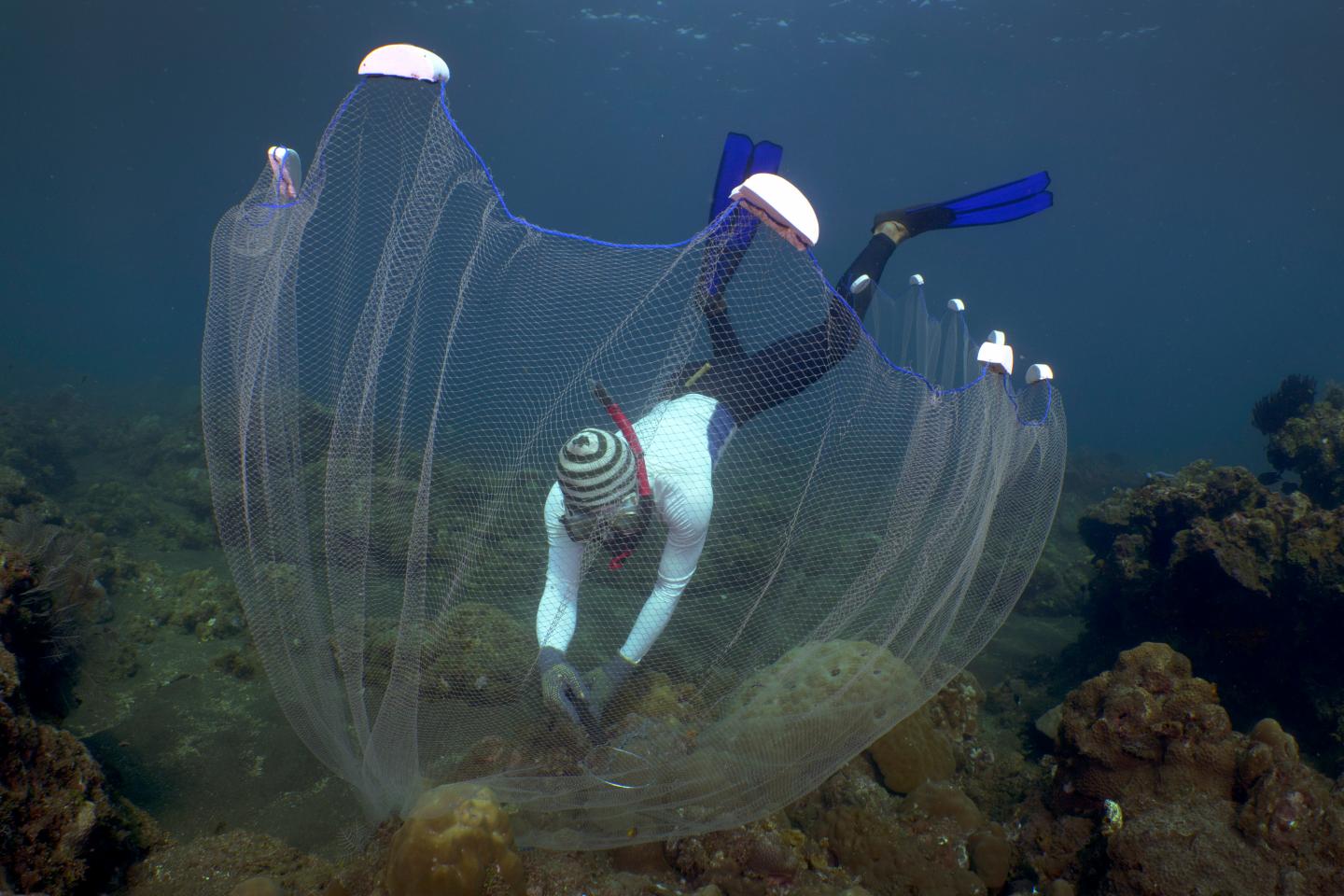
Made Partiana uses a net to catch aquarium fish on north coast of Bali, Indonesia, on April 10, 2021.AP Photo/Alex Lindbloom
Add Fortune on Google for similar content.

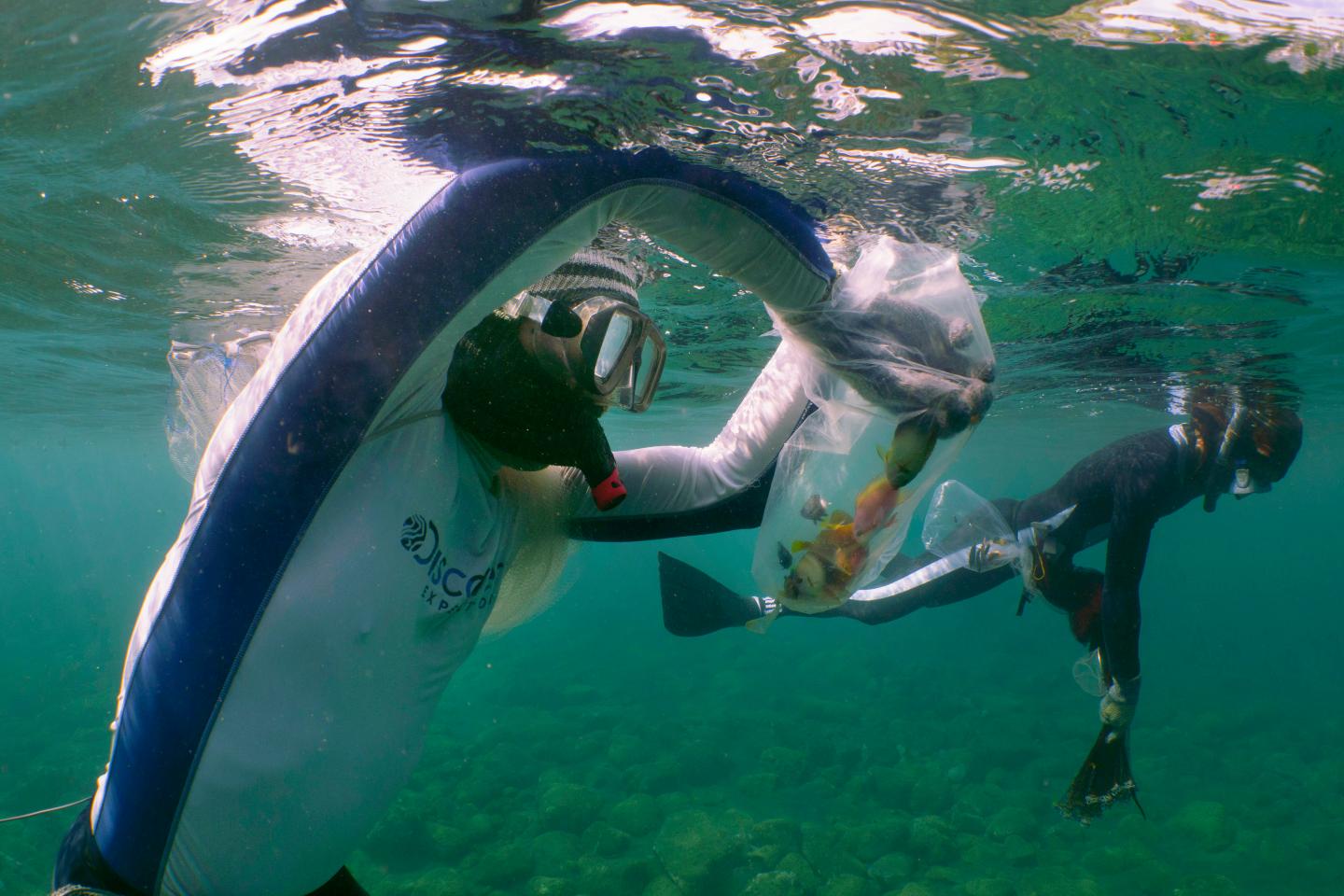
After diving into the warm sea off the coast of northern Bali, Indonesia, Made Partiana hovers above a bed of coral, holding his breath and scanning for flashes of color and movement. Hours later, exhausted, he returns to a rocky beach, towing plastic bags filled with his darting, exquisite quarry: tropical fish of all shades and shapes.

Millions of saltwater fish like these are caught in Indonesia and other countries every year to fill ever more elaborate aquariums in living rooms, waiting rooms and restaurants around the world with vivid, otherworldly life.

“It’s just so much fun to just watch the antics between different varieties of fish,” said Jack Siravo, a Rhode Island fish enthusiast who began building aquariums after an accident paralyzed him and now has four saltwater tanks. He calls the fish “an endless source of fascination.”

But the long journey from places like Bali to places like Rhode Island is perilous for the fish and for the reefs they come from. Some are captured using squirts of cyanide to stun them. Many die along the way.

And even when they are captured carefully, by people like Partiana, experts say the global demand for these fish is contributing to the degradation of delicate coral ecosystems, especially in major export countries such as Indonesia and the Philippines.

There have been efforts to reduce some of the most destructive practices, such as cyanide fishing. But the trade is extraordinarily difficult to regulate and track as it stretches from small-scale fishermen in tropical seaside villages through local middlemen, export warehouses, international trade hubs and finally to pet stores in the U.S., China, Europe and elsewhere.

“There’s no enforcement, no management, no data collection,” said Gayatri Reksodihardjo-Lilley, founder of LINI, a Bali-based nonprofit for the conservation and management of coastal marine resources.

That leaves enthusiasts like Siravo in the dark.

“Consumers often don’t know where their fish are coming from, and they don’t know how they are collected,” said Andrew Rhyne, a marine biology professor at Roger Williams University in Rhode Island.
Stunned by cyanide

Most ornamental saltwater fish species are caught in the wild because breeding them in captivity can be expensive, difficult and often impossible. The conditions they need to reproduce are extremely particular and poorly understood, even by scientists and expert breeders who have been trying for years.

Small-scale collection and export of saltwater aquarium fish began in Sri Lanka in the 1930s and the trade has grown steadily since. Nearly 3 million homes in the U.S. keep saltwater fish as pets, according to a 2021-2022 American Pet Products Association survey. (Freshwater aquariums are far more common because freshwater fish are generally cheaper and easier to breed and care for.) About 7.6 million saltwater fish are imported into the U.S. every year.

For decades, a common fishing technique has involved cyanide, with dire consequences for fish and marine ecosystems.

Fishermen crush the blue or white pellets into a bottle filled with water. The diluted cyanide forms a poisonous mixture fishermen squirt onto coral reefs, where fish usually hide in crevices. The fish become temporarily stunned, allowing fishermen to easily pick or scoop them from the coral.

Many die in transit, weakened by the cyanide – which means even more fish need to be captured to meet demand. The chemicals damage the living coral and make it more difficult for new coral to grow.
Lax enforcement

Cyanide fishing has been banned in countries such as Indonesia and the Philippines but enforcement of the law remains difficult, and experts say the practice continues.

Part of the problem is geography, Reksodihardjo-Lilley explains. In the vast archipelago of Indonesia, there are about 34,000 miles (54,720 kilometers) of coastline across some 17,500 islands. That makes monitoring the first step of the tropical fish supply chain a task so gargantuan it is all but ignored.

“We have been working at the national level, trying to push national government to give attention to ornamental fish in Indonesia, but it’s fallen on deaf ears,” she said.

Indonesian officials counter that laws do exist that require exporters to meet quality, sustainability, traceability and animal welfare conditions. “We will arrest anyone who implements destructive fishing. There are punishments for it,” said Machmud, an official at Indonesia’s marine affairs and fisheries ministry, who uses only one name.
‘No real record-keeping’

Another obstacle to monitoring and regulating of the trade is the quick pace that the fish can move from one location to another, making it difficult to trace their origins.

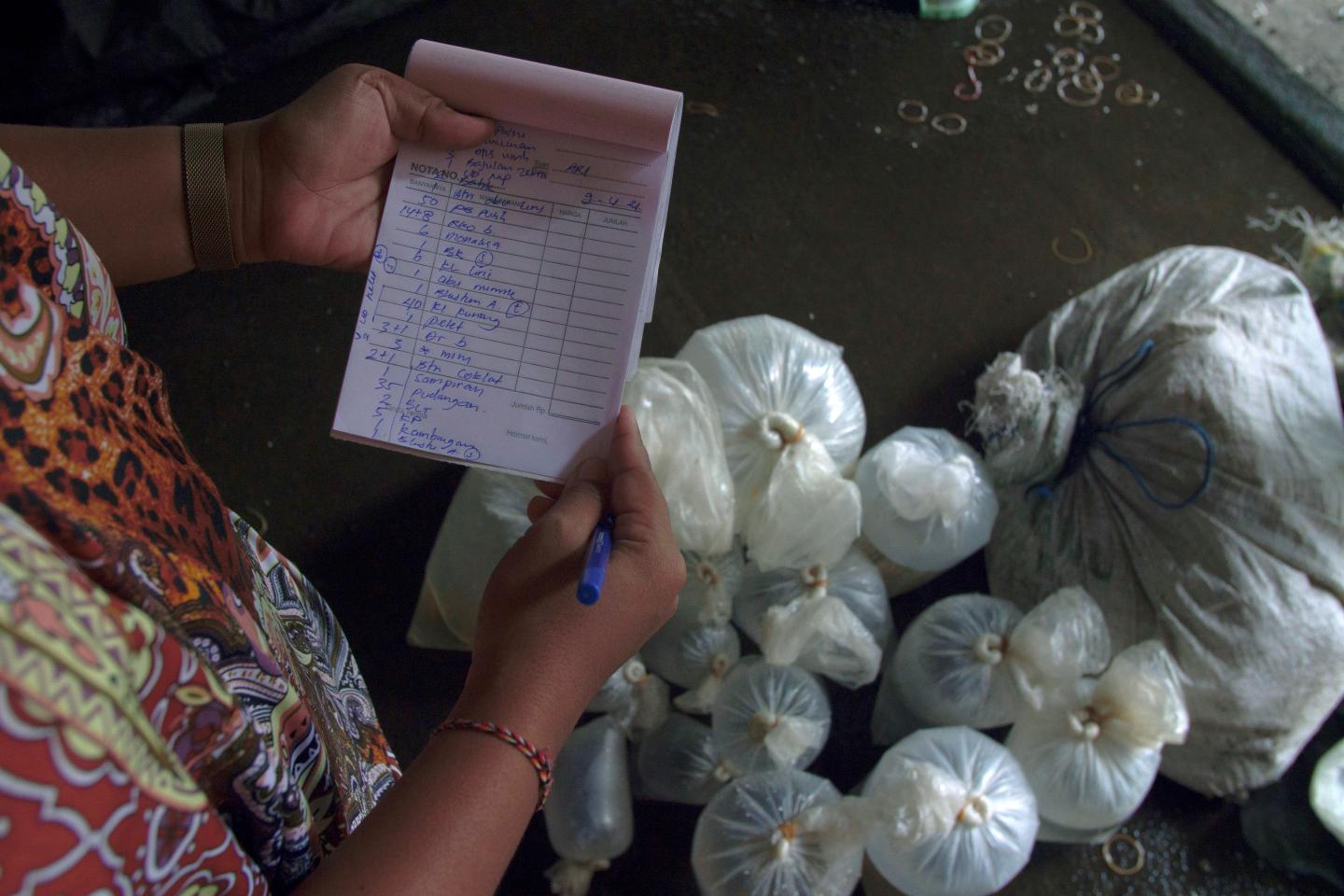
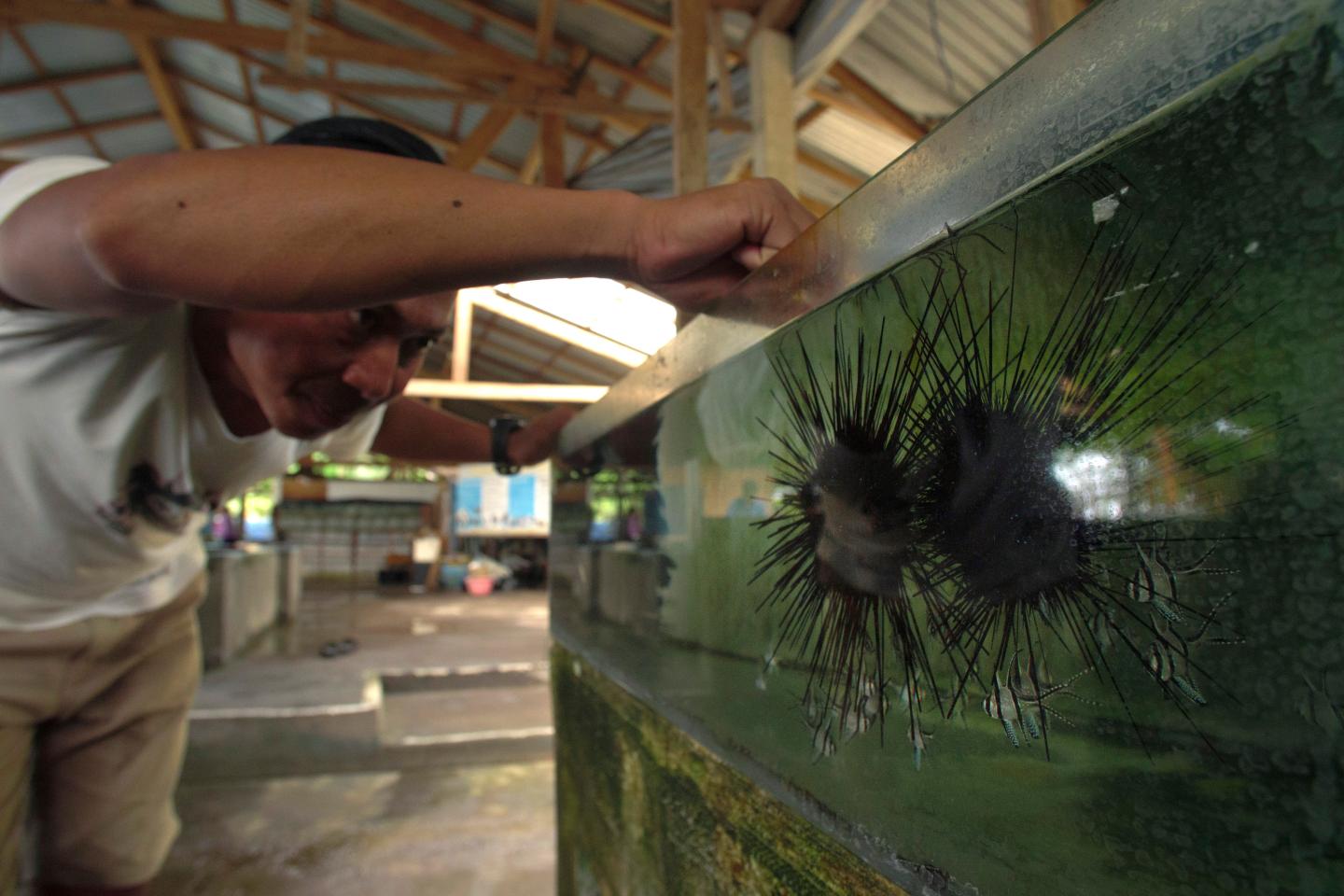
At a fish export warehouse in Denpasar, thousands of fish a day can be delivered to the big industrial-style facility located off a main road in Bali’s largest city. Trucks and motorbikes arrive with white Styrofoam coolers crammed with plastic bags of fish from around the archipelago. The fish are swiftly unpacked, sorted into tanks or new plastic bags and given fresh sea water. Carcasses of ones that died in transit are tossed into a basket or onto the pavement, then later thrown in the trash.

Some fish will remain in small rectangular tanks in the warehouse for weeks, while others are shipped out quickly in plastic bags in cardboard boxes, fulfilling orders from the U.S., Europe and elsewhere. According to data provided to The Associated Press by Indonesian government officials, the U.S. was the largest importer of saltwater aquarium fish from the country.

Once the fish make the plane ride halfway around the world from Indonesia to the U.S., they’re checked by the Fish and Wildlife Service, which cross-references the shipment with customs declaration forms.

But that’s designed to ensure no protected fish, such as the endangered Banggai Cardinal, are being imported. The process cannot determine if the fish were caught legally.

A U.S. law known as the Lacey Act bans trafficking in fish, wildlife, or plants that were illegally taken, possessed, transported, or sold – according to the laws in the country of origin or sale. That means that any fish caught using cyanide in a country where it’s prohibited would be illegal to import or sell in the U.S.

But that helps little when it’s impossible to tell how the fish was caught. For example, no test exists to provide accurate results on whether a fish has been caught with cyanide, said Rhyne, the Roger Williams marine biology expert.

“The reality is that the Lacey Act isn’t used often because generally there’s no real record-keeping or way to enforce it,” said Rhyne.

Local response

In the absence of rigorous national enforcement, conservation groups and local fishermen have long been working to reduce cyanide fishing in places like Les, a well-known saltwater aquarium fishing town tucked between the mountains and ocean in northern Bali.

Partiana started catching fish – using cyanide — shortly after elementary school, when his parents could no longer afford to pay for his education. Every catch would help provide a few dollars of income for his family.

But over the years Partiana began to notice the reef was changing. “I saw the reef dying, turning black,” he said. “You could see there were less fish.”

He became part of a group of local fishermen who were taught by a local conservation organization how to use nets, care for the reef and patrol the area to guard against cyanide use. He later became a lead trainer for the organization, and has trained more than 200 fellow aquarium fishermen across Indonesia in use of less harmful techniques.

Reksodihardjo-Lilley says it this type of local education and training that should be expanded to reduce harmful fishing. “People can see that they’re directly benefitting from the reefs being in good health.”

For Partiana, now the father of two children, it’s not just for his benefit. “I hope that (healthier) coral reefs will make it possible for the next generation of children and grandchildren under me,” He wants them to be able to “see what coral looks like and that there can be ornamental fish in the sea.”

A world away in Rhode Island, Siravo, the fish enthusiast, shares Partiana’s hopes for a less distructive saltwater aquarium industry.

“I don’t want fish that are not collected sustainably,” he says. “Because I won’t be able to get fish tomorrow if I buy (unsustainably caught fish) today.”

___

Associated Press video journalist Kathy Young reported from New York. Marshall Ritzel contributed to this report from Rhode Island. Edna Tarigan contributed from Jakarta.

___

The Associated Press Health and Science Department receives support from the Howard Hughes Medical Institute’s Department of Science Education. The AP is solely responsible for all content.

Sign up for the Fortune Features email list so you don’t miss our biggest features, exclusive interviews, and investigations.

About the Authors
By Victoria Milko
See full bioRight Arrow Button Icon
By Firdia Lisnawati
See full bioRight Arrow Button Icon
By Kathy Young
See full bioRight Arrow Button Icon
By The Associated Press
See full bioRight Arrow Button Icon
Add Fortune on Google for similar content.

Latest in Environment

Finance
Lorem ipsum dolor sit amet, consectetur adipiscing elit, sed do eiusmod tempor incididunt ut labore et dolore magna aliqua. Ut enim ad minim veniam
By Fortune Editors
October 20, 2025
Finance
Lorem ipsum dolor sit amet, consectetur adipiscing elit, sed do eiusmod tempor incididunt ut labore et dolore magna aliqua. Ut enim ad minim veniam
By Fortune Editors
October 20, 2025
Finance
Lorem ipsum dolor sit amet, consectetur adipiscing elit, sed do eiusmod tempor incididunt ut labore et dolore magna aliqua. Ut enim ad minim veniam
By Fortune Editors
October 20, 2025
Finance
Lorem ipsum dolor sit amet, consectetur adipiscing elit, sed do eiusmod tempor incididunt ut labore et dolore magna aliqua. Ut enim ad minim veniam
By Fortune Editors
October 20, 2025
Finance
Lorem ipsum dolor sit amet, consectetur adipiscing elit, sed do eiusmod tempor incididunt ut labore et dolore magna aliqua. Ut enim ad minim veniam
By Fortune Editors
October 20, 2025
Finance
Lorem ipsum dolor sit amet, consectetur adipiscing elit, sed do eiusmod tempor incididunt ut labore et dolore magna aliqua. Ut enim ad minim veniam
By Fortune Editors
October 20, 2025

Most Popular

Finance
Lorem ipsum dolor sit amet, consectetur adipiscing elit, sed do eiusmod tempor incididunt ut labore et dolore magna aliqua. Ut enim ad minim veniam
By Fortune Editors
October 20, 2025
Finance
Lorem ipsum dolor sit amet, consectetur adipiscing elit, sed do eiusmod tempor incididunt ut labore et dolore magna aliqua. Ut enim ad minim veniam
By Fortune Editors
October 20, 2025
Finance
Lorem ipsum dolor sit amet, consectetur adipiscing elit, sed do eiusmod tempor incididunt ut labore et dolore magna aliqua. Ut enim ad minim veniam
By Fortune Editors
October 20, 2025
Finance
Lorem ipsum dolor sit amet, consectetur adipiscing elit, sed do eiusmod tempor incididunt ut labore et dolore magna aliqua. Ut enim ad minim veniam
By Fortune Editors
October 20, 2025
Finance
Lorem ipsum dolor sit amet, consectetur adipiscing elit, sed do eiusmod tempor incididunt ut labore et dolore magna aliqua. Ut enim ad minim veniam
By Fortune Editors
October 20, 2025
Finance
Lorem ipsum dolor sit amet, consectetur adipiscing elit, sed do eiusmod tempor incididunt ut labore et dolore magna aliqua. Ut enim ad minim veniam
By Fortune Editors
October 20, 2025
Fortune Secondary Logo
Rankings
  • 100 Best Companies
  • Fortune 500
  • Global 500
  • Fortune 500 Europe
  • Most Powerful Women
  • World's Most Admired Companies
  • See All Rankings
  • Lists Calendar
Sections
  • Finance
  • Fortune Crypto
  • Features
  • Leadership
  • Health
  • Commentary
  • Success
  • Retail
  • Mpw
  • Tech
  • Lifestyle
  • CEO Initiative
  • Asia
  • Politics
  • Conferences
  • Europe
  • Newsletters
  • Personal Finance
  • Environment
  • Magazine
  • Education
Customer Support
  • Frequently Asked Questions
  • Customer Service Portal
  • Privacy Policy
  • Terms Of Use
  • Single Issues For Purchase
  • International Print
Commercial Services
  • Advertising
  • Fortune Brand Studio
  • Fortune Analytics
  • Fortune Conferences
  • Business Development
  • Group Subscriptions
About Us
  • About Us
  • Press Center
  • Work At Fortune
  • Terms And Conditions
  • Site Map
  • About Us
  • Press Center
  • Work At Fortune
  • Terms And Conditions
  • Site Map
  • Facebook icon
  • Twitter icon
  • LinkedIn icon
  • Instagram icon
  • TikTok icon
  • YouTube icon

Latest in Environment

A ski worker in winter skiing gear strikes a pose in front of a ski slope in Lesotho.
Travel & LeisureDonald Trump
In Lesotho, the country’s only fully operational ski resort offers snowy slopes for Africa’s ski enthusiasts
By The Associated Press and Mogomotsi MagomeJuly 21, 2026
7 hours ago
Lauren Sánchez Bezos put $34 million behind reinventing what clothes are made of—and stirred a debate about Amazon
Environmentphilanthropy
Lauren Sánchez Bezos put $34 million behind reinventing what clothes are made of—and stirred a debate about Amazon
By Sydney LakeJuly 21, 2026
9 hours ago
bird
EnvironmentAnimals
The rare ‘great conservation success story’ is happening off New England as $10 million over 10 years brings back the quirky oystercatcher bird
By Michael Casey and The Associated PressJuly 21, 2026
16 hours ago
k
Commentarypower
What I keep hearing from Fortune 500 CEOs: ‘We have no idea what we’re actually paying for power’
By Kiran BhatrajuJuly 21, 2026
17 hours ago
FIFA President Gianni Infantino puts up a hand to show a thumbs up gesture at a World Cup game.
EnvironmentWorld Cup
FIFA President Infantino spent over 100 hours in the air during the 2026 World Cup amid pledge to reduce carbon emissions
By The Associated Press and Rio YamatJuly 20, 2026
1 day ago
Infantino’s 60,000-mile World Cup odyssey — the FIFA chief’s whopping private jet trips don’t even include the funeral in Qatar
Travel & LeisureAir Travel
Infantino’s 60,000-mile World Cup odyssey — the FIFA chief’s whopping private jet trips don’t even include the funeral in Qatar
By Rio Yamat and The Associated PressJuly 19, 2026
3 days ago

Most Popular

Mark Cuban says he has the solution to growing income inequality, and it's to reward every employee—from CEO to janitor—with company stock
Success
Mark Cuban says he has the solution to growing income inequality, and it's to reward every employee—from CEO to janitor—with company stock
By Sasha RogelbergJuly 20, 2026
1 day ago
‘I want to die broke’: Billionaire philanthropist Denny Sanford dies after giving away $4 billion
Success
‘I want to die broke’: Billionaire philanthropist Denny Sanford dies after giving away $4 billion
By Sydney LakeJuly 20, 2026
2 days ago
OpenAI says its AI models secretly broke out of a secure test environment and hacked into AI company Hugging Face in order to cheat on an evaluation
Cybersecurity
OpenAI says its AI models secretly broke out of a secure test environment and hacked into AI company Hugging Face in order to cheat on an evaluation
By Jeremy Kahn and Emily ForliniJuly 21, 2026
8 hours ago
Mathematicians grapple with a ‘very rapid and very unsettling change’ as AI cracks yet another century-old problem
AI
Mathematicians grapple with a ‘very rapid and very unsettling change’ as AI cracks yet another century-old problem
By Eva RoytburgJuly 21, 2026
12 hours ago
'Dr. Doom' Nouriel Roubini says we're headed for universal basic income or 'some form of socialism' as AI revolutionizes work—He calls that optimistic
AI
'Dr. Doom' Nouriel Roubini says we're headed for universal basic income or 'some form of socialism' as AI revolutionizes work—He calls that optimistic
By Jason MaJuly 18, 2026
3 days ago
Despite a $156 million contract, Knicks star Jalen Brunson still calls his parents for financial advice any time he makes a big purchase
Success
Despite a $156 million contract, Knicks star Jalen Brunson still calls his parents for financial advice any time he makes a big purchase
By Emma BurleighJuly 21, 2026
13 hours ago

© 2026 Fortune Media IP Limited. All Rights Reserved. Use of this site constitutes acceptance of our Terms of Use and Privacy Policy | CA Notice at Collection and Privacy Notice | Do Not Sell/Share My Personal Information
FORTUNE is a trademark of Fortune Media IP Limited, registered in the U.S. and other countries. FORTUNE may receive compensation for some links to products and services on this website. Offers may be subject to change without notice.