• Home
  • Latest
  • Fortune 500
  • Finance
  • Tech
  • Leadership
  • Lifestyle
  • Rankings
  • Multimedia
Commentarypublic health

A U.S. monkeypox pandemic can be prevented. COVID-19 has shown us how

By
Ronald Williams
Ronald Williams
and
Mike Swinford
Mike Swinford
Down Arrow Button Icon
By
Ronald Williams
Ronald Williams
and
Mike Swinford
Mike Swinford
Down Arrow Button Icon
August 5, 2022, 9:55 AM ET
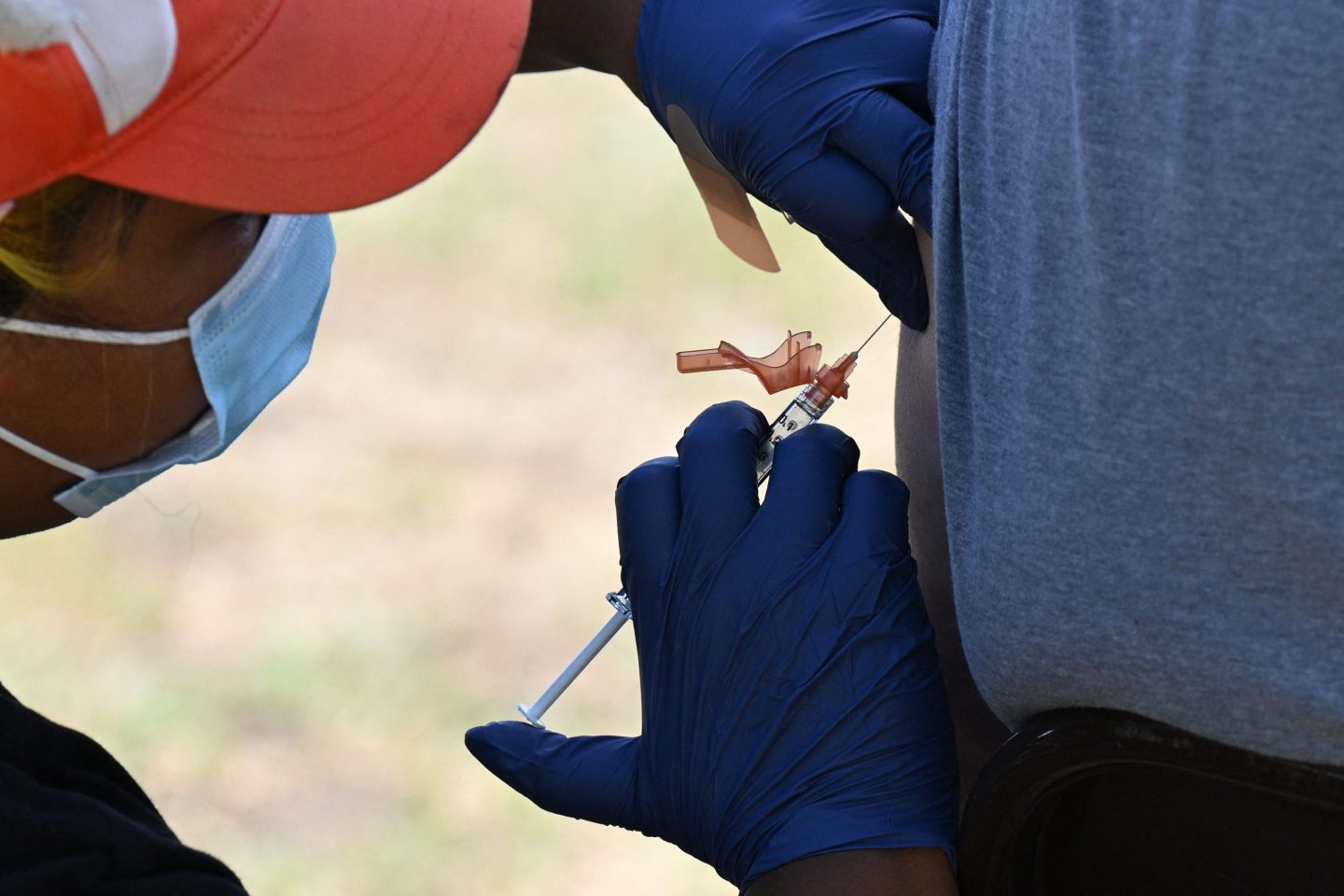
Public-private collaborations have been essential in confronting the COVID-19 pandemic–and can help fend off future outbreaks.
Public-private collaborations have been essential in confronting the COVID-19 pandemic–and can help fend off future outbreaks.ROBYN BECK - AFP - Getty Images

The next global pandemic may already be upon us. The Biden administration has declared monkeypox a public health emergency as cases topped 6,600 in the U.S. The rapid spread of the disease has prompted the World Health Organization to classify it as a global health emergency. The last time the WHO took that step, it was responding to the emergence of COVID-19.

While the monkeypox virus spreads mostly through close contact with someone who is infected, our window for preparing for a mass outbreak is closing.

Perhaps the biggest takeaway from the COVID-19 pandemic is that government, at all levels, must consult and collaborate more closely with business leaders on combating a pandemic. This will minimize economic disruption, maximize workplace safety, and enable the government to mitigate public health consequences by responding rapidly.

At COVID-19’s onset, business leaders had to adapt quickly, making decisions in an environment of uncertainty amid a rapidly shifting public health response. A costly lockdown became the default public policy option because the nation was unprepared.

Now, to help protect the economy, the public and private sectors should work together to identify which workers qualify as essential and how they can work as safely as possible in a public health emergency.

It’s important to note that the public and private sectors were able to achieve great successes during these tumultuous times. Public-private collaborations enabled scientists to develop vaccines in record time. Private companies built on a decade of research partnerships, including with the National Institutes of Health, on a new vaccine type–based on messenger RNA and produced synthetically–and took on billions of dollars in risk. The result was a vaccine that offers high rates of efficacy and protection against severe illness, hospitalization, and death. However, the vaccine distribution system can be improved, particularly by leveraging private sector networks’ strong existing patient contacts.

There were other critical victories as well: Greatly expanded use of telehealth helped many patients get the care they needed, remotely. An ambitious regulatory reform agenda enabled hospitals to adapt to surge capacity and brought many healthcare providers back to work. We must make certain necessary regulatory reforms that can help with this latest public health challenge remain in place.

Conversely, the COVID-19 pandemic has highlighted glaring shortcomings in our system and revealed how the U.S. has chronically underinvested in several dimensions of public health, especially considering its underserved communities’ acute vulnerability.

The nation should move towards a healthcare system that provides better access, with a focus on the health disparities that the pandemic has so starkly highlighted. We saw this through COVID-19’s impact on people with comorbidities such as diabetes and hypertension, those in nursing homes, and those with mobility-related disabilities.

A healthcare system that reimburses providers for maintaining health would raise overall levels of health and thus prepare Americans better for future public health crises and address issues of health equity. These make up the second lesson.

The third is that having accurate data is critical. Wastewater screening, for example, gave early warning of COVID spikes. Genomic sequencing was an essential tool for identifying new variants and developing ways to address them.

A global public-private partnership for genomic sequencing, along with mRNA technology, would be a powerful way to quickly address and respond to future pathogens and viral outbreaks.

The fourth lesson is that government, at all levels, must do more to prepare. For starters, the federal government ought to upgrade and constantly refresh the national stockpile of goods needed to fight a pandemic, such as personal protective equipment. It must also ensure that we have a strong supply chain for these items, which can be activated quickly in a crisis.

The federal government should reform its public health communications to be consistent and clear. The CDC needs to more proactively implement scientific guidance in real-world contexts. It should create a business advisory committee, modeled on the Department of Homeland Security’s critical infrastructure advisory committees, with representatives from diverse industries, to advise on the economic impacts of public health regulations and assist in pandemic planning.

State and local officials should consult with businesses to ensure public-sector support for essential public health emergency infrastructure. America’s schools can also improve how they teach health education.

The final lesson from the COVID-19 pandemic concerns the way businesses themselves can better prepare. They should update their business plans now with lessons learned from the pandemic to be ready to shift operations as events require. They should embrace their roles as trusted information sources for their employees during a public health crisis. Businesses need relationships with trusted medical professionals who can guide their employee communications.

While these solutions are not necessarily easy, they are all common sense and draw from recent experience. Infectious diseases grow exponentially, not linearly. We must start applying these lessons now–and hope that it’s not already too late to benefit from them in our fight against monkeypox.

Ronald Williams is the chairman and CEO of RW2 Enterprises, LLC and former chair and CEO of Aetna. Mike Swinford is the CEO of Numotion. Both are trustees of the Committee for Economic Development, the public policy center of The Conference Board (CED), and serve on CED’s healthcare committee.

The opinions expressed in Fortune.com commentary pieces are solely the views of their authors and do not reflect the opinions and beliefs of Fortune.

More must-read commentary published by Fortune:

  • Here come the Roarin’ 20s. Invest until it hurts
  • A list of companies supporting abortion rights after the Roe v. Wade ruling shows which firms are stepping up, and why
  • The recession is already here—if you’re a woman
  • Career hoarding is on the rise—but it comes at a cost
  • Venture capital is hard–and it’s supposed to be

Sign up for the Fortune Features email list so you don’t miss our biggest features, exclusive interviews, and investigations.

About the Authors
By Ronald Williams
See full bioRight Arrow Button Icon
By Mike Swinford
See full bioRight Arrow Button Icon

Latest in Commentary

Finance
Lorem ipsum dolor sit amet, consectetur adipiscing elit, sed do eiusmod tempor incididunt ut labore et dolore magna aliqua. Ut enim ad minim veniam
By Fortune Editors
October 20, 2025
Finance
Lorem ipsum dolor sit amet, consectetur adipiscing elit, sed do eiusmod tempor incididunt ut labore et dolore magna aliqua. Ut enim ad minim veniam
By Fortune Editors
October 20, 2025
Finance
Lorem ipsum dolor sit amet, consectetur adipiscing elit, sed do eiusmod tempor incididunt ut labore et dolore magna aliqua. Ut enim ad minim veniam
By Fortune Editors
October 20, 2025
Finance
Lorem ipsum dolor sit amet, consectetur adipiscing elit, sed do eiusmod tempor incididunt ut labore et dolore magna aliqua. Ut enim ad minim veniam
By Fortune Editors
October 20, 2025
Finance
Lorem ipsum dolor sit amet, consectetur adipiscing elit, sed do eiusmod tempor incididunt ut labore et dolore magna aliqua. Ut enim ad minim veniam
By Fortune Editors
October 20, 2025
Finance
Lorem ipsum dolor sit amet, consectetur adipiscing elit, sed do eiusmod tempor incididunt ut labore et dolore magna aliqua. Ut enim ad minim veniam
By Fortune Editors
October 20, 2025

Most Popular

Finance
Lorem ipsum dolor sit amet, consectetur adipiscing elit, sed do eiusmod tempor incididunt ut labore et dolore magna aliqua. Ut enim ad minim veniam
By Fortune Editors
October 20, 2025
Finance
Lorem ipsum dolor sit amet, consectetur adipiscing elit, sed do eiusmod tempor incididunt ut labore et dolore magna aliqua. Ut enim ad minim veniam
By Fortune Editors
October 20, 2025
Finance
Lorem ipsum dolor sit amet, consectetur adipiscing elit, sed do eiusmod tempor incididunt ut labore et dolore magna aliqua. Ut enim ad minim veniam
By Fortune Editors
October 20, 2025
Finance
Lorem ipsum dolor sit amet, consectetur adipiscing elit, sed do eiusmod tempor incididunt ut labore et dolore magna aliqua. Ut enim ad minim veniam
By Fortune Editors
October 20, 2025
Finance
Lorem ipsum dolor sit amet, consectetur adipiscing elit, sed do eiusmod tempor incididunt ut labore et dolore magna aliqua. Ut enim ad minim veniam
By Fortune Editors
October 20, 2025
Finance
Lorem ipsum dolor sit amet, consectetur adipiscing elit, sed do eiusmod tempor incididunt ut labore et dolore magna aliqua. Ut enim ad minim veniam
By Fortune Editors
October 20, 2025
Fortune Secondary Logo
Rankings
  • 100 Best Companies
  • Fortune 500
  • Global 500
  • Fortune 500 Europe
  • Most Powerful Women
  • Future 50
  • World’s Most Admired Companies
  • See All Rankings
Sections
  • Finance
  • Fortune Crypto
  • Features
  • Leadership
  • Health
  • Commentary
  • Success
  • Retail
  • Mpw
  • Tech
  • Lifestyle
  • CEO Initiative
  • Asia
  • Politics
  • Conferences
  • Europe
  • Newsletters
  • Personal Finance
  • Environment
  • Magazine
  • Education
Customer Support
  • Frequently Asked Questions
  • Customer Service Portal
  • Privacy Policy
  • Terms Of Use
  • Single Issues For Purchase
  • International Print
Commercial Services
  • Advertising
  • Fortune Brand Studio
  • Fortune Analytics
  • Fortune Conferences
  • Business Development
  • Group Subscriptions
About Us
  • About Us
  • Editorial Calendar
  • Press Center
  • Work At Fortune
  • Diversity And Inclusion
  • Terms And Conditions
  • Site Map
  • About Us
  • Editorial Calendar
  • Press Center
  • Work At Fortune
  • Diversity And Inclusion
  • Terms And Conditions
  • Site Map
  • Facebook icon
  • Twitter icon
  • LinkedIn icon
  • Instagram icon
  • Pinterest icon

Latest in Commentary

EuropeLetter from London
Rishi Sunak is giving advice to CEOs on AI. Here are his golden rules
By Kamal AhmedMarch 25, 2026
9 hours ago
retirement
CommentaryRetirement
Our retirement system gets a C-plus; policymakers have an opportunity to make it A grade
By Chris MahoneyMarch 25, 2026
16 hours ago
david-f
CommentaryVenture Capital
Europe has survived 3 energy shocks in 4 years. The only way out is to stop buying power from its enemies
By David FrykmanMarch 25, 2026
17 hours ago
fauci
CommentaryCOVID-19 vaccines
How COVID turned America against science — and what it will take to win it back
By David Blumenthal and James A. MoroneMarch 24, 2026
2 days ago
alex
Commentarydisruption
AI’s disruption is a choice, not a forecast
By Alex StephanyMarch 24, 2026
2 days ago
trump
Commentarynational debt
The Treasury just declared the U.S. insolvent. The media missed it
By Steve H. Hanke and David M. WalkerMarch 23, 2026
2 days ago

Most Popular

Magazine
The youngest-ever female CEO of a Fortune 500 company is fighting Trump's cuts to keep Medicaid strong
By Fortune EditorsMarch 24, 2026
2 days ago
Commentary
The Treasury just declared the U.S. insolvent. The media missed it
By Fortune EditorsMarch 23, 2026
2 days ago
Success
Palantir’s billionaire CEO says only two kinds of people will succeed in the AI era: trade workers — ‘or you’re neurodivergent’
By Fortune EditorsMarch 24, 2026
1 day ago
Success
The job market is so bad that ‘reverse recruiters’ are charging $1,500 a month just to help people look for jobs
By Fortune EditorsMarch 25, 2026
17 hours ago
Energy
Nobel laureate Paul Krugman calls it 'treason': $580 million in suspicious oil futures traded minutes before Trump's Iran reversal
By Fortune EditorsMarch 24, 2026
1 day ago
Success
JPMorgan has started monitoring the keystrokes, video calls, and meetings of its junior investment bankers—and they say it's for employee well-being
By Fortune EditorsMarch 24, 2026
1 day ago

© 2026 Fortune Media IP Limited. All Rights Reserved. Use of this site constitutes acceptance of our Terms of Use and Privacy Policy | CA Notice at Collection and Privacy Notice | Do Not Sell/Share My Personal Information
FORTUNE is a trademark of Fortune Media IP Limited, registered in the U.S. and other countries. FORTUNE may receive compensation for some links to products and services on this website. Offers may be subject to change without notice.