In July 2006, the hit “MTV Cribs” returned for its 13th season. Unbeknownst to viewers, who were getting an inside look at pop singer Joey Fatone’s home, that season premiere was airing just as the housing bubble was hitting its peak. Between 2000—the first year the show aired—and July 2006, the Case-Shiller U.S. National Home Price Index jumped 84.6%. But the party was coming to an end. After hitting that peak reading in July 2006, the U.S. housing market began to slow. By 2008, it was in a full-blown housing bust. That bust was so deep that U.S. home prices wouldn’t top their July 2006 reading again until January 2017.
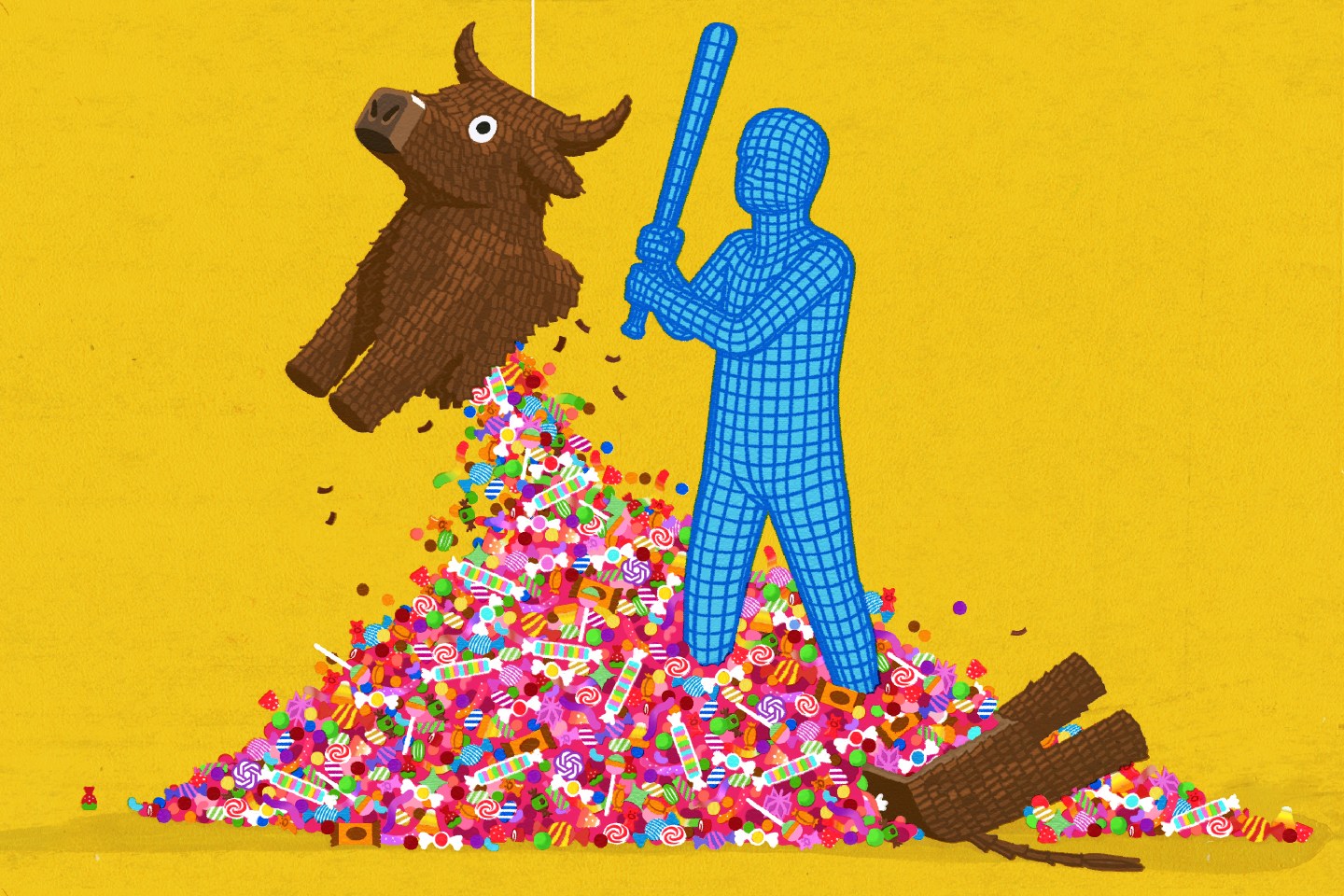
The textbook definition of a housing bubble requires three things. First, you’d see exuberant demand—boosted by speculation—rush into the housing market. Second, spiked home prices would travel well above what incomes can support and reach overvaluation levels. Third, the housing bubble pops and home prices fall. As the 13th season of “MTV Cribs” aired in 2006, the housing market had already hit the first two criteria and, unknown to the public, was barreling towards the third.
Now let’s fast-forward to 2022, where the Pandemic Housing Boom has sent U.S. home prices up a staggering 41.6% since January 2020. That swift move-up in home prices (which is far above the 4.4% posted in a typical year since 1987) has economists perplexed. While the Pandemic Housing Boom isn’t underpinned by the unsound mortgage vehicles that drove the last bubble, it does meet some of the criteria for being a housing bubble.
“This might be a housing bubble. The evidence suggests it looks like a housing bubble. A little bit like a duck. It walks like a duck, it looks like a duck, it certainly might be a duck,” Enrique Martínez-García, a senior research economist at the Dallas Fed, recently told Fortune. While Martínez-García won’t call this a housing bubble, he says we should be paying attention to “the potential risks [that] housing poses.”
To better understand the ongoing housing cycle, let’s take a closer look at how it does—and doesn’t—look like a housing bubble. First up: We’re looking at overvaluation.
Every quarter, Moody's Analytics calculates an "overvalued" or "undervalued" figure for around 400 markets. The firm aims to find out whether fundamentals, including local income levels, could support local home prices. It's only troubling when a housing market becomes significantly "overvalued." That was the case in the lead up to the 2008 crash. In the first quarter of 2006, the median U.S. housing market was "overvalued" by 14.5%.
Following the 2008 housing crash, the U.S. housing market was left in a slump that lasted for years. By around 2013, things were inching up again. However, even as the housing market steadily improved, home prices remained relatively affordable. In the first quarter of 2020, Moody's Analytics estimates the median U.S. regional housing market was "overvalued" by just 2.1%.
That's why housing economists are on high alert. Over the past year, U.S. home prices have climbed 20.4% while private sector wages climbed 4.8%. That disconnect between income growth and home price growth is the perfect recipe for housing overvaluation to return. In the first quarter of 2022, Moody's Analytics estimates the median regional housing market was "overvalued" by 23%. That's a 20.9 percentage point jump in just a two-year timeframe.
On paper, the U.S. housing market has once again become historically "overvalued." However, like the industry saying goes: "Real estate is local."
The Pandemic Housing Boom was hardly a one-size-fits-all frenzy. As white-collar professionals realized the pandemic had given them the ability to work remotely on a permanent basis, many ditched their expensive apartments in cities like New York and San Francisco and took off for more affordable markets in places like Atlanta and Las Vegas. That saw markets like Atlanta and Las Vegas absolutely explode with buyer interest, while urban neighborhoods in New York and San Francisco were relatively cooler.
That regional divergence also means that some housing markets remained priced closer to fundamentals while others became bubbly. Look no further than the New York City metro. In the first quarter of 2006, it was "overvalued" by 39.3%. However, now it's "overvalued" by 8%. Meanwhile, frenzied Las Vegas is now "overvalued" by 53.3%—just slightly below its 2006 first quarter reading of 54.2%.
Among the 414 housing markets that Moody's Analytics assessed, 27 markets are "overvalued" by at least 50%. Of those, only two aren't located in the U.S. South or West. The Sun Belt and Mountain West, in particular, are the epicenters of this boom.
Overvaluation? Check. Now let's look at speculation.
As the COVID-19 recession took hold in spring 2020, the Federal Reserve pulled every lever at its disposal. That pushed mortgage rates to historic lows.
Those low rates, which saw the average 30-year fixed mortgage rate bottom out at 2.65% in January 2021, were too good of a deal for investors to pass up on. Everyone from mom-and-pop landlords, Airbnb hosts, to institutional investors were jumping into the housing market. A study published by the Harvard Joint Center for Housing Studies found that investors' purchases of single-family homes hit an all-time high of 28% earlier this year. A separate analysis by Redfin found that investor purchases shot up this year in 31 of the 33 major housing markets it measured.
It wasn't just long-term investors who jumped in. Short-term flippers, attracted by record levels of home price appreciation, got in too. Indeed, a total of 114,706 homes were "flipped" in the first quarter of 2022, according to ATTOM Data. That's higher than any quarter in the years leading up to the 2008 bubble.
Why does that matter? A rush of investors buying up homes tells us that speculation and FOMO returned to the U.S. housing market. And you can't get a housing bubble, in theory, without speculation.
Let's be clear: While the U.S. housing market has met, on paper, two key elements for a housing bubble, it doesn't guarantee we are in one. We're still missing the final component: a housing bust.
Unlike in the run-up to 2008, the Pandemic Housing Boom wasn't fueled by a subprime lending boom. Just look at Americans' balance sheets. In the quarter of 2007, 7.1% of U.S. disposable personal income was going towards mortgage debt service payments. In the first quarter of 2022, that figure is 3.9%. That matters. As the housing market corrected in 2007, debt burdened households struggling to pay their subprime mortgages created a foreclosure crisis that took many of the nation's biggest financial firms, like Bank of America and Citigroup, to the brink. The combination of tighter lending standards and healthier balance sheets should, according to many industry insiders, prevent a housing correction from turning into a housing crash.
"Based on present evidence, there is no expectation that fallout from a housing correction would be comparable to the 2007–2009 Global Financial Crisis in terms of magnitude or macroeconomic gravity. Among other things, household balance sheets appear in better shape, and excessive borrowing doesn’t appear to be fueling the housing market boom," wrote Dallas Fed researchers back in March.
It might not be a housing bubble. Then again, that doesn't mean we can rule out rough or challenging times ahead in some markets.
As the Federal Reserve kicks into inflation fighting mode, financial markets have pushed up mortgage rates. Moody's Analytics chief economist Mark Zandi says those spiked mortgage rates have pushed us into a "housing correction." Zandi says we should soon see home prices decline by 5% to 10% in significantly "overvalued" housing markets like Boise and Phoenix. Elevated demand for housing amid a period of tight inventory simply saw home prices move up too high too fast. While Zandi won't call this a housing bubble, he does think regional "overvaluation" could be a drag on future home price growth for years to come.
"I don’t think the market will face a Great Financial Crisis-like bust, given the different dynamics today around mortgage lending standards and strong builder balance sheets. We can’t ignore, however, that the market is already correcting. Higher home prices and higher mortgage rates rose to the point that demand seized up in many parts of the country. Home prices are already adjusting down, and we could see that continue until consumer confidence and affordability resets," Ali Wolf, chief economist at Zonda, a housing market research firm, tells Fortune.
If you’re hungry for more housing data, follow me on Twitter at @NewsLambert.
Sign up for the Fortune Features email list so you don’t miss our biggest features, exclusive interviews, and investigations.