• Home
  • Latest
  • Fortune 500
  • Finance
  • Tech
  • Leadership
  • Lifestyle
  • Rankings
  • Multimedia

Trendingnow

1

The Pentagon said Iran War costs $29 billion, but the real cost is closer to $200 billion—and counting

2

Now worth $200 million, Sarah Jessica Parker credits being ‘one of eight kids that struggled financially’ for her hunger, ambition, and work ethic

3

After forcing workers back to the office, Goldman Sachs and JPMorgan Chase are now letting their staff work remotely—but only for the World Cup

1

The Pentagon said Iran War costs $29 billion, but the real cost is closer to $200 billion—and counting

2

Now worth $200 million, Sarah Jessica Parker credits being ‘one of eight kids that struggled financially’ for her hunger, ambition, and work ethic

3

After forcing workers back to the office, Goldman Sachs and JPMorgan Chase are now letting their staff work remotely—but only for the World Cup
CommentaryU.S. Politics

State corporate welfare is undemocratic

By
James Hohman
James Hohman
Down Arrow Button Icon
By
James Hohman
James Hohman
Down Arrow Button Icon
April 21, 2022, 4:25 PM ET
Many states have existing business subsidy programs. Yet when company lobbyists ask for more money, state officials oblige because they want to show they are doing something to help create jobs.
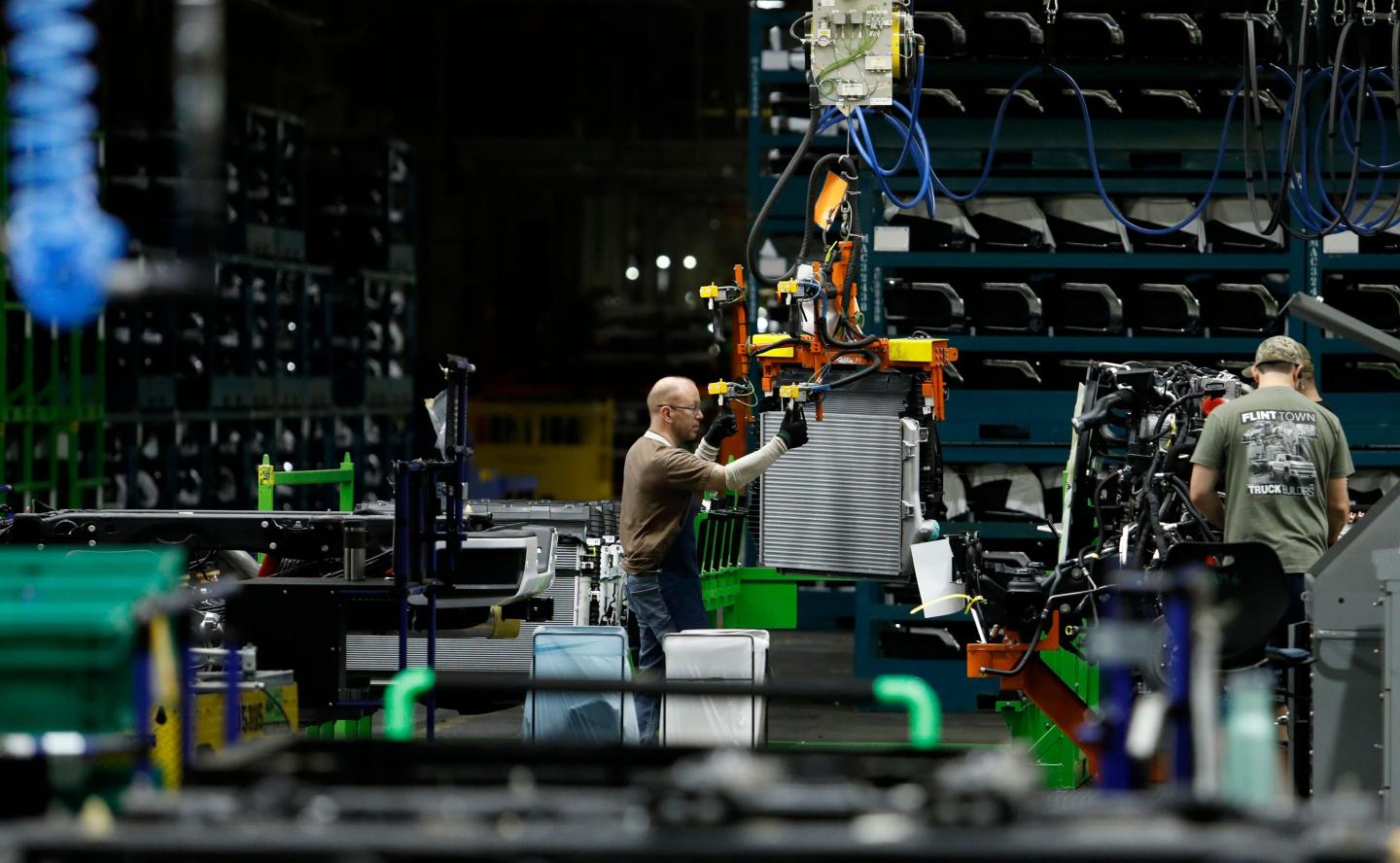
Many states have existing business subsidy programs. Yet when company lobbyists ask for more money, state officials oblige because they want to show they are doing something to help create jobs. JEFF KOWALSKY - AFP - Getty Images)
Add Fortune on Google for similar content.

Virtually every day, state and city governments violate a basic principle of democracy. They pass laws or enact policies that give a single organization an unfair advantage over everyone else. Worse yet, they typically let the organization dictate the terms.

State handouts to corporations, which cost at least $95 billion a year nationwide, are fundamentally undemocratic, in addition to being ineffective and expensive.

The proof is playing out in every corner of the country. West Virginia policymakers recently voted to create a new selective business program to give an unnamed company $1.7 billion earlier this year. Residents were later told that it was going to be collected by steel producer Nucor. The terms of the deal were negotiated after lawmakers signed non-disclosure agreements.

In Michigan, lawmakers recently authorized a new program to give one billion dollars to mystery companies, some of which got officials to sign a non-disclosure agreement to prevent them from saying who was lobbying for the program. General Motors, which is already the second biggest recipient of corporate handouts in the country according to the Good Jobs First database, was offered the first deal and $666 million in support. Meanwhile, Tennessee passed a new program to land Ford auto plants, in coordination with the business.

Then there’s Kansas. Lawmakers just approved a new business subsidy program to give an unnamed company taxpayer dollars, with the amounts to be determined later, following discussions with the business. Hopefully, voters will eventually find out the name of that company, though it’s far from certain. Other states, such as Colorado, hand out cash to select companies and won’t say who gets it.

All of these states have existing business subsidy programs. Yet when company lobbyists asked for more, state lawmakers bent to the lobbyists’ requests. How do you square that with democracy, which demands that laws equally apply to all? You can’t. Companies are dictating the policies they want, and from state to state and city to city, elected officials are giving in to their demands.

Businesses know exactly what they’re doing. They only ask for more money if they expect lawmakers will give them what they want. If lobbyists expect lawmakers to reject their requests, they are unlikely to make them. Rejection would hurt the company’s other legislative priorities and its reputation. The company could be portrayed as looking for unfair special favors. It could be criticized for costing the state cash needed for important government services. It could be hammered for trying to sell elected officials a bill of goods by treating cash that benefits their narrow private interests as something that benefits the public interest. Obviously, businesses don’t want any of that, but they’ve still found a way to get the government to pass laws that benefit them and no one else.

The calculus for lawmakers is equally straightforward. There are political benefits from showing that they’re doing something about jobs. When these benefits are large enough, our elected officials give the business what it wants. They praise the company and pat themselves on the back. Never mind that corporate handouts have been proven ineffective at creating the promised jobs or boosting the economy. Lawmakers are subverting a basic democratic principle of fairness, and their constituents aren’t even getting anything out of it.

Big companies seem to be changing their lobbying strategies to make it easier for state officials to bend to their will. There was a large negative reaction to Amazon after the company appeared to auction off its second headquarters to the highest bidder. Meanwhile, the companies listed above that received handouts in West Virginia, Kansas, Michigan, and Tennessee didn’t threaten to locate their projects elsewhere. They instead treated their requests for taxpayer cash as a regular practice, with special treatment as par for the course.

It shouldn’t be. States and cities should be prohibited from doling out taxpayer money to specific firms. The best bet to ban this practice is an interstate compact to end corporate handouts. Legislation to that effect has been introduced in 15 states, and as states start to pass it, lawmakers would officially be blocked from giving away the taxpayer’s money to this or that business.

Companies shouldn’t get special treatment from lawmakers–and they definitely shouldn’t be able to write the rules in their own favor. That’s undemocratic, and it needs to end now.

James Hohman is the director of fiscal policy at the Mackinac Center for Public Policy, a research and educational institute in Midland, Mich. 

The opinions expressed in Fortune.com Commentary pieces are solely the views of their authors, and do not reflect the opinions and beliefs of Fortune.

More must-read commentary published by Fortune:

  • How to dismantle a culture of impunity–and find the real superstars in your company
  • It’s time for business to end its Faustian pact with autocrats
  • Sallie Krawcheck: This women-led funding round gives me hope venture capital is changing
  • Women of color can no longer buy into the ‘inclusion delusion’
  • Here’s how CEOs can successfully navigate inflation
Never miss a story: Follow your favorite topics and authors to get a personalized email with the journalism that matters most to you.
About the Author
By James Hohman
See full bioRight Arrow Button Icon
Add Fortune on Google for similar content.

Latest in Commentary

Finance
Lorem ipsum dolor sit amet, consectetur adipiscing elit, sed do eiusmod tempor incididunt ut labore et dolore magna aliqua. Ut enim ad minim veniam
By Fortune Editors
October 20, 2025
Finance
Lorem ipsum dolor sit amet, consectetur adipiscing elit, sed do eiusmod tempor incididunt ut labore et dolore magna aliqua. Ut enim ad minim veniam
By Fortune Editors
October 20, 2025
Finance
Lorem ipsum dolor sit amet, consectetur adipiscing elit, sed do eiusmod tempor incididunt ut labore et dolore magna aliqua. Ut enim ad minim veniam
By Fortune Editors
October 20, 2025
Finance
Lorem ipsum dolor sit amet, consectetur adipiscing elit, sed do eiusmod tempor incididunt ut labore et dolore magna aliqua. Ut enim ad minim veniam
By Fortune Editors
October 20, 2025
Finance
Lorem ipsum dolor sit amet, consectetur adipiscing elit, sed do eiusmod tempor incididunt ut labore et dolore magna aliqua. Ut enim ad minim veniam
By Fortune Editors
October 20, 2025
Finance
Lorem ipsum dolor sit amet, consectetur adipiscing elit, sed do eiusmod tempor incididunt ut labore et dolore magna aliqua. Ut enim ad minim veniam
By Fortune Editors
October 20, 2025

Most Popular

Finance
Lorem ipsum dolor sit amet, consectetur adipiscing elit, sed do eiusmod tempor incididunt ut labore et dolore magna aliqua. Ut enim ad minim veniam
By Fortune Editors
October 20, 2025
Finance
Lorem ipsum dolor sit amet, consectetur adipiscing elit, sed do eiusmod tempor incididunt ut labore et dolore magna aliqua. Ut enim ad minim veniam
By Fortune Editors
October 20, 2025
Finance
Lorem ipsum dolor sit amet, consectetur adipiscing elit, sed do eiusmod tempor incididunt ut labore et dolore magna aliqua. Ut enim ad minim veniam
By Fortune Editors
October 20, 2025
Finance
Lorem ipsum dolor sit amet, consectetur adipiscing elit, sed do eiusmod tempor incididunt ut labore et dolore magna aliqua. Ut enim ad minim veniam
By Fortune Editors
October 20, 2025
Finance
Lorem ipsum dolor sit amet, consectetur adipiscing elit, sed do eiusmod tempor incididunt ut labore et dolore magna aliqua. Ut enim ad minim veniam
By Fortune Editors
October 20, 2025
Finance
Lorem ipsum dolor sit amet, consectetur adipiscing elit, sed do eiusmod tempor incididunt ut labore et dolore magna aliqua. Ut enim ad minim veniam
By Fortune Editors
October 20, 2025
Fortune Secondary Logo
Rankings
  • 100 Best Companies
  • Fortune 500
  • Global 500
  • Fortune 500 Europe
  • Most Powerful Women
  • World's Most Admired Companies
  • See All Rankings
  • Lists Calendar
Sections
  • Finance
  • Fortune Crypto
  • Features
  • Leadership
  • Health
  • Commentary
  • Success
  • Retail
  • Mpw
  • Tech
  • Lifestyle
  • CEO Initiative
  • Asia
  • Politics
  • Conferences
  • Europe
  • Newsletters
  • Personal Finance
  • Environment
  • Magazine
  • Education
Customer Support
  • Frequently Asked Questions
  • Customer Service Portal
  • Privacy Policy
  • Terms Of Use
  • Single Issues For Purchase
  • International Print
Commercial Services
  • Advertising
  • Fortune Brand Studio
  • Fortune Analytics
  • Fortune Conferences
  • Business Development
  • Group Subscriptions
About Us
  • About Us
  • Press Center
  • Work At Fortune
  • Terms And Conditions
  • Site Map
  • About Us
  • Press Center
  • Work At Fortune
  • Terms And Conditions
  • Site Map
  • Facebook icon
  • Twitter icon
  • LinkedIn icon
  • Instagram icon
  • Pinterest icon

Latest in Commentary

Asia’s defense boom is rewiring the global arms supply chain
Commentaryarms, weapons, and defense
Asia’s defense boom is rewiring the global arms supply chain
By Chris OberoiJune 24, 2026
9 hours ago
steve
Commentary250 Years of Innovation
Steve Case: America was built by entrepreneurs. Here’s how we keep that edge for the next 250 years
By Steve CaseJune 24, 2026
17 hours ago
t
CommentaryWhite House
Trump mistakes the bully pulpit for bullying leadership — history’s villains were never heroes
By Jeffrey Sonnenfeld and Steven TianJune 24, 2026
18 hours ago
mg
CommentaryHealth
The ‘tech neck’ time bomb: why 43 million young Americans could cripple U.S. health care within a generation
By Michael GerlingJune 24, 2026
18 hours ago
sb
Commentaryclimate change
The climate policy triangle: why leaders can no longer choose between growth, security and sustainability
By Sebastian BuckupJune 23, 2026
1 day ago
brett
CommentaryManagement
Middle managers aren’t going extinct—they’re evolving into something more powerful
By Brett HurtJune 23, 2026
2 days ago

Most Popular

The Pentagon said Iran War costs $29 billion, but the real cost is closer to $200 billion—and counting
Economy
The Pentagon said Iran War costs $29 billion, but the real cost is closer to $200 billion—and counting
By Jacqueline MunisJune 24, 2026
23 hours ago
Now worth $200 million, Sarah Jessica Parker credits being ‘one of eight kids that struggled financially’ for her hunger, ambition, and work ethic
Success
Now worth $200 million, Sarah Jessica Parker credits being ‘one of eight kids that struggled financially’ for her hunger, ambition, and work ethic
By Orianna Rosa RoyleJune 24, 2026
23 hours ago
After forcing workers back to the office, Goldman Sachs and JPMorgan Chase are now letting their staff work remotely—but only for the World Cup
Success
After forcing workers back to the office, Goldman Sachs and JPMorgan Chase are now letting their staff work remotely—but only for the World Cup
By Orianna Rosa RoyleJune 23, 2026
2 days ago
Amazon's record Prime Day masks a darker truth: Americans are spending more and getting less
Retail
Amazon's record Prime Day masks a darker truth: Americans are spending more and getting less
By Nick LichtenbergJune 24, 2026
15 hours ago
Ray Dalio just finished a 10-day trip to China. He says global leaders know America ‘doesn’t have what it takes to fight to maintain its empire’
Asia
Ray Dalio just finished a 10-day trip to China. He says global leaders know America ‘doesn’t have what it takes to fight to maintain its empire’
By Nick LichtenbergJune 24, 2026
16 hours ago
Current price of gold as of June 23, 2026
Personal Finance
Current price of gold as of June 23, 2026
By Danny BakstJune 23, 2026
2 days ago

© 2026 Fortune Media IP Limited. All Rights Reserved. Use of this site constitutes acceptance of our Terms of Use and Privacy Policy | CA Notice at Collection and Privacy Notice | Do Not Sell/Share My Personal Information
FORTUNE is a trademark of Fortune Media IP Limited, registered in the U.S. and other countries. FORTUNE may receive compensation for some links to products and services on this website. Offers may be subject to change without notice.