• Home
  • Latest
  • Fortune 500
  • Finance
  • Tech
  • Leadership
  • Lifestyle
  • Rankings
  • Multimedia

Trendingnow

1

After forcing workers back to the office, Goldman Sachs and JPMorgan Chase are now letting their staff work remotely—but only for the World Cup

2

Markets tumble worldwide as Fed resets expectations: $400 billion wiped off SpaceX stock

3

Current price of oil as of June 23, 2026

1

After forcing workers back to the office, Goldman Sachs and JPMorgan Chase are now letting their staff work remotely—but only for the World Cup

2

Markets tumble worldwide as Fed resets expectations: $400 billion wiped off SpaceX stock

3

Current price of oil as of June 23, 2026
CommentaryCoronavirus

Singapore and Dubai: two very different approaches to the COVID expat

By
Jeevan Vasagar
Jeevan Vasagar
Down Arrow Button Icon
By
Jeevan Vasagar
Jeevan Vasagar
Down Arrow Button Icon
January 19, 2022, 7:30 PM ET
Jeevan Vasagar, author of "Lion City: Singapore and the Invention of Modern Asia", writes that Singapore's inward turn is indicative of broader difficulties for expats during the COVID pandemic.
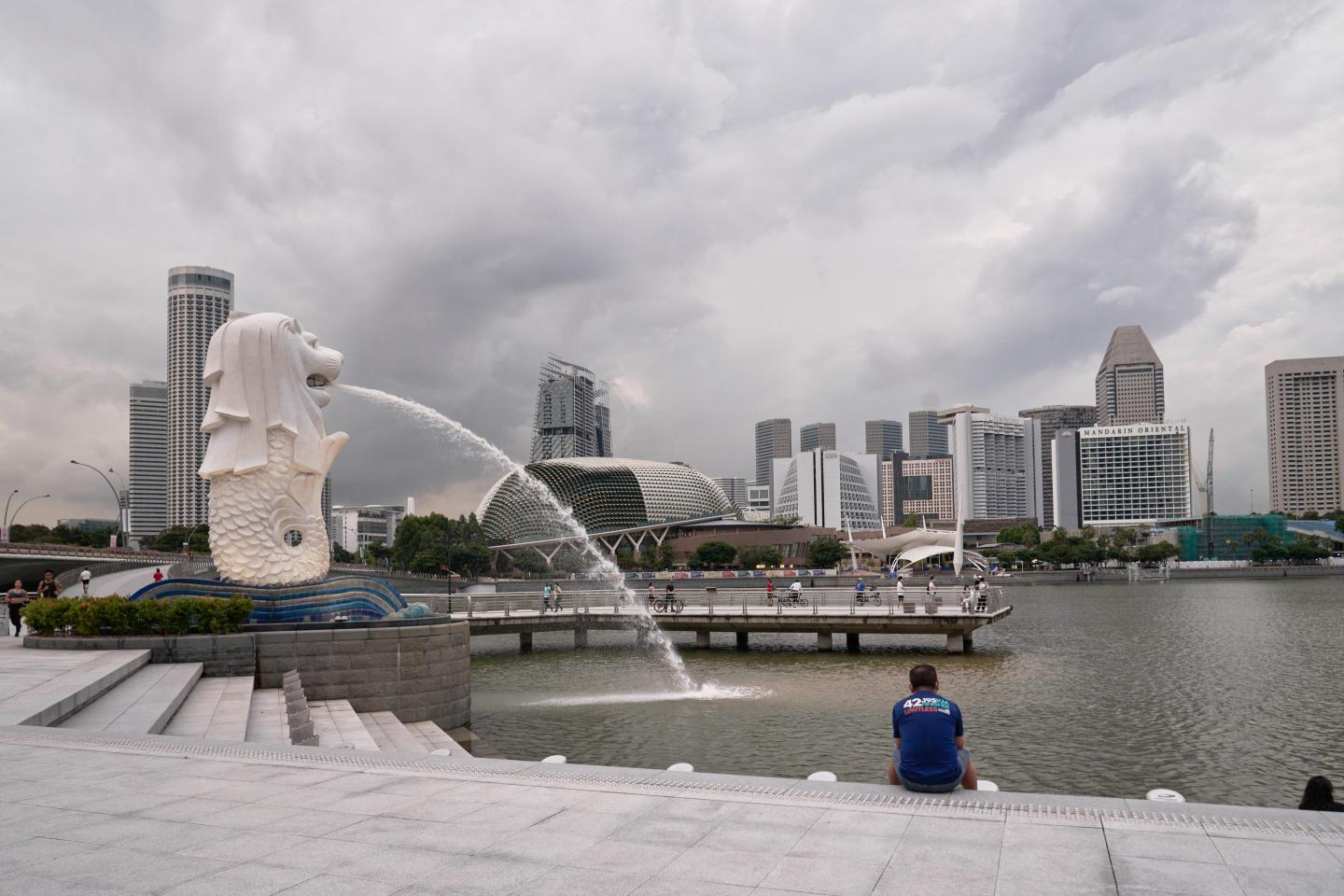
Jeevan Vasagar, author of "Lion City: Singapore and the Invention of Modern Asia", writes that Singapore's inward turn is indicative of broader difficulties for expats during the COVID pandemic. Lauryn Ishak—Bloomberg/Getty Images
Add Fortune on Google for similar content.

COVID-19 was supposed to unleash a new era of global remote work. Business outlets published stories of Zoom-proficient white-collar workers, no longer tied to an office, hoping to dial into meetings from Bali or Barcelona.

Rather than usher in the world of the globe-trotting professional, the COVID pandemic may instead indicate the end of the expat.

Two global cities—Singapore and Dubai—show the two approaches to life under the virus. Singapore is putting its own citizens first, with one government minister memorably describing foreign workers as “ballast” to be shed in a storm. In contrast, Dubai has thrown open its doors, becoming a party city for Europe’s elite, competing for remote workers and moving towards a more liberal interpretation of citizenship.

Singapore’s experience shows that even the most open places can easily turn inward when faced with a deadly threat.

An eagerness to attract global investment, knowledge and talent was one of the driving forces behind Singapore’s postcolonial economic transformation from a port city to a manufacturing hub and financial center. Singapore has always sold itself as a connected, cosmopolitan place—and so COVID hit one of the city’s key selling points.

For foreign workers in Singapore—especially the elite accustomed to effortless international travel—COVID was a sharp reminder of just how small the place actually is.

And the pandemic accelerated a trend to favor local hires. In September 2020, Singapore raised the minimum qualifying salary for foreign professionals. For the first time, Singapore created a sector-specific minimum, with new foreign hires in financial services needing to be paid at least $3700 a month.

Since 2020, work pass holders have needed permits, in addition to their visa, to re-enter Singapore. Many expats complained of being stranded overseas while waiting for approval to return.

There has been a xenophobic tilt to Singapore’s politics for years, but these measures deepened a feeling among many expats that—despite contributing to Singaporean society by paying taxes and in some cases creating jobs—they were not extended the same consideration as citizens during a crisis.

Whatever the reason, foreign workers aren’t staying. Since the start of the pandemic, Singapore’s total foreign workforce, from Filipina domestic workers to French investment bankers, has dropped 16% to 1.2 million. The number of foreign white-collar workers has dropped by about 14% to 167,000 over the same period.

By contrast, Dubai offered itself as a base for the digital nomad. The city launched a one-year virtual working program that cost $611, advertised as living and working “by the beach”.

In a more profound change, the UAE transformed its approach to citizenship, announcing that it would grant passports to doctors, artists and others with specialist knowledge and talents. It’s the first time in its 50-year history that the country—which has long seen very little mingling between Emiratis and foreigners—has opened citizenship to non-Emiratis, even if its stringent conditions mean this stream will remain a trickle rather than a flood.

While Singapore and Dubai have differing attitudes towards wealthier professionals, the COVID pandemic exposed both cities’ shoddy treatment of low-wage migrant workers. Singapore’s crowded dormitories for migrant construction and manufacturing workers were ground-zero for the city’s first major outbreaks. While these were brought under control, the workers’ lives remain circumscribed, with tighter restrictions on movement than the rest of the population, even as the city ‘reopens’.

In Dubai, blue-collar workers were frequently left to fend for themselves as the economy contracted in 2020—with reports of men left penniless and starving in labor camps after losing work.

At the other end of the wealth spectrum, both Singapore and Dubai have become havens for the super-rich, with the number of ultra-wealthy individuals in Singapore rising from 1000 in 2019 to more than 1300 in 2020, while the same class of ultra-rich in the UAE swelled from around 400 to just over 700, according to Credit Suisse.

But even though both Singapore and Dubai have sought to attract the uber-wealthy and neglected poorer migrants, they are now taking very different approaches to a post-COVID world. And while it is true that Dubai relies much more on foreign labor—nearly 90% of Dubai’s population is foreign, compared to 27% in Singapore—that alone doesn’t fully account for the different outlooks.

Singapore appears to regard migration as a buyers’ market. The government tolerates, even encourages, a public narrative that is largely dismissive towards foreigners and puts its own people first.

Even if Singapore does draw on foreign talent again, it may come from different places. Placements in Singapore’s independent schools and private colleges plummeted during the pandemic, but demand from China has helped some schools bolster their rolls. Singapore may turn to Asia’s growing middle class for talent rather than expats from the West.

By contrast the UAE is eager to establish itself as the West’s preferred partner in the Middle East, with a range of policies to facilitate this including extensive security cooperation with the US and warmer relations with Israel.

Singapore has long been seen as an exception in Asia—especially as its competitor Hong Kong is buffeted from all sides. Its economic resilience, efficiency and stability mean it is likely to remain attractive to outsiders, even if it offers them a frostier welcome.

But it is Dubai that is casting itself as a truly global city. For most of the world’s expats, the future is more likely to resemble Singapore.

Jeevan Vasagar is the author of Lion City: Singapore and the Invention of Modern Asia, out from Pegasus Books in March. He is currently Environment Editor at the Bureau of Investigative Journalism, and was the FT’s Singapore and Malaysia correspondent from 2015 to 2017.

Never miss a story: Follow your favorite topics and authors to get a personalized email with the journalism that matters most to you.

About the Author
By Jeevan Vasagar
See full bioRight Arrow Button Icon
Add Fortune on Google for similar content.

Latest in Commentary

Finance
Lorem ipsum dolor sit amet, consectetur adipiscing elit, sed do eiusmod tempor incididunt ut labore et dolore magna aliqua. Ut enim ad minim veniam
By Fortune Editors
October 20, 2025
Finance
Lorem ipsum dolor sit amet, consectetur adipiscing elit, sed do eiusmod tempor incididunt ut labore et dolore magna aliqua. Ut enim ad minim veniam
By Fortune Editors
October 20, 2025
Finance
Lorem ipsum dolor sit amet, consectetur adipiscing elit, sed do eiusmod tempor incididunt ut labore et dolore magna aliqua. Ut enim ad minim veniam
By Fortune Editors
October 20, 2025
Finance
Lorem ipsum dolor sit amet, consectetur adipiscing elit, sed do eiusmod tempor incididunt ut labore et dolore magna aliqua. Ut enim ad minim veniam
By Fortune Editors
October 20, 2025
Finance
Lorem ipsum dolor sit amet, consectetur adipiscing elit, sed do eiusmod tempor incididunt ut labore et dolore magna aliqua. Ut enim ad minim veniam
By Fortune Editors
October 20, 2025
Finance
Lorem ipsum dolor sit amet, consectetur adipiscing elit, sed do eiusmod tempor incididunt ut labore et dolore magna aliqua. Ut enim ad minim veniam
By Fortune Editors
October 20, 2025

Most Popular

Finance
Lorem ipsum dolor sit amet, consectetur adipiscing elit, sed do eiusmod tempor incididunt ut labore et dolore magna aliqua. Ut enim ad minim veniam
By Fortune Editors
October 20, 2025
Finance
Lorem ipsum dolor sit amet, consectetur adipiscing elit, sed do eiusmod tempor incididunt ut labore et dolore magna aliqua. Ut enim ad minim veniam
By Fortune Editors
October 20, 2025
Finance
Lorem ipsum dolor sit amet, consectetur adipiscing elit, sed do eiusmod tempor incididunt ut labore et dolore magna aliqua. Ut enim ad minim veniam
By Fortune Editors
October 20, 2025
Finance
Lorem ipsum dolor sit amet, consectetur adipiscing elit, sed do eiusmod tempor incididunt ut labore et dolore magna aliqua. Ut enim ad minim veniam
By Fortune Editors
October 20, 2025
Finance
Lorem ipsum dolor sit amet, consectetur adipiscing elit, sed do eiusmod tempor incididunt ut labore et dolore magna aliqua. Ut enim ad minim veniam
By Fortune Editors
October 20, 2025
Finance
Lorem ipsum dolor sit amet, consectetur adipiscing elit, sed do eiusmod tempor incididunt ut labore et dolore magna aliqua. Ut enim ad minim veniam
By Fortune Editors
October 20, 2025
Fortune Secondary Logo
Rankings
  • 100 Best Companies
  • Fortune 500
  • Global 500
  • Fortune 500 Europe
  • Most Powerful Women
  • World's Most Admired Companies
  • See All Rankings
  • Lists Calendar
Sections
  • Finance
  • Fortune Crypto
  • Features
  • Leadership
  • Health
  • Commentary
  • Success
  • Retail
  • Mpw
  • Tech
  • Lifestyle
  • CEO Initiative
  • Asia
  • Politics
  • Conferences
  • Europe
  • Newsletters
  • Personal Finance
  • Environment
  • Magazine
  • Education
Customer Support
  • Frequently Asked Questions
  • Customer Service Portal
  • Privacy Policy
  • Terms Of Use
  • Single Issues For Purchase
  • International Print
Commercial Services
  • Advertising
  • Fortune Brand Studio
  • Fortune Analytics
  • Fortune Conferences
  • Business Development
  • Group Subscriptions
About Us
  • About Us
  • Press Center
  • Work At Fortune
  • Terms And Conditions
  • Site Map
  • About Us
  • Press Center
  • Work At Fortune
  • Terms And Conditions
  • Site Map
  • Facebook icon
  • Twitter icon
  • LinkedIn icon
  • Instagram icon
  • Pinterest icon

Latest in Commentary

mg
CommentaryHealth
The ‘tech neck’ time bomb: why 43 million young Americans could cripple U.S. health care within a generation
By Michael GerlingJune 24, 2026
4 minutes ago
sb
Commentaryclimate change
The climate policy triangle: why leaders can no longer choose between growth, security and sustainability
By Sebastian BuckupJune 23, 2026
14 hours ago
brett
CommentaryManagement
Middle managers aren’t going extinct—they’re evolving into something more powerful
By Brett HurtJune 23, 2026
23 hours ago
ravi
CommentaryAI agents
Yale School of Management: surveillance pricing is just the beginning. AI agents will be the real test of corporate trust
By Ravi Dhar and Jon IwataJune 23, 2026
1 day ago
elon
CommentaryElon Musk
Elon Musk’s trillion dollars aren’t real — and that’s the point
By Douglas P. McCormickJune 23, 2026
1 day ago
gen z
CommentaryCareers
Gen Z: if you want to succeed at work, you need to start friction-maxxing
By Michelle SobelJune 23, 2026
1 day ago

Most Popular

After forcing workers back to the office, Goldman Sachs and JPMorgan Chase are now letting their staff work remotely—but only for the World Cup
Success
After forcing workers back to the office, Goldman Sachs and JPMorgan Chase are now letting their staff work remotely—but only for the World Cup
By Orianna Rosa RoyleJune 23, 2026
23 hours ago
Markets tumble worldwide as Fed resets expectations: $400 billion wiped off SpaceX stock
Banking
Markets tumble worldwide as Fed resets expectations: $400 billion wiped off SpaceX stock
By Jim EdwardsJune 23, 2026
1 day ago
Current price of oil as of June 23, 2026
Personal Finance
Current price of oil as of June 23, 2026
By Joseph HostetlerJune 23, 2026
23 hours ago
Meet the 2 men putting New York's $300 billion pension fund in play for the first time in 20 years
Investing
Meet the 2 men putting New York's $300 billion pension fund in play for the first time in 20 years
By Nick LichtenbergJune 22, 2026
2 days ago
Texas and Charlotte used to build huge McMansions—now they're copying the California design tricks they once mocked
Real Estate
Texas and Charlotte used to build huge McMansions—now they're copying the California design tricks they once mocked
By Sydney LakeJune 22, 2026
2 days ago
Former U.S. Secret Service agent says bringing your authentic self to work stifles teamwork: 'You don’t get high performers, you get sloppiness'
Success
Former U.S. Secret Service agent says bringing your authentic self to work stifles teamwork: 'You don’t get high performers, you get sloppiness'
By Sydney LakeJune 21, 2026
3 days ago

© 2026 Fortune Media IP Limited. All Rights Reserved. Use of this site constitutes acceptance of our Terms of Use and Privacy Policy | CA Notice at Collection and Privacy Notice | Do Not Sell/Share My Personal Information
FORTUNE is a trademark of Fortune Media IP Limited, registered in the U.S. and other countries. FORTUNE may receive compensation for some links to products and services on this website. Offers may be subject to change without notice.