• Home
  • Latest
  • Fortune 500
  • Finance
  • Tech
  • Leadership
  • Lifestyle
  • Rankings
  • Multimedia

Trendingnow

1

After forcing workers back to the office, Goldman Sachs and JPMorgan Chase are now letting their staff work remotely—but only for the World Cup

2

The Pentagon said Iran War costs $29 billion, but the real cost is closer to $200 billion—and counting

3

Current price of oil as of June 23, 2026

1

After forcing workers back to the office, Goldman Sachs and JPMorgan Chase are now letting their staff work remotely—but only for the World Cup

2

The Pentagon said Iran War costs $29 billion, but the real cost is closer to $200 billion—and counting

3

Current price of oil as of June 23, 2026
Commentary

The U.S. is hungry for seafood, but more industrial aquaculture is not the answer

By
Dana Honn
Dana Honn
and
Marianne Cufone
Marianne Cufone
Down Arrow Button Icon
By
Dana Honn
Dana Honn
and
Marianne Cufone
Marianne Cufone
Down Arrow Button Icon
November 4, 2021, 7:33 AM ET
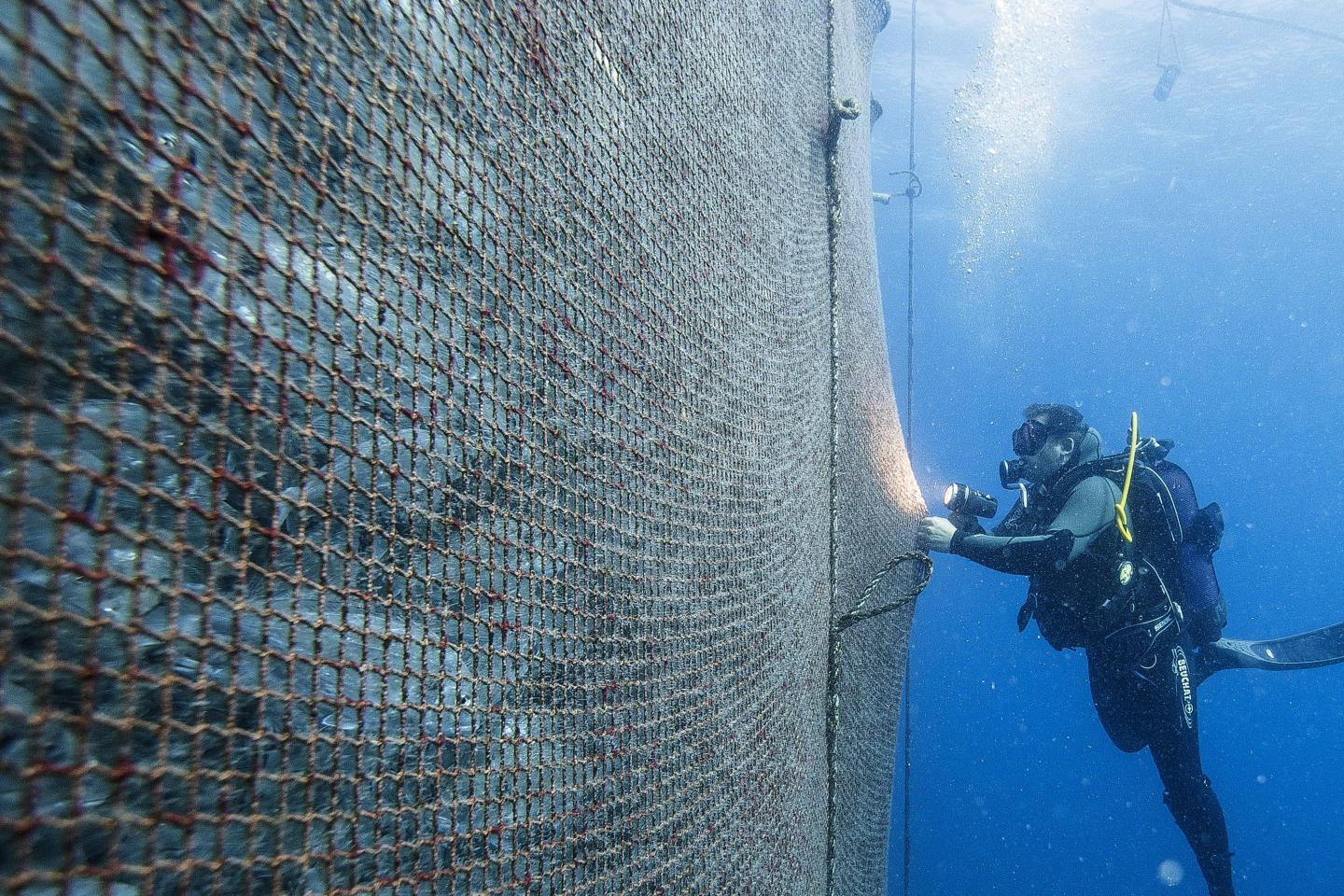
Stress from cramped conditions can make farmed fish more susceptible to illness and pests that can spread to surrounding wild fish.
Stress from cramped conditions can make farmed fish more susceptible to illness and pests that can spread to surrounding wild fish. Boris Horvat—Getty Images
Add Fortune on Google for similar content.

As coastal restaurants and markets rebuild their businesses following a brutal year and a half of challenges due to the COVID pandemic and Hurricane Ida, it’s time to rethink our approach to sourcing seafood.

A recent commentary piece from a Sysco food executive argued that expanding industrial aquaculture is the best way to increase domestic fish production and reduce our nation’s reliance on imported seafood. Consumer demand for seafood is strong and a robust domestic supply would be ideal, but industrial aquaculture in our oceans is not the answer to challenges in our seafood supply chain. 

An often-cited statistic to prove the need for industrial aquaculture is that as a country, we import as much as 90% of the seafood we consume. A lesser-known fact is that U.S. seafood exports have grown to record levels over the past decade. Sometimes, we export and import the same type of products, because other countries are willing to pay more for fish from the U.S. where we often use higher safety, environmental, and labor standards. Meanwhile, U.S. consumers prefer to pay less for cheaper fish farmed abroad. Rather than allowing destructive fish farming practices that can pollute our environment and displace commercial fishing in our markets, we should support our domestic fishing communities, so they can sell more of the higher-quality wild-caught seafood we produce here at home.

Right now, megacorporations are pushing the U.S. Environmental Protection Agency and other federal agencies to gut existing regulations and fast-track permit approvals to build new floating factory fish farms and control even more of the seafood market.

These kinds of industrial aquaculture facilities use giant cages filled with tens of thousands of fish. Stress from being confined, cramped, and seeing predators outside cages regularly can make farmed fish more susceptible to illness and pests that can spread to surrounding wild fish. Facilities regularly excrete excess fish feed, fish waste, antibiotics, and other chemicals that pollute the water, threaten wildlife, and hurt natural habitats. 

Here in Louisiana, we are already battling pollution and the loss of our coastal ecosystems. Our fragile environment and coastal communities are facing severe impacts from climate change too. We do not want more threats to our resources and livelihoods. In fact, an industrial aquaculture facility planned for construction in the Gulf of Mexico off Florida has been met with widespread opposition because it’s expected to pollute waters and worsen the devastating red tides and coral die-offs we’ve seen in recent years.

Some states in the U.S. are heading in the right direction and charting a path for the rest. Washington State outlawed non-native ocean fish farming after a disastrous spill let farmed fish escape into the surrounding waters, where they created new competition and spread new diseases to wild populations. Other nations, such as Denmark and Canada, are also leading the way in blocking industrial finfish aquaculture in their waters and boosting more sustainable alternatives. These are the kind of decisive, proactive moves we need at the U.S. federal level.

A sustainable path forward for U.S. seafood is not only possible, but necessary. There are plenty of proven methods for seafood production that can meet consumer demand and create good-paying jobs for people in our communities without damaging our resources. One option is properly scaled and sited land-based recirculating aquaculture projects and aquaponics, where fish and plants are farmed together.

In coastal communities, the ocean is the foundation for our economy. Local fishing businesses, tourism companies, and many more rely on a thriving ecosystem—and they know the importance of preserving natural resources. We need to support our commercial fishing businesses in using the tools and best practices to catch wild fish with a minimal environmental footprint. We also must support other smart, sustainable methods of production. If we instead allow multinational corporations to come into our communities, take over our markets, and damage our resources, local businesses will be squeezed out, and we’ll all lose.

It’s time for our leaders to protect the Gulf of Mexico and other marine ecosystems and economies with legislation like the Keep Finfish Free Act, which would block corporations from building industrial aquaculture facilities in federal waters without specific congressional approval. We must invest our public resources in the independent community-based businesses charting a more sustainable path forward.

Chefs and customers deserve quality local seafood products. We, not big corporations, should decide how and what we eat—and factory fish is off the menu.

Dana Honn is the head chef for and co-owner of Carmo and Café Cour in New Orleans. Marianne Cufone is the executive director of Recirculating Farms and an environmental attorney based in Florida and Louisiana.

More must-read commentary published by Fortune:

  • Now’s the time for CFOs to lead on culture, not just numbers
  • Patagonia doesn’t use the word ‘sustainable’. Here’s why
  • What still needs a makeover at Facebook: Mark Zuckerberg’s leadership style
  • Corporate boards are suffering from ESG burnout. Here are 4 ways they can fix it
  • NFTs are revolutionizing the music industry too

Subscribe to Fortune Daily to get essential business stories straight to your inbox each morning.

About the Authors
By Dana Honn
See full bioRight Arrow Button Icon
By Marianne Cufone
See full bioRight Arrow Button Icon
Add Fortune on Google for similar content.

Latest in Commentary

Finance
Lorem ipsum dolor sit amet, consectetur adipiscing elit, sed do eiusmod tempor incididunt ut labore et dolore magna aliqua. Ut enim ad minim veniam
By Fortune Editors
October 20, 2025
Finance
Lorem ipsum dolor sit amet, consectetur adipiscing elit, sed do eiusmod tempor incididunt ut labore et dolore magna aliqua. Ut enim ad minim veniam
By Fortune Editors
October 20, 2025
Finance
Lorem ipsum dolor sit amet, consectetur adipiscing elit, sed do eiusmod tempor incididunt ut labore et dolore magna aliqua. Ut enim ad minim veniam
By Fortune Editors
October 20, 2025
Finance
Lorem ipsum dolor sit amet, consectetur adipiscing elit, sed do eiusmod tempor incididunt ut labore et dolore magna aliqua. Ut enim ad minim veniam
By Fortune Editors
October 20, 2025
Finance
Lorem ipsum dolor sit amet, consectetur adipiscing elit, sed do eiusmod tempor incididunt ut labore et dolore magna aliqua. Ut enim ad minim veniam
By Fortune Editors
October 20, 2025
Finance
Lorem ipsum dolor sit amet, consectetur adipiscing elit, sed do eiusmod tempor incididunt ut labore et dolore magna aliqua. Ut enim ad minim veniam
By Fortune Editors
October 20, 2025

Most Popular

Finance
Lorem ipsum dolor sit amet, consectetur adipiscing elit, sed do eiusmod tempor incididunt ut labore et dolore magna aliqua. Ut enim ad minim veniam
By Fortune Editors
October 20, 2025
Finance
Lorem ipsum dolor sit amet, consectetur adipiscing elit, sed do eiusmod tempor incididunt ut labore et dolore magna aliqua. Ut enim ad minim veniam
By Fortune Editors
October 20, 2025
Finance
Lorem ipsum dolor sit amet, consectetur adipiscing elit, sed do eiusmod tempor incididunt ut labore et dolore magna aliqua. Ut enim ad minim veniam
By Fortune Editors
October 20, 2025
Finance
Lorem ipsum dolor sit amet, consectetur adipiscing elit, sed do eiusmod tempor incididunt ut labore et dolore magna aliqua. Ut enim ad minim veniam
By Fortune Editors
October 20, 2025
Finance
Lorem ipsum dolor sit amet, consectetur adipiscing elit, sed do eiusmod tempor incididunt ut labore et dolore magna aliqua. Ut enim ad minim veniam
By Fortune Editors
October 20, 2025
Finance
Lorem ipsum dolor sit amet, consectetur adipiscing elit, sed do eiusmod tempor incididunt ut labore et dolore magna aliqua. Ut enim ad minim veniam
By Fortune Editors
October 20, 2025
Fortune Secondary Logo
Rankings
  • 100 Best Companies
  • Fortune 500
  • Global 500
  • Fortune 500 Europe
  • Most Powerful Women
  • World's Most Admired Companies
  • See All Rankings
  • Lists Calendar
Sections
  • Finance
  • Fortune Crypto
  • Features
  • Leadership
  • Health
  • Commentary
  • Success
  • Retail
  • Mpw
  • Tech
  • Lifestyle
  • CEO Initiative
  • Asia
  • Politics
  • Conferences
  • Europe
  • Newsletters
  • Personal Finance
  • Environment
  • Magazine
  • Education
Customer Support
  • Frequently Asked Questions
  • Customer Service Portal
  • Privacy Policy
  • Terms Of Use
  • Single Issues For Purchase
  • International Print
Commercial Services
  • Advertising
  • Fortune Brand Studio
  • Fortune Analytics
  • Fortune Conferences
  • Business Development
  • Group Subscriptions
About Us
  • About Us
  • Press Center
  • Work At Fortune
  • Terms And Conditions
  • Site Map
  • About Us
  • Press Center
  • Work At Fortune
  • Terms And Conditions
  • Site Map
  • Facebook icon
  • Twitter icon
  • LinkedIn icon
  • Instagram icon
  • Pinterest icon

Latest in Commentary

steve
Commentary250 Years of Innovation
Steve Case: America was built by entrepreneurs. Here’s how we keep that edge for the next 250 years
By Steve CaseJune 24, 2026
7 hours ago
t
CommentaryWhite House
Trump mistakes the bully pulpit for bullying leadership — history’s villains were never heroes
By Jeffrey Sonnenfeld and Steven TianJune 24, 2026
8 hours ago
mg
CommentaryHealth
The ‘tech neck’ time bomb: why 43 million young Americans could cripple U.S. health care within a generation
By Michael GerlingJune 24, 2026
8 hours ago
sb
Commentaryclimate change
The climate policy triangle: why leaders can no longer choose between growth, security and sustainability
By Sebastian BuckupJune 23, 2026
22 hours ago
brett
CommentaryManagement
Middle managers aren’t going extinct—they’re evolving into something more powerful
By Brett HurtJune 23, 2026
1 day ago
ravi
CommentaryAI agents
Yale School of Management: surveillance pricing is just the beginning. AI agents will be the real test of corporate trust
By Ravi Dhar and Jon IwataJune 23, 2026
1 day ago

Most Popular

After forcing workers back to the office, Goldman Sachs and JPMorgan Chase are now letting their staff work remotely—but only for the World Cup
Success
After forcing workers back to the office, Goldman Sachs and JPMorgan Chase are now letting their staff work remotely—but only for the World Cup
By Orianna Rosa RoyleJune 23, 2026
1 day ago
The Pentagon said Iran War costs $29 billion, but the real cost is closer to $200 billion—and counting
Economy
The Pentagon said Iran War costs $29 billion, but the real cost is closer to $200 billion—and counting
By Jacqueline MunisJune 24, 2026
13 hours ago
Current price of oil as of June 23, 2026
Personal Finance
Current price of oil as of June 23, 2026
By Joseph HostetlerJune 23, 2026
1 day ago
Current price of gold as of June 23, 2026
Personal Finance
Current price of gold as of June 23, 2026
By Danny BakstJune 23, 2026
1 day ago
Texas and Charlotte used to build huge McMansions—now they're copying the California design tricks they once mocked
Real Estate
Texas and Charlotte used to build huge McMansions—now they're copying the California design tricks they once mocked
By Sydney LakeJune 22, 2026
2 days ago
Markets tumble worldwide as Fed resets expectations: $400 billion wiped off SpaceX stock
Banking
Markets tumble worldwide as Fed resets expectations: $400 billion wiped off SpaceX stock
By Jim EdwardsJune 23, 2026
1 day ago

© 2026 Fortune Media IP Limited. All Rights Reserved. Use of this site constitutes acceptance of our Terms of Use and Privacy Policy | CA Notice at Collection and Privacy Notice | Do Not Sell/Share My Personal Information
FORTUNE is a trademark of Fortune Media IP Limited, registered in the U.S. and other countries. FORTUNE may receive compensation for some links to products and services on this website. Offers may be subject to change without notice.