• Home
  • Latest
  • Fortune 500
  • Finance
  • Tech
  • Leadership
  • Lifestyle
  • Rankings
  • Multimedia
CommentaryChina Evergrande Group

With Evergrande’s managed collapse, Beijing is sending mixed messages to the markets

By
Eswar Prasad
Eswar Prasad
Down Arrow Button Icon
By
Eswar Prasad
Eswar Prasad
Down Arrow Button Icon
October 5, 2021, 8:30 PM ET
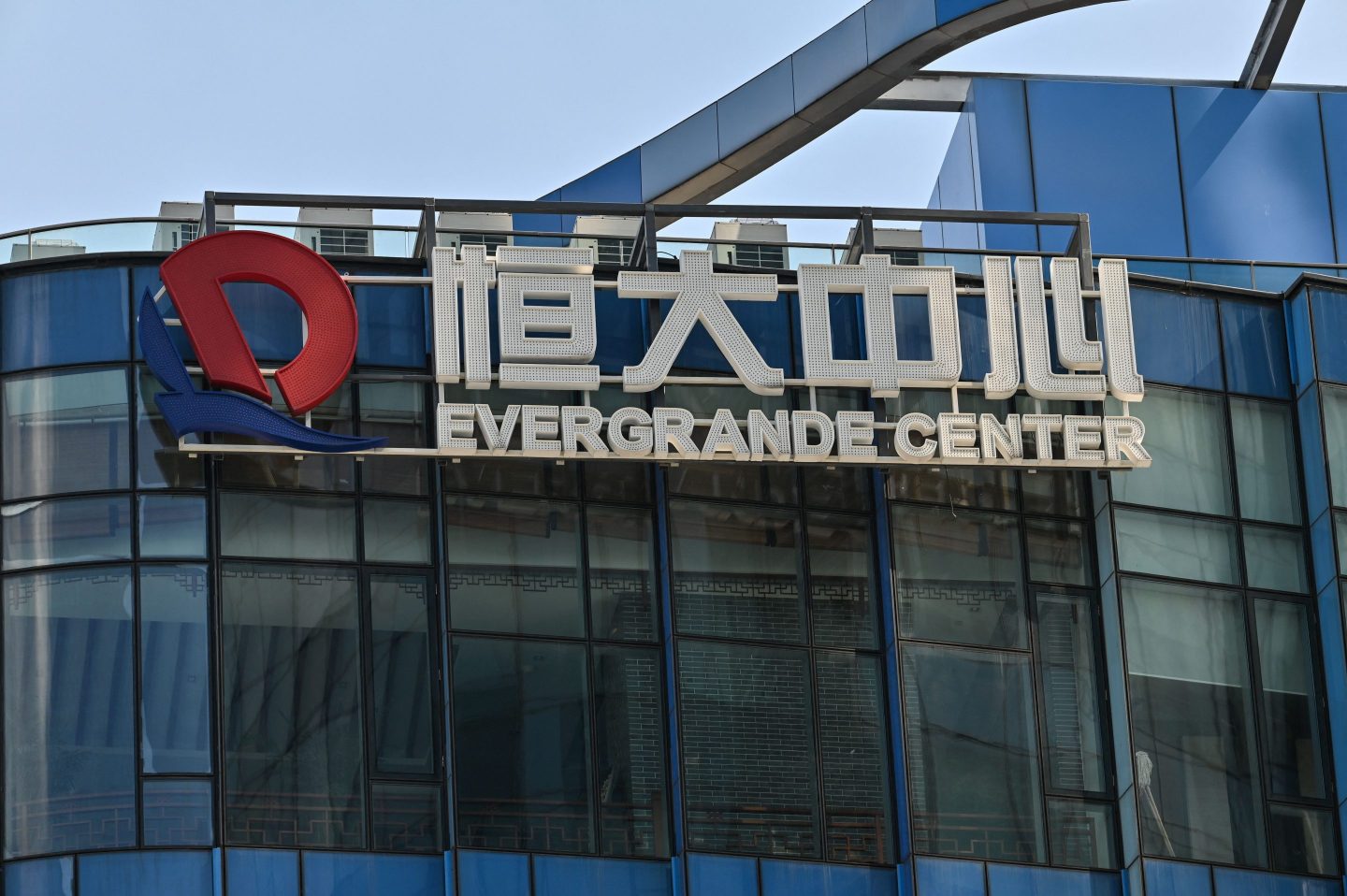
Professor Eswar Prasad notes Beijing's mixed messages about how much control it wants over China's economy risks investor uncertainty and market volatility.
Professor Eswar Prasad notes Beijing's mixed messages about how much control it wants over China's economy risks investor uncertainty and market volatility. Hector Retamal—AFP/Getty Images

The financial troubles of Evergrande—one of China’s biggest property developers—has set off tremors in global financial markets. Even if the debt-laden company manages to stave off a full-fledged default, its future is hardly secure.

The fear that Evergrande’s collapse could trigger a meltdown of China’s financial system is overblown. Yet this episode reveals key elements of the Xi Jinping government’s approach to economic policy and financial markets—and what this might mean for foreign investors and the global economy.

Beijing is sending a clear signal that it wants to rein in debt and tamp down property speculation. Furthermore, the implicit government guarantees that shielded highly leveraged firms are a thing of the past. Financial markets will now be expected to exert discipline over borrowers.

Evergrande’s sheer size has raised concerns about a collapse in property prices and, in turn, a broader financial meltdown. Beijing has enough resources to manage any fallout from a restructuring of Evergrande’s debt. Major state-owned Chinese banks can provide infusions of cash to Evergrande and other troubled corporations, even if that only pushes problems into the future.

China’s debt, while high, is not unmanageable. While overall corporate debt is colossal (exceeding 160% of GDP), most of it is denominated in China’s own currency and owned by domestic banks and investors, creating fewer fragilities than external debt. China also has a high level of domestic savings, amounting to about 45% of annual GDP. This makes it easier for the financial system to roll over the debt of even shaky companies and postpone the day of reckoning.

Still, markets have reacted negatively to the larger symbolism of Evergrande being forced to the brink of default. What pushed Evergrande to the precipice? Ironically, Evergrande’s crisis is the result of the central government attempting to do the right thing by containing the expansion of debt, particularly that of real estate developers, and curbing speculative property investments.

Evergrande was emblematic of China’s debt-fueled approach to growth, taking on massive debt (now $300 billion by some estimates), and applying the funds to extensive real estate development across virtually every Chinese province.

For a while, this suited China’s economy and its government well. Real estate investment has become a bulwark of the economy, helping to maintain growth even when other sectors flounder. Local government officials are happy to sell land to developers, expanding a source of government revenue captured entirely at the local level.

Many companies, both private and state-owned, as well as provincial governments have long been able to borrow at cheap rates that do not fully reflect their repayment capacity. Lenders assume that the central government will step in if borrowers run into financial trouble.

Beijing is now making it clear that the game has changed. The government has specified “red lines”—limits on different indicators of debt exposure—that constrain excessive corporate borrowing. Corporate bond defaults have risen as the government no longer steps in to rescue failing firms, including some high-profile state-owned enterprises such as chipmaker Tsinghua Unigroup and Huachen Automotive Group.

Evergrande’s looming default shows that Beijing is sticking to its plan of letting market discipline work, sorting out risky borrowers from sound ones, even if that causes some short-term financial pain. Rather than preventing a default, the government seems eager to limit its intervention to containing the fallout, especially on homeowners.

Banks and investors who lent to corporations—even large ones—with weak balance sheets, or fiscally undisciplined local governments should be ready to face losses.

But, amid a swirl of new regulations and clampdowns on companies like Ant Financial and Didi, how committed is Beijing to promoting market discipline? Xi Jinping’s government is sending conflicting signals about whether it intends to let market forces operate freely or tighten state control over the economy. While the government looks to the private sector for innovation and employment generation, it balks when private enterprises grow large and influential. Moreover, state control over key sectors is rising and the government seems eager to aggressively impose redistributive policies.

Enacting all these changes simultaneously, in the guise of market-oriented socialism, will inevitably lead to further stumbles. Expecting financial market participants to exert discipline over irresponsible borrowers as they also try to determine whether the government considers the situation worthy of intervention will fuel uncertainty and volatility in the market.

As implicit guarantees of debt or equity disappear, and as Beijing continues its frontal assault of some of its most prominent companies, investments in China now seem a highly risky proposition.

Market discipline will benefit China’s financial system in the long run. But fostering that will require government action in areas other than debt. Effective discipline requires not just the elimination of implicit state guarantees but also measures to improve corporate governance, enhance transparency and accounting standards, and impose more stringent auditing requirements.

If Beijing gets serious about these changes, China will not just improve how it allocates domestic resources, but also reduce the uncertainties that foreign investors face.

Eswar Prasad is a professor at Cornell University and senior fellow at the Brookings Institution. His new book is The Future of Money: How the Digital Revolution is Transforming Currencies and Finance.

More must-read commentary published by Fortune:

  • Historically Black colleges can’t solve tech’s diversity problem alone
  • Conservative business groups support the Equality Act. Congress should heed their call
  • Stop shaming corporations with meaninglessly low effective tax rates
  • How companies can capitalize on the coming boom in “smart assistants”
  • The Great Resignation is upon us, and purpose can help you resist its siren call

Subscribe to Fortune Daily to get essential business stories straight to your inbox each morning.

About the Author
By Eswar Prasad
See full bioRight Arrow Button Icon

Latest in Commentary

Finance
Lorem ipsum dolor sit amet, consectetur adipiscing elit, sed do eiusmod tempor incididunt ut labore et dolore magna aliqua. Ut enim ad minim veniam
By Fortune Editors
October 20, 2025
Finance
Lorem ipsum dolor sit amet, consectetur adipiscing elit, sed do eiusmod tempor incididunt ut labore et dolore magna aliqua. Ut enim ad minim veniam
By Fortune Editors
October 20, 2025
Finance
Lorem ipsum dolor sit amet, consectetur adipiscing elit, sed do eiusmod tempor incididunt ut labore et dolore magna aliqua. Ut enim ad minim veniam
By Fortune Editors
October 20, 2025
Finance
Lorem ipsum dolor sit amet, consectetur adipiscing elit, sed do eiusmod tempor incididunt ut labore et dolore magna aliqua. Ut enim ad minim veniam
By Fortune Editors
October 20, 2025
Finance
Lorem ipsum dolor sit amet, consectetur adipiscing elit, sed do eiusmod tempor incididunt ut labore et dolore magna aliqua. Ut enim ad minim veniam
By Fortune Editors
October 20, 2025
Finance
Lorem ipsum dolor sit amet, consectetur adipiscing elit, sed do eiusmod tempor incididunt ut labore et dolore magna aliqua. Ut enim ad minim veniam
By Fortune Editors
October 20, 2025

Most Popular

Finance
Lorem ipsum dolor sit amet, consectetur adipiscing elit, sed do eiusmod tempor incididunt ut labore et dolore magna aliqua. Ut enim ad minim veniam
By Fortune Editors
October 20, 2025
Finance
Lorem ipsum dolor sit amet, consectetur adipiscing elit, sed do eiusmod tempor incididunt ut labore et dolore magna aliqua. Ut enim ad minim veniam
By Fortune Editors
October 20, 2025
Finance
Lorem ipsum dolor sit amet, consectetur adipiscing elit, sed do eiusmod tempor incididunt ut labore et dolore magna aliqua. Ut enim ad minim veniam
By Fortune Editors
October 20, 2025
Finance
Lorem ipsum dolor sit amet, consectetur adipiscing elit, sed do eiusmod tempor incididunt ut labore et dolore magna aliqua. Ut enim ad minim veniam
By Fortune Editors
October 20, 2025
Finance
Lorem ipsum dolor sit amet, consectetur adipiscing elit, sed do eiusmod tempor incididunt ut labore et dolore magna aliqua. Ut enim ad minim veniam
By Fortune Editors
October 20, 2025
Finance
Lorem ipsum dolor sit amet, consectetur adipiscing elit, sed do eiusmod tempor incididunt ut labore et dolore magna aliqua. Ut enim ad minim veniam
By Fortune Editors
October 20, 2025
Fortune Secondary Logo
Rankings
  • 100 Best Companies
  • Fortune 500
  • Global 500
  • Fortune 500 Europe
  • Most Powerful Women
  • Future 50
  • World’s Most Admired Companies
  • See All Rankings
Sections
  • Finance
  • Fortune Crypto
  • Features
  • Leadership
  • Health
  • Commentary
  • Success
  • Retail
  • Mpw
  • Tech
  • Lifestyle
  • CEO Initiative
  • Asia
  • Politics
  • Conferences
  • Europe
  • Newsletters
  • Personal Finance
  • Environment
  • Magazine
  • Education
Customer Support
  • Frequently Asked Questions
  • Customer Service Portal
  • Privacy Policy
  • Terms Of Use
  • Single Issues For Purchase
  • International Print
Commercial Services
  • Advertising
  • Fortune Brand Studio
  • Fortune Analytics
  • Fortune Conferences
  • Business Development
  • Group Subscriptions
About Us
  • About Us
  • Editorial Calendar
  • Press Center
  • Work At Fortune
  • Diversity And Inclusion
  • Terms And Conditions
  • Site Map
  • About Us
  • Editorial Calendar
  • Press Center
  • Work At Fortune
  • Diversity And Inclusion
  • Terms And Conditions
  • Site Map
  • Facebook icon
  • Twitter icon
  • LinkedIn icon
  • Instagram icon
  • Pinterest icon

Latest in Commentary

retirement
CommentaryRetirement
Our retirement system gets a C-plus; policymakers have an opportunity to make it A grade
By Chris MahoneyMarch 25, 2026
5 hours ago
david-f
CommentaryVenture Capital
Europe has survived 3 energy shocks in 4 years. The only way out is to stop buying power from its enemies
By David FrykmanMarch 25, 2026
6 hours ago
fauci
CommentaryCOVID-19 vaccines
How COVID turned America against science — and what it will take to win it back
By David Blumenthal and James A. MoroneMarch 24, 2026
1 day ago
alex
Commentarydisruption
AI’s disruption is a choice, not a forecast
By Alex StephanyMarch 24, 2026
1 day ago
trump
Commentarynational debt
The Treasury just declared the U.S. insolvent. The media missed it
By Steve H. Hanke and David M. WalkerMarch 23, 2026
2 days ago
kuo
CommentaryUnicorns
Alibaba.com President: The one-person unicorn is coming. AI is making it possible
By Kuo ZhangMarch 23, 2026
2 days ago

Most Popular

Magazine
The youngest-ever female CEO of a Fortune 500 company is fighting Trump's cuts to keep Medicaid strong
By Fortune EditorsMarch 24, 2026
1 day ago
Commentary
The Treasury just declared the U.S. insolvent. The media missed it
By Fortune EditorsMarch 23, 2026
2 days ago
Success
Palantir’s billionaire CEO says only two kinds of people will succeed in the AI era: trade workers — ‘or you’re neurodivergent’
By Fortune EditorsMarch 24, 2026
23 hours ago
Energy
Nobel laureate Paul Krugman calls it 'treason': $580 million in suspicious oil futures traded minutes before Trump's Iran reversal
By Fortune EditorsMarch 24, 2026
20 hours ago
Economy
It took 200 years for national debt to hit $1 trillion. Annual interest alone now exceeds that—a 'crushing legacy we must reverse,' says budget chair
By Fortune EditorsMarch 23, 2026
2 days ago
Personal Finance
Current price of oil as of March 24, 2026
By Fortune EditorsMarch 24, 2026
1 day ago

© 2026 Fortune Media IP Limited. All Rights Reserved. Use of this site constitutes acceptance of our Terms of Use and Privacy Policy | CA Notice at Collection and Privacy Notice | Do Not Sell/Share My Personal Information
FORTUNE is a trademark of Fortune Media IP Limited, registered in the U.S. and other countries. FORTUNE may receive compensation for some links to products and services on this website. Offers may be subject to change without notice.