• Home
  • Latest
  • Fortune 500
  • Finance
  • Tech
  • Leadership
  • Lifestyle
  • Rankings
  • Multimedia

Trendingnow

1

Pentagon accuses Alibaba, Baidu and BYD, three of China's biggest companies, of supporting the Chinese military

2

'We are rapidly running out of time': Watchdog sounds Social Security alarm after 22% cut confirmed for 2032

3

Costco CEO Ron Vachris rose from forklift driver to the C-suite without a college degree: ‘Don’t chase a title’ is the career advice that got him there

1

Pentagon accuses Alibaba, Baidu and BYD, three of China's biggest companies, of supporting the Chinese military

2

'We are rapidly running out of time': Watchdog sounds Social Security alarm after 22% cut confirmed for 2032

3

Costco CEO Ron Vachris rose from forklift driver to the C-suite without a college degree: ‘Don’t chase a title’ is the career advice that got him there
Commentary

Supply-chain restrictions on China actually hurt American companies

By
Andy Purdy
Andy Purdy
Down Arrow Button Icon
By
Andy Purdy
Andy Purdy
Down Arrow Button Icon
May 9, 2021, 9:00 AM ET
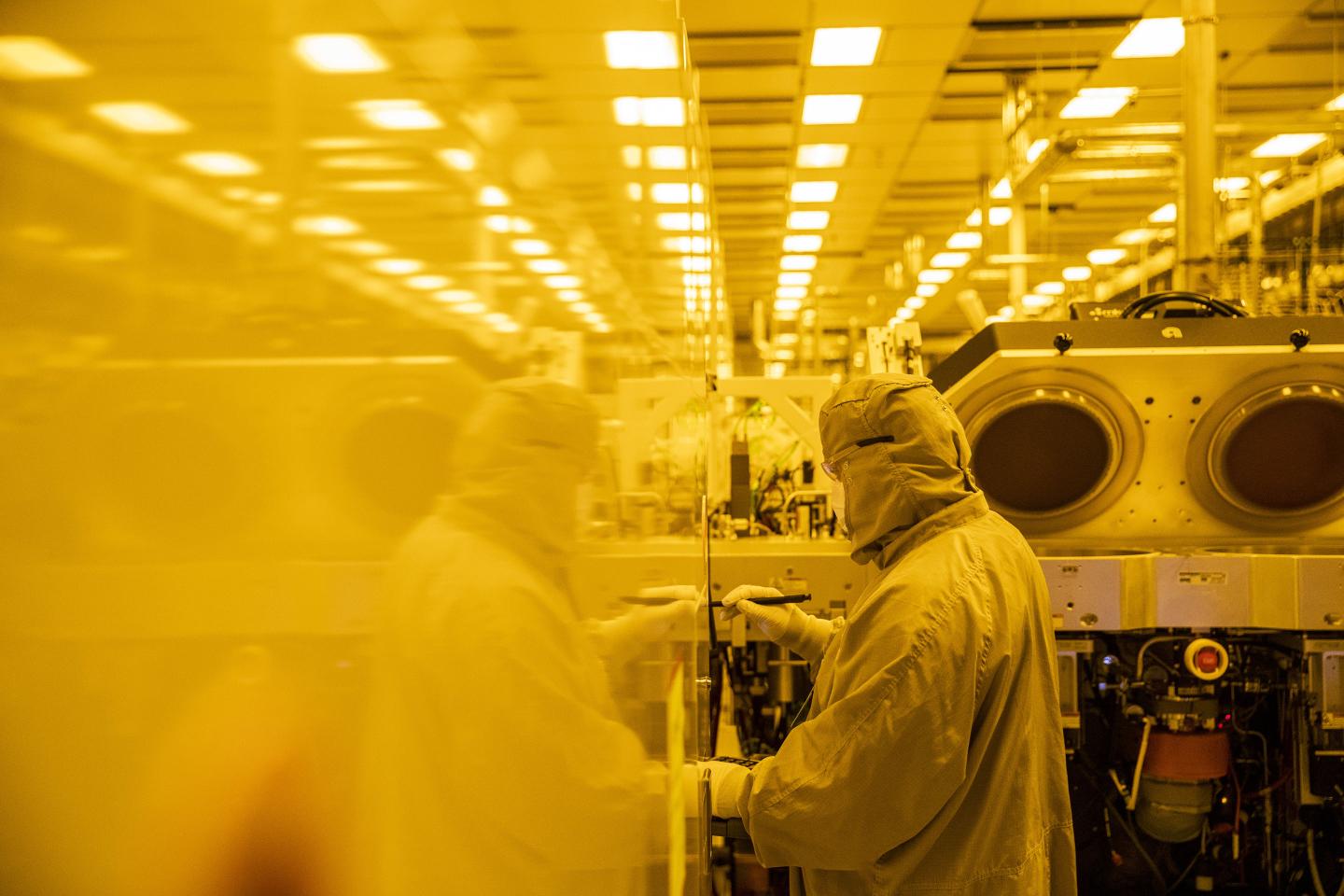
An employee at the GlobalFoundries semiconductor manufacturing facility in Malta, N.Y., on March 16, 2021.
An employee at the GlobalFoundries semiconductor manufacturing facility in Malta, N.Y., on March 16, 2021.Adam Glanzman—Bloomberg/Getty Images

The Biden administration’s push to shore up critical U.S. supply chains is a welcome show of support for American industry and a smart way to enhance the country’s emergency preparedness. But the President must also repair the cratered highways of global trade that are key to America’s technological future.

Aimed partly at helping U.S. companies cope with the global shortage of semiconductor chips used in products from smartphones to cars, President Biden’s recent executive order to review supply-chain vulnerabilities looks at key industrial sectors of the economy such as health and energy in a bid to reduce U.S. dependence on foreign suppliers and ensure that America will not come up short in a crisis.

Such a review, combined with incentives for domestic manufacturing and R&D, are a better way to improve supply-chain security than maintaining the China-focused export restrictions imposed by the Trump administration last year.

Yet politics continues to infect U.S. government thinking about supply-chain management. In April, the U.S. Senate Foreign Relations Committee voted overwhelmingly in favor of the Strategic Competition Act of 2021, a bill aimed at assuring that the U.S. is positioned to compete with China. One section of the bill specifically aims to help U.S. companies diversify their supply chains away from the country.

Over the past two years, the U.S. government has curtailed the sale of certain U.S. technology to Chinese companies. Designed to hurt China, those curbs are actually hurting American businesses. 

Before being placed on a blacklist by the Trump administration, Huawei was one of the U.S. chip sector’s biggest customers. It spent around $12 billion a year overall in the U.S., including on semiconductors, and contributed to 40,000 jobs. The company’s rotating chairman, Ken Hu, said the company had planned to buy more than $20 billion in components from U.S. companies last year, but was prevented from doing so by the export bans. (For this reason, Huawei has a direct interest in the termination of the U.S. ban on the export of technology to Chinese companies.)

If these measures are kept in place, they will provide a strong incentive for foreign companies to de-Americanize their supply chains, lest Washington target them or their suppliers in the future. Unfortunately, however, the potential harm extends far beyond job losses and corporate profits.

Revenue from the sale of chips to Huawei has allowed American companies to fund new research that supports U.S. national security goals. When that revenue drops, so does the ability of U.S. companies to invest in R&D. This link is so crucial that when the U.S. government was thinking about expanding the restrictions already placed on Chinese companies, the Defense and Treasury departments objected to the expansion, saying it would hurt U.S. companies’ ability to fund R&D and, most significantly, to support the U.S. defense industrial base.

In addition, the Information Technology Industry Council concluded that an excessive focus on Chinese companies had “short-circuited” America’s ability to analyze the risks facing its own supply chain. An effective strategy must evaluate all relevant threats to America’s supply chains—not just focus on a single one.

Export restrictions that lead to a broad-scale “decoupling” of Chinese and American technology could also erode innovation. Decoupling America’s tech platforms from China’s was a goal pursued by the Trump administration. The so-called Clean Networks Initiative used a “trusted-country-of-origin” requirement to insulate the U.S. from Chinese technology, while pressing American allies to exclude Chinese equipment from their 5G telecom networks.

But splitting the digital world in half would balkanize the technical standards that companies and governments use to collaborate across borders, thereby restricting their ability to innovate. The Internet Society, an educational nonprofit, has said decoupling could “significantly threaten” economic growth while reducing the broader benefits of collaboration. Even former Google CEO Eric Schmidt, who has called for some separation between U.S. and Chinese tech systems, has warned that U.S. innovation will be undermined by “closing off the United States to the ideas, people, technologies, and supply chains necessary to compete effectively.”

Biden’s latest actions are a welcome acknowledgement that secure global supply chains benefit everyone and should not be hijacked by geopolitics. His approach will spur American investment in innovation without relying on protectionist measures that place American businesses and households at risk. That is a step in the right direction—and, we hope, a harbinger of things to come.

Andy Purdy is the chief security officer for Huawei Technologies USA.

Correction, May 11, 2021: A previous version of this commentary mischaracterized the U.S. government’s policy on the sale of certain U.S. technology to Chinese companies.

Our mission to make business better is fueled by readers like you. To enjoy unlimited access to our journalism, subscribe today.
About the Author
By Andy Purdy
See full bioRight Arrow Button Icon

Latest in Commentary

Finance
Lorem ipsum dolor sit amet, consectetur adipiscing elit, sed do eiusmod tempor incididunt ut labore et dolore magna aliqua. Ut enim ad minim veniam
By Fortune Editors
October 20, 2025
Finance
Lorem ipsum dolor sit amet, consectetur adipiscing elit, sed do eiusmod tempor incididunt ut labore et dolore magna aliqua. Ut enim ad minim veniam
By Fortune Editors
October 20, 2025
Finance
Lorem ipsum dolor sit amet, consectetur adipiscing elit, sed do eiusmod tempor incididunt ut labore et dolore magna aliqua. Ut enim ad minim veniam
By Fortune Editors
October 20, 2025
Finance
Lorem ipsum dolor sit amet, consectetur adipiscing elit, sed do eiusmod tempor incididunt ut labore et dolore magna aliqua. Ut enim ad minim veniam
By Fortune Editors
October 20, 2025
Finance
Lorem ipsum dolor sit amet, consectetur adipiscing elit, sed do eiusmod tempor incididunt ut labore et dolore magna aliqua. Ut enim ad minim veniam
By Fortune Editors
October 20, 2025
Finance
Lorem ipsum dolor sit amet, consectetur adipiscing elit, sed do eiusmod tempor incididunt ut labore et dolore magna aliqua. Ut enim ad minim veniam
By Fortune Editors
October 20, 2025

Most Popular

Finance
Lorem ipsum dolor sit amet, consectetur adipiscing elit, sed do eiusmod tempor incididunt ut labore et dolore magna aliqua. Ut enim ad minim veniam
By Fortune Editors
October 20, 2025
Finance
Lorem ipsum dolor sit amet, consectetur adipiscing elit, sed do eiusmod tempor incididunt ut labore et dolore magna aliqua. Ut enim ad minim veniam
By Fortune Editors
October 20, 2025
Finance
Lorem ipsum dolor sit amet, consectetur adipiscing elit, sed do eiusmod tempor incididunt ut labore et dolore magna aliqua. Ut enim ad minim veniam
By Fortune Editors
October 20, 2025
Finance
Lorem ipsum dolor sit amet, consectetur adipiscing elit, sed do eiusmod tempor incididunt ut labore et dolore magna aliqua. Ut enim ad minim veniam
By Fortune Editors
October 20, 2025
Finance
Lorem ipsum dolor sit amet, consectetur adipiscing elit, sed do eiusmod tempor incididunt ut labore et dolore magna aliqua. Ut enim ad minim veniam
By Fortune Editors
October 20, 2025
Finance
Lorem ipsum dolor sit amet, consectetur adipiscing elit, sed do eiusmod tempor incididunt ut labore et dolore magna aliqua. Ut enim ad minim veniam
By Fortune Editors
October 20, 2025
Fortune Secondary Logo
Rankings
  • 100 Best Companies
  • Fortune 500
  • Global 500
  • Fortune 500 Europe
  • Most Powerful Women
  • World's Most Admired Companies
  • See All Rankings
  • Lists Calendar
Sections
  • Finance
  • Fortune Crypto
  • Features
  • Leadership
  • Health
  • Commentary
  • Success
  • Retail
  • Mpw
  • Tech
  • Lifestyle
  • CEO Initiative
  • Asia
  • Politics
  • Conferences
  • Europe
  • Newsletters
  • Personal Finance
  • Environment
  • Magazine
  • Education
Customer Support
  • Frequently Asked Questions
  • Customer Service Portal
  • Privacy Policy
  • Terms Of Use
  • Single Issues For Purchase
  • International Print
Commercial Services
  • Advertising
  • Fortune Brand Studio
  • Fortune Analytics
  • Fortune Conferences
  • Business Development
  • Group Subscriptions
About Us
  • About Us
  • Press Center
  • Work At Fortune
  • Terms And Conditions
  • Site Map
  • About Us
  • Press Center
  • Work At Fortune
  • Terms And Conditions
  • Site Map
  • Facebook icon
  • Twitter icon
  • LinkedIn icon
  • Instagram icon
  • Pinterest icon

Latest in Commentary

tim
CommentaryAirline industry
Merlin CTO: autonomy can rebuild the foundation of aviation — and national security
By Tim BurnsJune 9, 2026
20 hours ago
dewar
CommentaryLeadership
I founded McKinsey’s CEO practice: Here’s why operational excellence is a liability right now
By Carolyn DewarJune 9, 2026
21 hours ago
250
Commentary250 Years of Innovation
America turns 250. Its greatest innovation was never a product — it was a system that let anyone build one
By Keith KrachJune 7, 2026
3 days ago
retirement
CommentaryRetirement
Retiring at 62 costs the average American $250,000. Here’s the math (and the neuroscience) that explain why
By Jon SabesJune 7, 2026
3 days ago
da
CommentaryIPOs
The short seller’s argument nobody on the coming mega IPO roadshow wants you to make
By Bhaskar ChakravortiJune 7, 2026
3 days ago
bs
CommentaryCalifornia
I’ve sold property on California’s Central Coast for decades. The buyers chasing ranch and winery estates are after more than a lifestyle
By Lindsey HarnJune 6, 2026
4 days ago

Most Popular

Pentagon accuses Alibaba, Baidu and BYD, three of China's biggest companies, of supporting the Chinese military
Asia
Pentagon accuses Alibaba, Baidu and BYD, three of China's biggest companies, of supporting the Chinese military
By Kate O'Keeffe and BloombergJune 8, 2026
1 day ago
'We are rapidly running out of time': Watchdog sounds Social Security alarm after 22% cut confirmed for 2032
Economy
'We are rapidly running out of time': Watchdog sounds Social Security alarm after 22% cut confirmed for 2032
By Nick LichtenbergJune 9, 2026
16 hours ago
Costco CEO Ron Vachris rose from forklift driver to the C-suite without a college degree: ‘Don’t chase a title’ is the career advice that got him there
Success
Costco CEO Ron Vachris rose from forklift driver to the C-suite without a college degree: ‘Don’t chase a title’ is the career advice that got him there
By Preston ForeJune 8, 2026
2 days ago
Trump, who has repeatedly called climate change fake, is now threatening Brazil with tariffs over the deforestation of the Amazon
Environment
Trump, who has repeatedly called climate change fake, is now threatening Brazil with tariffs over the deforestation of the Amazon
By Sasha RogelbergJune 8, 2026
1 day ago
Current price of oil as of June 8, 2026
Personal Finance
Current price of oil as of June 8, 2026
By Joseph HostetlerJune 8, 2026
2 days ago
Current price of oil as of June 9, 2026
Personal Finance
Current price of oil as of June 9, 2026
By Joseph HostetlerJune 9, 2026
19 hours ago

© 2026 Fortune Media IP Limited. All Rights Reserved. Use of this site constitutes acceptance of our Terms of Use and Privacy Policy | CA Notice at Collection and Privacy Notice | Do Not Sell/Share My Personal Information
FORTUNE is a trademark of Fortune Media IP Limited, registered in the U.S. and other countries. FORTUNE may receive compensation for some links to products and services on this website. Offers may be subject to change without notice.