• Home
  • Latest
  • Fortune 500
  • Finance
  • Tech
  • Leadership
  • Lifestyle
  • Rankings
  • Multimedia

Trendingnow

1

After forcing workers back to the office, Goldman Sachs and JPMorgan Chase are now letting their staff work remotely—but only for the World Cup

2

The Pentagon said Iran War costs $29 billion, but the real cost is closer to $200 billion—and counting

3

Current price of oil as of June 23, 2026

1

After forcing workers back to the office, Goldman Sachs and JPMorgan Chase are now letting their staff work remotely—but only for the World Cup

2

The Pentagon said Iran War costs $29 billion, but the real cost is closer to $200 billion—and counting

3

Current price of oil as of June 23, 2026
Commentary

What startups should learn from Robinhood’s pre-IPO stumbles

By
Nnamdi Okike
Nnamdi Okike
and
Aaron Holiday
Aaron Holiday
Down Arrow Button Icon
By
Nnamdi Okike
Nnamdi Okike
and
Aaron Holiday
Aaron Holiday
Down Arrow Button Icon
March 25, 2021, 12:30 PM ET
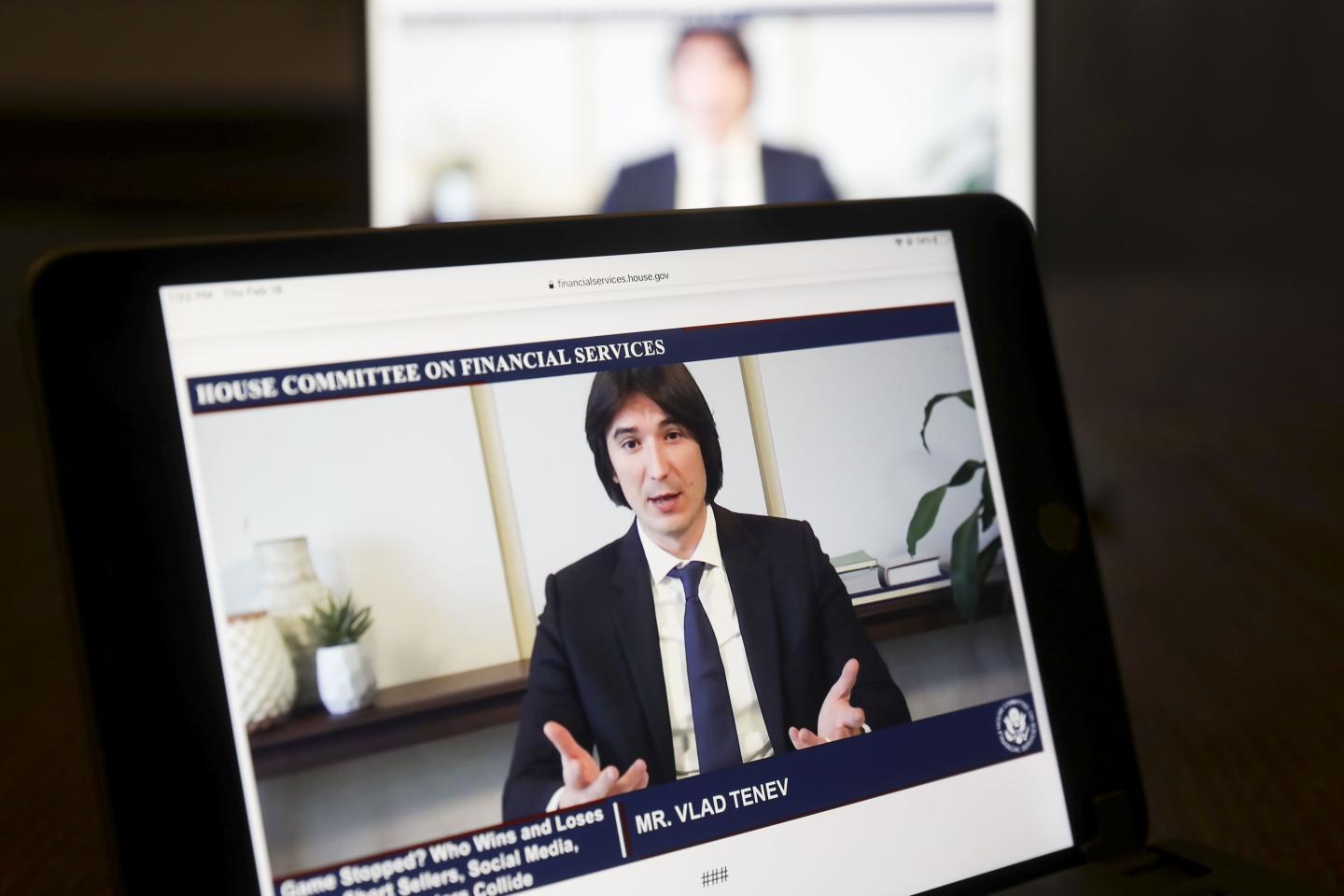
Robinhood CEO and cofounder Vlad Tenev speaks virtually during a House Financial Services Committee hearing on Feb. 18, 2021. For startups, the authors write, seasoned advisers add value by “anticipating crises and age-old challenges, and helping founders address them proactively before they spiral out of control.”
Robinhood CEO and cofounder Vlad Tenev speaks virtually during a House Financial Services Committee hearing on Feb. 18, 2021. For startups, the authors write, seasoned advisers add value by “anticipating crises and age-old challenges, and helping founders address them proactively before they spiral out of control.”Daniel Acker—Bloomberg/Getty Images
Add Fortune on Google for similar content.

Robinhood has reportedly just confidentially filed for an IPO. Typically, this is a celebratory moment in a company’s life cycle, and Robinhood has a good chance of long-term success. However, as Robinhood embarks on its road show and moves toward becoming a public company, the process will be dominated by headlines about the company’s handling of the GameStop controversy.

For some, Robinhood’s problems seemed to come out of nowhere. Many commentators called the outcry about the halt in GameStop trading an aberration driven by a group of Redditors reveling in the power of their own disruption. But the events that severely damaged the high-flying fintech company and its brand were not as sudden as they seemed—or as unavoidable as they appeared.

As managing partners of an early-stage venture capital firm, we are intimately familiar with the challenges that technology startups encounter as they reach exponential growth. The reality is that, while Robinhood’s story may have been dramatic, it is not unique. Instead, it is representative of an increasingly common phenomenon: first-time founders realizing that the breakneck approach initially fueling success can leave them exposed in challenging situations, unprepared to deal with the scope of the crises they encounter after their company reaches exponential growth in customer adoption and market penetration.  

The “move fast and break things” mentality, left unchecked after years, can often break their companies.

As companies mature, so should their board members, advisers, and investors. Involving them in critical decisions as early as possible can make the difference between success and disaster. The truth is that operating a large-scale business is not the same as running a scrappy startup. It requires carefully navigating the interests of many stakeholders—customers, employees, investors, and the public through the lens of the media. It takes an awareness of potential complications and an understanding of how to navigate thorny conflicts with care.

Before a company reaches critical mass, leaders who have been there before can help guide founder decision-making, anticipating crises and age-old challenges, and helping founders address them proactively before they spiral out of control. When companies are formed, founders often tend to be homogenous, but as they scale, they should seek diversity. Diversity of experience is one of the important vectors that equips companies to deal with crisis moments.

In Robinhood’s case, a long-standing perceived conflict between the interests of key stakeholder groups—the platform’s largely younger individual investors on the one hand and large financial firms who represent the bulk of Robinhood’s revenues on the other—made a crisis almost unavoidable. When the Depository Trust and Clearing Corporation (DTCC) announced its requirement for Robinhood to post $3 billion to cover trades, Robinhood chose to halt trading on select securities to reduce its collateral requirements. Because of the perceived conflict between its core users and its revenue sources, users assumed the halt was due to Robinhood protecting large institutional investors, who were losing money in a short squeeze. This led to widespread and highly publicized user backlash for weeks.

All of this might have been avoided. A seasoned adviser with deep industry experience could have helped the founders explain the service more transparently and without missteps, avoiding the company’s $65 million settlement with the SEC for misleading communications. An experienced CEO from a large bank might have brought to bear familiarity with addressing conflicts between retail and institutional customers, and helped the company create greater transparency.

Involving Robinhood’s experienced investors earlier could have enabled the company to identify potential risk exposure in a heightened trading environment, avoiding a cash crunch. Robinhood’s investors demonstrated leadership and moved very quickly in the wake of the crisis, injecting $3.4 billion of cash into the company. But the fact that the company was caught off guard by the DTCC’s collateral requirement, which precipitated the crisis, suggests that effective communication with investors was not occurring. 

While the specific dynamics of the incident may have been unique, the underlying issues were not. What we are describing are not magic formulas or hidden insights, but they are the kinds of approaches that seasoned advisers would have encouraged Robinhood to employ. Strong leadership and decision-making in crisis moments can empower a company and improve its standing with stakeholders, enhancing its brand and reputation. When a company is growing at a breakneck pace, as Robinhood has been, recruiting seasoned advisers may seem like a low priority amid the myriad responsibilities that founders have. However, the moment a crisis hits, the investment in cultivating advisers is more than worth it. 

One approach to help founders navigate these consequential leadership decisions is what we call our “Connected Network.” It’s a group of senior operators and investors who have “been there, done that.” Those leaders, who range from Fortune 1000 executives to technology company founders, and from operators to experienced investors, bring a depth of knowledge and diversity to the table, working closely with founders in an advisory capacity. Especially for first-time founders who are building a business in an industry where they do not have previous work experience—those who are most vulnerable to the kind of crisis Robinhood faced—these advisers can prove invaluable.

As technology companies rapidly advance in expansive and impactful industries from artificial intelligence, to genomics, to biotechnology, to autonomous vehicles, the way founders prepare their companies to avoid crises will become more important than ever. The quality of the advice and counsel that these founders receive from investors, board members, and advisers will have significant ramifications not only for shareholders and users, but also for the general public.

It is vital that founders recognize their responsibility to make experienced advisers part of the conversation from the formative stages of their companies.

Nnamdi Okike and Aaron Holiday are cofounders and managing directors of 645 Ventures.

More opinion from Fortune:

  • “Open banking” tech could make the economy truly inclusive
  • 3 women in Biden’s cabinet are going to boost the post-COVID recovery
  • How companies can reinvigorate collaboration post-COVID
  • The U.S. can’t keep waiting for China’s Belt and Road Initiative to fail
  • If Congress wants to spark economic recovery, it must invest in care
About the Authors
By Nnamdi Okike
See full bioRight Arrow Button Icon
By Aaron Holiday
See full bioRight Arrow Button Icon
Add Fortune on Google for similar content.

Latest in Commentary

Finance
Lorem ipsum dolor sit amet, consectetur adipiscing elit, sed do eiusmod tempor incididunt ut labore et dolore magna aliqua. Ut enim ad minim veniam
By Fortune Editors
October 20, 2025
Finance
Lorem ipsum dolor sit amet, consectetur adipiscing elit, sed do eiusmod tempor incididunt ut labore et dolore magna aliqua. Ut enim ad minim veniam
By Fortune Editors
October 20, 2025
Finance
Lorem ipsum dolor sit amet, consectetur adipiscing elit, sed do eiusmod tempor incididunt ut labore et dolore magna aliqua. Ut enim ad minim veniam
By Fortune Editors
October 20, 2025
Finance
Lorem ipsum dolor sit amet, consectetur adipiscing elit, sed do eiusmod tempor incididunt ut labore et dolore magna aliqua. Ut enim ad minim veniam
By Fortune Editors
October 20, 2025
Finance
Lorem ipsum dolor sit amet, consectetur adipiscing elit, sed do eiusmod tempor incididunt ut labore et dolore magna aliqua. Ut enim ad minim veniam
By Fortune Editors
October 20, 2025
Finance
Lorem ipsum dolor sit amet, consectetur adipiscing elit, sed do eiusmod tempor incididunt ut labore et dolore magna aliqua. Ut enim ad minim veniam
By Fortune Editors
October 20, 2025

Most Popular

Finance
Lorem ipsum dolor sit amet, consectetur adipiscing elit, sed do eiusmod tempor incididunt ut labore et dolore magna aliqua. Ut enim ad minim veniam
By Fortune Editors
October 20, 2025
Finance
Lorem ipsum dolor sit amet, consectetur adipiscing elit, sed do eiusmod tempor incididunt ut labore et dolore magna aliqua. Ut enim ad minim veniam
By Fortune Editors
October 20, 2025
Finance
Lorem ipsum dolor sit amet, consectetur adipiscing elit, sed do eiusmod tempor incididunt ut labore et dolore magna aliqua. Ut enim ad minim veniam
By Fortune Editors
October 20, 2025
Finance
Lorem ipsum dolor sit amet, consectetur adipiscing elit, sed do eiusmod tempor incididunt ut labore et dolore magna aliqua. Ut enim ad minim veniam
By Fortune Editors
October 20, 2025
Finance
Lorem ipsum dolor sit amet, consectetur adipiscing elit, sed do eiusmod tempor incididunt ut labore et dolore magna aliqua. Ut enim ad minim veniam
By Fortune Editors
October 20, 2025
Finance
Lorem ipsum dolor sit amet, consectetur adipiscing elit, sed do eiusmod tempor incididunt ut labore et dolore magna aliqua. Ut enim ad minim veniam
By Fortune Editors
October 20, 2025
Fortune Secondary Logo
Rankings
  • 100 Best Companies
  • Fortune 500
  • Global 500
  • Fortune 500 Europe
  • Most Powerful Women
  • World's Most Admired Companies
  • See All Rankings
  • Lists Calendar
Sections
  • Finance
  • Fortune Crypto
  • Features
  • Leadership
  • Health
  • Commentary
  • Success
  • Retail
  • Mpw
  • Tech
  • Lifestyle
  • CEO Initiative
  • Asia
  • Politics
  • Conferences
  • Europe
  • Newsletters
  • Personal Finance
  • Environment
  • Magazine
  • Education
Customer Support
  • Frequently Asked Questions
  • Customer Service Portal
  • Privacy Policy
  • Terms Of Use
  • Single Issues For Purchase
  • International Print
Commercial Services
  • Advertising
  • Fortune Brand Studio
  • Fortune Analytics
  • Fortune Conferences
  • Business Development
  • Group Subscriptions
About Us
  • About Us
  • Press Center
  • Work At Fortune
  • Terms And Conditions
  • Site Map
  • About Us
  • Press Center
  • Work At Fortune
  • Terms And Conditions
  • Site Map
  • Facebook icon
  • Twitter icon
  • LinkedIn icon
  • Instagram icon
  • Pinterest icon

Latest in Commentary

steve
Commentary250 Years of Innovation
Steve Case: America was built by entrepreneurs. Here’s how we keep that edge for the next 250 years
By Steve CaseJune 24, 2026
5 hours ago
t
CommentaryWhite House
Trump mistakes the bully pulpit for bullying leadership — history’s villains were never heroes
By Jeffrey Sonnenfeld and Steven TianJune 24, 2026
6 hours ago
mg
CommentaryHealth
The ‘tech neck’ time bomb: why 43 million young Americans could cripple U.S. health care within a generation
By Michael GerlingJune 24, 2026
6 hours ago
sb
Commentaryclimate change
The climate policy triangle: why leaders can no longer choose between growth, security and sustainability
By Sebastian BuckupJune 23, 2026
20 hours ago
brett
CommentaryManagement
Middle managers aren’t going extinct—they’re evolving into something more powerful
By Brett HurtJune 23, 2026
1 day ago
ravi
CommentaryAI agents
Yale School of Management: surveillance pricing is just the beginning. AI agents will be the real test of corporate trust
By Ravi Dhar and Jon IwataJune 23, 2026
1 day ago

Most Popular

After forcing workers back to the office, Goldman Sachs and JPMorgan Chase are now letting their staff work remotely—but only for the World Cup
Success
After forcing workers back to the office, Goldman Sachs and JPMorgan Chase are now letting their staff work remotely—but only for the World Cup
By Orianna Rosa RoyleJune 23, 2026
1 day ago
The Pentagon said Iran War costs $29 billion, but the real cost is closer to $200 billion—and counting
Economy
The Pentagon said Iran War costs $29 billion, but the real cost is closer to $200 billion—and counting
By Jacqueline MunisJune 24, 2026
11 hours ago
Current price of oil as of June 23, 2026
Personal Finance
Current price of oil as of June 23, 2026
By Joseph HostetlerJune 23, 2026
1 day ago
Markets tumble worldwide as Fed resets expectations: $400 billion wiped off SpaceX stock
Banking
Markets tumble worldwide as Fed resets expectations: $400 billion wiped off SpaceX stock
By Jim EdwardsJune 23, 2026
1 day ago
Current price of gold as of June 23, 2026
Personal Finance
Current price of gold as of June 23, 2026
By Danny BakstJune 23, 2026
1 day ago
Texas and Charlotte used to build huge McMansions—now they're copying the California design tricks they once mocked
Real Estate
Texas and Charlotte used to build huge McMansions—now they're copying the California design tricks they once mocked
By Sydney LakeJune 22, 2026
2 days ago

© 2026 Fortune Media IP Limited. All Rights Reserved. Use of this site constitutes acceptance of our Terms of Use and Privacy Policy | CA Notice at Collection and Privacy Notice | Do Not Sell/Share My Personal Information
FORTUNE is a trademark of Fortune Media IP Limited, registered in the U.S. and other countries. FORTUNE may receive compensation for some links to products and services on this website. Offers may be subject to change without notice.