• Home
  • Latest
  • Fortune 500
  • Finance
  • Tech
  • Leadership
  • Lifestyle
  • Rankings
  • Multimedia

Trendingnow

1

Now worth $200 million, Sarah Jessica Parker credits being ‘one of eight kids that struggled financially’ for her hunger, ambition, and work ethic

2

The Pentagon said Iran War costs $29 billion, but the real cost is closer to $200 billion—and counting

3

Amazon's record Prime Day masks a darker truth: Americans are spending more and getting less

1

Now worth $200 million, Sarah Jessica Parker credits being ‘one of eight kids that struggled financially’ for her hunger, ambition, and work ethic

2

The Pentagon said Iran War costs $29 billion, but the real cost is closer to $200 billion—and counting

3

Amazon's record Prime Day masks a darker truth: Americans are spending more and getting less
CommentaryMyanmar

ASEAN states must act to help Myanmar. This is where they should start

By
Brian Wong
Brian Wong
Down Arrow Button Icon
By
Brian Wong
Brian Wong
Down Arrow Button Icon
March 24, 2021, 8:30 PM ET
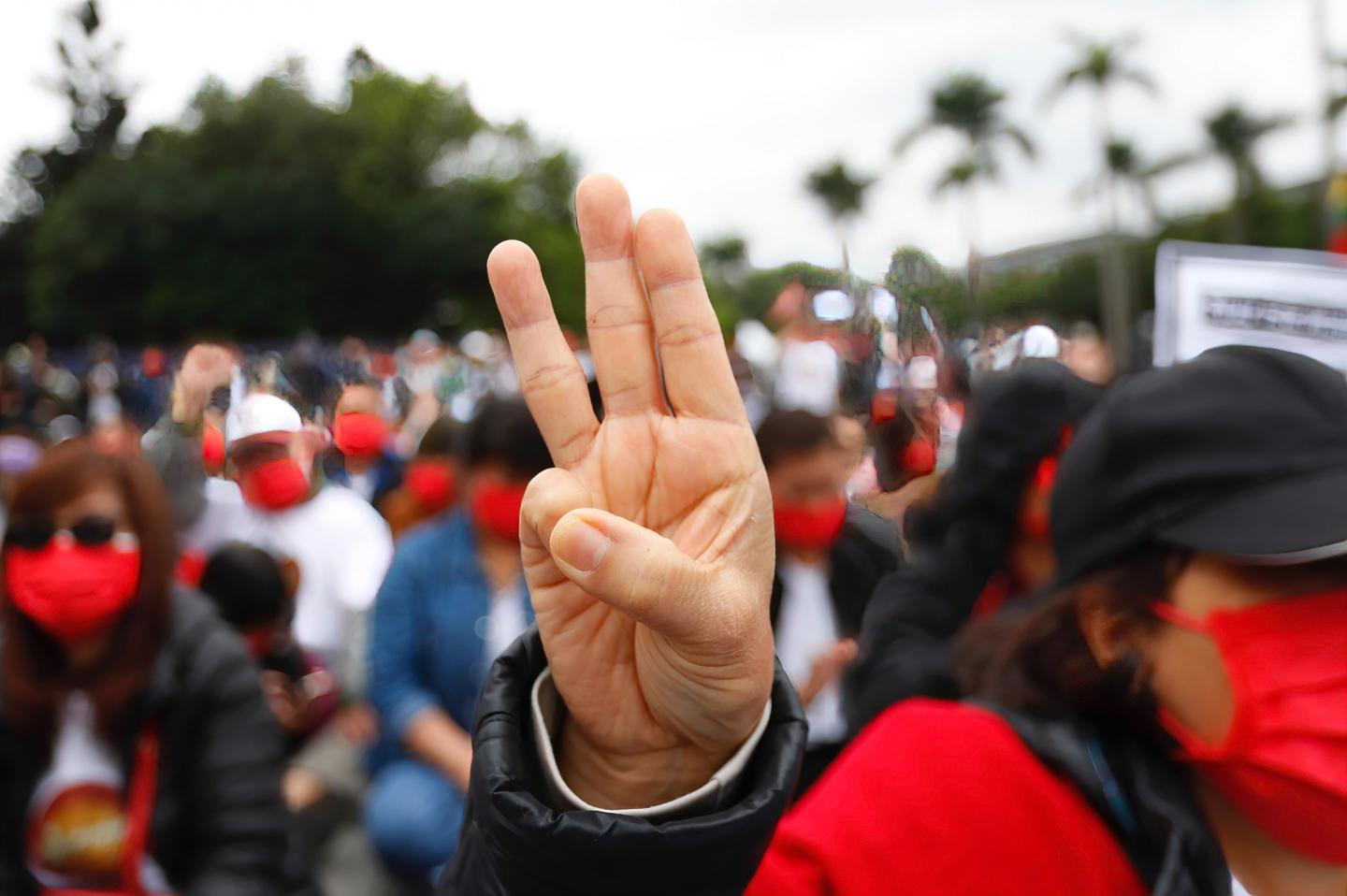
A Burmese demonstrator at a protest against Myanmar’s military in Taipei, Taiwan. “The ASEAN community must push for the restoration of civilian government and the conducting of observer-monitored, unfettered elections,” writes Brian Wong.
A Burmese demonstrator at a protest against Myanmar’s military in Taipei, Taiwan. “The ASEAN community must push for the restoration of civilian government and the conducting of observer-monitored, unfettered elections,” writes Brian Wong.Daniel Tsang—SOPA Images/LightRocket/Getty Images
Add Fortune on Google for similar content.

On Feb.1, the military of Myanmar (known as the Tatmadaw) launched a coup d’état against the civilian government led by the National League for Democracy (NLD). Large-scale protests, civilian-army altercations, and a state-driven crackdown have since led to some of the worst violence the region has borne witness to over the past decade. 

Members of the Association of Southeast Asian Nations (ASEAN)—Malaysia and Indonesia among the most vocal of them—have come out in opposition to the coup. This is a helpful step in what could hopefully be a reset for both Myanmar’s internal politics and foreign relations; it could also set a template for the international community’s concerted application of critical pressure on the Tatmadaw. Yet hope is one thing; realistic politics are another. ASEAN states themselves confront a difficult balancing act—one in which they must prudently engage with the Tatmadaw, the better to maintain leverage to prevent an authoritarian backslide. 

On one hand, ASEAN states need to engage and maintain continued conversations with the military. Extracting immediate concessions, such as the release of all or most political prisoners or the halting of egregious violence, is impossible without at least some functional communication channels. Should ASEAN countries sever all political and economic ties with Myanmar—as some critics have insisted—such drastic moves would only serve to further propel the country into the hands of Russia and other regionally interested actors. 

More practically, mediation requires a modicum of trust and goodwill, which are—even under peacetime—somewhat strained between Myanmar and the rest of ASEAN. At times like these, it is imperative that Burmese generals believe that they have something to lose in their relations with ASEAN. This would not be the case if ASEAN opted to de-link from the country and wipe out its leverage over Myanmar in the first place.

Secondly, crises in Myanmar have grave implications for its neighbors. The Rohingya crisis, for one, led to the exodus of hundreds of thousands of citizens from Myanmar’s Rakhine state into neighboring Bangladesh. Coordination between those two nations over the repatriation and settlement of refugees is nigh-impossible without the maintenance of at least some degree of communication. Similarly, the insurgency in Kachin state has substantial ramifications for China, as well as broader regional stability in the Indochina region. While the Tatmadaw are by no means a legitimate government, it behooves ASEAN states to formally or informally engage them, in pressuring them to arrive at a functional modus operandi.

In all of these issues, ASEAN corporations and conglomerates have a critical role to play, as well. Singapore and Thailand remain substantial trading and investment partners in Myanmar, with sizable presences of both personnel and capital in the country. Disengagement would not only undermine the interests of local business operations, but also substantially heighten uncertainty for the firms’ prospective performance at large. Corporations must draw upon and highlight the potential profits they can bring to Myanmar in general, and the army in particular—under more stable, democratic political conditions—as a critical bargaining chip. An unstable and untenable Burmese government is in no one’s economic interest.

Yet ASEAN economies must also confront the consequences of seeming too accommodating or concessionary. The Indonesian foreign ministry had previously declared its stance in favor of the junta’s holding ostensibly “free” elections—only to subsequently backtrack upon the substantial backlash it received. The criticism here from local activists and human rights organizations in Myanmar was that by engaging with Myanmar as if its current government were legitimate, ASEAN states would inadvertently affirm its legitimacy, and lend credibility to the unjustly established coup regime. 

One could quibble over such characterizations—after all, it is unlikely that the military in Myanmar banks on foreign approval or endorsement of its stances. There may also be grounds to think that were ASEAN states not to press for open elections in the country, no such elections would ever emerge. Yet irrespective of the merits and demerits, ASEAN states must pay heed to the voices on the ground in Myanmar—especially those in the anti-coup movement.

Aimless talks, empty calls for dialogue, and vacuous condemnation would do very little for Myanmar’s people. ASEAN states have come under substantial heat for engaging in precisely such platitudes. They must also be wary of engaging in tokenistic, asymmetric conversations that serve as stalling tactics for the junta. All in all, ASEAN countries have a fine line to tread, and it is all the more important that they do so with flexibility and caution.

So what can those nations do?

For starters, ASEAN states must engage with both the Tatmadaw and the unofficial cabinet of the Committee Representing Pyidaungsu Hluttaw (CRPH)—a makeshift coalition of elected members of the Parliament led by the NLD. With the former, ASEAN states must stand firm on critical issues that should transcend political divides—including the immediate cessation of violence and the release of political prisoners, Aung San Suu Kyi among them. 

To the CRPH, ASEAN states must provide more than merely lip service—material aid, monetary support, media platforms, and political backing would be crucial. Obviously, recognizing the latter would inevitably ruffle the feathers of the Tatmadaw. Yet if ASEAN states and their leaders had the guts to stand up in unison in ensuring that the Tatmadaw’s transgressions cannot be free of consequences, then such ruffling is more than worth it. 

Furthermore, powerful actors in the ASEAN community must push for the restoration of civilian government and the conducting of observer-monitored, unfettered elections within a determined period of time. Corporations and conglomerates do wield substantial power to influence individuals in the Tatmadaw—through threatening sanctions and obstructionism to economic activities, and promising investment and economic aid on the flip side. It is high time they exercised such power, to discharge the corporate social responsibilities that they have gone to painstaking lengths in articulating. 

Fundamentally, ASEAN states can and should make a difference in Myanmar. The people of Myanmar need our help. The future of Myanmar is hanging by a thread, and it behooves all parties with the capacity to act, to act. Disengagement and withdrawal may be politically expedient—but they are the opposite of constructive action. 

Brian Wong is the founding editor-in-chief of the Oxford Political Review, and a Rhodes Scholar from Hong Kong. 

About the Author
By Brian Wong
See full bioRight Arrow Button Icon
Add Fortune on Google for similar content.

Latest in Commentary

Finance
Lorem ipsum dolor sit amet, consectetur adipiscing elit, sed do eiusmod tempor incididunt ut labore et dolore magna aliqua. Ut enim ad minim veniam
By Fortune Editors
October 20, 2025
Finance
Lorem ipsum dolor sit amet, consectetur adipiscing elit, sed do eiusmod tempor incididunt ut labore et dolore magna aliqua. Ut enim ad minim veniam
By Fortune Editors
October 20, 2025
Finance
Lorem ipsum dolor sit amet, consectetur adipiscing elit, sed do eiusmod tempor incididunt ut labore et dolore magna aliqua. Ut enim ad minim veniam
By Fortune Editors
October 20, 2025
Finance
Lorem ipsum dolor sit amet, consectetur adipiscing elit, sed do eiusmod tempor incididunt ut labore et dolore magna aliqua. Ut enim ad minim veniam
By Fortune Editors
October 20, 2025
Finance
Lorem ipsum dolor sit amet, consectetur adipiscing elit, sed do eiusmod tempor incididunt ut labore et dolore magna aliqua. Ut enim ad minim veniam
By Fortune Editors
October 20, 2025
Finance
Lorem ipsum dolor sit amet, consectetur adipiscing elit, sed do eiusmod tempor incididunt ut labore et dolore magna aliqua. Ut enim ad minim veniam
By Fortune Editors
October 20, 2025

Most Popular

Finance
Lorem ipsum dolor sit amet, consectetur adipiscing elit, sed do eiusmod tempor incididunt ut labore et dolore magna aliqua. Ut enim ad minim veniam
By Fortune Editors
October 20, 2025
Finance
Lorem ipsum dolor sit amet, consectetur adipiscing elit, sed do eiusmod tempor incididunt ut labore et dolore magna aliqua. Ut enim ad minim veniam
By Fortune Editors
October 20, 2025
Finance
Lorem ipsum dolor sit amet, consectetur adipiscing elit, sed do eiusmod tempor incididunt ut labore et dolore magna aliqua. Ut enim ad minim veniam
By Fortune Editors
October 20, 2025
Finance
Lorem ipsum dolor sit amet, consectetur adipiscing elit, sed do eiusmod tempor incididunt ut labore et dolore magna aliqua. Ut enim ad minim veniam
By Fortune Editors
October 20, 2025
Finance
Lorem ipsum dolor sit amet, consectetur adipiscing elit, sed do eiusmod tempor incididunt ut labore et dolore magna aliqua. Ut enim ad minim veniam
By Fortune Editors
October 20, 2025
Finance
Lorem ipsum dolor sit amet, consectetur adipiscing elit, sed do eiusmod tempor incididunt ut labore et dolore magna aliqua. Ut enim ad minim veniam
By Fortune Editors
October 20, 2025
Fortune Secondary Logo
Rankings
  • 100 Best Companies
  • Fortune 500
  • Global 500
  • Fortune 500 Europe
  • Most Powerful Women
  • World's Most Admired Companies
  • See All Rankings
  • Lists Calendar
Sections
  • Finance
  • Fortune Crypto
  • Features
  • Leadership
  • Health
  • Commentary
  • Success
  • Retail
  • Mpw
  • Tech
  • Lifestyle
  • CEO Initiative
  • Asia
  • Politics
  • Conferences
  • Europe
  • Newsletters
  • Personal Finance
  • Environment
  • Magazine
  • Education
Customer Support
  • Frequently Asked Questions
  • Customer Service Portal
  • Privacy Policy
  • Terms Of Use
  • Single Issues For Purchase
  • International Print
Commercial Services
  • Advertising
  • Fortune Brand Studio
  • Fortune Analytics
  • Fortune Conferences
  • Business Development
  • Group Subscriptions
About Us
  • About Us
  • Press Center
  • Work At Fortune
  • Terms And Conditions
  • Site Map
  • About Us
  • Press Center
  • Work At Fortune
  • Terms And Conditions
  • Site Map
  • Facebook icon
  • Twitter icon
  • LinkedIn icon
  • Instagram icon
  • Pinterest icon

Latest in Commentary

nido
Commentary250 Years of Innovation
As an immigrant turned entrepreneur and college president, here is why I celebrate our nation as it turns 250
By Nido R. QubeinJune 25, 2026
49 minutes ago
Asia’s defense boom is rewiring the global arms supply chain
Commentaryarms, weapons, and defense
Asia’s defense boom is rewiring the global arms supply chain
By Chris OberoiJune 24, 2026
15 hours ago
steve
Commentary250 Years of Innovation
Steve Case: America was built by entrepreneurs. Here’s how we keep that edge for the next 250 years
By Steve CaseJune 24, 2026
24 hours ago
t
CommentaryWhite House
Trump mistakes the bully pulpit for bullying leadership — history’s villains were never heroes
By Jeffrey Sonnenfeld and Steven TianJune 24, 2026
1 day ago
mg
CommentaryHealth
The ‘tech neck’ time bomb: why 43 million young Americans could cripple U.S. health care within a generation
By Michael GerlingJune 24, 2026
1 day ago
sb
Commentaryclimate change
The climate policy triangle: why leaders can no longer choose between growth, security and sustainability
By Sebastian BuckupJune 23, 2026
2 days ago

Most Popular

Now worth $200 million, Sarah Jessica Parker credits being ‘one of eight kids that struggled financially’ for her hunger, ambition, and work ethic
Success
Now worth $200 million, Sarah Jessica Parker credits being ‘one of eight kids that struggled financially’ for her hunger, ambition, and work ethic
By Orianna Rosa RoyleJune 24, 2026
1 day ago
The Pentagon said Iran War costs $29 billion, but the real cost is closer to $200 billion—and counting
Economy
The Pentagon said Iran War costs $29 billion, but the real cost is closer to $200 billion—and counting
By Jacqueline MunisJune 24, 2026
1 day ago
Amazon's record Prime Day masks a darker truth: Americans are spending more and getting less
Retail
Amazon's record Prime Day masks a darker truth: Americans are spending more and getting less
By Nick LichtenbergJune 24, 2026
21 hours ago
Ray Dalio just finished a 10-day trip to China. He says global leaders know America ‘doesn’t have what it takes to fight to maintain its empire’
Asia
Ray Dalio just finished a 10-day trip to China. He says global leaders know America ‘doesn’t have what it takes to fight to maintain its empire’
By Nick LichtenbergJune 24, 2026
23 hours ago
After forcing workers back to the office, Goldman Sachs and JPMorgan Chase are now letting their staff work remotely—but only for the World Cup
Success
After forcing workers back to the office, Goldman Sachs and JPMorgan Chase are now letting their staff work remotely—but only for the World Cup
By Orianna Rosa RoyleJune 23, 2026
2 days ago
Trump’s international student crackdown kicked off a domino effect that could shave nearly $500 billion off the economy
Economy
Trump’s international student crackdown kicked off a domino effect that could shave nearly $500 billion off the economy
By Tristan BoveJune 24, 2026
18 hours ago

© 2026 Fortune Media IP Limited. All Rights Reserved. Use of this site constitutes acceptance of our Terms of Use and Privacy Policy | CA Notice at Collection and Privacy Notice | Do Not Sell/Share My Personal Information
FORTUNE is a trademark of Fortune Media IP Limited, registered in the U.S. and other countries. FORTUNE may receive compensation for some links to products and services on this website. Offers may be subject to change without notice.