• Home
  • Latest
  • Fortune 500
  • Finance
  • Tech
  • Leadership
  • Lifestyle
  • Rankings
  • Multimedia
Commentarycrisis management

Ginni Rometty: 3 steps we must take now to prepare for the next national crisis

By
Ginni Rometty
Ginni Rometty
Down Arrow Button Icon
By
Ginni Rometty
Ginni Rometty
Down Arrow Button Icon
February 10, 2021, 7:00 PM ET
Three steps commentary
Christina Pagan, 7, does her schoolwork at the Olivet Boys & Girls Club in Reading, Pa.Ben Hasty—MediaNews Group/Reading Eagle via Getty Images

As we continue to confront the devastating toll of COVID-19, it’s hard to contemplate the next national crisis. But if we want any chance at beating it, we have to do more than contemplate it. 

When COVID struck last March, states were clamoring for help in securing urgently needed equipment to stem the rapidly spreading virus. That was difficult enough, but imagine how much worse things could have been had the virus been even more lethal or transmissible.

This week, a new report examining America’s collective response capabilities from Business Executives for National Security, for which I served as a commissioner, concluded that while some components of an integrated national response are in place, significant execution challenges remain. This is particularly troubling when a crisis affects multiple states and countries simultaneously, with limited time to acquire supplies and other resources. 

The federal government must take the lead in defining and establishing clear lines of communication and coordination during crises, creating a network of state-of-the-art command centers for national emergency response and surge and supply efforts, and better leveraging technology, data, and analytics to power our response.

So where do we start? In order to put us on better footing for responding to the next emergency, we need to focus first on equalizing access to opportunity, revitalizing digital infrastructure, and restoring trust in technology. America’s collective experience since the pandemic began underscores that crisis-ready capabilities in each of these areas are vital to our country’s national and economic security.

We must expand opportunity and devise a system that avoids further disenfranchisement of citizens when crises erupt. While COVID did not create the digital divide, it revealed its enormity and cost. We saw during the emergence of the pandemic that millions of people were left out of solutions because they lacked broadband access, inhibiting small businesses, entrepreneurs, and families.

An alarming 16.9 million children, many of whom are students of color and come from low-income or rural communities, lack high-speed home Internet access, and 7.3 million children do not own a computer. Right now, when kids aren’t connected, they aren’t learning. We are failing to prepare a new generation of talented individuals from all backgrounds whose dedication and expertise could prove critical to future crisis response.

The pandemic has reinforced the importance of STEM education in preparing the next generation of medical innovators, mathematicians to design predictive models, and engineers to design and deploy critical infrastructure. But STEM learning has not been accessible to all—there is a stunning lack of diversity in the field of professional STEM. 

While Black and Hispanic workers make up 11% and 16% of the total U.S. workforce, they are underrepresented in STEM. According to the Pew Research Center, “among employed adults with a bachelor’s degree or higher, blacks are just 7% and Hispanics are 6% of the STEM workforce.” Closing the STEM education gap is crucial to fostering the diverse expertise and ideas needed to respond effectively to multifaceted national emergencies.

In order to protect our national security, we also need to get smart about data. In any crisis, there is data that needs to be shared and data that should not be shared across both the public and private sectors. We need a secure, robust digital infrastructure that maximizes the value and power of data as an emergency response tool, while ensuring that organizations aren’t worried that collaboration around data will threaten their survival or create unacceptable risk. 

Further, as local governments carry great responsibility for ground-level emergency response, there must be a system to share information and coordinate processes across distributed centers. This should involve a decentralized, cloud-based approach that manages data across multiple sources securely.

Finally, our ability to confront the next crisis depends on addressing faltering trust in technology. Citizens have found sufficient reasons during the pandemic to question whether supply chains will work for them when needed. That, coupled with concerns over privacy in health tracking systems and the rapid spread of questionable and misleading information, makes technology look like part of the problem, not the solution. 

This view cannot persist. We need to build trust in the models and simulations we use for national emergencies. The experts who specifically model disease progression and extreme weather events—and accurately inform the public on how to respond in such scenarios—are essential for future preparedness. Society deserves to understand how these models reach their conclusions. That understanding will in turn strengthen trust.

COVID-19 has shown that emergency shocks can significantly stress our national response. We have learned painful lessons during this crisis, and we have an obligation to act on them. Preparing for the next national crisis must begin now.

Ginni Rometty is the former chairman, president, and CEO of IBM and served as a Business Executives for National Security commissioner during the development of this report.

More opinion from Fortune:

  • China is leaning into antitrust regulation to stay competitive with the U.S.
  • To beat Zoom fatigue, your workplace needs fewer meetings and more data
  • How to diversify America’s doctor workforce
  • Pitting Black people against the LGBTQ community is a wrongheaded path to false diversity
  • A “startup visa” will help Biden jump-start the economy

About the Author
By Ginni Rometty
See full bioRight Arrow Button Icon

Latest in Commentary

Finance
Lorem ipsum dolor sit amet, consectetur adipiscing elit, sed do eiusmod tempor incididunt ut labore et dolore magna aliqua. Ut enim ad minim veniam
By Fortune Editors
October 20, 2025
Finance
Lorem ipsum dolor sit amet, consectetur adipiscing elit, sed do eiusmod tempor incididunt ut labore et dolore magna aliqua. Ut enim ad minim veniam
By Fortune Editors
October 20, 2025
Finance
Lorem ipsum dolor sit amet, consectetur adipiscing elit, sed do eiusmod tempor incididunt ut labore et dolore magna aliqua. Ut enim ad minim veniam
By Fortune Editors
October 20, 2025
Finance
Lorem ipsum dolor sit amet, consectetur adipiscing elit, sed do eiusmod tempor incididunt ut labore et dolore magna aliqua. Ut enim ad minim veniam
By Fortune Editors
October 20, 2025
Finance
Lorem ipsum dolor sit amet, consectetur adipiscing elit, sed do eiusmod tempor incididunt ut labore et dolore magna aliqua. Ut enim ad minim veniam
By Fortune Editors
October 20, 2025
Finance
Lorem ipsum dolor sit amet, consectetur adipiscing elit, sed do eiusmod tempor incididunt ut labore et dolore magna aliqua. Ut enim ad minim veniam
By Fortune Editors
October 20, 2025

Most Popular

Finance
Lorem ipsum dolor sit amet, consectetur adipiscing elit, sed do eiusmod tempor incididunt ut labore et dolore magna aliqua. Ut enim ad minim veniam
By Fortune Editors
October 20, 2025
Finance
Lorem ipsum dolor sit amet, consectetur adipiscing elit, sed do eiusmod tempor incididunt ut labore et dolore magna aliqua. Ut enim ad minim veniam
By Fortune Editors
October 20, 2025
Finance
Lorem ipsum dolor sit amet, consectetur adipiscing elit, sed do eiusmod tempor incididunt ut labore et dolore magna aliqua. Ut enim ad minim veniam
By Fortune Editors
October 20, 2025
Finance
Lorem ipsum dolor sit amet, consectetur adipiscing elit, sed do eiusmod tempor incididunt ut labore et dolore magna aliqua. Ut enim ad minim veniam
By Fortune Editors
October 20, 2025
Finance
Lorem ipsum dolor sit amet, consectetur adipiscing elit, sed do eiusmod tempor incididunt ut labore et dolore magna aliqua. Ut enim ad minim veniam
By Fortune Editors
October 20, 2025
Finance
Lorem ipsum dolor sit amet, consectetur adipiscing elit, sed do eiusmod tempor incididunt ut labore et dolore magna aliqua. Ut enim ad minim veniam
By Fortune Editors
October 20, 2025
Fortune Secondary Logo
Rankings
  • 100 Best Companies
  • Fortune 500
  • Global 500
  • Fortune 500 Europe
  • Most Powerful Women
  • Future 50
  • World’s Most Admired Companies
  • See All Rankings
Sections
  • Finance
  • Fortune Crypto
  • Features
  • Leadership
  • Health
  • Commentary
  • Success
  • Retail
  • Mpw
  • Tech
  • Lifestyle
  • CEO Initiative
  • Asia
  • Politics
  • Conferences
  • Europe
  • Newsletters
  • Personal Finance
  • Environment
  • Magazine
  • Education
Customer Support
  • Frequently Asked Questions
  • Customer Service Portal
  • Privacy Policy
  • Terms Of Use
  • Single Issues For Purchase
  • International Print
Commercial Services
  • Advertising
  • Fortune Brand Studio
  • Fortune Analytics
  • Fortune Conferences
  • Business Development
  • Group Subscriptions
About Us
  • About Us
  • Editorial Calendar
  • Press Center
  • Work At Fortune
  • Diversity And Inclusion
  • Terms And Conditions
  • Site Map
  • About Us
  • Editorial Calendar
  • Press Center
  • Work At Fortune
  • Diversity And Inclusion
  • Terms And Conditions
  • Site Map
  • Facebook icon
  • Twitter icon
  • LinkedIn icon
  • Instagram icon
  • Pinterest icon

Latest in Commentary

kennnedy
CommentaryDrugs
America is handing its mRNA lead to China—and RFK Jr. is to blame
By Jeff CollerMarch 26, 2026
6 hours ago
jerry
CommentaryEducation
The college degree isn’t dead. But the wrong kind could cost you $2 million
By Jerry BalentineMarch 26, 2026
6 hours ago
trump
CommentaryMarkets
We’re no longer in a bull or bear market. We’re in a Trump market — and here’s how to navigate it
By Jeffrey Sonnenfeld and Steven TianMarch 26, 2026
7 hours ago
EuropeLetter from London
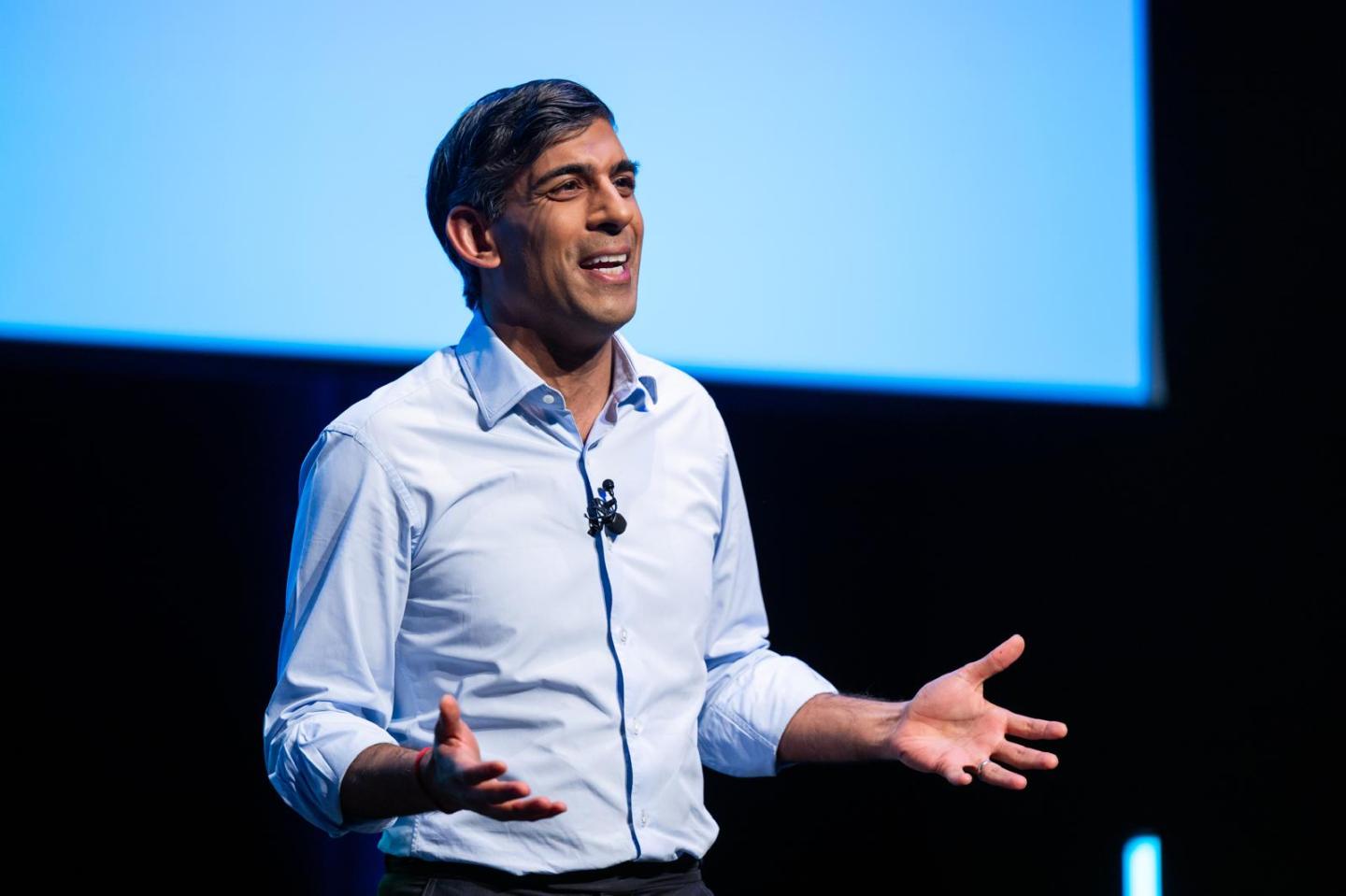
Rishi Sunak is giving advice to CEOs on AI. Here are his golden rules
By Kamal AhmedMarch 25, 2026
1 day ago
retirement
CommentaryRetirement
Our retirement system gets a C-plus; policymakers have an opportunity to make it A grade
By Chris MahoneyMarch 25, 2026
1 day ago
david-f
CommentaryVenture Capital
Europe has survived 3 energy shocks in 4 years. The only way out is to stop buying power from its enemies
By David FrykmanMarch 25, 2026
1 day ago

Most Popular

Success
Palantir’s billionaire CEO says only two kinds of people will succeed in the AI era: trade workers — ‘or you’re neurodivergent’
By Fortune EditorsMarch 24, 2026
2 days ago
C-Suite
'I didn’t want anybody shooting me': Five Guys CEO gave away $1.5 million bonus to employees over botched BOGO burger birthday celebration
By Fortune EditorsMarch 25, 2026
22 hours ago
Magazine
The youngest-ever female CEO of a Fortune 500 company is fighting Trump's cuts to keep Medicaid strong
By Fortune EditorsMarch 24, 2026
2 days ago
Commentary
The Treasury just declared the U.S. insolvent. The media missed it
By Fortune EditorsMarch 23, 2026
3 days ago
Success
JPMorgan’s Jamie Dimon says remote work breeds ‘rope-a-dope politics’ and stunts young workers’ growth
By Fortune EditorsMarch 25, 2026
1 day ago
Environment
Vail Resorts' CEO says it's time to think beyond the $1,000 ski pass that helped build the empire
By Fortune EditorsMarch 26, 2026
10 hours ago

© 2026 Fortune Media IP Limited. All Rights Reserved. Use of this site constitutes acceptance of our Terms of Use and Privacy Policy | CA Notice at Collection and Privacy Notice | Do Not Sell/Share My Personal Information
FORTUNE is a trademark of Fortune Media IP Limited, registered in the U.S. and other countries. FORTUNE may receive compensation for some links to products and services on this website. Offers may be subject to change without notice.