• Home
  • Latest
  • Fortune 500
  • Finance
  • Tech
  • Leadership
  • Lifestyle
  • Rankings
  • Multimedia

Trendingnow

1

Now worth $200 million, Sarah Jessica Parker credits being ‘one of eight kids that struggled financially’ for her hunger, ambition, and work ethic

2

The Pentagon said Iran War costs $29 billion, but the real cost is closer to $200 billion—and counting

3

Amazon's record Prime Day masks a darker truth: Americans are spending more and getting less

1

Now worth $200 million, Sarah Jessica Parker credits being ‘one of eight kids that struggled financially’ for her hunger, ambition, and work ethic

2

The Pentagon said Iran War costs $29 billion, but the real cost is closer to $200 billion—and counting

3

Amazon's record Prime Day masks a darker truth: Americans are spending more and getting less
CommentaryPolitics

Halting corporate political contributions isn’t enough to protect democracy

By
Timothy Werner
Timothy Werner
Down Arrow Button Icon
By
Timothy Werner
Timothy Werner
Down Arrow Button Icon
January 23, 2021, 11:00 AM ET
Commentary-Congress Joint Session-PAC
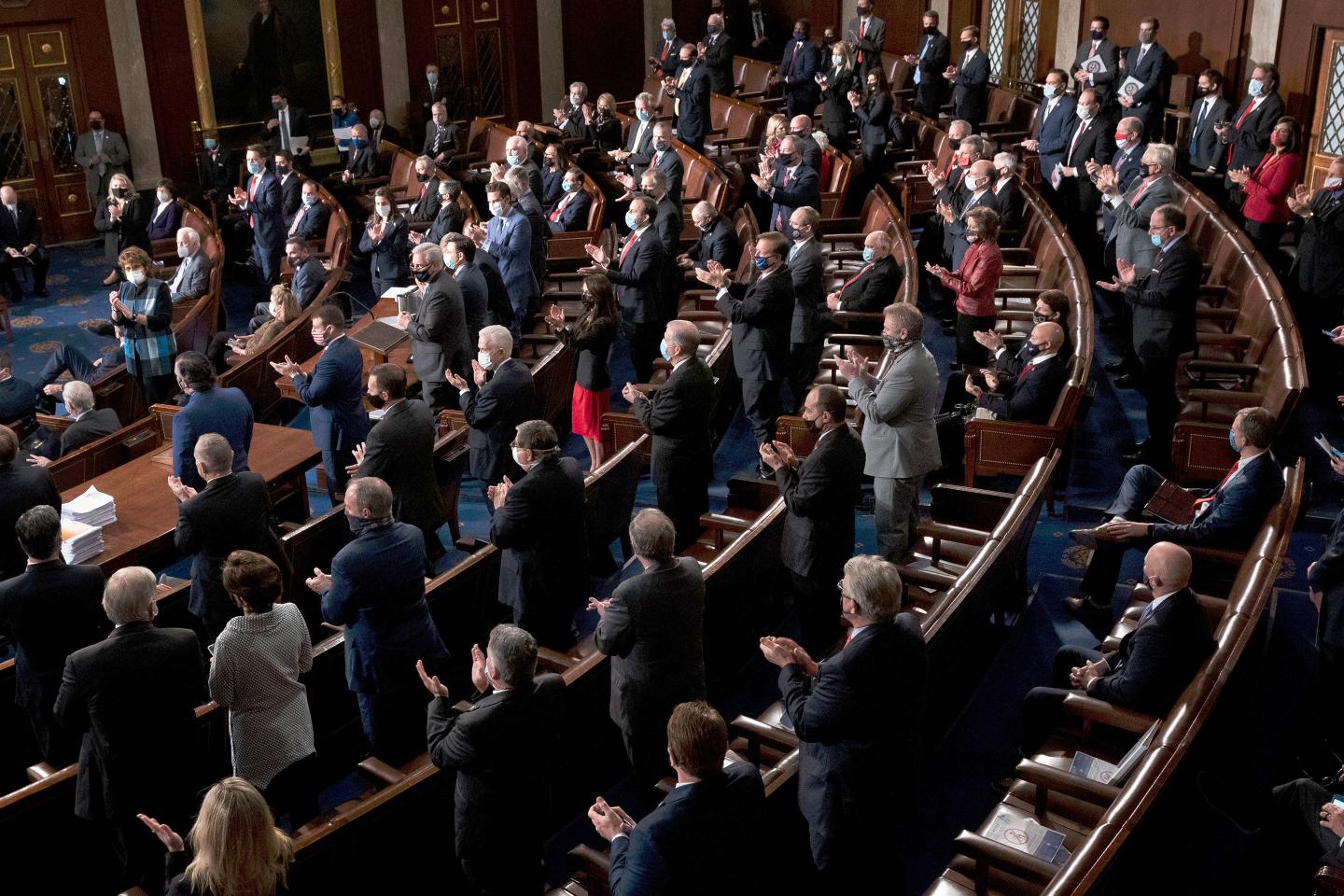
Corporations can still spend unlimited amounts to influence politics even if they stop sending PAC money to campaigns, writes Timothy Werner.Erin Schaff—Pool/REUTERS
Add Fortune on Google for similar content.

Since the riot at the U.S. Capitol, several major corporations, including American Express, Facebook, and Morgan Stanley, have won praise for restricting campaign contributions from their affiliated political action committees, or PACs. While this is an admirable action, it is largely symbolic.

As a scholar of corporate political activity, I find it difficult to credit companies much for this act. That’s because corporate PACs play an increasingly minimal role in our political system. There are far more important ways in which the disclosure of ties between firms and politicians need strengthening.

When corporations restrict PAC contributions, they are not ending their use of money to influence politics. Rather, they are only restricting one relatively insignificant form of political activity. Corporate PACs, which are funded by employees and shareholders, can only give a candidate $5,000 per election. But corporations are still free to spend unlimited amounts on “dark money”—political spending by nonprofit organizations that do not need to disclose their donors—to influence campaigns, or on lobbying to influence legislation.

Further, it is unclear that cutting off PAC contributions will serve as a concrete punishment for any politician, since a growing majority of their funding comes directly from individuals.

Restricting PAC giving to individual politicians is thus only a first step. To truly make a difference, PACs must also withhold contributions to the campaign finance committees of these politicians’ parties—in this case, the Republicans. That may persuade the party to discipline members who voted to reject the outcome of the election.

Companies should also voluntarily disclose and stop giving money, whether directly or covertly from their corporate accounts, to 527 and dark money organizations—both of which can spend unlimited amounts to influence federal elections. Once companies give funds to these outside groups, they largely lose control over them. Failing to similarly restrict these donations could allow financial support to controversial politicians to continue. Facebook and the University of Phoenix, for example, have suspended or demanded refunds from the policy arm of the Republican Attorneys General Association, which has been accused of helping to facilitate the Capitol takeover.

In the long run, even these steps are insufficient to strengthen our democracy while simultaneously lowering companies’ risks from political activity. More companies must support increasingly thorough and legislatively mandated disclosure policies.

For example, the individual contributions of top managers should be more explicitly linked to their companies. Although current law requires individual donors to identify their employers, there are many examples of evasion by executives and campaigns through non-reporting and the use of alternative “employment,” such as nonprofit board memberships. The Federal Election Commission must step up its enforcement, and either via regulation or legislation, top executives should be tied to their organizations via a common unique identifier such as that employed by the Securities and Exchange Commission.

Ultimately, to scholars of money in politics, campaign contributions are a sideshow: On average, companies spend vastly larger sums from their corporate accounts on lobbying Congress and the federal bureaucracy. Lobbying must be a target for any reform effort, whether voluntarily adopted or mandated.

Several U.S. states already require that corporations identify the specific pieces of legislation or regulations that they are lobbying on, their lobbying position, and the names of the specific legislators or regulators targeted. At the federal level, only foreign firms that lobby in the U.S. are required to report such information. We must extend these requirements to all firms and make the data broadly available.

The time for change is now. Reform of money in politics typically occurs following major events that grab the public’s attention. Real disclosure of campaign contributions only began in the 1970s in the wake of Watergate. Public disclosure of corporate lobbying only began in the 1990s and started happening on a quarterly basis in 2007, following scandals involving the House bank and the disgraced lobbyist Jack Abramoff, respectively.

Voters need to better understand the role of corporate influence in public policymaking. We must go beyond the—potentially temporary—halting of corporate PAC contributions. We must have bold reform that empowers the American people to hold their elected leaders and corporations accountable for their actions.

Timothy Werner is an associate professor of business, government, and society in the McCombs School of Business at the University of Texas at Austin. 

About the Author
By Timothy Werner
See full bioRight Arrow Button Icon
Add Fortune on Google for similar content.

Latest in Commentary

Finance
Lorem ipsum dolor sit amet, consectetur adipiscing elit, sed do eiusmod tempor incididunt ut labore et dolore magna aliqua. Ut enim ad minim veniam
By Fortune Editors
October 20, 2025
Finance
Lorem ipsum dolor sit amet, consectetur adipiscing elit, sed do eiusmod tempor incididunt ut labore et dolore magna aliqua. Ut enim ad minim veniam
By Fortune Editors
October 20, 2025
Finance
Lorem ipsum dolor sit amet, consectetur adipiscing elit, sed do eiusmod tempor incididunt ut labore et dolore magna aliqua. Ut enim ad minim veniam
By Fortune Editors
October 20, 2025
Finance
Lorem ipsum dolor sit amet, consectetur adipiscing elit, sed do eiusmod tempor incididunt ut labore et dolore magna aliqua. Ut enim ad minim veniam
By Fortune Editors
October 20, 2025
Finance
Lorem ipsum dolor sit amet, consectetur adipiscing elit, sed do eiusmod tempor incididunt ut labore et dolore magna aliqua. Ut enim ad minim veniam
By Fortune Editors
October 20, 2025
Finance
Lorem ipsum dolor sit amet, consectetur adipiscing elit, sed do eiusmod tempor incididunt ut labore et dolore magna aliqua. Ut enim ad minim veniam
By Fortune Editors
October 20, 2025

Most Popular

Finance
Lorem ipsum dolor sit amet, consectetur adipiscing elit, sed do eiusmod tempor incididunt ut labore et dolore magna aliqua. Ut enim ad minim veniam
By Fortune Editors
October 20, 2025
Finance
Lorem ipsum dolor sit amet, consectetur adipiscing elit, sed do eiusmod tempor incididunt ut labore et dolore magna aliqua. Ut enim ad minim veniam
By Fortune Editors
October 20, 2025
Finance
Lorem ipsum dolor sit amet, consectetur adipiscing elit, sed do eiusmod tempor incididunt ut labore et dolore magna aliqua. Ut enim ad minim veniam
By Fortune Editors
October 20, 2025
Finance
Lorem ipsum dolor sit amet, consectetur adipiscing elit, sed do eiusmod tempor incididunt ut labore et dolore magna aliqua. Ut enim ad minim veniam
By Fortune Editors
October 20, 2025
Finance
Lorem ipsum dolor sit amet, consectetur adipiscing elit, sed do eiusmod tempor incididunt ut labore et dolore magna aliqua. Ut enim ad minim veniam
By Fortune Editors
October 20, 2025
Finance
Lorem ipsum dolor sit amet, consectetur adipiscing elit, sed do eiusmod tempor incididunt ut labore et dolore magna aliqua. Ut enim ad minim veniam
By Fortune Editors
October 20, 2025
Fortune Secondary Logo
Rankings
  • 100 Best Companies
  • Fortune 500
  • Global 500
  • Fortune 500 Europe
  • Most Powerful Women
  • World's Most Admired Companies
  • See All Rankings
  • Lists Calendar
Sections
  • Finance
  • Fortune Crypto
  • Features
  • Leadership
  • Health
  • Commentary
  • Success
  • Retail
  • Mpw
  • Tech
  • Lifestyle
  • CEO Initiative
  • Asia
  • Politics
  • Conferences
  • Europe
  • Newsletters
  • Personal Finance
  • Environment
  • Magazine
  • Education
Customer Support
  • Frequently Asked Questions
  • Customer Service Portal
  • Privacy Policy
  • Terms Of Use
  • Single Issues For Purchase
  • International Print
Commercial Services
  • Advertising
  • Fortune Brand Studio
  • Fortune Analytics
  • Fortune Conferences
  • Business Development
  • Group Subscriptions
About Us
  • About Us
  • Press Center
  • Work At Fortune
  • Terms And Conditions
  • Site Map
  • About Us
  • Press Center
  • Work At Fortune
  • Terms And Conditions
  • Site Map
  • Facebook icon
  • Twitter icon
  • LinkedIn icon
  • Instagram icon
  • Pinterest icon

Latest in Commentary

nido
Commentary250 Years of Innovation
As an immigrant turned entrepreneur and college president, here is why I celebrate our nation as it turns 250
By Nido R. QubeinJune 25, 2026
2 hours ago
Asia’s defense boom is rewiring the global arms supply chain
Commentaryarms, weapons, and defense
Asia’s defense boom is rewiring the global arms supply chain
By Chris OberoiJune 24, 2026
17 hours ago
steve
Commentary250 Years of Innovation
Steve Case: America was built by entrepreneurs. Here’s how we keep that edge for the next 250 years
By Steve CaseJune 24, 2026
1 day ago
t
CommentaryWhite House
Trump mistakes the bully pulpit for bullying leadership — history’s villains were never heroes
By Jeffrey Sonnenfeld and Steven TianJune 24, 2026
1 day ago
mg
CommentaryHealth
The ‘tech neck’ time bomb: why 43 million young Americans could cripple U.S. health care within a generation
By Michael GerlingJune 24, 2026
1 day ago
sb
Commentaryclimate change
The climate policy triangle: why leaders can no longer choose between growth, security and sustainability
By Sebastian BuckupJune 23, 2026
2 days ago

Most Popular

Now worth $200 million, Sarah Jessica Parker credits being ‘one of eight kids that struggled financially’ for her hunger, ambition, and work ethic
Success
Now worth $200 million, Sarah Jessica Parker credits being ‘one of eight kids that struggled financially’ for her hunger, ambition, and work ethic
By Orianna Rosa RoyleJune 24, 2026
1 day ago
The Pentagon said Iran War costs $29 billion, but the real cost is closer to $200 billion—and counting
Economy
The Pentagon said Iran War costs $29 billion, but the real cost is closer to $200 billion—and counting
By Jacqueline MunisJune 24, 2026
1 day ago
Amazon's record Prime Day masks a darker truth: Americans are spending more and getting less
Retail
Amazon's record Prime Day masks a darker truth: Americans are spending more and getting less
By Nick LichtenbergJune 24, 2026
23 hours ago
Ray Dalio just finished a 10-day trip to China. He says global leaders know America ‘doesn’t have what it takes to fight to maintain its empire’
Asia
Ray Dalio just finished a 10-day trip to China. He says global leaders know America ‘doesn’t have what it takes to fight to maintain its empire’
By Nick LichtenbergJune 24, 2026
1 day ago
After forcing workers back to the office, Goldman Sachs and JPMorgan Chase are now letting their staff work remotely—but only for the World Cup
Success
After forcing workers back to the office, Goldman Sachs and JPMorgan Chase are now letting their staff work remotely—but only for the World Cup
By Orianna Rosa RoyleJune 23, 2026
2 days ago
Trump’s international student crackdown kicked off a domino effect that could shave nearly $500 billion off the economy
Economy
Trump’s international student crackdown kicked off a domino effect that could shave nearly $500 billion off the economy
By Tristan BoveJune 24, 2026
19 hours ago

© 2026 Fortune Media IP Limited. All Rights Reserved. Use of this site constitutes acceptance of our Terms of Use and Privacy Policy | CA Notice at Collection and Privacy Notice | Do Not Sell/Share My Personal Information
FORTUNE is a trademark of Fortune Media IP Limited, registered in the U.S. and other countries. FORTUNE may receive compensation for some links to products and services on this website. Offers may be subject to change without notice.