• Home
  • Latest
  • Fortune 500
  • Finance
  • Tech
  • Leadership
  • Lifestyle
  • Rankings
  • Multimedia
Commentary

MLK was arrested before the 1960 election. Nixon and JFK’s reactions offer lessons for Trump and Biden

By
Paul Kendrick
Paul Kendrick
and
Stephen Kendrick
Stephen Kendrick
Down Arrow Button Icon
By
Paul Kendrick
Paul Kendrick
and
Stephen Kendrick
Stephen Kendrick
Down Arrow Button Icon
October 31, 2020, 12:00 PM ET
Commentary-JFK-Nixon-1960 Lessons
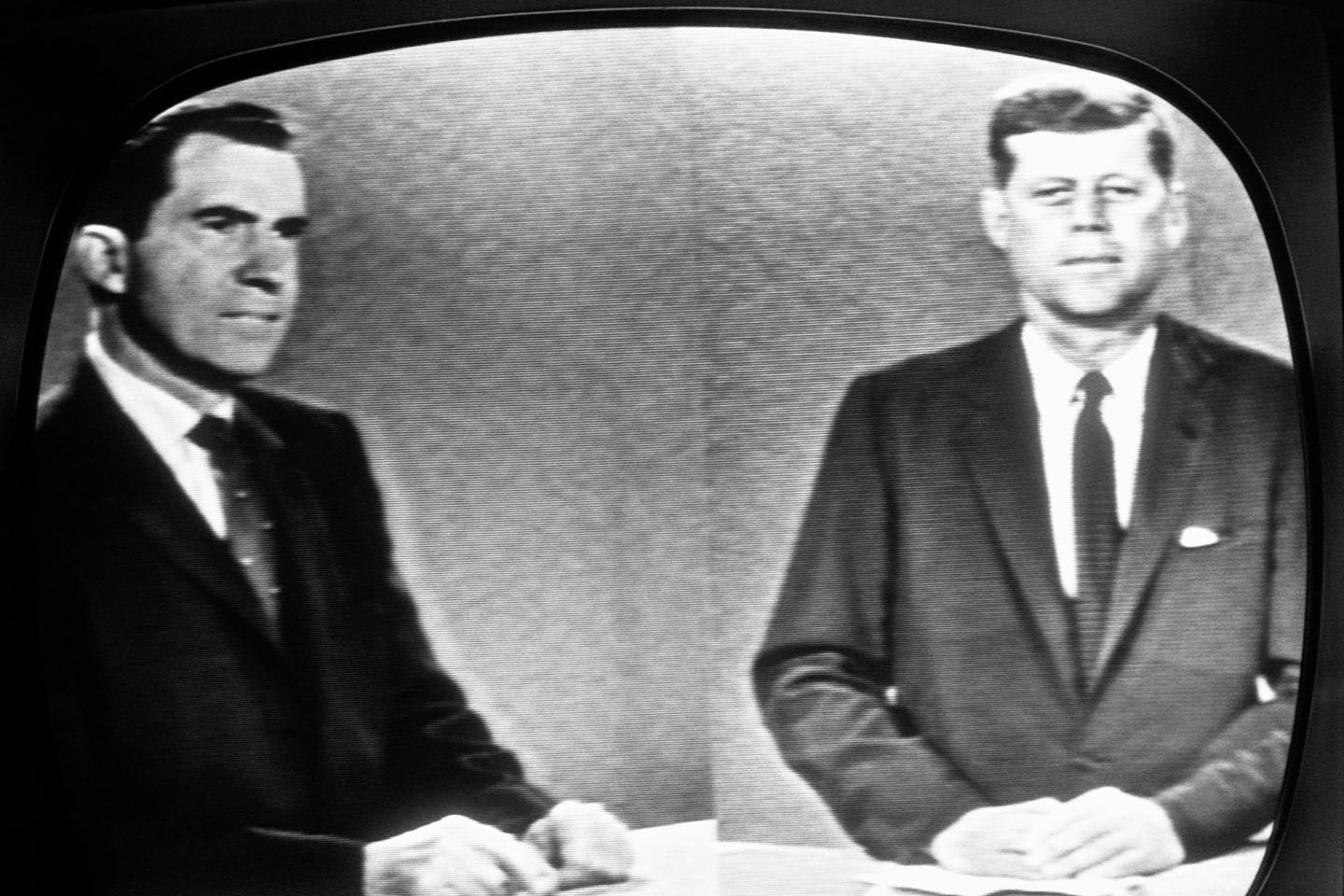
Richard Nixon and John F. Kennedy participate in a long distance presidential debate during the 1960 campaign. Martin Luther King's arrest was the October surprise of the 1960 election. Lessons from then apply to the 2020 contest, write Paul and Stephen Kendrick.Corbis/Getty Images

If activists are agile and alert, there is abundant energy to be tapped in an election year. Focused passions can force candidates preferring to stay on the sidelines of controversial issues, particularly concerning race, to move. Social movements can use such energy to heighten the stakes of the election for their cause, and that was at no point clearer than in 1960, the year Southern Black college students began their fabled sit-in movement and changed everything.

Martin Luther King Jr. did not lead the student sit-in movement, but supported it because the students inspired him. King wisely got on board in a way that certainly neither presidential candidates Richard Nixon nor John F. Kennedy were at first bold enough to do. Yet the sit-in students managed, three weeks before Election Day, to force their new movement into the campaign, and perhaps, as events played out, to even decide it.

In today’s presidential year, one marked by civil rights protests ever since a Minneapolis police officer knelt on the neck of George Floyd, we are seeing echoes of those consequential turns of events 60 years ago playing out now. In the era of Black Lives Matter, the 2020 candidates are once again being challenged by activists demanding equal justice. A new generation of activists is looking for candidates to respond with awareness and compassion to the demand for equal treatment—most fundamentally, for Black citizens to not be killed simply for living their lives.

In 1960, 31-year-old King moved home to Atlanta searching for strategic direction after the Montgomery bus boycott’s success. After the sit-ins swept through the South, Atlanta students pressured King to go to jail with them, believing King getting arrested would force the presidential candidates to talk about civil rights. Student activists were not excited about either Nixon or Kennedy, though many Black Americans such as Daddy King, the minister’s father, did support Nixon. Republicans hoped Nixon could garner half of the Black vote, aiding his way to victory.

It was a hard decision for King to get arrested with the students, having never spent a night in jail before Oct. 19, 1960. What neither King, nor the students, understood was that a previous minor driving ticket would be used by a judge in neighboring DeKalb County to sentence King to four months hard labor in Georgia’s notorious state prison.

This was an October surprise that both candidates were pushed to respond to—in Kennedy’s case, by his civil rights staffers Louis Martin, Harris Wofford, and Sargent Shriver, and in Nixon’s case, by his Black surrogates like Jackie Robinson and Eisenhower White House aide E. Frederic Morrow.

Students expected Nixon would speak out for King, but the Vice President was eyeing white Southern Democratic votes and stayed silent. In contrast, Kennedy risked those votes by calling Coretta Scott King to express sympathy and had his brother Robert Kennedy call the judge in Georgia.

After King was released following a perilous nine days behind bars, Kennedy’s Black advisor Louis Martin, on leave from the Chicago Defender, had the audacious idea to distribute what became an estimated 2 million pamphlets through Black churches on just what Kennedy did and Nixon did not. The Democrats swung back a critical seven percentage points of the Black vote from the previous presidential election and Black voters were the difference in nine states in a historically close election. The Black vote has never again been anywhere near in doubt as it was in the fall of 1960.

This year, a pivotal moment in the jump in Biden’s lead was the handling of the protests arising from the killing of George Floyd. Black Lives Matter is a movement that is self-intentionally less identified with one charismatic leader such as King, given the decentralized groups of activists across the country. In this, it echoes the sit-in movement before King’s imprisonment increased the national sense of him as the leader of the civil rights movement. As well, Biden, being pushed by activists as Kennedy was, articulated a message of bringing people together to address systemic racism. Trump did not bother with the silence of Nixon, and was ready to condemn the movement, as in the more-than-symbolic attack on demonstrators in Lafayette Square in Washington.

Again, echoing Kennedy’s outreach to Coretta Scott King, after the police shooting of Jacob Blake in Kenosha, Wis., Biden called and listened to the Blake family, stating a commitment to national change in a meeting with them, even in the face of Trump choosing Nixon’s late-1960s “law and order” response to protest in the streets.

Yet Trump is not unmindful of the power and impact of the Black vote. Black speakers at the Republican National Convention showed Trump’s desire to cut into the roughly 90% Black support Democrats received in 2016, seeking to create a contrast on criminal justice and economic opportunity. Meanwhile, the Biden campaign is seeking to raise turnout levels in this potentially determinative voting bloc, particularly among young Black men. And the need to quickly respond to events, as in 1960, keeps arising, as we’re seeing now in the crucial swing state of Pennsylvania. The police shooting of a Black man, Walter Wallace Jr., has led to protests in Philadelphia in the final days of the campaign.

There are lessons from 1960 on how candidates can boldly seize an opportunity to signal the kind of leader they would be on issues of racial inequality for the next four years. However, expectations have certainly risen for politicians since 1960—those concerned with injustice today want not just moral gestures, but policy plans and a commitment to enact them.

Paul Kendrick and Stephen Kendrick are the authors of Nine Days: The Race to Save Martin Luther King’s Life and Win the 1960 Election, which will be published in January 2021.

About the Authors
By Paul Kendrick
See full bioRight Arrow Button Icon
By Stephen Kendrick
See full bioRight Arrow Button Icon

Latest in Commentary

Finance
Lorem ipsum dolor sit amet, consectetur adipiscing elit, sed do eiusmod tempor incididunt ut labore et dolore magna aliqua. Ut enim ad minim veniam
By Fortune Editors
October 20, 2025
Finance
Lorem ipsum dolor sit amet, consectetur adipiscing elit, sed do eiusmod tempor incididunt ut labore et dolore magna aliqua. Ut enim ad minim veniam
By Fortune Editors
October 20, 2025
Finance
Lorem ipsum dolor sit amet, consectetur adipiscing elit, sed do eiusmod tempor incididunt ut labore et dolore magna aliqua. Ut enim ad minim veniam
By Fortune Editors
October 20, 2025
Finance
Lorem ipsum dolor sit amet, consectetur adipiscing elit, sed do eiusmod tempor incididunt ut labore et dolore magna aliqua. Ut enim ad minim veniam
By Fortune Editors
October 20, 2025
Finance
Lorem ipsum dolor sit amet, consectetur adipiscing elit, sed do eiusmod tempor incididunt ut labore et dolore magna aliqua. Ut enim ad minim veniam
By Fortune Editors
October 20, 2025
Finance
Lorem ipsum dolor sit amet, consectetur adipiscing elit, sed do eiusmod tempor incididunt ut labore et dolore magna aliqua. Ut enim ad minim veniam
By Fortune Editors
October 20, 2025

Most Popular

Finance
Lorem ipsum dolor sit amet, consectetur adipiscing elit, sed do eiusmod tempor incididunt ut labore et dolore magna aliqua. Ut enim ad minim veniam
By Fortune Editors
October 20, 2025
Finance
Lorem ipsum dolor sit amet, consectetur adipiscing elit, sed do eiusmod tempor incididunt ut labore et dolore magna aliqua. Ut enim ad minim veniam
By Fortune Editors
October 20, 2025
Finance
Lorem ipsum dolor sit amet, consectetur adipiscing elit, sed do eiusmod tempor incididunt ut labore et dolore magna aliqua. Ut enim ad minim veniam
By Fortune Editors
October 20, 2025
Finance
Lorem ipsum dolor sit amet, consectetur adipiscing elit, sed do eiusmod tempor incididunt ut labore et dolore magna aliqua. Ut enim ad minim veniam
By Fortune Editors
October 20, 2025
Finance
Lorem ipsum dolor sit amet, consectetur adipiscing elit, sed do eiusmod tempor incididunt ut labore et dolore magna aliqua. Ut enim ad minim veniam
By Fortune Editors
October 20, 2025
Finance
Lorem ipsum dolor sit amet, consectetur adipiscing elit, sed do eiusmod tempor incididunt ut labore et dolore magna aliqua. Ut enim ad minim veniam
By Fortune Editors
October 20, 2025
Fortune Secondary Logo
Rankings
  • 100 Best Companies
  • Fortune 500
  • Global 500
  • Fortune 500 Europe
  • Most Powerful Women
  • World's Most Admired Companies
  • See All Rankings
  • Lists Calendar
Sections
  • Finance
  • Fortune Crypto
  • Features
  • Leadership
  • Health
  • Commentary
  • Success
  • Retail
  • Mpw
  • Tech
  • Lifestyle
  • CEO Initiative
  • Asia
  • Politics
  • Conferences
  • Europe
  • Newsletters
  • Personal Finance
  • Environment
  • Magazine
  • Education
Customer Support
  • Frequently Asked Questions
  • Customer Service Portal
  • Privacy Policy
  • Terms Of Use
  • Single Issues For Purchase
  • International Print
Commercial Services
  • Advertising
  • Fortune Brand Studio
  • Fortune Analytics
  • Fortune Conferences
  • Business Development
  • Group Subscriptions
About Us
  • About Us
  • Press Center
  • Work At Fortune
  • Terms And Conditions
  • Site Map
  • About Us
  • Press Center
  • Work At Fortune
  • Terms And Conditions
  • Site Map
  • Facebook icon
  • Twitter icon
  • LinkedIn icon
  • Instagram icon
  • Pinterest icon

Latest in Commentary

joaquin
Commentary250 Years of Innovation
Johnson & Johnson CEO: America’s innovation advantage starts with health 
By Joaquin DuatoMay 9, 2026
17 hours ago
reed
CommentaryRetirement
Tim Cook and Reed Hastings just showed every CEO how to leave gracefully
By Paul HardartMay 9, 2026
20 hours ago
golf
Commentarybooks
How playing golf alone can make you better at your job
By Gary BelskyMay 8, 2026
2 days ago
naomi
Commentarymental health
Naomi Osaka: the things I didn’t do to succeed
By Naomi OsakaMay 8, 2026
2 days ago
amanda
Commentarybatteries
Why energy storage is moving beyond the capex debate
By Amanda SimonianMay 7, 2026
3 days ago
trump
CommentaryMedicare
Auto-enrollment in Medicare Advantage isn’t a nudge. It’s a trap
By Brian KeyserMay 7, 2026
3 days ago

Most Popular

'Employers are increasingly turning to degree and GPA' in hiring: Recruiters retreat from ‘talent is everywhere,’ double down on top colleges
Future of Work
'Employers are increasingly turning to degree and GPA' in hiring: Recruiters retreat from ‘talent is everywhere,’ double down on top colleges
By Jake AngeloMay 9, 2026
15 hours ago
Ted Cruz says the quiet part out loud: Trump accounts are Social Security personal accounts as GOP senator reveals 'dirty little secret'
Politics
Ted Cruz says the quiet part out loud: Trump accounts are Social Security personal accounts as GOP senator reveals 'dirty little secret'
By Jason MaMay 9, 2026
11 hours ago
You're probably safe from the Hantavirus outbreak, but here's what you absolutely must not do, experts say
Politics
You're probably safe from the Hantavirus outbreak, but here's what you absolutely must not do, experts say
By Catherina GioinoMay 8, 2026
1 day ago
A Michigan farm town voted down plans for a giant OpenAI-Oracle data center. Weeks later, construction began
Magazine
A Michigan farm town voted down plans for a giant OpenAI-Oracle data center. Weeks later, construction began
By Sharon GoldmanMay 6, 2026
4 days ago
California farmers must destroy 420,000 peach trees after Del Monte closes its canneries and cancels more than $550 million in long-term contracts
North America
California farmers must destroy 420,000 peach trees after Del Monte closes its canneries and cancels more than $550 million in long-term contracts
By Sasha RogelbergMay 7, 2026
2 days ago
The CEO of Maersk, which ships 14% of everything you buy, said the Iran war is adding $500 million in monthly costs it's trying not to pass down
Energy
The CEO of Maersk, which ships 14% of everything you buy, said the Iran war is adding $500 million in monthly costs it's trying not to pass down
By Sasha RogelbergMay 8, 2026
1 day ago

© 2026 Fortune Media IP Limited. All Rights Reserved. Use of this site constitutes acceptance of our Terms of Use and Privacy Policy | CA Notice at Collection and Privacy Notice | Do Not Sell/Share My Personal Information
FORTUNE is a trademark of Fortune Media IP Limited, registered in the U.S. and other countries. FORTUNE may receive compensation for some links to products and services on this website. Offers may be subject to change without notice.