• Home
  • Latest
  • Fortune 500
  • Finance
  • Tech
  • Leadership
  • Lifestyle
  • Rankings
  • Multimedia

Trendingnow

1

U.S. says deals with Iran for safe Hormuz transit are prohibited

2

Surging Treasury yields expose a brutal truth: America has no margin for error on its $39 trillion debt

3

After a judge ordered Trump's name be removed from the Kennedy Center, president says it will 'soon be closed, probably never to open again'

1

U.S. says deals with Iran for safe Hormuz transit are prohibited

2

Surging Treasury yields expose a brutal truth: America has no margin for error on its $39 trillion debt

3

After a judge ordered Trump's name be removed from the Kennedy Center, president says it will 'soon be closed, probably never to open again'
CommentaryEconomic Recovery

Winning the peace: Lessons from history for a post-coronavirus economic recovery

By
Kevin Sneader
Kevin Sneader
and
Shubham Singhal
Shubham Singhal
Down Arrow Button Icon
By
Kevin Sneader
Kevin Sneader
and
Shubham Singhal
Shubham Singhal
Down Arrow Button Icon
July 23, 2020, 1:00 PM ET
Employment 1950s Government Agency
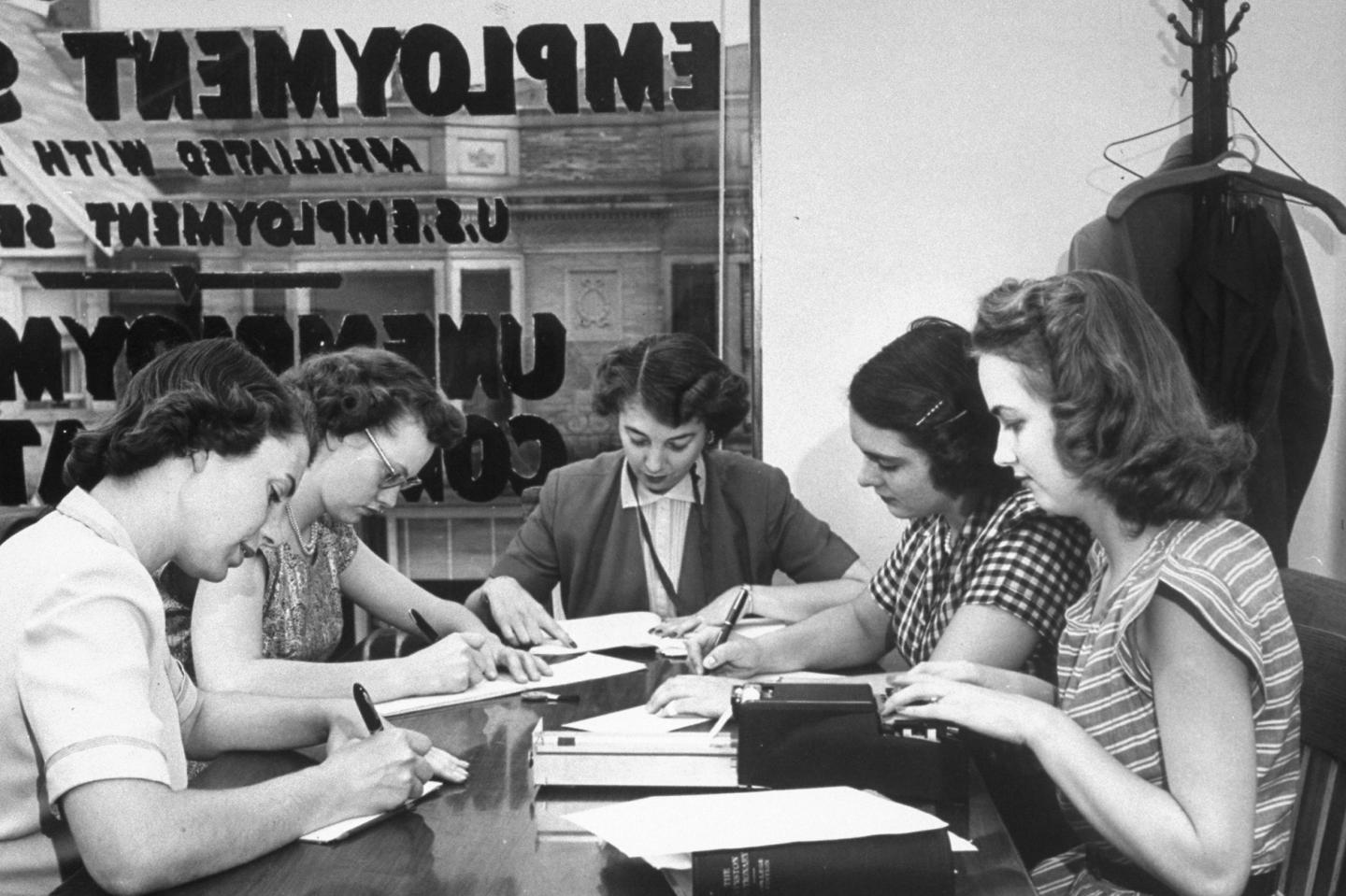
Government agencies recruiting girls for clerical jobs, Wisconsin, United States, 1951(Photo by Francis Miller/The LIFE Picture Collection via Getty Images)Francis Miller—The LIFE Picture Collection/Getty Images

The French have a phrase for it—“les trente glorieuses.” The German term is “wirtschaftswunder,” or economic miracle, and the Italian is similar, “il miracolo economico.” In the United States, it’s just the “good old days.” Whatever the term, it recalls the decades after World War II, in which strong economic growth—4% annually in the United States, 5% in Western Europe, and 8% in Japan from 1950–70—spread prosperity widely. Truly, these countries can be said to have “won the peace.” 

As the world considers how to rebuild once COVID-19 becomes less of a threat, the lessons of history can be pertinent. For a start, let us note that there were no postwar miracles. Success came from actions taken by international institutions, government, and business. All three sectors pulled in the same direction—toward greater openness and higher productivity.

While COVID-19-wracked 2020 is not war-torn 1950, a similar kind of cohesive effort is essential. In this article, we look at the role of international organizations and the public sector. In our next one, running later this week, we’ll consider the private sector. 

Reshape globalization 

Global problems need global attention, something that postwar leaders recognized. Then, the emphasis was on liberalizing the trade in goods. Today, the priority needs to be on trade in services, which is growing much faster, and the flow of data faster still. Global institutions need to be modernized to meet this dynamic. 

A dozen technologies could create $33 trillion in value by 2025 and foster the next generation of inclusive growth. Among them: the Internet of things, advanced robotics, genomics, energy storage, and renewable energy. For these to advance, global agreements that enable the flow of data and services, including standards on digital taxation, privacy, and security, need to be developed. Without a global framework, regulation will be fragmented, which raises costs and irritation—as ongoing disputes over digital taxes and privacy prove. 

This could be done through existing institutions, such as the World Trade Organization (the successor to GATT, the postwar trade entity). But it may make sense to start from scratch, given the distinctive issues involved. In either case, it is essential to protect intellectual property, which, as Abraham Lincoln said, “adds the fuel of interest to the fire of genius.” Second, an international agency can adapt best practices from national governments, such as Britain, Denmark, and South Korea, who all get high marks for delivering digital services while safeguarding their citizens’ rights to privacy and access to their own information. Think of it as GATT for the 21st century. 

Renew the public sector

In many countries, distrust of established institutions is rising. To increase trust, governments need to show that they are serious about adapting postwar social policies to the present-day realities of more insecure work, higher housing costs, and greater economic polarization. Yet social policies related to work, unemployment, and income support have not changed nearly as much as the circumstances around them. For example, more could be done to address the needs of temporary and gig workers. 

Governments in Australia, France, Georgia, and Massachusetts, are considering or have passed legislation that extends unemployment insurance to independent contractors. Others allow recipients to continue to receive benefits if they are working part-time or starting a business. Governments from Germany to Nebraska to Minneapolis are changing zoning laws to encourage denser and cheaper housing. Making benefits portable—that is, attached to individuals, rather than workplaces—is another option. New York State’s Black Car Fund provides workers’ compensation, paid for by a fare surcharge, for livery and ride-share drivers. These are just some of the many ideas that countries and states are experimenting with; we cite them to illustrate that there are many different options to learn from. The role of government is to identify the best ideas, test them, and then expand (or discard) them.

There can be no inclusive growth without economic growth. That means productivity has to grow, too—as it did strongly after the war, but weakly of late in most advanced economies. There are proven “catch up” approaches, such as cutting red tape that impedes business formation (and dissolution) and liberalizing labor markets. The other way to boost productivity is to “push the frontier” of innovation and technology; this requires supportive regulation. The evidence is clear that industries in which competition is robust see higher productivity growth. In addition to enforcing antitrust law, then, governments need to reconsider policies that suppress competition, such as subsidies that favor incumbents or licensing requirements that keep out new entrants. 

The recent history of Sweden shows the benefits of strong pro-competition policy. In the early 1990s, slow-growing Sweden faced an economic crisis. So it deregulated product markets; broke up cartels; opened the economy to foreign investment; and encouraged entrepreneurship. And it worked. From 1995 to 2011, Sweden recorded the highest productivity growth among all developed countries; economic growth accelerated, and private-sector employment and individual incomes grew strongly.

Finally, postwar governments invested in people by broadening access to health care. Today, too, investing in health is an investment in growth, with an estimated return of $2 to $4 for every dollar spent. In advanced economies, the economic benefit comes from the possibility of creating a longer, healthier middle age: Think of 65 as the new 55. Beyond the obvious benefits to individuals, this would allow more people to work longer and more productively. In the United States alone, delayed retirement could add 675 million work hours per week. That is important in the context of slow labor force growth. 

Interventions that provide the most benefit at low cost include smoking cessation, weight management, road safety, lower back pain management, and the use of antihypertensives and statins. Expensive? Maybe not. The McKinsey Global Institute estimates that improving “health care delivery efficiency could more than pay for the additional spending required.” The COVID-19 crisis has shown the direct connection between health and the economy and provides an important moment to reset priorities. 

Next: Reimagining the social contract between the private and public sectors

Kevin Sneader is the global managing partner of McKinsey & Co., where Shubham Singhal is a senior partner.

More opinion in Fortune:

  • How zoning laws exclude Black families from areas of economic opportunity
  • Nikki Haley and former Walmart U.S. president Bill Simon: The coronavirus makes the case for bringing manufacturing back to America
  • Why brands should use TikTok—even if it’s at risk of being banned
  • The Goya boycott isn’t an example of cancel culture—it’s the free market at work
  • Why unions are crucial to empowering Black workers
About the Authors
By Kevin Sneader
See full bioRight Arrow Button Icon
By Shubham Singhal
See full bioRight Arrow Button Icon

Latest in Commentary

Finance
Lorem ipsum dolor sit amet, consectetur adipiscing elit, sed do eiusmod tempor incididunt ut labore et dolore magna aliqua. Ut enim ad minim veniam
By Fortune Editors
October 20, 2025
Finance
Lorem ipsum dolor sit amet, consectetur adipiscing elit, sed do eiusmod tempor incididunt ut labore et dolore magna aliqua. Ut enim ad minim veniam
By Fortune Editors
October 20, 2025
Finance
Lorem ipsum dolor sit amet, consectetur adipiscing elit, sed do eiusmod tempor incididunt ut labore et dolore magna aliqua. Ut enim ad minim veniam
By Fortune Editors
October 20, 2025
Finance
Lorem ipsum dolor sit amet, consectetur adipiscing elit, sed do eiusmod tempor incididunt ut labore et dolore magna aliqua. Ut enim ad minim veniam
By Fortune Editors
October 20, 2025
Finance
Lorem ipsum dolor sit amet, consectetur adipiscing elit, sed do eiusmod tempor incididunt ut labore et dolore magna aliqua. Ut enim ad minim veniam
By Fortune Editors
October 20, 2025
Finance
Lorem ipsum dolor sit amet, consectetur adipiscing elit, sed do eiusmod tempor incididunt ut labore et dolore magna aliqua. Ut enim ad minim veniam
By Fortune Editors
October 20, 2025

Most Popular

Finance
Lorem ipsum dolor sit amet, consectetur adipiscing elit, sed do eiusmod tempor incididunt ut labore et dolore magna aliqua. Ut enim ad minim veniam
By Fortune Editors
October 20, 2025
Finance
Lorem ipsum dolor sit amet, consectetur adipiscing elit, sed do eiusmod tempor incididunt ut labore et dolore magna aliqua. Ut enim ad minim veniam
By Fortune Editors
October 20, 2025
Finance
Lorem ipsum dolor sit amet, consectetur adipiscing elit, sed do eiusmod tempor incididunt ut labore et dolore magna aliqua. Ut enim ad minim veniam
By Fortune Editors
October 20, 2025
Finance
Lorem ipsum dolor sit amet, consectetur adipiscing elit, sed do eiusmod tempor incididunt ut labore et dolore magna aliqua. Ut enim ad minim veniam
By Fortune Editors
October 20, 2025
Finance
Lorem ipsum dolor sit amet, consectetur adipiscing elit, sed do eiusmod tempor incididunt ut labore et dolore magna aliqua. Ut enim ad minim veniam
By Fortune Editors
October 20, 2025
Finance
Lorem ipsum dolor sit amet, consectetur adipiscing elit, sed do eiusmod tempor incididunt ut labore et dolore magna aliqua. Ut enim ad minim veniam
By Fortune Editors
October 20, 2025
Fortune Secondary Logo
Rankings
  • 100 Best Companies
  • Fortune 500
  • Global 500
  • Fortune 500 Europe
  • Most Powerful Women
  • World's Most Admired Companies
  • See All Rankings
  • Lists Calendar
Sections
  • Finance
  • Fortune Crypto
  • Features
  • Leadership
  • Health
  • Commentary
  • Success
  • Retail
  • Mpw
  • Tech
  • Lifestyle
  • CEO Initiative
  • Asia
  • Politics
  • Conferences
  • Europe
  • Newsletters
  • Personal Finance
  • Environment
  • Magazine
  • Education
Customer Support
  • Frequently Asked Questions
  • Customer Service Portal
  • Privacy Policy
  • Terms Of Use
  • Single Issues For Purchase
  • International Print
Commercial Services
  • Advertising
  • Fortune Brand Studio
  • Fortune Analytics
  • Fortune Conferences
  • Business Development
  • Group Subscriptions
About Us
  • About Us
  • Press Center
  • Work At Fortune
  • Terms And Conditions
  • Site Map
  • About Us
  • Press Center
  • Work At Fortune
  • Terms And Conditions
  • Site Map
  • Facebook icon
  • Twitter icon
  • LinkedIn icon
  • Instagram icon
  • Pinterest icon

Latest in Commentary

Allison Danielsen is CEO, Tallo.
CommentaryCareers
My wrist injury derailed my college plans. It’s why I’m a CEO today
By Allison DanielsenMay 31, 2026
7 hours ago
treble
CommentaryElections
I built a startup from scratch and still nearly died because of a broken healthcare system. That’s why I’m running for Congress
By Jonathan TrebleMay 31, 2026
7 hours ago
bn
CommentaryEducation
Bill Nye: Companies say there’s a skills gap. They’re wrong — and students can prove it
By Bill NyeMay 31, 2026
8 hours ago
soccer moms
CommentarySports
Why soccer moms are shaping the future of football in the U.S.
By Ruslan BashirovMay 31, 2026
10 hours ago
Matt Rogers
Commentarystart-ups
I worked with Steve Jobs at Apple, where every OS update killed startups. AI founders are about to face the same thing
By Matt RogersMay 30, 2026
1 day ago
sam
CommentaryChips
The AI economy could crash on mounting chip costs — and those token costs won’t help
By Rakesh KumarMay 30, 2026
1 day ago

Most Popular

U.S. says deals with Iran for safe Hormuz transit are prohibited
Politics
U.S. says deals with Iran for safe Hormuz transit are prohibited
By Jack Wittels and BloombergMay 30, 2026
1 day ago
Surging Treasury yields expose a brutal truth: America has no margin for error on its $39 trillion debt
Economy
Surging Treasury yields expose a brutal truth: America has no margin for error on its $39 trillion debt
By Shawn TullyMay 30, 2026
2 days ago
After a judge ordered Trump's name be removed from the Kennedy Center, president says it will 'soon be closed, probably never to open again'
Law
After a judge ordered Trump's name be removed from the Kennedy Center, president says it will 'soon be closed, probably never to open again'
By Collin Binkley and The Associated PressMay 30, 2026
23 hours ago
After Blue Origin rocket explosion, NASA's entire moon exploration program depends on SpaceX for now as Musk eyes blockbuster IPO soon
Innovation
After Blue Origin rocket explosion, NASA's entire moon exploration program depends on SpaceX for now as Musk eyes blockbuster IPO soon
By Jason MaMay 30, 2026
24 hours ago
Damn the torpedoes — More ships are quietly slipping through the Strait of Hormuz as helicopters scare off Iran's fast-attack boats
Energy
Damn the torpedoes — More ships are quietly slipping through the Strait of Hormuz as helicopters scare off Iran's fast-attack boats
By Jason MaMay 30, 2026
1 day ago
Meet the Black women on Fortune's Most Powerful Women list shaping business leadership
MPW
Meet the Black women on Fortune's Most Powerful Women list shaping business leadership
By Cheyann HarrisMay 29, 2026
2 days ago

© 2026 Fortune Media IP Limited. All Rights Reserved. Use of this site constitutes acceptance of our Terms of Use and Privacy Policy | CA Notice at Collection and Privacy Notice | Do Not Sell/Share My Personal Information
FORTUNE is a trademark of Fortune Media IP Limited, registered in the U.S. and other countries. FORTUNE may receive compensation for some links to products and services on this website. Offers may be subject to change without notice.