• Home
  • Latest
  • Fortune 500
  • Finance
  • Tech
  • Leadership
  • Lifestyle
  • Rankings
  • Multimedia
MagazineCoronavirus

3 restaurateurs on how the battered food-service industry is weathering the coronavirus pandemic

Emma Hinchliffe
By
Emma Hinchliffe
Emma Hinchliffe
Most Powerful Women Editor
Down Arrow Button Icon
Emma Hinchliffe
By
Emma Hinchliffe
Emma Hinchliffe
Most Powerful Women Editor
Down Arrow Button Icon
April 20, 2020, 8:00 AM ET

This article is part of a Fortune Special Report: Business in the Coronavirus Economy—a look at the impact of the pandemic on more than 50 industries.

The coronavirus recession has left no industry untouched, but the restaurant business is arguably the hardest hit so far. The food and beverage sector accounted for 60% of the jobs lost in March, the first wave of the tsunami that has since prompted 16.8 million Americans to apply for unemployment. The impact on those workers foreshadows a supersize blow to the economy at large. The restaurant industry—which includes five chains large enough to appear in the Fortune 500—­contributes an estimated 4% of the U.S. GDP, or roughly $1 trillion. 

To get a sense of the ways in which the industry has been impacted—and how it might ultimately pick up the pieces, Fortune spoke to three restaurateurs, each leading a very different type of establishment. 

Newsletter-Red-Line-15

Brian Niccol

Chairman and CEO, Chipotle

National chain
2,600 locations 
$5.6 billion in annual revenue
85,000 employees

 The Impact of the virus on Chipotle and its employees “breaks my heart,” says Brian Niccol. The crisis comes at a particularly frustrating time for the new CEO, who was guiding the chain past its earlier food safety issues by redesigning restaurants and rolling out new menu items like carne asada—changes that helped provide a 15% bump in revenue last year.

“We’ve kind of hit the pause button on those things,” he says. Instead, Chipotle, like its chain-restaurant peers, is focused on adapting to the new reality: plunging consumer demand and a workforce increasingly concerned about its health and safety—not to mention longer-term job security. The brand has reduced hours at 10% of its stores and closed 3% of locations—mostly those in shuttered malls or shopping centers—furloughing those employees. The rest of the hourly workforce, still coming in, received a 10% pay bump through mid-May; Chipotle employees typically get three days of sick leave, and now those working during the crisis are eligible for up to two weeks of sick pay, depending on their work schedules. 

$150 billion

Estimated cash flow required for independent U.S. restaurants to pay all current expenses

Some long-term changes to the company may be positive, Niccol says. More diners are now turning to the chain, traditionally a lunch staple, for dinner, he notes. Digital orders—already up 90% last year to 18% of total sales—will, he expects, become a permanent consumer habit (although that revenue stream largely depends on the continued success of partners like Uber Eats). Niccol also predicts that restaurant industry employees, burned by rapid layoffs at other companies, may start paying closer attention to the financial health of their employers (Chipotle has prioritized a healthy balance sheet as it has recovered from its 2015 E. coli outbreak): “Employees are going to have a closer eye on, ‘What is the health of my company? How good of a cash position are they in in the event of a crisis?’”

Newsletter-Red-Line-15

Tom Colicchio

Owner, Crafted Hospitality

Midsize restaurant group
5 Crafted Hospitality locations
4 ’wichcraft locations
475 employees

Tom Colicchio has high standards—for his staff, for Top Chef contestants, and for the nation’s lawmakers. As one of the founders of the newly created Independent Restaurant Coalition (IRC), the Crafted Hospitality and ’Wichcraft owner has become a spokesman for the sector’s 11 million or so servers, chefs, kitchen staff, and hosts, and is calling for government support. “Without help, the restaurant industry is going to be decimated,” he says. Colicchio is lobbying for changes to Congress’s CARES Act that account for the particularities of running a restaurant. For instance, the legislation forgives loans for companies that keep employees on the payroll for at least eight weeks after disbursement; many restaurants need the money now but suspect that it will take far longer to return to business as usual. Colicchio opted to close the doors of his establishments on March 15, sending his nearly 500 employees to file for unemployment rather than try to transfer to a takeout model as some of his fine-dining peers have done. The risk outweighed the pros of staying open, he says: “I couldn’t live with myself if, for a couple thousand dollars a night, someone may end up on a respirator.” 

The IRC is pushing for new tax rebates and other longer-term support, but for Colicchio, the immediate priority is keeping the industry—and its role as a community touchstone—alive. “Our neighborhoods without restaurants aren’t neighborhoods,” he says. “Our buildings with ground floors empty—that just feels like the city is dead.”

Newsletter-Red-Line-15

Moonlynn Tsai

Co-owner, Kopitiam 

Independent restaurant
1 location
28 employees

Kopitiam’s Moonlynn Tsai in New York City’s Chinatown.
Courtesy of Yin Chang

It was only January when Manhattan’s Chinatown, home to Moonlynn Tsai’s Malaysian coffeehouse and restaurant, first felt the sting of the coronavirus. Diners, concerned about the new disease in China, began avoiding the area—despite an utter lack of evidence that the virus was present in the neighborhood.

Three months later, Kopitiam—named for the Hokkien word for coffeehouse—­remains open, but it’s making less than 5% of its usual sales. The beloved eatery, first opened in 2015, is deeply entrenched in the community. Its staffers are a mix of local high-schoolers and elderly residents, and Tsai and her business partner, chef Kyo Pang, are trying their hardest to continue serving their neighbors. The pair furloughed their staff on March 17, days after New York City ordered restaurants to close, but paid all employees through April 1. They’ve tried to keep some revenue coming in with takeout orders, as well as gift cards and special offers like an at-home kit to build the restaurant’s famous kaya jam toast. But the challenges continue. Tsai said suppliers have gone from delivery every day to three times a week. In just a month, Kopitiam burned through all its savings from the past two years. 

Looking ahead, Tsai fears for her fellow Chinatown establishments. If her restaurant—fawned over by food critics and with a savvy digital presence—can’t weather the storm, what will happen to others? 

As for Kopitiam, she’s not ready to think beyond the next days. “I’ve learned to numb myself. If I start sitting still, all the emotions are going to come,” Tsai says. “We were hoping by now we could expand, but everything we had for that has been wiped out. If this happens again—how do we make sure we’ll be okay?” 

A version of this article appears in the May 2020 issue of Fortune with the headline “86 the restaurant industry?”

More coronavirus coverage from Fortune:

—Saving a city: How Seattle’s corporate giants banded together to flatten the curve
—How Fortune 500 companies are utilizing their resources and expertise during the pandemic
—Inside the surreal “Mask Economy”: Price-gouging, bidding wars, and armed guards
—Researchers working on “contact tracing” say they welcome Apple and Google’s help
—How every sector of the S&P 500 has been impacted by the coronavirus selloff
—If you’ve been a little busy lately, here’s what’s going on with the 2020 election
—Looking for a travel refund? Here’s what airlines, hotels, and theme parks are offering
—PODCAST: COVID-19 might have upended the concept of the best companies of the year
—VIDEO: 401(k) withdrawal penalties waived for anyone hurt by COVID-19

Subscribe to Outbreak, a daily newsletter roundup of stories on the coronavirus pandemic and its impact on global business. It’s free to get it in your inbox.

About the Author
Emma Hinchliffe
By Emma HinchliffeMost Powerful Women Editor
LinkedIn iconTwitter icon

Emma Hinchliffe is Fortune’s Most Powerful Women editor, overseeing editorial for the longstanding franchise. As a senior writer at Fortune, Emma has covered women in business and gender-lens news across business, politics, and culture. She is the lead author of the Most Powerful Women Daily newsletter (formerly the Broadsheet), Fortune’s daily missive for and about the women leading the business world.

See full bioRight Arrow Button Icon

Latest from the Magazine

Finance
Lorem ipsum dolor sit amet, consectetur adipiscing elit, sed do eiusmod tempor incididunt ut labore et dolore magna aliqua. Ut enim ad minim veniam
By Fortune Editors
October 20, 2025
Finance
Lorem ipsum dolor sit amet, consectetur adipiscing elit, sed do eiusmod tempor incididunt ut labore et dolore magna aliqua. Ut enim ad minim veniam
By Fortune Editors
October 20, 2025
Finance
Lorem ipsum dolor sit amet, consectetur adipiscing elit, sed do eiusmod tempor incididunt ut labore et dolore magna aliqua. Ut enim ad minim veniam
By Fortune Editors
October 20, 2025
Finance
Lorem ipsum dolor sit amet, consectetur adipiscing elit, sed do eiusmod tempor incididunt ut labore et dolore magna aliqua. Ut enim ad minim veniam
By Fortune Editors
October 20, 2025
Finance
Lorem ipsum dolor sit amet, consectetur adipiscing elit, sed do eiusmod tempor incididunt ut labore et dolore magna aliqua. Ut enim ad minim veniam
By Fortune Editors
October 20, 2025
Finance
Lorem ipsum dolor sit amet, consectetur adipiscing elit, sed do eiusmod tempor incididunt ut labore et dolore magna aliqua. Ut enim ad minim veniam
By Fortune Editors
October 20, 2025

Most Popular

Finance
Lorem ipsum dolor sit amet, consectetur adipiscing elit, sed do eiusmod tempor incididunt ut labore et dolore magna aliqua. Ut enim ad minim veniam
By Fortune Editors
October 20, 2025
Finance
Lorem ipsum dolor sit amet, consectetur adipiscing elit, sed do eiusmod tempor incididunt ut labore et dolore magna aliqua. Ut enim ad minim veniam
By Fortune Editors
October 20, 2025
Finance
Lorem ipsum dolor sit amet, consectetur adipiscing elit, sed do eiusmod tempor incididunt ut labore et dolore magna aliqua. Ut enim ad minim veniam
By Fortune Editors
October 20, 2025
Finance
Lorem ipsum dolor sit amet, consectetur adipiscing elit, sed do eiusmod tempor incididunt ut labore et dolore magna aliqua. Ut enim ad minim veniam
By Fortune Editors
October 20, 2025
Finance
Lorem ipsum dolor sit amet, consectetur adipiscing elit, sed do eiusmod tempor incididunt ut labore et dolore magna aliqua. Ut enim ad minim veniam
By Fortune Editors
October 20, 2025
Finance
Lorem ipsum dolor sit amet, consectetur adipiscing elit, sed do eiusmod tempor incididunt ut labore et dolore magna aliqua. Ut enim ad minim veniam
By Fortune Editors
October 20, 2025
Fortune Secondary Logo
Rankings
  • 100 Best Companies
  • Fortune 500
  • Global 500
  • Fortune 500 Europe
  • Most Powerful Women
  • Future 50
  • World’s Most Admired Companies
  • See All Rankings
Sections
  • Finance
  • Fortune Crypto
  • Features
  • Leadership
  • Health
  • Commentary
  • Success
  • Retail
  • Mpw
  • Tech
  • Lifestyle
  • CEO Initiative
  • Asia
  • Politics
  • Conferences
  • Europe
  • Newsletters
  • Personal Finance
  • Environment
  • Magazine
  • Education
Customer Support
  • Frequently Asked Questions
  • Customer Service Portal
  • Privacy Policy
  • Terms Of Use
  • Single Issues For Purchase
  • International Print
Commercial Services
  • Advertising
  • Fortune Brand Studio
  • Fortune Analytics
  • Fortune Conferences
  • Business Development
  • Group Subscriptions
About Us
  • About Us
  • Editorial Calendar
  • Press Center
  • Work At Fortune
  • Diversity And Inclusion
  • Terms And Conditions
  • Site Map
  • About Us
  • Editorial Calendar
  • Press Center
  • Work At Fortune
  • Diversity And Inclusion
  • Terms And Conditions
  • Site Map
  • Facebook icon
  • Twitter icon
  • LinkedIn icon
  • Instagram icon
  • Pinterest icon

Latest from the Magazine

Who’s really in control as AI and Big Tech race ahead?
MagazineEurope
Who’s really in control as AI and Big Tech race ahead?
By Francesca CassidyApril 10, 2026
14 hours ago
Who owns ideas in the AI age?
MagazinePublishing
Who owns ideas in the AI age?
By Francesca CassidyApril 8, 2026
3 days ago
Southeast Asia’s business leaders want wellness at work—as long as the programs get real results
Magazine100 Best Companies to Work For
Southeast Asia’s business leaders want wellness at work—as long as the programs get real results
By Alice WilliamsApril 8, 2026
3 days ago
So… what are we doing with AI? Innovating in an age of caution
MagazineStrategy
So… what are we doing with AI? Innovating in an age of caution
By Francesca CassidyApril 7, 2026
3 days ago
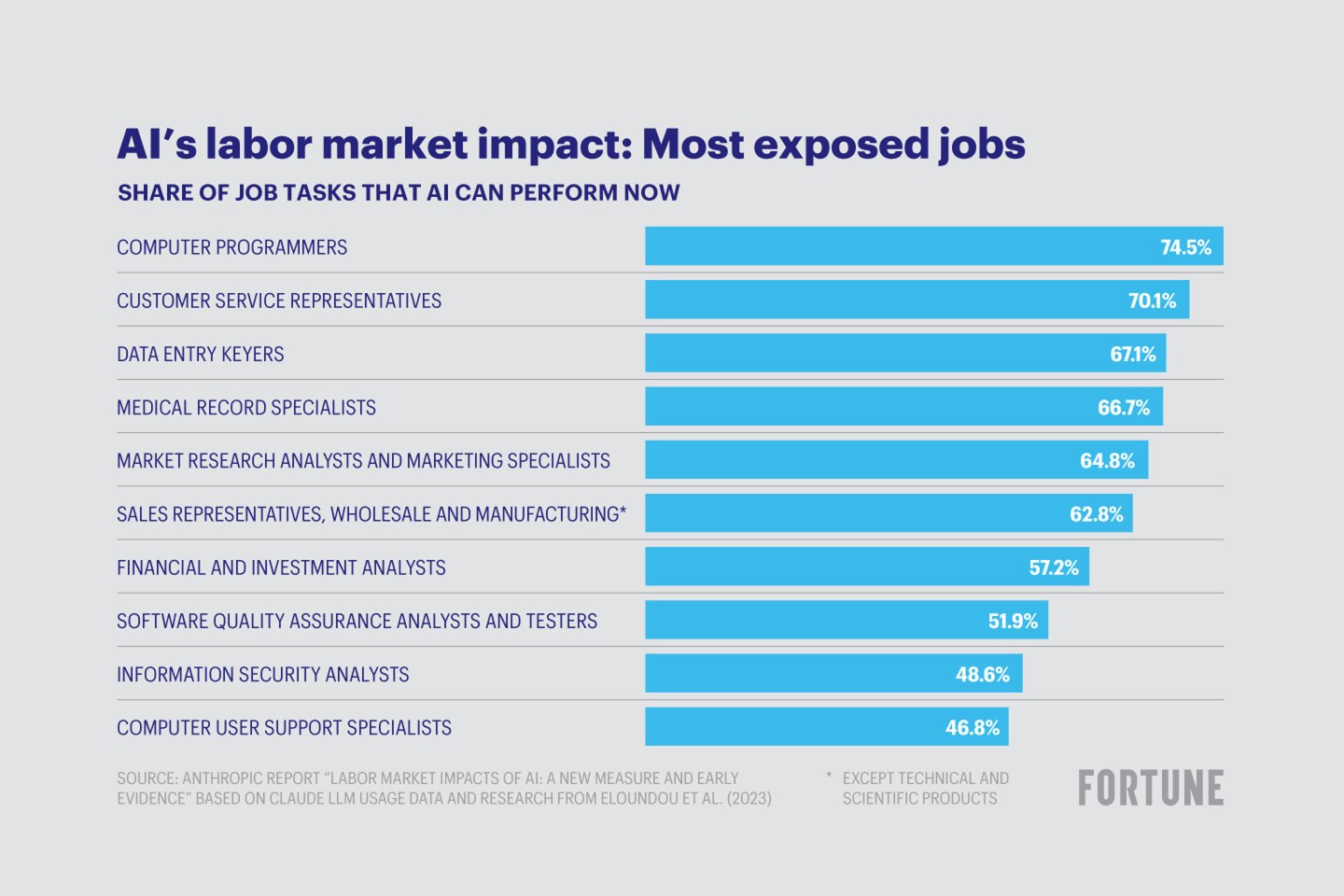
Anthropic’s research shows that AI can already do a huge portion of many jobs; its top economist talks about how that could shape the future of work
MagazineAutomation
Anthropic’s research shows that AI can already do a huge portion of many jobs; its top economist talks about how that could shape the future of work
By Matthew Heimer and Nicolas RappApril 7, 2026
4 days ago
Fortune Archives: Who gets a seat at the table?
MagazineFortune Archives
Fortune Archives: Who gets a seat at the table?
By Indrani SenApril 5, 2026
6 days ago

Most Popular

The U.S. government is spending $88 billion a month in interest on national debt—equal to spending on defense and education combined
Economy
The U.S. government is spending $88 billion a month in interest on national debt—equal to spending on defense and education combined
By Fortune EditorsApril 9, 2026
2 days ago
A Meta employee created a dashboard so coworkers can compete to be the company's No. 1 AI token user—and Zuckerberg doesn't even rank in the top 250
AI
A Meta employee created a dashboard so coworkers can compete to be the company's No. 1 AI token user—and Zuckerberg doesn't even rank in the top 250
By Fortune EditorsApril 9, 2026
2 days ago
Mark Cuban admits he made a mistake letting go of the Mavericks: 'I don't regret selling. I regret who I sold to'
Investing
Mark Cuban admits he made a mistake letting go of the Mavericks: 'I don't regret selling. I regret who I sold to'
By Fortune EditorsApril 9, 2026
1 day ago
Schools across America are quietly admitting that screens in classrooms made students worse off and are reversing years of tech-first policies
Innovation
Schools across America are quietly admitting that screens in classrooms made students worse off and are reversing years of tech-first policies
By Fortune EditorsApril 10, 2026
16 hours ago
'I hate working 5 days': Zoom CEO says traditional work schedules are becoming obsolete—and predicts a 3-day workweek by 2031
Success
'I hate working 5 days': Zoom CEO says traditional work schedules are becoming obsolete—and predicts a 3-day workweek by 2031
By Fortune EditorsApril 9, 2026
1 day ago
 The world's 500 richest people made more than a quarter trillion yesterday as volatile markets react to fragile Iran war ceasefire
Economy
 The world's 500 richest people made more than a quarter trillion yesterday as volatile markets react to fragile Iran war ceasefire
By Fortune EditorsApril 9, 2026
1 day ago

© 2026 Fortune Media IP Limited. All Rights Reserved. Use of this site constitutes acceptance of our Terms of Use and Privacy Policy | CA Notice at Collection and Privacy Notice | Do Not Sell/Share My Personal Information
FORTUNE is a trademark of Fortune Media IP Limited, registered in the U.S. and other countries. FORTUNE may receive compensation for some links to products and services on this website. Offers may be subject to change without notice.