
• Home
  • Latest
  • Fortune 500
  • Finance
  • Tech
  • Leadership
  • Lifestyle
  • Rankings
  • Multimedia

Trendingnow

1

Markets tumble worldwide as Fed resets expectations: $400 billion wiped off SpaceX stock

2

After forcing workers back to the office, Goldman Sachs and JPMorgan Chase are now letting their staff work remotely—but only for the World Cup

3

Former U.S. Secret Service agent says bringing your authentic self to work stifles teamwork: 'You don’t get high performers, you get sloppiness'

1

Markets tumble worldwide as Fed resets expectations: $400 billion wiped off SpaceX stock

2

After forcing workers back to the office, Goldman Sachs and JPMorgan Chase are now letting their staff work remotely—but only for the World Cup

3

Former U.S. Secret Service agent says bringing your authentic self to work stifles teamwork: 'You don’t get high performers, you get sloppiness'
Finance

The best buys in this overpriced market may be beaten-down big bank stocks

Shawn Tully
By
Shawn Tully
Shawn Tully
Senior Editor-at-Large
Down Arrow Button Icon
Shawn Tully
By
Shawn Tully
Shawn Tully
Senior Editor-at-Large
Down Arrow Button Icon
March 6, 2020, 6:00 AM ET
ColorBlind
Add Fortune on Google for similar content.

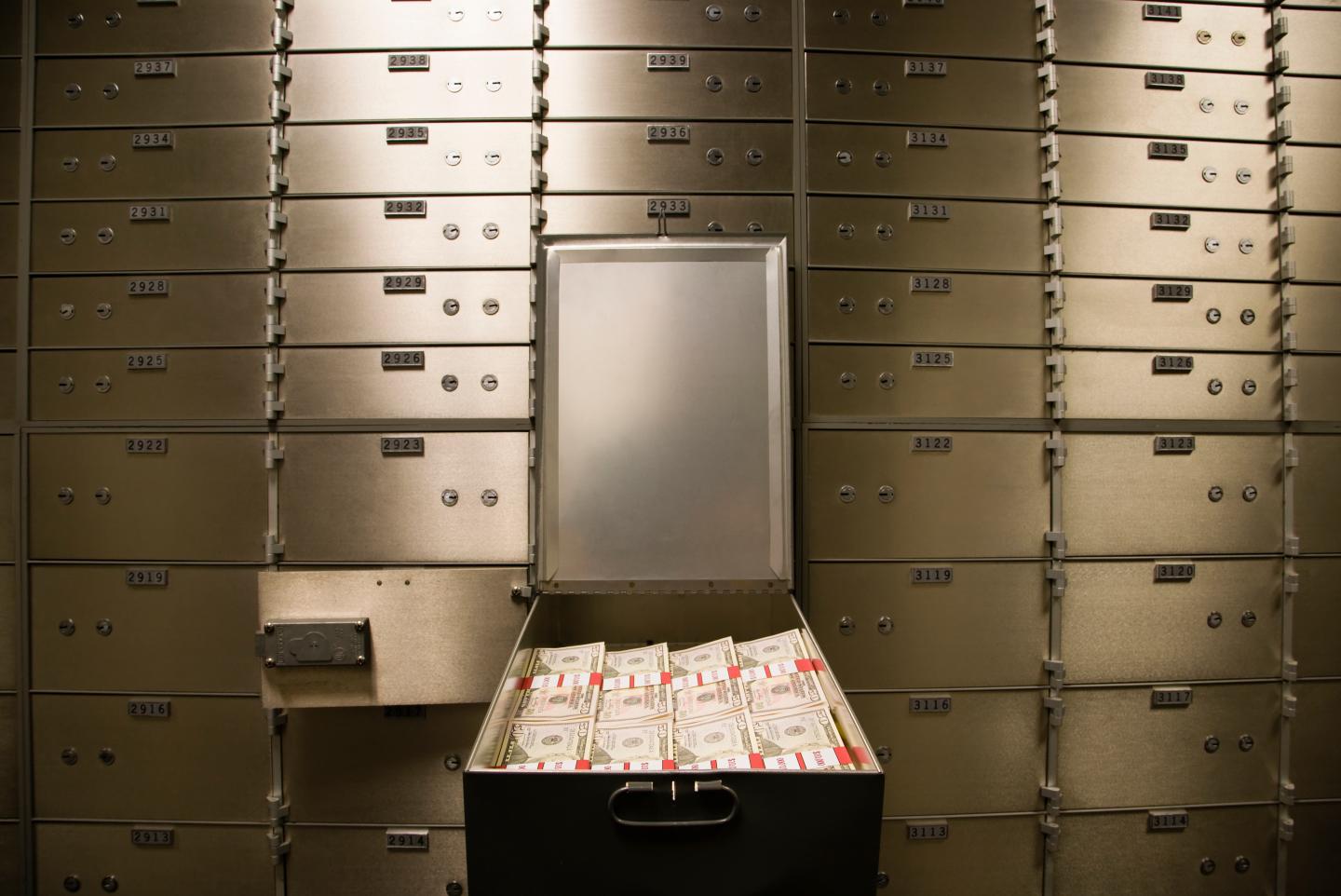
Hunting for rare bargains in today’s pricey stock market? Rummage through the deep-discount bin, and you’ll find that the best deals may be the marquee-name big banks.

In an overall market that remains pricey despite the big corononavirus-driven selloff, shares of America’s three largest banks—Bank of America, JPMorgan Chase, and Wells Fargo—look incredibly cheap. They’re offering plenty of what Warren Buffett, whose Berkshire Hathaway is a large holder of all three, lauds as “margin of safety.” Put simply, the Big Three are offering such a rich flow of earnings for each dollar paid for their shares, all of which they’re returning to investors, that they can tread water from here and still provide low double-digit returns. If they show even modest growth, and investors embrace them as long-term winners, their returns could prove spectacular.

While the S&P 500 has dropped 8.1% since hitting a record high in mid-February, shares in the Big Three have fallen far more. Their descent started late last year, but the coronavirus panic quickened the fall. Since mid-December, BofA has dropped 21%, JPMorgan 16%, and Wells by 13%. All told, the Big Three have shed a colossal $143 billion in market cap.

The selloff has sunk their price-to-earnings ratios to levels that scream bargain. JPMorgan, BofA, and Wells are selling at multiples of 10.1, 10.2, and 11.2 based on their four-quarter, trailing reported earnings. That’s half the S&P average of over 21. All three are returning at least 100% of their profits to shareholders through buybacks and dividends, and pledge to continue that policy. So let’s examine which vehicle each bank is choosing to distribute those ample earnings, and assess the odds that the flow of profits will wax or wane in the future.

Last year, BofA posted profits of $29 billion and paid out even more. It sent shareholders $6.4 billion in dividends, 22% of the total, and returned $30 billion via repurchases. But let’s assume that in future years, BofA’s earnings simply grow with inflation at an estimated 2% annually, and it pays out 100% of earnings. Its market cap is $244 billion. Investors are getting a dividend yield of 2.6% ($6.4 billion in dividends on total value of $244 billion), up from 2.1% in December.

In addition, investors will reap capital gains that come in two parts, via share buybacks and that 2% earnings growth tied to the CPI. After paying those dividends, BofA has $22.6 billion, or three-quarters of the total, left over for repurchases, which would allow it to buy back 9.3% of its stock. Add 2% from advancing profits, and if the PE, the number you multiply earnings by to get the share price, simply remains steady, the shares will appreciate by the same 11.3% a year. (That’s 9.3% from repurchases, plus 2% from growth in profits.)

Result: In a scenario in which profits simply track inflation, and the PE multiple remains at a paltry 10.1, BofA garners 2.6% from dividends, plus 11.3% in cap gains from buybacks, for a total return of 13.9%. That’s rich, considering that junk bonds are yielding 5.5%, investment-grade corporate bonds 2.5%, and the 10-year Treasury under 1%.

The picture is similar at JPMorgan. That’s remarkable, because investors are awarding little premium over BofA or even Wells to the industry’s longtime champion, superbly managed by the redoubtable Jamie Dimon. Last year, JPMorgan booked earnings of $36.4 billion, an all-time banking record. It returned $11.1 billion, or 30.4% of the total, in dividends, for a yield of 3.6% ($11.1 billion on its total value of a sector-topping $364 billion). It deployed almost all the remainder, over $24 billion, to buy back stock. Once again, let’s predict that JPMorgan follows the same policy of returning all profits to shareholders in the years to come, and simply lifts earnings with inflation. If its PE stays at that modest 11.1, JPMorgan would hand shareholders 3.6% from dividends, 2% from profit expansion, and 6.6% from buybacks—from spending $24 billion–plus in repurchase shares worth $364 billion. Total return: 12.2%.

Surprisingly, Wells Fargo, hammered in recent years by scandals and investigations, looks only slightly cheaper than JPMorgan, and its multiple at 10.2 is a whisker above BofA’s. That picture is deceiving, because Wells’ 2019 earnings of $19.5 billion, under new CEO Charles Scharf, were depressed by restructuring and other one-time charges. So adjusting for what may be a temporary dip, Wells is probably the cheapest of the lot.

Exhibit A is its 5% dividend yield. Wells has by far the lowest market cap of the Big Three at $167 billion, but it distributes a hefty $8.3 billion in dividends, even more than BofA, and three-quarters of JPMorgan’s payout. If Wells devotes its remaining $11.2 billion to annual buybacks, it will add 6.6% in capital gains ($11.2 billion deployed to repurchase shares worth $167 billion). Tacking on 2% earnings growth, assuming its super-low PE remains constant, Wells would return 5% in dividends, 6.6% from buybacks, and 2% from earnings growth, good for 13.6%.

Why are the big-name banks so unloved? Judging from their multiples, investors don’t expect their earnings to even grow with inflation. Instead, they’re predicting years of long, slow decline. Markets aren’t dumb, and a good case can be made that the universal banks face a bleak future. Today’s record-low interest rates shrink margins on loans, economic growth that creates demand for consumer and corporate borrowing is waning, and the Big Three now face competition from a new generation of digital, online-only newcomers. Markets may also be baking in the expectation that the next recession will bring a wave in defaults on consumer and business loans that would sap earnings.

Consider, however, that JPMorgan and Bank of America have been thriving in a low-rate environment for several years because of good loan growth and strong cost discipline. Earnings for both banks have been far outpacing inflation. JPMorgan’s profits rose 12.2% in 2019, while BofA’s jumped 11.2%. And although Wells’ earnings fell in 2019, they’ve been mainly steady over the past several years despite the backlash from the scandals that tarnished the once-vaunted brand.

All three banks have also created their own menus of digital and mobile offerings to appeal to millennials. So it’s by no means clear that the rise of online disrupters spells decline for the traditional leaders, whose gigantic branch networks provide pools of low-cost deposits available for credit card, auto, or commercial loans.

For example, if the big banks simply grow earnings with the economy at 4%, instead of matching inflation at 2%, they’d gain an extra 2%. If that happens, BofA would return 15.9%, JPMorgan 14.2%, and Wells 15.6%. They could also get a bonus bump from higher valuations. By continuing to show decent growth when the coronavirus scare passes and interest rates return to their pre-outbreak, still-well-below-average levels, the Big Three could sway investors to award them much higher PEs.

The case for bank stocks is basic: They can amble along in a no-growth walk, and you can still get double-digit returns. The combination of super-low prices and a policy of sending all cash to shareholders is hard to beat. In this still-frothy market, these unloved stocks could be long-term winners.

More must-read stories from Fortune:

—Coronavirus spreads to a previously healthy sector: corporate earnings
—A Fed rate cut won’t cure what’s ailing the stock market
—How companies like Ernst & Young are going to extremes to avoid infections
—These cities have the most jobs with six-figure salaries
—Credit Karma was acquired rather than pursuing an IPO. Will more companies follow suit in 2020?

Subscribe to Fortune’s Bull Sheet for no-nonsense finance news and analysis daily.

About the Author
Shawn Tully
By Shawn TullySenior Editor-at-Large

Shawn Tully is a senior editor-at-large at Fortune, covering the biggest trends in business, aviation, politics, and leadership.

See full bioRight Arrow Button Icon
Add Fortune on Google for similar content.

Latest in Finance

Finance
Lorem ipsum dolor sit amet, consectetur adipiscing elit, sed do eiusmod tempor incididunt ut labore et dolore magna aliqua. Ut enim ad minim veniam
By Fortune Editors
October 20, 2025
Finance
Lorem ipsum dolor sit amet, consectetur adipiscing elit, sed do eiusmod tempor incididunt ut labore et dolore magna aliqua. Ut enim ad minim veniam
By Fortune Editors
October 20, 2025
Finance
Lorem ipsum dolor sit amet, consectetur adipiscing elit, sed do eiusmod tempor incididunt ut labore et dolore magna aliqua. Ut enim ad minim veniam
By Fortune Editors
October 20, 2025
Finance
Lorem ipsum dolor sit amet, consectetur adipiscing elit, sed do eiusmod tempor incididunt ut labore et dolore magna aliqua. Ut enim ad minim veniam
By Fortune Editors
October 20, 2025
Finance
Lorem ipsum dolor sit amet, consectetur adipiscing elit, sed do eiusmod tempor incididunt ut labore et dolore magna aliqua. Ut enim ad minim veniam
By Fortune Editors
October 20, 2025
Finance
Lorem ipsum dolor sit amet, consectetur adipiscing elit, sed do eiusmod tempor incididunt ut labore et dolore magna aliqua. Ut enim ad minim veniam
By Fortune Editors
October 20, 2025

Most Popular

Finance
Lorem ipsum dolor sit amet, consectetur adipiscing elit, sed do eiusmod tempor incididunt ut labore et dolore magna aliqua. Ut enim ad minim veniam
By Fortune Editors
October 20, 2025
Finance
Lorem ipsum dolor sit amet, consectetur adipiscing elit, sed do eiusmod tempor incididunt ut labore et dolore magna aliqua. Ut enim ad minim veniam
By Fortune Editors
October 20, 2025
Finance
Lorem ipsum dolor sit amet, consectetur adipiscing elit, sed do eiusmod tempor incididunt ut labore et dolore magna aliqua. Ut enim ad minim veniam
By Fortune Editors
October 20, 2025
Finance
Lorem ipsum dolor sit amet, consectetur adipiscing elit, sed do eiusmod tempor incididunt ut labore et dolore magna aliqua. Ut enim ad minim veniam
By Fortune Editors
October 20, 2025
Finance
Lorem ipsum dolor sit amet, consectetur adipiscing elit, sed do eiusmod tempor incididunt ut labore et dolore magna aliqua. Ut enim ad minim veniam
By Fortune Editors
October 20, 2025
Finance
Lorem ipsum dolor sit amet, consectetur adipiscing elit, sed do eiusmod tempor incididunt ut labore et dolore magna aliqua. Ut enim ad minim veniam
By Fortune Editors
October 20, 2025
Fortune Secondary Logo
Rankings
  • 100 Best Companies
  • Fortune 500
  • Global 500
  • Fortune 500 Europe
  • Most Powerful Women
  • World's Most Admired Companies
  • See All Rankings
  • Lists Calendar
Sections
  • Finance
  • Fortune Crypto
  • Features
  • Leadership
  • Health
  • Commentary
  • Success
  • Retail
  • Mpw
  • Tech
  • Lifestyle
  • CEO Initiative
  • Asia
  • Politics
  • Conferences
  • Europe
  • Newsletters
  • Personal Finance
  • Environment
  • Magazine
  • Education
Customer Support
  • Frequently Asked Questions
  • Customer Service Portal
  • Privacy Policy
  • Terms Of Use
  • Single Issues For Purchase
  • International Print
Commercial Services
  • Advertising
  • Fortune Brand Studio
  • Fortune Analytics
  • Fortune Conferences
  • Business Development
  • Group Subscriptions
About Us
  • About Us
  • Press Center
  • Work At Fortune
  • Terms And Conditions
  • Site Map
  • About Us
  • Press Center
  • Work At Fortune
  • Terms And Conditions
  • Site Map
  • Facebook icon
  • Twitter icon
  • LinkedIn icon
  • Instagram icon
  • Pinterest icon

Latest in Finance

Amazon Prime Day isn’t a midsummer shopping event anymore. Here’s what changed in 2026
RetailAmazon
Amazon Prime Day isn’t a midsummer shopping event anymore. Here’s what changed in 2026
By Vidhi Choudhary and Retail BrewJune 23, 2026
4 hours ago
Tom and Diane Peterman pose outside their home at Black Lake on Wednesday, April 29, 2026, in Grant Township, Mich.
EnvironmentNatural disasters
FEMA told these families they weren’t in a flood zone. Then ice came through the windows
By Tammy Webber, M.K. Wildeman and The Associated PressJune 23, 2026
5 hours ago
Quantum computing stocks surge after Trump signed executive orders backing the sector
Investingquantum computing
Quantum computing stocks surge after Trump signed executive orders backing the sector
By Marco Quiroz-GutierrezJune 23, 2026
5 hours ago
Alan Greenspan testifying before the Senate Banking Committee.
BankingFederal Reserve
The man who invented the Fed’s magic trick just died. His successor is about to try it again
By Eva RoytburgJune 23, 2026
7 hours ago
data
EnergyData centers
AI’s power hunger is turning electric utilities into Wall Street growth stocks — and customers may pay the price
By Conor Harrison and The ConversationJune 23, 2026
8 hours ago
k
PoliticsElections
Coming to an election near you: prediction markets
By Matt Motta, Robert Ralston and The ConversationJune 23, 2026
8 hours ago

Most Popular

Markets tumble worldwide as Fed resets expectations: $400 billion wiped off SpaceX stock
Banking
Markets tumble worldwide as Fed resets expectations: $400 billion wiped off SpaceX stock
By Jim EdwardsJune 23, 2026
16 hours ago
After forcing workers back to the office, Goldman Sachs and JPMorgan Chase are now letting their staff work remotely—but only for the World Cup
Success
After forcing workers back to the office, Goldman Sachs and JPMorgan Chase are now letting their staff work remotely—but only for the World Cup
By Orianna Rosa RoyleJune 23, 2026
13 hours ago
Former U.S. Secret Service agent says bringing your authentic self to work stifles teamwork: 'You don’t get high performers, you get sloppiness'
Success
Former U.S. Secret Service agent says bringing your authentic self to work stifles teamwork: 'You don’t get high performers, you get sloppiness'
By Sydney LakeJune 21, 2026
3 days ago
Current price of oil as of June 22, 2026
Personal Finance
Current price of oil as of June 22, 2026
By Joseph HostetlerJune 22, 2026
2 days ago
Meet the 2 men putting New York's $300 billion pension fund in play for the first time in 20 years
Investing
Meet the 2 men putting New York's $300 billion pension fund in play for the first time in 20 years
By Nick LichtenbergJune 22, 2026
1 day ago
By 7 a.m., Bank of America’s CEO has already read 5 newspapers, his email inbox, and hit the gym—he says if you’re late to meetings, you’re ‘selfish’
Success
By 7 a.m., Bank of America’s CEO has already read 5 newspapers, his email inbox, and hit the gym—he says if you’re late to meetings, you’re ‘selfish’
By Preston ForeJune 22, 2026
1 day ago

© 2026 Fortune Media IP Limited. All Rights Reserved. Use of this site constitutes acceptance of our Terms of Use and Privacy Policy | CA Notice at Collection and Privacy Notice | Do Not Sell/Share My Personal Information
FORTUNE is a trademark of Fortune Media IP Limited, registered in the U.S. and other countries. FORTUNE may receive compensation for some links to products and services on this website. Offers may be subject to change without notice.