• Home
  • Latest
  • Fortune 500
  • Finance
  • Tech
  • Leadership
  • Lifestyle
  • Rankings
  • Multimedia
emissions

The oil industry is finally talking climate crisis, but don’t expect change to come easily

By
Katherine Dunn
Katherine Dunn
Down Arrow Button Icon
By
Katherine Dunn
Katherine Dunn
Down Arrow Button Icon
February 28, 2020, 4:30 PM ET
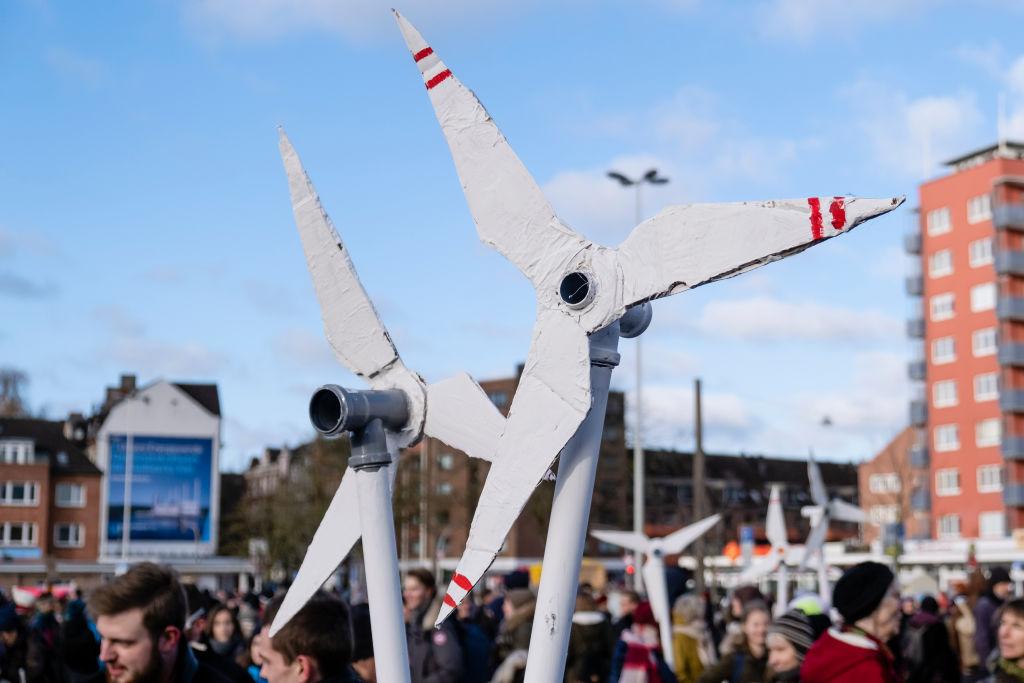
Demonstrators hold cardboard wind turbines in the air during a protest over climate action in Kiel, Germany in November 2019.
During a demonstration for climate protection in Kiel, Germany, in November 2019, demonstrators hold cardboard wind turbines. Frank Molter—Picture Alliance/Getty Images

It took approximately one hour for someone to mention Greta Thunberg.

Standing onstage at a Monday morning event at the start of the annual International Petroleum Week in London, Chris Midgley, the global head of analytics at S&P Global Platts, flipped to the next slide on his Powerpoint presentation, and an illustration of the Swedish climate activist loomed over a ballroom full of oil and gas executives.

“This young lady, Greta Thunberg, has had a huge impact,” he said. 

Thunberg, who has launched to global fame in the months since her “Fridays for Future” protest movement spread worldwide, was not present at the oil industry’s annual event, a weeklong mash up of conferences and parties in London that operates as a temperature-taking for the industry.

But her presence was clearly felt, as the face of the growing public pressure on the oil and gas sector to act on climate change. This year, that pressure was a major theme for the oil industry, bringing environmental questions to a business that has often been accused of looking the other way; presenting difficult questions about the possibility of meeting increasing energy demand while also decarbonizing; and frequently drawing assurances that the world—regardless of environmental commitments—would still need oil for many years to come.

‘Obsolescence and destruction’

By the following day, that pressure was increasingly obvious, even as climate protestors themselves were nowhere to be seen. (Last year, Extinction Rebellion protestors glued themselves to the venue’s doors.)

Also conspicuously absent at the official International Petroleum Week event, which began on Tuesday, were the usual keynotes from CEOs of the world’s largest oil and gas companies. In their place were two sets of speakers: experts, some from within the sector, who offered the industry sharp rebukes on its record on climate change—and executives charged with the awkward task of defending their companies’ records on the environment. 

“Many oil and gas companies are facing a major challenge,” said Fatih Birol, the head of the International Energy Agency, speaking at the event. “On the one hand, short-term profits. On the other hand, having a social license [to operate]. How are they going to balance these things?”

So far, not well. Claims that the industry was investing in clean energy did not bear out scrutiny, Birol said: an IEA analysis showed that 99% of investment by major oil and gas companies worldwide was in fossil fuels, with just the remaining 1% in clean energy. Meanwhile, oil companies’ own operations contributed 15% to their emissions, with the majority of that in the form of methane.

“Ladies and gentlemen, these methane emissions can be reduced with existing technology, and at no or low cost,” he said. “We need companies not to be greedy here.”

The industry must take “immediate action”, and work with the other sectors it serves in order to stay relevant, said Andrew Smart, Global Energy Lead at Accenture.

“We’re clearly confronted with the fact that many other industries and sectors have embraced the circular economies, are driving the circular economies, far quicker and more effectively than we have today,” Smart said. “And that there is a massive opportunity for us if we step in and embrace that.”

The industry has the background and the capability to play a major role in the energy transition, particularly in developing carbon capture and storage technology, Bob Ward, from the Grantham Research Institute on Climate Change and the Environment at the London School of Economics.

But the lack of investment in clean energy gives the impression of a sector “invested in its own obsolescence and destruction”, he said, while climate denial is still being allowed to continue.

“The oil and gas industry has a track record of dragging its feet on this issue,” Ward said. “There are those within the industry that have in the past—and continue to—promote climate change denial. Every time somebody from within the industry promotes climate change denial, it damages the whole industry. And you’re going to have to call them out on it. It’s bad science, it’s bad economics, it’s bad politics, it’s bad ethics.”

‘Nothing less than a complete change in the economic model.’ 

For energy companies, it was a tense act to follow. Speaking after the other panelists, executives at Shell and Equinor, the Norwegian national energy company, made statements recognizing the severity of the impact of climate change, while also defending their own companies’ efforts.

Sinead Lynch, U.K. Country Chair for Shell, said the company had set ambitious emissions goals for 2050—which, until BP committed to net zero emissions in 2050 earlier this month, were broadly viewed as the most aggressive among the world’s largest oil majors—and was backing solar and wind projects, while supporting the creation of a government carbon tax in every market they operate in. 

But she also argued that the shift was going to be more difficult if all the players on the energy sector were not working together with “unprecedented” levels of collaboration.

“One of the challenges of that deep collaboration that we need is that the public debate on climate change is becoming increasingly polarized,” she said.

Rising populations and the search for better living standards would inevitably raise energy demand, Lynch said, “and as much of that energy as possible needs to be clean. But oil and gas will also need to play a role, and so society’s use of oil and gas will not necessarily reduce at the pace many might like.” 

Echoing Lynch’s comments, Al Cook, executive vice president of Global Strategy and Business Development at Equinor, pointed out the company’s investments in carbon capture and storage near Norway, and a wind energy project offshore Scotland. The impact of climate change was clear, he noted.

“Even in Norway, at the beginning of January, we saw a temperature 19 degrees [celcius],” or 66 degrees Fahrenheit, he said. “If you’ve been to Norway, you’ll know that that is not normal for the beginning of January.”

But he, too, said that the industry needed more collaboration, including with governments and investors.

“We’re working together for nothing less than a complete change in the global economic model,” he said. “For 200 years, we’ve made the environment the servant of the economy, extracting resources to drive wealth, and it has benefited billions.”

Now, Cook said, it was time “to make economies the servant of the environment.” 

If it felt like a mediated confrontation between the tensions of public pressure over climate change, and what the future of energy companies will look like, it was still a notable shift.

Reflecting on the discussions of climate change dominating this year’s event (alongside another crisis: the coronavirus outbreak), Paola Rodrigues-Masiu, an analyst at energy consultancy Rystad, said the needle had finally shifted from “if” the energy transition was happening—to what that transition would actually look like.

It was a shift that was “unthinkable” just a couple years ago, she said—and meant two traditionally divided actors on climate change would finally be forced to meaningfully interact.

“Oil companies and environmentalists: they can no longer ignore each other,” she said. “I think that’s the slogan of 2020.”

More must-read stories from Fortune:

—In China, oil won’t be the only sector battered by the coronavirus
—Energy emissions plateaued in 2019
—Oil demand was set to rise in 2020, then the coronavirus outbreak hit
—Can Germany phase out nuclear energy and coal?
—Coronavirus may be the straw that breaks the back of oil fracking

Subscribe to The Loop, a weekly look at the revolutions in energy, tech, and sustainability.

About the Author
By Katherine Dunn
LinkedIn iconTwitter icon
See full bioRight Arrow Button Icon

Latest in

Finance
Lorem ipsum dolor sit amet, consectetur adipiscing elit, sed do eiusmod tempor incididunt ut labore et dolore magna aliqua. Ut enim ad minim veniam
By Fortune Editors
October 20, 2025
Finance
Lorem ipsum dolor sit amet, consectetur adipiscing elit, sed do eiusmod tempor incididunt ut labore et dolore magna aliqua. Ut enim ad minim veniam
By Fortune Editors
October 20, 2025
Finance
Lorem ipsum dolor sit amet, consectetur adipiscing elit, sed do eiusmod tempor incididunt ut labore et dolore magna aliqua. Ut enim ad minim veniam
By Fortune Editors
October 20, 2025
Finance
Lorem ipsum dolor sit amet, consectetur adipiscing elit, sed do eiusmod tempor incididunt ut labore et dolore magna aliqua. Ut enim ad minim veniam
By Fortune Editors
October 20, 2025
Finance
Lorem ipsum dolor sit amet, consectetur adipiscing elit, sed do eiusmod tempor incididunt ut labore et dolore magna aliqua. Ut enim ad minim veniam
By Fortune Editors
October 20, 2025
Finance
Lorem ipsum dolor sit amet, consectetur adipiscing elit, sed do eiusmod tempor incididunt ut labore et dolore magna aliqua. Ut enim ad minim veniam
By Fortune Editors
October 20, 2025

Most Popular

Finance
Lorem ipsum dolor sit amet, consectetur adipiscing elit, sed do eiusmod tempor incididunt ut labore et dolore magna aliqua. Ut enim ad minim veniam
By Fortune Editors
October 20, 2025
Finance
Lorem ipsum dolor sit amet, consectetur adipiscing elit, sed do eiusmod tempor incididunt ut labore et dolore magna aliqua. Ut enim ad minim veniam
By Fortune Editors
October 20, 2025
Finance
Lorem ipsum dolor sit amet, consectetur adipiscing elit, sed do eiusmod tempor incididunt ut labore et dolore magna aliqua. Ut enim ad minim veniam
By Fortune Editors
October 20, 2025
Finance
Lorem ipsum dolor sit amet, consectetur adipiscing elit, sed do eiusmod tempor incididunt ut labore et dolore magna aliqua. Ut enim ad minim veniam
By Fortune Editors
October 20, 2025
Finance
Lorem ipsum dolor sit amet, consectetur adipiscing elit, sed do eiusmod tempor incididunt ut labore et dolore magna aliqua. Ut enim ad minim veniam
By Fortune Editors
October 20, 2025
Finance
Lorem ipsum dolor sit amet, consectetur adipiscing elit, sed do eiusmod tempor incididunt ut labore et dolore magna aliqua. Ut enim ad minim veniam
By Fortune Editors
October 20, 2025
Fortune Secondary Logo
Rankings
  • 100 Best Companies
  • Fortune 500
  • Global 500
  • Fortune 500 Europe
  • Most Powerful Women
  • World's Most Admired Companies
  • See All Rankings
  • Lists Calendar
Sections
  • Finance
  • Fortune Crypto
  • Features
  • Leadership
  • Health
  • Commentary
  • Success
  • Retail
  • Mpw
  • Tech
  • Lifestyle
  • CEO Initiative
  • Asia
  • Politics
  • Conferences
  • Europe
  • Newsletters
  • Personal Finance
  • Environment
  • Magazine
  • Education
Customer Support
  • Frequently Asked Questions
  • Customer Service Portal
  • Privacy Policy
  • Terms Of Use
  • Single Issues For Purchase
  • International Print
Commercial Services
  • Advertising
  • Fortune Brand Studio
  • Fortune Analytics
  • Fortune Conferences
  • Business Development
  • Group Subscriptions
About Us
  • About Us
  • Press Center
  • Work At Fortune
  • Terms And Conditions
  • Site Map
  • About Us
  • Press Center
  • Work At Fortune
  • Terms And Conditions
  • Site Map
  • Facebook icon
  • Twitter icon
  • LinkedIn icon
  • Instagram icon
  • Pinterest icon

Latest in

Asia’s ultra-luxury Capella Hotels brand plans to double its portfolio by 2030, starting with Florence and Riyadh
Travel & LeisureHospitality
Asia’s ultra-luxury Capella Hotels brand plans to double its portfolio by 2030, starting with Florence and Riyadh
By Angelica AngMay 8, 2026
43 minutes ago
You’re probably safe from the Hantavirus outbreak, but here’s what you absolutely must not do, experts say
PoliticsCoronavirus
You’re probably safe from the Hantavirus outbreak, but here’s what you absolutely must not do, experts say
By Catherina GioinoMay 8, 2026
5 hours ago
The Best Online Personal Trainers of 2026: In-Depth Workout Coaching at Home
HealthDietary Supplements
The Best Online Personal Trainers of 2026: In-Depth Workout Coaching at Home
By Emily PharesMay 8, 2026
6 hours ago
Man driving and looking shocked.
Economygas prices
Driving less, canceling vacations, and tightening budgets: All the ways Americans are coping with soaring gas prices
By Tristan BoveMay 8, 2026
7 hours ago
Goldman Sachs’ tech boss says tracking individual AI usage isn’t useful. He just watches how fast his 12,000 engineers move from idea to production
AIBanks
Goldman Sachs’ tech boss says tracking individual AI usage isn’t useful. He just watches how fast his 12,000 engineers move from idea to production
By Marco Quiroz-GutierrezMay 8, 2026
8 hours ago
kid on phone
Politicssmartphones and mobile devices
‘Close to zero’: Schools are spending tens of millions banning phones from classrooms, but test scores aren’t improving
By Jake AngeloMay 8, 2026
8 hours ago

Most Popular

California farmers must destroy 420,000 peach trees after Del Monte closes its canneries and cancels more than $550 million in long-term contracts
North America
California farmers must destroy 420,000 peach trees after Del Monte closes its canneries and cancels more than $550 million in long-term contracts
By Sasha RogelbergMay 7, 2026
1 day ago
'Blue dot fever' plagues musicians like Post Malone, Meghan Trainor, and Zayn as a growing list of artists cancel tours due to lagging ticket sales
Arts & Entertainment
'Blue dot fever' plagues musicians like Post Malone, Meghan Trainor, and Zayn as a growing list of artists cancel tours due to lagging ticket sales
By Dave Lozo and Morning BrewMay 7, 2026
1 day ago
A Michigan farm town voted down plans for a giant OpenAI-Oracle data center. Weeks later, construction began
Magazine
A Michigan farm town voted down plans for a giant OpenAI-Oracle data center. Weeks later, construction began
By Sharon GoldmanMay 6, 2026
3 days ago
U.S. Treasury will have to borrow $2 trillion this year just to continue functioning—more than $166 billion every month
Economy
U.S. Treasury will have to borrow $2 trillion this year just to continue functioning—more than $166 billion every month
By Eleanor PringleMay 7, 2026
2 days ago
Airbnb CEO Brian Chesky warns two types of people won’t survive the AI era: ‘pure people managers’ and workers who resist change
Success
Airbnb CEO Brian Chesky warns two types of people won’t survive the AI era: ‘pure people managers’ and workers who resist change
By Emma BurleighMay 7, 2026
1 day ago
Auto-enrollment in Medicare Advantage isn't a nudge. It's a trap
Commentary
Auto-enrollment in Medicare Advantage isn't a nudge. It's a trap
By Brian KeyserMay 7, 2026
2 days ago

© 2026 Fortune Media IP Limited. All Rights Reserved. Use of this site constitutes acceptance of our Terms of Use and Privacy Policy | CA Notice at Collection and Privacy Notice | Do Not Sell/Share My Personal Information
FORTUNE is a trademark of Fortune Media IP Limited, registered in the U.S. and other countries. FORTUNE may receive compensation for some links to products and services on this website. Offers may be subject to change without notice.