• Home
  • Latest
  • Fortune 500
  • Finance
  • Tech
  • Leadership
  • Lifestyle
  • Rankings
  • Multimedia

Trendingnow

1

The U.S. campaigned to host the World Cup. Now soccer fans will trade their countries' train system for the U.S.'s 'D' rated infrastructure

2

The pig in the python: Baby Boomers are strangling the economy they built by refusing to move or retire

3

Jeff Bezos wants the bottom half of earners to pay zero income tax—he says nurses making just $75K should save $12K a year

1

The U.S. campaigned to host the World Cup. Now soccer fans will trade their countries' train system for the U.S.'s 'D' rated infrastructure

2

The pig in the python: Baby Boomers are strangling the economy they built by refusing to move or retire

3

Jeff Bezos wants the bottom half of earners to pay zero income tax—he says nurses making just $75K should save $12K a year
MagazineHow I Got Started

How this 20-time founder with hundreds of patents got his start

By
Dinah Eng
Dinah Eng
Down Arrow Button Icon
By
Dinah Eng
Dinah Eng
Down Arrow Button Icon
October 1, 2019, 6:30 AM ET
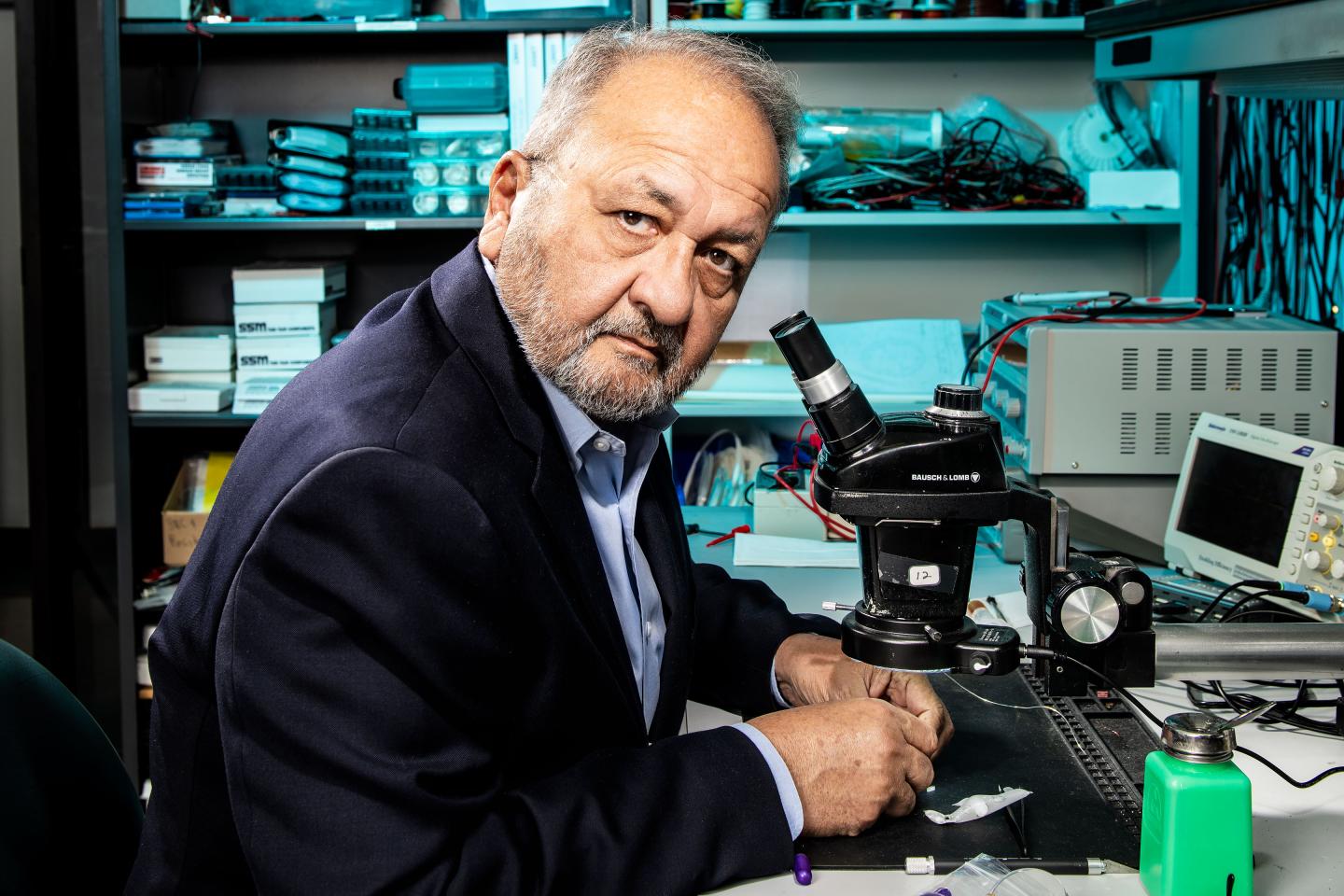
VEN1019.Mir Imran-Rani Therapeutics-01
Mir Imran, founder of Rani Therapeutics, at its lab in San Jose. Photograph by Winni Wintermeyer for FortunePhotograph by Winni Wintermeyer for Fortune

Interview by Dinah Eng

Doing business came naturally to me. I was born in Hyderabad, India, and started building toys and selling them to my classmates when I was 8 or 9. I was infected by the entrepreneurial bug. By ninth grade, I was building radios in matchboxes that I sold at school. 

When I was growing up, there was a lot of corruption in India. At school, a kid from a wealthy family could bribe a teacher for a better grade. When I turned 15, I decided to leave India and sent applications to U.S. and Canadian universities. My parents didn’t know anything until I started getting acceptances. 

When the time came, I asked my dad for money. He tried to persuade me to study in India, but I said, “If you don’t give me the money, I’ll figure out a way to do it.” So he borrowed $4,000 from friends, even though borrowing money was frowned upon in India, and with that, I went to New York. In the days without Internet, it was quite an exciting journey. I was 17½ and enrolled at Rutgers. 

Back then, you could pay $200 per semester, and there was no limit on credit hours. So I fit all my courses for an electrical engineering degree into two years. I lived in a walk-in closet—subleasing it from another student for $20 a month—and had zero social life.

In 1975 I got excited about ­single-chip microcomputers. I started my first company, manufacturing home security systems, and was selling and installing them on the weekends. I financed everything with a credit card and made some money, but going to school full-time and running a business didn’t work, so I shut it down.

One year I saw a summer job posting for a school in northern New Jersey that served children with cerebral palsy. I spent time with a 7-year-old girl named Jenny who was quadriplegic, and I developed a device she could use with the muscles in her neck to communicate. That cemented my interest in bioengineering.

Then I got a scholarship to graduate school. I’ve never felt richer than when I started getting that $500-a-month stipend, and I saved the money to send back to my dad.

Toward the end of grad school, I started a second security company that failed because I didn’t understand how much money to raise, where to raise it, or what a business plan was. My entrepreneurial career started with two failures.

A professor insisted that I go to medical school. It was a great experience to understand the disease process and how poorly things were managed and treated. But as an engineer, I wanted to understand why things work the way they do and decided not to practice medicine. 

A cardiologist [Michel Mirowski] who wanted to create an implantable cardioverter-defibrillator invited me to work with him in Pittsburgh. He thought it would cost about $100,000 to produce the device, but it ended up costing $27 million and took six years to develop. Raising the money and talking to the FDA taught me a lot. I developed the second-generation device, which got FDA approval. Eli Lilly came in as an investor and eventually bought the company. So in 1985, I left for California.

Realtors at the time were using a brass lockbox with a universal key that thieves stole to obtain house keys. While I was selling my home, it got burglarized this way, so I thought, I have to fix that. In the late ’80s, I started a company to invent an electronic lockbox that keeps track of every realtor who enters, with a time and date, which has become the industry standard. I sold that company to Supra.

Early on, my biggest challenge was understanding business and fundraising. I had such a hard time asking people for investment. I had the mortal fear that the company could fail, and I could never show my face again. 

I was talented at science and technology, but investors saw me as a techie and not as a business guy. A lot of scientists stop working in the lab when they get into business, but I kept developing products while I grew my businesses.

My plan was to found a life-science com­pany for each medical device I invented. Invariably, a larger company would be looking for new categories of therapy, wanting to own those, so they’d come and make an offer. I even took three companies public—they still got acquired.

I was starting companies at a pace of one a year because there were so many problems I wanted to solve. I’d hire a CEO, do some work, build a team, and start another company.

In 1998, some friends and I started Adam Ventures. We wrote small checks to 81 dotcoms and 37 med-tech companies. Many of the med-tech companies did well, but of the 81 tech companies, 78 went kaput. Only three made money, and one of them was Google.

The problem we’re addressing today at Rani Therapeutics is how to deliver protein drugs orally. We plan to convert insulin and another diabetes drug into an oral pill. This will improve patient compliance and get better outcomes, taking away the need for self-injections. 

You can treat multiple sclerosis, Crohn’s disease, and a long list of chronic diseases with protein drugs, so we could have a transformative effect on the treatment of 30 to 40 diseases with this process. We’ve raised $140 million so far from investors like Google and Novartis, and are currently in clinical trials in Australia.

I realized early on that each company can take six to eight years to reach clinical success. That would have meant I could solve only five problems and take them to completion within my lifetime, if taken one at a time. So I decided to work on multiple problems. At any given time, I have six to eight companies at various stages of development. I doubt I’ll ever retire because I’ll always have six to eight unfinished businesses. My hope is that someone will take them over and complete them after I die.

I’m constantly pushing the boundaries of my knowledge. The young man is gone, and in his place is an old, bald guy, but I’m working harder than ever. I have the same curiosity and passion, and unless the body gives out, I hope to keep producing for years to come. 

My Best Advice 

Mir Imran, founder of Rani Therapeutics

Choose the right problem. 

To me, innovation is about identifying a problem that’s worthy of a solution and framing it without thinking about the methods you were taught. The solution needs to have dramatic impact rather than incremental improvement. To choose the right problem, look at current solutions, market potential, IP landscape, potential for reimbursement, and other factors.

Imran by the Numbers

—Founded 22 life-science companies.
—Was issued 364 patents, with an additional 343 patents pending.
—Invested in over 100 health care companies.

A version of this article appears in the October 2019 issue of Fortune with the headline “Master of Invention.”

More must-read stories from Fortune:

—Billionaire Ken Griffin to fund $10 million Parkinson’s competition with Michael J. Fox Foundation
—How people are using smartwatches to lose weight and stay healthy
—Why the cost of U.S. health insurance is surging
—”Virtual care is the great equalizer in healthcare,” says Teladoc Health CEO
—Listen to our audio briefing, Fortune 500 Daily
Follow Fortune on Flipboard to stay up-to-date on the latest news and analysis.

Sign up for the Fortune Features email list so you don’t miss our biggest features, exclusive interviews, and investigations.

About the Author
By Dinah Eng
See full bioRight Arrow Button Icon

Latest from the Magazine

Finance
Lorem ipsum dolor sit amet, consectetur adipiscing elit, sed do eiusmod tempor incididunt ut labore et dolore magna aliqua. Ut enim ad minim veniam
By Fortune Editors
October 20, 2025
Finance
Lorem ipsum dolor sit amet, consectetur adipiscing elit, sed do eiusmod tempor incididunt ut labore et dolore magna aliqua. Ut enim ad minim veniam
By Fortune Editors
October 20, 2025
Finance
Lorem ipsum dolor sit amet, consectetur adipiscing elit, sed do eiusmod tempor incididunt ut labore et dolore magna aliqua. Ut enim ad minim veniam
By Fortune Editors
October 20, 2025
Finance
Lorem ipsum dolor sit amet, consectetur adipiscing elit, sed do eiusmod tempor incididunt ut labore et dolore magna aliqua. Ut enim ad minim veniam
By Fortune Editors
October 20, 2025
Finance
Lorem ipsum dolor sit amet, consectetur adipiscing elit, sed do eiusmod tempor incididunt ut labore et dolore magna aliqua. Ut enim ad minim veniam
By Fortune Editors
October 20, 2025
Finance
Lorem ipsum dolor sit amet, consectetur adipiscing elit, sed do eiusmod tempor incididunt ut labore et dolore magna aliqua. Ut enim ad minim veniam
By Fortune Editors
October 20, 2025

Most Popular

Finance
Lorem ipsum dolor sit amet, consectetur adipiscing elit, sed do eiusmod tempor incididunt ut labore et dolore magna aliqua. Ut enim ad minim veniam
By Fortune Editors
October 20, 2025
Finance
Lorem ipsum dolor sit amet, consectetur adipiscing elit, sed do eiusmod tempor incididunt ut labore et dolore magna aliqua. Ut enim ad minim veniam
By Fortune Editors
October 20, 2025
Finance
Lorem ipsum dolor sit amet, consectetur adipiscing elit, sed do eiusmod tempor incididunt ut labore et dolore magna aliqua. Ut enim ad minim veniam
By Fortune Editors
October 20, 2025
Finance
Lorem ipsum dolor sit amet, consectetur adipiscing elit, sed do eiusmod tempor incididunt ut labore et dolore magna aliqua. Ut enim ad minim veniam
By Fortune Editors
October 20, 2025
Finance
Lorem ipsum dolor sit amet, consectetur adipiscing elit, sed do eiusmod tempor incididunt ut labore et dolore magna aliqua. Ut enim ad minim veniam
By Fortune Editors
October 20, 2025
Finance
Lorem ipsum dolor sit amet, consectetur adipiscing elit, sed do eiusmod tempor incididunt ut labore et dolore magna aliqua. Ut enim ad minim veniam
By Fortune Editors
October 20, 2025
Fortune Secondary Logo
Rankings
  • 100 Best Companies
  • Fortune 500
  • Global 500
  • Fortune 500 Europe
  • Most Powerful Women
  • World's Most Admired Companies
  • See All Rankings
  • Lists Calendar
Sections
  • Finance
  • Fortune Crypto
  • Features
  • Leadership
  • Health
  • Commentary
  • Success
  • Retail
  • Mpw
  • Tech
  • Lifestyle
  • CEO Initiative
  • Asia
  • Politics
  • Conferences
  • Europe
  • Newsletters
  • Personal Finance
  • Environment
  • Magazine
  • Education
Customer Support
  • Frequently Asked Questions
  • Customer Service Portal
  • Privacy Policy
  • Terms Of Use
  • Single Issues For Purchase
  • International Print
Commercial Services
  • Advertising
  • Fortune Brand Studio
  • Fortune Analytics
  • Fortune Conferences
  • Business Development
  • Group Subscriptions
About Us
  • About Us
  • Press Center
  • Work At Fortune
  • Terms And Conditions
  • Site Map
  • About Us
  • Press Center
  • Work At Fortune
  • Terms And Conditions
  • Site Map
  • Facebook icon
  • Twitter icon
  • LinkedIn icon
  • Instagram icon
  • Pinterest icon

Latest from the Magazine

Inside the ultra-luxury eco-adventure industry turning conservation into a status symbol
MagazineLuxury
Inside the ultra-luxury eco-adventure industry turning conservation into a status symbol
By Adam EraceMay 24, 2026
2 days ago
Microsoft lost its way in the AI race. Can Copilot get it back on course?
MagazineMicrosoft
Microsoft lost its way in the AI race. Can Copilot get it back on course?
By Jeremy KahnMay 21, 2026
5 days ago
Why the AI field’s biggest names are betting billions on ‘world models’
MagazineAutomation
Why the AI field’s biggest names are betting billions on ‘world models’
By Sharon GoldmanMay 20, 2026
6 days ago
High gas prices are just the beginning: How the Iran war is changing the global energy map
MagazineIran
High gas prices are just the beginning: How the Iran war is changing the global energy map
By Jordan BlumMay 19, 2026
7 days ago
How EarthRanger uses AI to help protect endangered species—and boost the wildlife tourism industry
MagazineAfrica
How EarthRanger uses AI to help protect endangered species—and boost the wildlife tourism industry
By Alexandra KirkmanMay 18, 2026
8 days ago
Anduril CEO Brian Schimpf
MagazineDefense
Inside Anduril: Meet the quiet engineer-CEO building America’s $31 billion weapons startup
By Allie GarfinkleMay 6, 2026
20 days ago

Most Popular

The U.S. campaigned to host the World Cup. Now soccer fans will trade their countries' train system for the U.S.'s 'D' rated infrastructure
Travel & Leisure
The U.S. campaigned to host the World Cup. Now soccer fans will trade their countries' train system for the U.S.'s 'D' rated infrastructure
By Catherina GioinoMay 25, 2026
1 day ago
The pig in the python: Baby Boomers are strangling the economy they built by refusing to move or retire
Economy
The pig in the python: Baby Boomers are strangling the economy they built by refusing to move or retire
By Nick LichtenbergMay 25, 2026
1 day ago
Jeff Bezos wants the bottom half of earners to pay zero income tax—he says nurses making just $75K should save $12K a year
Success
Jeff Bezos wants the bottom half of earners to pay zero income tax—he says nurses making just $75K should save $12K a year
By Preston ForeMay 21, 2026
5 days ago
A billionaire and an A-list actor found refuge in a 37-home Florida neighborhood with armed guards—proof that privacy is now the ultimate luxury
Real Estate
A billionaire and an A-list actor found refuge in a 37-home Florida neighborhood with armed guards—proof that privacy is now the ultimate luxury
By Marco Quiroz-GutierrezMay 25, 2026
1 day ago
Elon Musk's best friend could make more than $100 billion from SpaceX's IPO. His firm is also owed billions by SpaceX
Investing
Elon Musk's best friend could make more than $100 billion from SpaceX's IPO. His firm is also owed billions by SpaceX
By Eva RoytburgMay 25, 2026
1 day ago
America's largest oil export hub is so starved of water that it's been illegal to have a green lawn for 2 years
North America
America's largest oil export hub is so starved of water that it's been illegal to have a green lawn for 2 years
By Michelle Hummel and The ConversationMay 25, 2026
24 hours ago

© 2026 Fortune Media IP Limited. All Rights Reserved. Use of this site constitutes acceptance of our Terms of Use and Privacy Policy | CA Notice at Collection and Privacy Notice | Do Not Sell/Share My Personal Information
FORTUNE is a trademark of Fortune Media IP Limited, registered in the U.S. and other countries. FORTUNE may receive compensation for some links to products and services on this website. Offers may be subject to change without notice.