
• Home
  • Latest
  • Fortune 500
  • Finance
  • Tech
  • Leadership
  • Lifestyle
  • Rankings
  • Multimedia

Trendingnow

1

The Pentagon said Iran War costs $29 billion, but the real cost is closer to $200 billion—and counting

2

Now worth $200 million, Sarah Jessica Parker credits being ‘one of eight kids that struggled financially’ for her hunger, ambition, and work ethic

3

After forcing workers back to the office, Goldman Sachs and JPMorgan Chase are now letting their staff work remotely—but only for the World Cup

1

The Pentagon said Iran War costs $29 billion, but the real cost is closer to $200 billion—and counting

2

Now worth $200 million, Sarah Jessica Parker credits being ‘one of eight kids that struggled financially’ for her hunger, ambition, and work ethic

3

After forcing workers back to the office, Goldman Sachs and JPMorgan Chase are now letting their staff work remotely—but only for the World Cup
Techquantum computing

What Is Quantum Supremacy, and Why Is It Such a Computing Milestone?

Jeremy Kahn
By
Jeremy Kahn
Jeremy Kahn
Editor, AI
Down Arrow Button Icon
Jeremy Kahn
By
Jeremy Kahn
Jeremy Kahn
Editor, AI
Down Arrow Button Icon
September 20, 2019, 8:26 PM ET
Super Quantum Computer Section
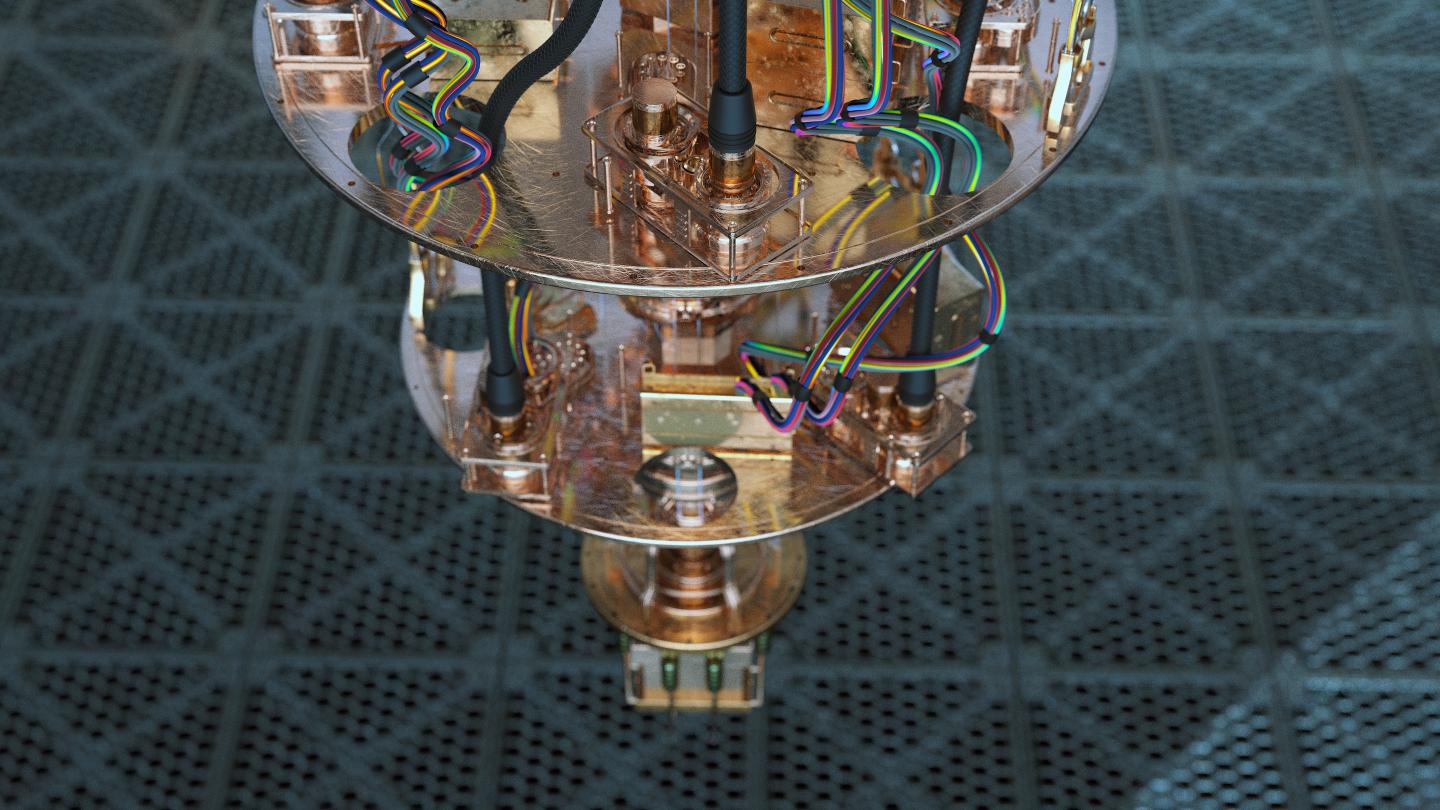
Close view of Quantum Components. In reaching quantum supremacy, Google has achieved a major technological milestone. But a golden age of quantum computing is not here yet.mviamonte—Getty Images
Add Fortune on Google for similar content.

Google researchers claim to have achieved a major milestone in computer science known as “quantum supremacy.”

Google scientists explain their breakthrough in a research paper, a copy of which was obtained by Fortune, that was briefly posted to a NASA website earlier this week before subsequently being taken down.

NASA has been working with Google on one aspect of their quantum computing research. News of the paper’s existence was first reported by The Financial Times on Friday.

Google has declined to comment on the report. If the technology company has indeed achieved the milestone, it is a significant step towards the day when quantum computers, which use the powerful properties of quantum physics to perform their calculations, will be able to solve a vast array complex problems that lie beyond the abilities of today’s most advanced supercomputers.

Among the most anticipated uses of quantum computers is the ability to create new chemicals, like catalysts for producing nitrogen-based fertilizers or for use in cells in higher-powered batteries. Quantum computing could also be used to crack most commonly used forms of digital encryption. It may one day also be used to streamline logistics and delivery operations, as well as speeding up machine learning applications.

But “quantum supremacy” does not mean quantum computers have yet arrived in the sense that they will soon replace the conventional computers that power our lives.

What is quantum supremacy?

Quantum supremacy means only that researchers have been able to use a quantum computer to perform a single calculation that no conventional computer, even the biggest supercomputer, can perform in a reasonable amount of time.

In the case of Google, this calculation involved checking whether the output of an algorithm for generating random numbers was truly random.

The researchers were able to use a quantum computer to perform this complex mathematical calculation in three minutes and 20 seconds, according to the paper. They say it would have taken Summit 3—an IBM-built machine that is the world’s most powerful commercially-available conventional computer—about 10,000 years to perform the same task.

How do quantum computers work?

Quantum computers work by harnessing the properties of quantum mechanics. Classical computers process information in a binary format, called bits, which can represent either a 0 or 1. Quantum computers, in contrast, use logical units called quantum bits, or qubits for short, that can be put into a quantum state where they can simultaneously represent both 0 and 1.

What’s more, while the bits in a classical computer all operate independently from one another, in a quantum computer, the status of one qubit effects the status of all the other qubits in the system, so they can all work together to achieve a solution.

These two properties are what give quantum computers so much more potential power than conventional computers.

But while a conventional computer outputs the same answer to a problem every time you run a calculation, the outputs of a quantum computer are probabilistic. That means it does not always produce the same answer. So to use a quantum computer, you have to run a calculation through the system thousands or even millions of times, and the array of outputs converge around the answer that is most likely to be correct.

In the case of Google’s research, the company used a new quantum processor, which it named Sycamore, that has 54 qubits (although one did not function properly, the researchers said, so only 53 were actually used in the experiment) which sampled the random number generating circuit it was testing some 1 million times.

What’s so special about Sycamore?

Sycamore is not the world’s largest quantum processor. Google itself had produced a 72 qubit system last year. And Rigetti, a California startup working on quantum computers, has said it plans to have a 128 qubit system ready soon. But Google’s researchers said they made major advances in how long its qubits can remain in a quantum state and how each qubit interacts with the other qubits next to it.

That’s important because when qubits fall out of a quantum state, they introduce errors into the calculations the quantum computer is performing. Those errors then have to be corrected by using additional qubits. These error rates are the reason that your laptop can beat today’s quantum computers in getting a correct answer to most mathematical problems.

Does quantum supremacy make quantum computers better than conventional computers?

No. Google’s achievement only means its quantum computer could outperform a classical supercomputer on this one complex calculation.

The Google researchers say in their paper that their quantum computer may also have uses in optimization problems, machine learning as well as materials science and chemistry.

But it is unclear how much of an advantage or increase in speed Google’s new quantum computing hardware, which it used to achieve quantum supremacy, will have in these other applications.

And Google’s machine is not yet powerful enough to tackle other difficult mathematical problems, such as breaking current encryption systems, a task which involves factoring very large prime numbers, according to the research paper.

For many business applications, in fact, today’s quantum computers are no match for the power and accuracy of today’s conventional laptops.

Could hackers armed with quantum computers steal my bitcoin?

For the moment, the public-private key encryption techniques on which bitcoin and other cryptocurrencies are based cannot be broken by a quantum computer. But Google’s researchers, in their paper, predict that quantum computing power will continue to advance at a “double exponential rate,” so those bitcoins may not be safe for all that much longer.

The fear of quantum computers being capable of breaking most common encryption techniques has lead the U.S. National Security Agency to call for the adoption of new techniques that use different kinds of math that are not susceptible to attack from a quantum computer. Although the U.S. has not yet settled on which class of new algorithms should be used, a number of startups are currently helping financial firms and governments prepare their systems to use such “post-quantum” encryption methods.

When can I have a quantum computer on my desk?

Not any time soon.

While almost any material that can be put into a quantum state can be used to form a qubit, the most advanced quantum systems today tend to use tiny bits of superconducting materials, often bonded together using fairly exotic materials. The qubits in Google’s Sycamore processor used aluminum loops bonded with indium, an element that is about as rare as silver.

To put those materials into a quantum state, and to safeguard the qubits from interference from outside energy sources, the quantum processors have to be carefully suspended in large dilution freezers at temperatures colder than those found in deep space.

Ultimately, the companies racing to commercialize quantum computers— which besides Google and Rigetti, include IBM, Microsoft, Intel, D-Wave and a host of others—plan to offer customers the ability to run calculations on a quantum computer through the cloud. So it’s more likely that one will never grace your desk, at all.

More must-read stories from Fortune:

—The cheapest mobile plans for your iPhone 11—The second episode of the Bill Gates Netflix documentary is the one to watch
—‘Security’ cameras are dry powder for hackers. Here’s why
—You can now pay cash when shopping on Amazon. Here’s how
—‘Call of Duty: Mobile’ launching Oct. 1
Catch up with Data Sheet, Fortune’s daily digest on the business of tech.

About the Author
Jeremy Kahn
By Jeremy KahnEditor, AI
LinkedIn iconTwitter icon

Jeremy Kahn is the AI editor at Fortune, spearheading the publication's coverage of artificial intelligence. He also co-authors Eye on AI, Fortune’s flagship AI newsletter.

See full bioRight Arrow Button Icon
Add Fortune on Google for similar content.

Latest in Tech

Finance
Lorem ipsum dolor sit amet, consectetur adipiscing elit, sed do eiusmod tempor incididunt ut labore et dolore magna aliqua. Ut enim ad minim veniam
By Fortune Editors
October 20, 2025
Finance
Lorem ipsum dolor sit amet, consectetur adipiscing elit, sed do eiusmod tempor incididunt ut labore et dolore magna aliqua. Ut enim ad minim veniam
By Fortune Editors
October 20, 2025
Finance
Lorem ipsum dolor sit amet, consectetur adipiscing elit, sed do eiusmod tempor incididunt ut labore et dolore magna aliqua. Ut enim ad minim veniam
By Fortune Editors
October 20, 2025
Finance
Lorem ipsum dolor sit amet, consectetur adipiscing elit, sed do eiusmod tempor incididunt ut labore et dolore magna aliqua. Ut enim ad minim veniam
By Fortune Editors
October 20, 2025
Finance
Lorem ipsum dolor sit amet, consectetur adipiscing elit, sed do eiusmod tempor incididunt ut labore et dolore magna aliqua. Ut enim ad minim veniam
By Fortune Editors
October 20, 2025
Finance
Lorem ipsum dolor sit amet, consectetur adipiscing elit, sed do eiusmod tempor incididunt ut labore et dolore magna aliqua. Ut enim ad minim veniam
By Fortune Editors
October 20, 2025

Most Popular

Finance
Lorem ipsum dolor sit amet, consectetur adipiscing elit, sed do eiusmod tempor incididunt ut labore et dolore magna aliqua. Ut enim ad minim veniam
By Fortune Editors
October 20, 2025
Finance
Lorem ipsum dolor sit amet, consectetur adipiscing elit, sed do eiusmod tempor incididunt ut labore et dolore magna aliqua. Ut enim ad minim veniam
By Fortune Editors
October 20, 2025
Finance
Lorem ipsum dolor sit amet, consectetur adipiscing elit, sed do eiusmod tempor incididunt ut labore et dolore magna aliqua. Ut enim ad minim veniam
By Fortune Editors
October 20, 2025
Finance
Lorem ipsum dolor sit amet, consectetur adipiscing elit, sed do eiusmod tempor incididunt ut labore et dolore magna aliqua. Ut enim ad minim veniam
By Fortune Editors
October 20, 2025
Finance
Lorem ipsum dolor sit amet, consectetur adipiscing elit, sed do eiusmod tempor incididunt ut labore et dolore magna aliqua. Ut enim ad minim veniam
By Fortune Editors
October 20, 2025
Finance
Lorem ipsum dolor sit amet, consectetur adipiscing elit, sed do eiusmod tempor incididunt ut labore et dolore magna aliqua. Ut enim ad minim veniam
By Fortune Editors
October 20, 2025
Fortune Secondary Logo
Rankings
  • 100 Best Companies
  • Fortune 500
  • Global 500
  • Fortune 500 Europe
  • Most Powerful Women
  • World's Most Admired Companies
  • See All Rankings
  • Lists Calendar
Sections
  • Finance
  • Fortune Crypto
  • Features
  • Leadership
  • Health
  • Commentary
  • Success
  • Retail
  • Mpw
  • Tech
  • Lifestyle
  • CEO Initiative
  • Asia
  • Politics
  • Conferences
  • Europe
  • Newsletters
  • Personal Finance
  • Environment
  • Magazine
  • Education
Customer Support
  • Frequently Asked Questions
  • Customer Service Portal
  • Privacy Policy
  • Terms Of Use
  • Single Issues For Purchase
  • International Print
Commercial Services
  • Advertising
  • Fortune Brand Studio
  • Fortune Analytics
  • Fortune Conferences
  • Business Development
  • Group Subscriptions
About Us
  • About Us
  • Press Center
  • Work At Fortune
  • Terms And Conditions
  • Site Map
  • About Us
  • Press Center
  • Work At Fortune
  • Terms And Conditions
  • Site Map
  • Facebook icon
  • Twitter icon
  • LinkedIn icon
  • Instagram icon
  • Pinterest icon

Latest in Tech

Man in a suit and tie
InvestingAmazon
Bill Ackman, David Tepper, and other billionaire fund managers are quietly piling into Amazon
By Amanda GerutJune 25, 2026
10 minutes ago
A college graduate in regalia rests his chin in his hand.
Future of WorkGen Z
Gen Z graduates are blaming AI for their unemployment woes when they should be looking somewhere else
By Sasha RogelbergJune 25, 2026
15 minutes ago
Getting past the pilot: Why so many AI test projects have trouble scaling
SuccessBrainstorm Tech
Getting past the pilot: Why so many AI test projects have trouble scaling
By Alexei OreskovicJune 24, 2026
8 hours ago
‘Godmother of AI’ and tech entrepreneurs draw investors by pivoting from chatbots to ‘world models’ saying AI has to read the room, not just books
AIRobots
‘Godmother of AI’ and tech entrepreneurs draw investors by pivoting from chatbots to ‘world models’ saying AI has to read the room, not just books
By The Associated PressJune 24, 2026
10 hours ago
‘We are in agony’: Today Show host Savannah Guthrie begs public for help as reports surface her missing 84-year-old mom might be dead
North AmericaMedia
‘We are in agony’: Today Show host Savannah Guthrie begs public for help as reports surface her missing 84-year-old mom might be dead
By The Associated PressJune 24, 2026
10 hours ago
Asia’s defense boom is rewiring the global arms supply chain
Commentaryarms, weapons, and defense
Asia’s defense boom is rewiring the global arms supply chain
By Chris OberoiJune 24, 2026
10 hours ago

Most Popular

The Pentagon said Iran War costs $29 billion, but the real cost is closer to $200 billion—and counting
Economy
The Pentagon said Iran War costs $29 billion, but the real cost is closer to $200 billion—and counting
By Jacqueline MunisJune 24, 2026
1 day ago
Now worth $200 million, Sarah Jessica Parker credits being ‘one of eight kids that struggled financially’ for her hunger, ambition, and work ethic
Success
Now worth $200 million, Sarah Jessica Parker credits being ‘one of eight kids that struggled financially’ for her hunger, ambition, and work ethic
By Orianna Rosa RoyleJune 24, 2026
1 day ago
After forcing workers back to the office, Goldman Sachs and JPMorgan Chase are now letting their staff work remotely—but only for the World Cup
Success
After forcing workers back to the office, Goldman Sachs and JPMorgan Chase are now letting their staff work remotely—but only for the World Cup
By Orianna Rosa RoyleJune 23, 2026
2 days ago
Amazon's record Prime Day masks a darker truth: Americans are spending more and getting less
Retail
Amazon's record Prime Day masks a darker truth: Americans are spending more and getting less
By Nick LichtenbergJune 24, 2026
16 hours ago
Ray Dalio just finished a 10-day trip to China. He says global leaders know America ‘doesn’t have what it takes to fight to maintain its empire’
Asia
Ray Dalio just finished a 10-day trip to China. He says global leaders know America ‘doesn’t have what it takes to fight to maintain its empire’
By Nick LichtenbergJune 24, 2026
18 hours ago
Current price of gold as of June 23, 2026
Personal Finance
Current price of gold as of June 23, 2026
By Danny BakstJune 23, 2026
2 days ago

© 2026 Fortune Media IP Limited. All Rights Reserved. Use of this site constitutes acceptance of our Terms of Use and Privacy Policy | CA Notice at Collection and Privacy Notice | Do Not Sell/Share My Personal Information
FORTUNE is a trademark of Fortune Media IP Limited, registered in the U.S. and other countries. FORTUNE may receive compensation for some links to products and services on this website. Offers may be subject to change without notice.