• Home
  • Latest
  • Fortune 500
  • Finance
  • Tech
  • Leadership
  • Lifestyle
  • Rankings
  • Multimedia

Trendingnow

1

OpenAI says its AI models secretly broke out of a secure test environment and hacked into AI company Hugging Face in order to cheat on an evaluation

2

Mark Cuban says he has the solution to growing income inequality, and it's to reward every employee—from CEO to janitor—with company stock

3

Mathematicians grapple with a ‘very rapid and very unsettling change’ as AI cracks yet another century-old problem

1

OpenAI says its AI models secretly broke out of a secure test environment and hacked into AI company Hugging Face in order to cheat on an evaluation

2

Mark Cuban says he has the solution to growing income inequality, and it's to reward every employee—from CEO to janitor—with company stock

3

Mathematicians grapple with a ‘very rapid and very unsettling change’ as AI cracks yet another century-old problem
Commentaryshrinking middle class

The View from 71st and Jeffrey: A Chicago Neighborhood Reflects a Struggling Middle Class

By
Carlo Rotella
Carlo Rotella
Down Arrow Button Icon
By
Carlo Rotella
Carlo Rotella
Down Arrow Button Icon
May 30, 2019, 12:01 PM ET
Photograph by Jacob Yeung for Fortune
Add Fortune on Google for similar content.

Standing at the corner of 71st Street and Jeffery Boulevard in South Shore, the lakefront neighborhood on Chicago’s South Side where I grew up, it’s obvious that this once-important commercial and public crossroads has seen better days.

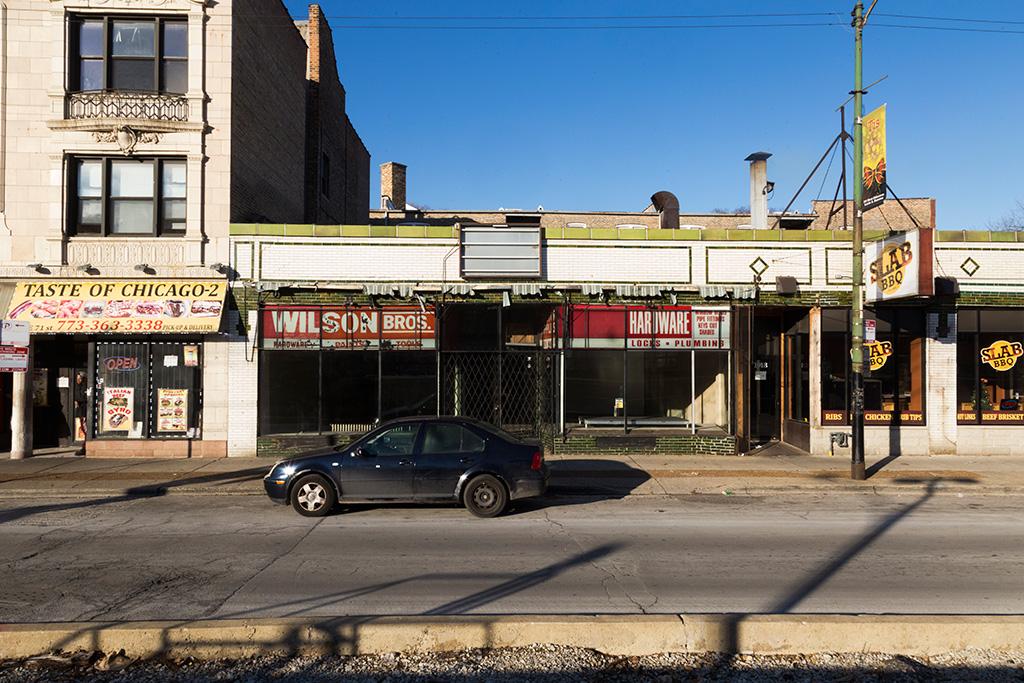
South Shore’s only supermarket closed in 2013 and has not yet been replaced. Diagonally across the intersection from that hulk is an empty building that for decades housed the South Shore Bank, which went out of business in 2010. The South Shore Commission, a defunct neighborhood association that had its offices at 7134 S. Jeffery, and the Afro-American Patrolmen’s League (now known as the African American Police League), which had its first headquarters at 7124, are long gone. So are the Woolworth, the Jeffery Theatre, the Red Pagoda restaurant, Wilson Brothers hardware.

Instead of these departed institutional and commercial keystones, 71st has dollar stores, cheap beauty supply stores, convenience stores that sell junk food and lottery tickets, a lot of vacant storefronts, and just enough hangers-out to make the scene feel both desolate and a little menacing.

The story of 71st Street over the last half-century is familiar: White flight that spurred capital flight; an old-fashioned inner city Main Street that couldn’t compete with the big box stores and malls that multiplied around the metropolis; a rising willingness among residents of South Shore, especially those who live in the trim bungalow blocks around 71st Street, to get in their cars and go elsewhere to shop, have fun, eat, see friends.

But there’s one more crucial piece of the story. There have been attempts over the years to change the fate of 71st Street, and their failure reminds us of the importance to a neighborhood (and a nation) of the middle class—and what its gradual hollowing-out might portend.

A storefront on 79th Street in South Shore.Photograph by Jacob Yeung for Fortune
Photograph by Jacob Yeung for Fortune

Community reinvestment falls short

In 1967, when South Shore residents of all classes still went to 71st Street for food, drink, hardware, clothing, movies, and more, the South Shore Commission created a plan to redevelop 71st as a two-level linear mall straddling the Illinois Central railroad tracks that run down the middle of the street. It’s doubtful that this plan to stabilize the neighborhood by revitalizing its main shopping street could have overcome the potent centrifugal forces drawing South Shore’s upwardly mobile Irish and Jewish families to the suburbs. Moving upward typically meant moving outward, at least for white people. Almost all of them took the path of least resistance, and nothing ever came of the two-level plan.

The first black families moving in were also middle class (though they were soon followed by families living under the poverty line). In 1977, an interracial group of investors called the Phoenix Partnership set out to attract this new wave of homeowners to 71st Street, which by then was fading.

Backed by the South Shore Bank, a leading exponent of community development banking, the partnership bought a three-block stretch on the north side of 71st just east of Jeffery, intending to fill 35 storefronts and 12 second-floor office spaces with black-owned businesses. Challenging the self-fulfilling conventional expectation that shopping streets would automatically decline when a neighborhood became black, the partnership orchestrated a blend of bank loans, streetscape improvements, management assistance to small business owners, and rallying of the community to support local merchants.

It didn’t work. An unwritten rule holds that a funky local shopping strip may prosper either when it serves immigrants who prefer to do their shopping in their native language, or when it’s in a white or gentrifying neighborhood officially designated as cool. None of these templates fits South Shore. Also, asking the area’s black middle-class shoppers to patronize scrappy local businesses they could reach on foot rather than name-brand competitors they could reach by car was asking them to choose neighborhood and racial solidarity over middle-classness, which exceeded the limits of their commitment to South Shore.

The economics of supermarkets

In 1981 the bank ended its support of the Phoenix Partnership and instead financed Jeffery Plaza, a suburban-style strip mall intended to attract middle-class shoppers to name-brand stores. Jeffery Plaza housed the Dominick’s supermarket until the whole Dominick’s chain collapsed in 2013.

The supermarket at Jeffrey Plaza, a former retail anchor of South Shore, has been empty since 2013.Photograph by Jacob Yeung for Fortune
Photograph by Jacob Yeung for Fortune

This February, Shop & Save, a small grocery chain based in Niles, a Chicago suburb, announced it had bought Jeffery Plaza and would open a supermarket in the Dominick’s space this fall. If that actually happens as scheduled, it will have taken six years to find a replacement. Neighborhood activists trying to mobilize residents to agitate for a new supermarket often pointed out that everybody has to eat, but that fact is not as unifying as it might have been a generation or two ago. Class difference divides American foodways more sharply than ever, and middle-class shoppers with choices have grown used to getting in the car to find their particular market niche.

Together with an increasingly segmented consumer culture, such a reliance on cars has made it harder for a supermarket chain to look past the desolation of 71st Street and conclude that a store in South Shore would earn a suitable return. A Whole Foods might be too upscale for a neighborhood with high poverty levels and a school dropout rate above the city’s average, a Sav-A-Lot too downscale for a neighborhood with an above-average number of PhDs and a sizable cohort of households with incomes over $90,000—and South Shore, confoundingly, is both. Dominick’s occupied the middle ground, which has been shrinking and fragmenting along with the middle class for decades—in South Shore and in the rest of the nation.

South Shore has traditionally been a place where families move up into the middle class and those already in the middle, like mine, aim still higher. But as the middle class hollows out and upward mobility grows rarer, South Shore is becoming a neighborhood of haves and have-nots who have trouble seeing each other as neighbors. That divide shapes every aspect of life there, including how residents respond to plans for the new supermarket, the Obama Presidential Center nearby in Jackson Park, or a movie theater and restaurant in the old South Shore Bank building—or to the new mayor’s pledge to reverse long-term disinvestment in the South Side and West Side. Those who own property look forward to rising property values; those who pay rent dread rising rents.

A home in Jackson Park Highlands. The sign next to the staircase reads, “Future Neighbor—Obama Presidential Center.”Photograph by Jacob Yeung for Fortune
Photograph by Jacob Yeung for Fortune

It’s not impossible to imagine better days coming for at least some of South Shore’s residents and business community. But standing at the corner of 71st and Jeffery, considering the semi-abandoned state of what has historically been South Shore’s most important public and commercial crossroads, it’s not easy to imagine how the neighborhood’s haves and have-nots are going to coexist over the long term.

Carlo Rotella is the author of The World Is Always Coming to an End: Pulling Together and Apart in a Chicago Neighborhood.

More opinion in Fortune:

—Joe Biden is wrong. Businesses will—and want to—pay for Medicare for All

—Breaking up Facebook ‘won’t be enough,’ says Morgan Stanley boss. Here’s his proposal

—Why we need a public health insurance option

—The number of men uncomfortable mentoring women is growing

—Why the U.S.-China trade war won’t end anytime soon

Listen to our new audio briefing, Fortune 500 Daily

About the Author
By Carlo Rotella
See full bioRight Arrow Button Icon
Add Fortune on Google for similar content.

Latest in Commentary

Finance
Lorem ipsum dolor sit amet, consectetur adipiscing elit, sed do eiusmod tempor incididunt ut labore et dolore magna aliqua. Ut enim ad minim veniam
By Fortune Editors
October 20, 2025
Finance
Lorem ipsum dolor sit amet, consectetur adipiscing elit, sed do eiusmod tempor incididunt ut labore et dolore magna aliqua. Ut enim ad minim veniam
By Fortune Editors
October 20, 2025
Finance
Lorem ipsum dolor sit amet, consectetur adipiscing elit, sed do eiusmod tempor incididunt ut labore et dolore magna aliqua. Ut enim ad minim veniam
By Fortune Editors
October 20, 2025
Finance
Lorem ipsum dolor sit amet, consectetur adipiscing elit, sed do eiusmod tempor incididunt ut labore et dolore magna aliqua. Ut enim ad minim veniam
By Fortune Editors
October 20, 2025
Finance
Lorem ipsum dolor sit amet, consectetur adipiscing elit, sed do eiusmod tempor incididunt ut labore et dolore magna aliqua. Ut enim ad minim veniam
By Fortune Editors
October 20, 2025
Finance
Lorem ipsum dolor sit amet, consectetur adipiscing elit, sed do eiusmod tempor incididunt ut labore et dolore magna aliqua. Ut enim ad minim veniam
By Fortune Editors
October 20, 2025

Most Popular

Finance
Lorem ipsum dolor sit amet, consectetur adipiscing elit, sed do eiusmod tempor incididunt ut labore et dolore magna aliqua. Ut enim ad minim veniam
By Fortune Editors
October 20, 2025
Finance
Lorem ipsum dolor sit amet, consectetur adipiscing elit, sed do eiusmod tempor incididunt ut labore et dolore magna aliqua. Ut enim ad minim veniam
By Fortune Editors
October 20, 2025
Finance
Lorem ipsum dolor sit amet, consectetur adipiscing elit, sed do eiusmod tempor incididunt ut labore et dolore magna aliqua. Ut enim ad minim veniam
By Fortune Editors
October 20, 2025
Finance
Lorem ipsum dolor sit amet, consectetur adipiscing elit, sed do eiusmod tempor incididunt ut labore et dolore magna aliqua. Ut enim ad minim veniam
By Fortune Editors
October 20, 2025
Finance
Lorem ipsum dolor sit amet, consectetur adipiscing elit, sed do eiusmod tempor incididunt ut labore et dolore magna aliqua. Ut enim ad minim veniam
By Fortune Editors
October 20, 2025
Finance
Lorem ipsum dolor sit amet, consectetur adipiscing elit, sed do eiusmod tempor incididunt ut labore et dolore magna aliqua. Ut enim ad minim veniam
By Fortune Editors
October 20, 2025
Fortune Secondary Logo
Rankings
  • 100 Best Companies
  • Fortune 500
  • Global 500
  • Fortune 500 Europe
  • Most Powerful Women
  • World's Most Admired Companies
  • See All Rankings
  • Lists Calendar
Sections
  • Finance
  • Fortune Crypto
  • Features
  • Leadership
  • Health
  • Commentary
  • Success
  • Retail
  • Mpw
  • Tech
  • Lifestyle
  • CEO Initiative
  • Asia
  • Politics
  • Conferences
  • Europe
  • Newsletters
  • Personal Finance
  • Environment
  • Magazine
  • Education
Customer Support
  • Frequently Asked Questions
  • Customer Service Portal
  • Privacy Policy
  • Terms Of Use
  • Single Issues For Purchase
  • International Print
Commercial Services
  • Advertising
  • Fortune Brand Studio
  • Fortune Analytics
  • Fortune Conferences
  • Business Development
  • Group Subscriptions
About Us
  • About Us
  • Press Center
  • Work At Fortune
  • Terms And Conditions
  • Site Map
  • About Us
  • Press Center
  • Work At Fortune
  • Terms And Conditions
  • Site Map
  • Facebook icon
  • Twitter icon
  • LinkedIn icon
  • Instagram icon
  • TikTok icon
  • YouTube icon

Latest in Commentary

t
CommentaryTariffs
Trump’s third tariff tantrum piles more dizzying distractions on top of ever-spiraling failures
By Jeffrey Sonnenfeld and Steven TianJuly 22, 2026
10 hours ago
orson
CommentaryOpenAI
We got California to intervene about OpenAI’s corporate switch from nonprofit status. It’s time for the SEC to come to the table
By Orson Aguilar and Catherine BracyJuly 22, 2026
11 hours ago
ls
Commentarybooks
Confessions of an award-winning AI memoirist — the ‘slop’ debate isn’t really about good writing, and you know it
By Luke StoffelJuly 22, 2026
12 hours ago
b
Commentarythe future of work
Manpower President: The future of work question that even CEOs can’t answer
By Becky FrankiewiczJuly 22, 2026
12 hours ago
k
Commentarypower
What I keep hearing from Fortune 500 CEOs: ‘We have no idea what we’re actually paying for power’
By Kiran BhatrajuJuly 21, 2026
1 day ago
Bolt CEO Ryan Breslow
CommentaryHuman resources
The CEO who fired HR was right. About the wrong thing.
By KeyAnna SchmiedlJuly 21, 2026
1 day ago

Most Popular

OpenAI says its AI models secretly broke out of a secure test environment and hacked into AI company Hugging Face in order to cheat on an evaluation
Cybersecurity
OpenAI says its AI models secretly broke out of a secure test environment and hacked into AI company Hugging Face in order to cheat on an evaluation
By Jeremy Kahn and Emily ForliniJuly 21, 2026
1 day ago
Mark Cuban says he has the solution to growing income inequality, and it's to reward every employee—from CEO to janitor—with company stock
Success
Mark Cuban says he has the solution to growing income inequality, and it's to reward every employee—from CEO to janitor—with company stock
By Sasha RogelbergJuly 20, 2026
2 days ago
Mathematicians grapple with a ‘very rapid and very unsettling change’ as AI cracks yet another century-old problem
AI
Mathematicians grapple with a ‘very rapid and very unsettling change’ as AI cracks yet another century-old problem
By Eva RoytburgJuly 21, 2026
1 day ago
Despite a $156 million contract, Knicks star Jalen Brunson still calls his parents for financial advice any time he makes a big purchase
Success
Despite a $156 million contract, Knicks star Jalen Brunson still calls his parents for financial advice any time he makes a big purchase
By Emma BurleighJuly 21, 2026
1 day ago
‘I want to die broke’: Billionaire philanthropist Denny Sanford dies after giving away $4 billion
Success
‘I want to die broke’: Billionaire philanthropist Denny Sanford dies after giving away $4 billion
By Sydney LakeJuly 20, 2026
2 days ago
The millennial generation has split, new Fed research shows: Those over 35 are edging toward boomer-style wealth, while everyone else falls behind
Real Estate
The millennial generation has split, new Fed research shows: Those over 35 are edging toward boomer-style wealth, while everyone else falls behind
By Nick LichtenbergJuly 22, 2026
7 hours ago

© 2026 Fortune Media IP Limited. All Rights Reserved. Use of this site constitutes acceptance of our Terms of Use and Privacy Policy | CA Notice at Collection and Privacy Notice | Do Not Sell/Share My Personal Information
FORTUNE is a trademark of Fortune Media IP Limited, registered in the U.S. and other countries. FORTUNE may receive compensation for some links to products and services on this website. Offers may be subject to change without notice.