• Home
  • Latest
  • Fortune 500
  • Finance
  • Tech
  • Leadership
  • Lifestyle
  • Rankings
  • Multimedia

Trendingnow

1

Jeff Bezos wants the bottom half of earners to pay zero income tax—he says nurses making just $75K should save $12K a year

2

Apple’s Steve Wozniak says he cofounded the tech giant after 5 rejections from HP—not to ‘make money.’ For years, his paycheck was just $50

3

Indeed chief economist says we’re entering an era of ‘great mismatch’ thanks to a generational imbalance of workers

1

Jeff Bezos wants the bottom half of earners to pay zero income tax—he says nurses making just $75K should save $12K a year

2

Apple’s Steve Wozniak says he cofounded the tech giant after 5 rejections from HP—not to ‘make money.’ For years, his paycheck was just $50

3

Indeed chief economist says we’re entering an era of ‘great mismatch’ thanks to a generational imbalance of workers
Commentary

How Milton Moskowitz Inspired the Creation of a Federal Agency

By
Martin Manley
Martin Manley
Down Arrow Button Icon
By
Martin Manley
Martin Manley
Down Arrow Button Icon
April 22, 2019, 4:57 PM ET
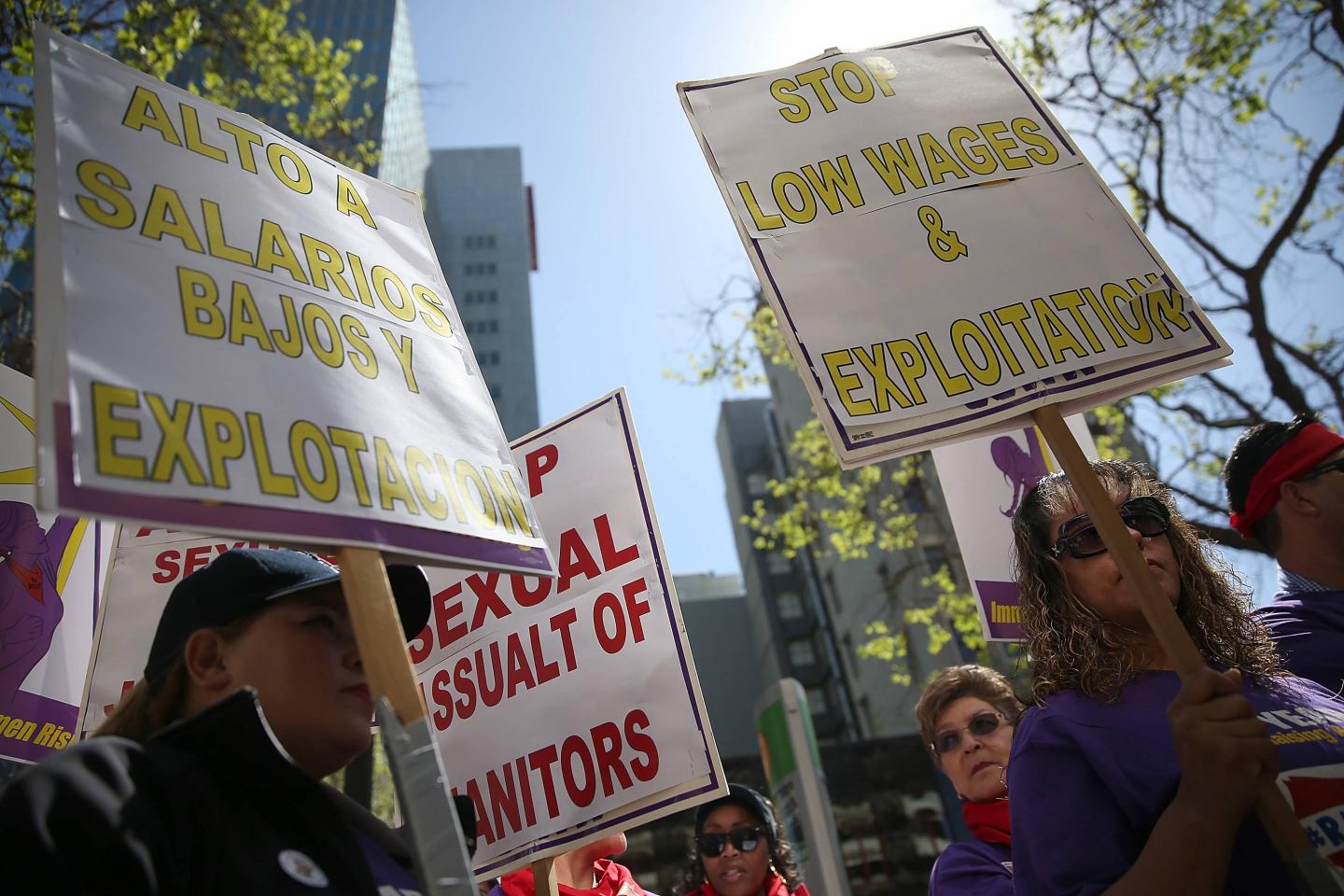
Union workers hold signs during a demonstration in support of a proposal to raise the California minimum wage to $15 by 2022 on March 31, 2016, in Oakland, Calif.
Justin Sullivan—Getty Images

Milton Moskowitz first published The 100 Best Companies to Work for in America with Robert Levering in 1984. Until his death on March 5, Moskowitz believed that better workplaces produce better companies. His genius was to transform data from surveys of millions of workers into stories about workplace innovation so compelling that managers began to take notice and compete for a place on his list.

Moskowitz was convinced that America’s best workplaces had important lessons to teach the rest. His conviction helped inspire the creation of a new federal agency. Promoting workplace best practices seemed like it could offer benefits to companies in the way agricultural extension services did for agriculture. Pioneered in Ireland in response to the potato famine, extension agents organized the exchange of information and skill between farmers to promote production. In the early days of the Clinton administration, I wondered whether the government could do something similar for U.S. workplaces?

Labor Secretary nominee Robert Reich believed we could. He thought that the Labor Department should not only collect critical economic data, enforce workplace standards, and fund training programs, but that it should also analyze and promote workplaces that trained and empowered hourly workers. From 1993 to 1996, the Labor Department operated the Office of the American Workplace which was, like Moskowitz, devoted to the notion that great companies are highly committed to their workers. I helped persuade Reich to create the agency and was appointed to lead it.

Reich challenged the agency to create a public scorecard that graded companies based on their workplace practices. He hoped that Wall Street might reward companies that embraced training, diversity, and pay equity and resisted layoffs, outsourcing, or plant closures.

I loved the idea of a public scorecard (and still do) but we were a small agency and, at the time, the U.S. had some 6 million workplaces. Moreover, I doubted that the connection between workplace practices and corporate performance was robust enough for Wall Street to care.

There are no single-factor explanations of business success. Product and service innovation, cost competitiveness, and smart leadership—as well as timing and luck—all affect business performance. Until the early 1990s, for instance, IBM invested heavily in training its employees and remained committed to shrinking its workforce through attrition, not layoffs. They promoted women and minorities into leadership. But the company had horribly mismanaged the PC revolution and was experiencing major losses. Microsoft, in contrast, had grown around 20% from 1993 to 1994 without any prominent workplace initiatives. I worried that a workplace quality index that promoted IBM but not Microsoft would carry little weight with securities traders.

Reich, however, was not easily dissuaded. And having sold him on the idea that workplaces mattered, I was in no position to equivocate. So I suggested that we test the workplace index with the CEOs and Wall Street traders we thought might use it. Reich proposed Alan Greenberg, CEO of Bear Stearns, and James Burke, the CEO of Johnson & Johnson. I suggested investor Warren Buffett and Peter Peterson, chairman of Blackstone Group.

Eventually, we brought together these and several other titans of American capitalism to tell us whether they would value an index of workplace quality. With Moskowitz very much on our minds, Reich and I described how it might work, where the data would come from, and how we hoped investors might use the information. Afterwards, each leader patiently explained why our idea wouldn’t work. One example offered was that Wall Street traded companies, not workplaces. The link between a strong, high-trust workplace culture and corporate performance was indicative—but not fully predictive—of strong business results. After all, companies like General Electric under Jack Welch had increased their profits by laying off staff and outsourcing manufacturing.

Even if Wall Street wouldn’t trade on the information, it still made sense to recognize America’s most innovative workplaces. I contacted Moskowitz to get his advice. Should the Labor Department create a prize like the Malcolm Baldrige National Quality Award? He worried that government prizes were too easily politicized. What about issuing an annual list of best workplaces like Fortune did for America’s largest companies? Having a business magazine publish his list would combine the best elements of a scorecard and a prize. Moskowitz pursued the idea and, in 1998, Fortune began publishing its annual “100 Best Places to Work” list based on his surveys and analysis.

Some companies continued to doubt that membership in the “Best Places to Work” list had business value. In 2010, however, a study in the Journal of Financial Economics created a portfolio of his companies and applied statistical controls for factors such as firm characteristics, sector, and outliers. They concluded that the “Best Places to Work” portfolio significantly outperformed industry benchmarks because the stock market does not fully value intangible assets like committed workers. Moskowitz, it turns out, had been right.

Martin Manley served as Assistant U.S. Secretary of Labor and subsequently as the co-founder and CEO of two Silicon Valley technology companies. He is the author of the forthcoming book: A Better Bargain: Organizing Employers and Workers to Save America’s Middle Class. Follow him on Twitter.

This article is commentary. For more opinion in Fortune, click here.

About the Author
By Martin Manley
See full bioRight Arrow Button Icon

Latest in Commentary

Finance
Lorem ipsum dolor sit amet, consectetur adipiscing elit, sed do eiusmod tempor incididunt ut labore et dolore magna aliqua. Ut enim ad minim veniam
By Fortune Editors
October 20, 2025
Finance
Lorem ipsum dolor sit amet, consectetur adipiscing elit, sed do eiusmod tempor incididunt ut labore et dolore magna aliqua. Ut enim ad minim veniam
By Fortune Editors
October 20, 2025
Finance
Lorem ipsum dolor sit amet, consectetur adipiscing elit, sed do eiusmod tempor incididunt ut labore et dolore magna aliqua. Ut enim ad minim veniam
By Fortune Editors
October 20, 2025
Finance
Lorem ipsum dolor sit amet, consectetur adipiscing elit, sed do eiusmod tempor incididunt ut labore et dolore magna aliqua. Ut enim ad minim veniam
By Fortune Editors
October 20, 2025
Finance
Lorem ipsum dolor sit amet, consectetur adipiscing elit, sed do eiusmod tempor incididunt ut labore et dolore magna aliqua. Ut enim ad minim veniam
By Fortune Editors
October 20, 2025
Finance
Lorem ipsum dolor sit amet, consectetur adipiscing elit, sed do eiusmod tempor incididunt ut labore et dolore magna aliqua. Ut enim ad minim veniam
By Fortune Editors
October 20, 2025

Most Popular

Finance
Lorem ipsum dolor sit amet, consectetur adipiscing elit, sed do eiusmod tempor incididunt ut labore et dolore magna aliqua. Ut enim ad minim veniam
By Fortune Editors
October 20, 2025
Finance
Lorem ipsum dolor sit amet, consectetur adipiscing elit, sed do eiusmod tempor incididunt ut labore et dolore magna aliqua. Ut enim ad minim veniam
By Fortune Editors
October 20, 2025
Finance
Lorem ipsum dolor sit amet, consectetur adipiscing elit, sed do eiusmod tempor incididunt ut labore et dolore magna aliqua. Ut enim ad minim veniam
By Fortune Editors
October 20, 2025
Finance
Lorem ipsum dolor sit amet, consectetur adipiscing elit, sed do eiusmod tempor incididunt ut labore et dolore magna aliqua. Ut enim ad minim veniam
By Fortune Editors
October 20, 2025
Finance
Lorem ipsum dolor sit amet, consectetur adipiscing elit, sed do eiusmod tempor incididunt ut labore et dolore magna aliqua. Ut enim ad minim veniam
By Fortune Editors
October 20, 2025
Finance
Lorem ipsum dolor sit amet, consectetur adipiscing elit, sed do eiusmod tempor incididunt ut labore et dolore magna aliqua. Ut enim ad minim veniam
By Fortune Editors
October 20, 2025
Fortune Secondary Logo
Rankings
  • 100 Best Companies
  • Fortune 500
  • Global 500
  • Fortune 500 Europe
  • Most Powerful Women
  • World's Most Admired Companies
  • See All Rankings
  • Lists Calendar
Sections
  • Finance
  • Fortune Crypto
  • Features
  • Leadership
  • Health
  • Commentary
  • Success
  • Retail
  • Mpw
  • Tech
  • Lifestyle
  • CEO Initiative
  • Asia
  • Politics
  • Conferences
  • Europe
  • Newsletters
  • Personal Finance
  • Environment
  • Magazine
  • Education
Customer Support
  • Frequently Asked Questions
  • Customer Service Portal
  • Privacy Policy
  • Terms Of Use
  • Single Issues For Purchase
  • International Print
Commercial Services
  • Advertising
  • Fortune Brand Studio
  • Fortune Analytics
  • Fortune Conferences
  • Business Development
  • Group Subscriptions
About Us
  • About Us
  • Press Center
  • Work At Fortune
  • Terms And Conditions
  • Site Map
  • About Us
  • Press Center
  • Work At Fortune
  • Terms And Conditions
  • Site Map
  • Facebook icon
  • Twitter icon
  • LinkedIn icon
  • Instagram icon
  • Pinterest icon

Latest in Commentary

David Bennahum
CommentaryMedia
I was one of the internet’s first influencers. AI just killed the whole category — and created something better
By David S. BennahumMay 24, 2026
5 hours ago
employees
CommentarySuccession
Millions of business owners are about to retire. They should sell to their employees
By Matt Helmer and Maxwell JohnsonMay 23, 2026
1 day ago
Ashley Yetman
Commentarydisruption
Everyone is blaming AI for the death of ‘craft.’ Take a good look in the mirror
By Ashley YetmanMay 23, 2026
1 day ago
clay
CommentaryLoneliness
I’ve spent 25 years studying loneliness. AI is about to make it much worse
By Clay RoutledgeMay 23, 2026
1 day ago
ambrose
CommentaryRobotics
Former NASA Robotics Chief: America is building the wrong kind of robots — and China knows it
By Robert AmbroseMay 23, 2026
1 day ago
morris
CommentaryEntrepreneurship
My startup hit $200 million ARR. But first I walked away from 2.5 million YouTube subscribers and nearly went bankrupt
By Joel MorrisMay 23, 2026
1 day ago

Most Popular

Jeff Bezos wants the bottom half of earners to pay zero income tax—he says nurses making just $75K should save $12K a year
Success
Jeff Bezos wants the bottom half of earners to pay zero income tax—he says nurses making just $75K should save $12K a year
By Preston ForeMay 21, 2026
3 days ago
Apple’s Steve Wozniak says he cofounded the tech giant after 5 rejections from HP—not to ‘make money.’ For years, his paycheck was just $50
Success
Apple’s Steve Wozniak says he cofounded the tech giant after 5 rejections from HP—not to ‘make money.’ For years, his paycheck was just $50
By Preston ForeMay 22, 2026
2 days ago
Indeed chief economist says we’re entering an era of ‘great mismatch’ thanks to a generational imbalance of workers
Success
Indeed chief economist says we’re entering an era of ‘great mismatch’ thanks to a generational imbalance of workers
By Emma BurleighMay 22, 2026
2 days ago
Microsoft reports are exposing AI's real cost problem: Using the tech is more expensive than paying human employees
AI
Microsoft reports are exposing AI's real cost problem: Using the tech is more expensive than paying human employees
By Jake AngeloMay 22, 2026
2 days ago
Elon Musk's SpaceX IPO filing just told us what business he's betting on for the future—and it's not rockets
Investing
Elon Musk's SpaceX IPO filing just told us what business he's betting on for the future—and it's not rockets
By Shawn TullyMay 23, 2026
1 day ago
Meet a 21-year-old community college student who's going to China as the first American woman welder in the trades Olympics
Future of Work
Meet a 21-year-old community college student who's going to China as the first American woman welder in the trades Olympics
By Mike Householder and The Associated PressMay 17, 2026
7 days ago

© 2026 Fortune Media IP Limited. All Rights Reserved. Use of this site constitutes acceptance of our Terms of Use and Privacy Policy | CA Notice at Collection and Privacy Notice | Do Not Sell/Share My Personal Information
FORTUNE is a trademark of Fortune Media IP Limited, registered in the U.S. and other countries. FORTUNE may receive compensation for some links to products and services on this website. Offers may be subject to change without notice.