• Home
  • Latest
  • Fortune 500
  • Finance
  • Tech
  • Leadership
  • Lifestyle
  • Rankings
  • Multimedia

Trendingnow

1

Venezuela oil minister to U.S. companies: ‘It's an entire world waiting to be discovered’

2

Scott Bessent on the national debt: 'There's nothing magic about the $40 trillion number'

3

Current price of oil as of August 20, 2026

1

Venezuela oil minister to U.S. companies: ‘It's an entire world waiting to be discovered’

2

Scott Bessent on the national debt: 'There's nothing magic about the $40 trillion number'

3

Current price of oil as of August 20, 2026

Stonehenge Builders Used Pythagoras’ Theorem Centuries Before His Birth, Say Experts

By
Kevin Kelleher
Kevin Kelleher
Down Arrow Button Icon
By
Kevin Kelleher
Kevin Kelleher
Down Arrow Button Icon
June 21, 2018, 7:42 PM ET
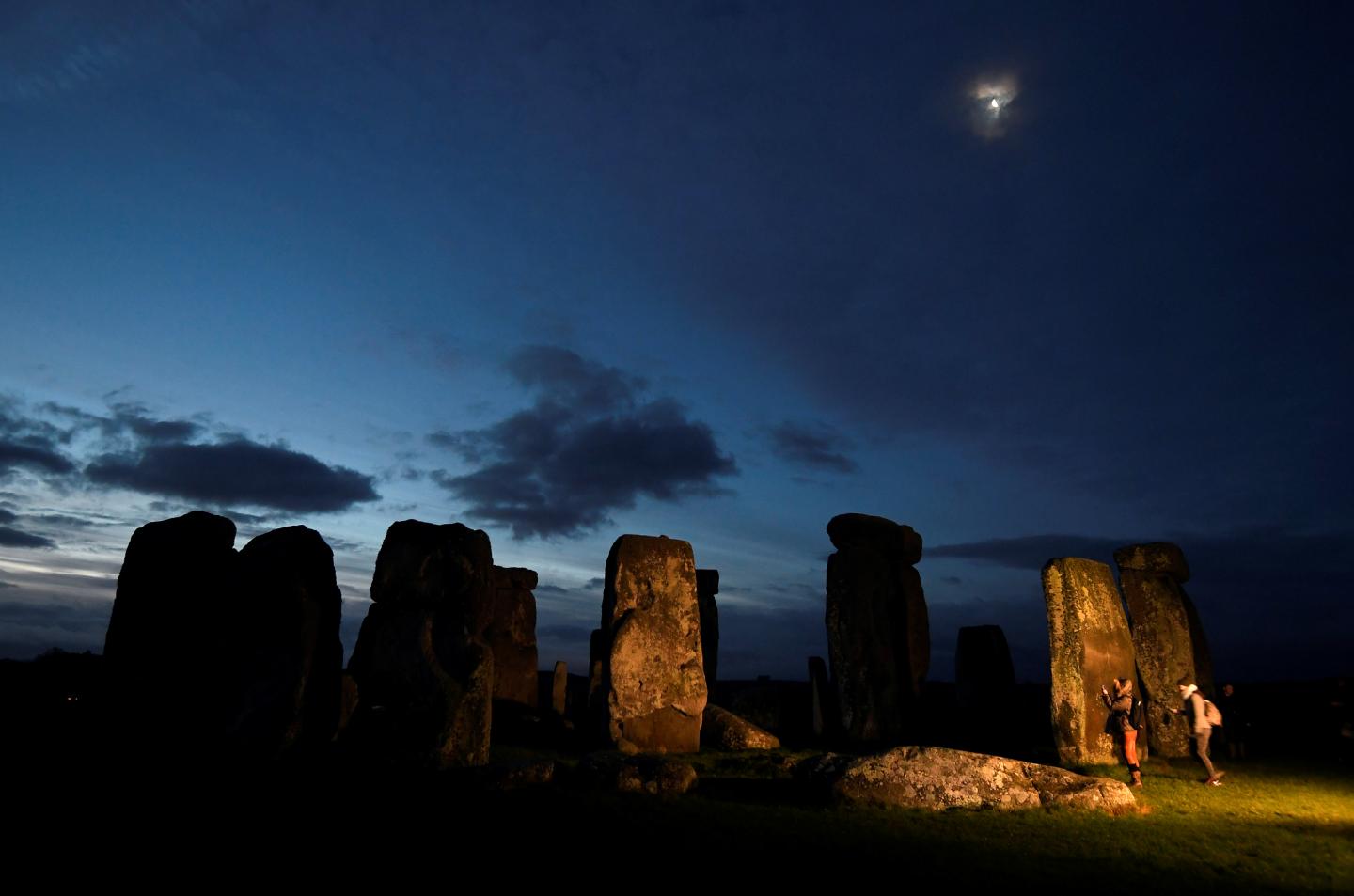
Visitors take photos amongst the prehistoric stones of the Stonehenge monument at dawn on Winter Solstice, near Amesbury
Visitors take photos amongst the prehistoric stones of the Stonehenge monument at dawn on Winter Solstice, the shortest day of the year, near Amesbury in south west Britain, December 21, 2016. REUTERS/Toby Melville - RC19BEF83640Toby Melville—Reuters
Add Fortune on Google for similar content.

Thousands of people gathered around Stonehenge on Thursday’s summer solstice to marvel at its enduring mysteries, as they do every year. But they may not appreciate an insight experts recently unearthed about the more than 4,000-year-old structure: the Neolithic builders used geometric concepts thought to be discovered many centuries later by a Greek philosopher.

A new book, titled Megalith, examined the geometry of Stonehenge and concluded that the builders had a sophisticated enough grasp of astronomy and geometry to use Pythagoras’ theorem 2000 years before the Greek philosopher was even born. The book was published to coincide with this year’s summer solstice.

“People often think of our ancestors as rough cavemen but they were also sophisticated astronomers,” John Matineau, a contributor and editor to Megalith, told the Telegraph. “They were applying Pythagorean geometry over 2000 years before Pythagoras was born.”

“We see triangles and double squares used which are simple versions of Pythagorean geometry” used in the layout of Stonehenge, Martineau said.

The book also posits that a giant Pythagorean triangle can be drawn between Stonehenge and two other important prehistoric sites on Great Britain.

Archaeologists believe that Stonehenge was built in stages between 2000 BC and 3000 BC. Many aspects of the British landmark remain a mystery or a matter of debate, such as how the monument was built and what it was used for.

Pythagoras lived between 570 BC and 495 BC. His theorem, a part of Euclidean geometry taught in many high school math classes, states that the hypotenuse of a right triangle (the side opposite the right angle) equals the sum of the squares of the other two sides.

About the Author
By Kevin Kelleher
See full bioRight Arrow Button Icon
Add Fortune on Google for similar content.

Latest in


Most Popular

Fortune Secondary Logo
Rankings
  • 100 Best Companies
  • Fortune 500
  • Global 500
  • Fortune 500 Europe
  • Most Powerful Women
  • World's Most Admired Companies
  • See All Rankings
  • Lists Calendar
Sections
  • Finance
  • Fortune Crypto
  • Features
  • Leadership
  • Health
  • Commentary
  • Success
  • Retail
  • Mpw
  • Tech
  • Lifestyle
  • CEO Initiative
  • Asia
  • Politics
  • Conferences
  • Europe
  • Newsletters
  • Personal Finance
  • Environment
  • Magazine
  • Education
Customer Support
  • Frequently Asked Questions
  • Customer Service Portal
  • Privacy Policy
  • Terms Of Use
  • Single Issues For Purchase
  • International Print
Commercial Services
  • Advertising
  • Fortune Brand Studio
  • Fortune Analytics
  • Fortune Conferences
  • Business Development
  • Group Subscriptions
About Us
  • About Us
  • Press Center
  • Work At Fortune
  • Terms And Conditions
  • Site Map
  • About Us
  • Press Center
  • Work At Fortune
  • Terms And Conditions
  • Site Map
  • Facebook icon
  • Twitter icon
  • LinkedIn icon
  • Instagram icon
  • TikTok icon
  • YouTube icon

    Latest in


    Most Popular

    © 2026 Fortune Media IP Limited. All Rights Reserved. Use of this site constitutes acceptance of our Terms of Use and Privacy Policy | CA Notice at Collection and Privacy Notice | Do Not Sell/Share My Personal Information
    FORTUNE is a trademark of Fortune Media IP Limited, registered in the U.S. and other countries. FORTUNE may receive compensation for some links to products and services on this website. Offers may be subject to change without notice.