• Home
  • Latest
  • Fortune 500
  • Finance
  • Tech
  • Leadership
  • Lifestyle
  • Rankings
  • Multimedia

Trendingnow

1

Philanthropy leader at Warren Buffett and Bill Gates’ Giving Pledge says children of billionaires are pushing them to give their wealth away faster

2

Meet a 71-year-old who retired as a radiologist and professor, and now runs a banana-skewer business: ‘I never want to retire. Why would you do that?’

3

China suffers another setback in effort to de-dollarize global finance as anchor in the greenback's dominance quietly exits Beijing's payment scheme

1

Philanthropy leader at Warren Buffett and Bill Gates’ Giving Pledge says children of billionaires are pushing them to give their wealth away faster

2

Meet a 71-year-old who retired as a radiologist and professor, and now runs a banana-skewer business: ‘I never want to retire. Why would you do that?’

3

China suffers another setback in effort to de-dollarize global finance as anchor in the greenback's dominance quietly exits Beijing's payment scheme
the future of work

These Subtle Psychological Hacks Keep Japan’s Trains Running Smoothly

By
David Z. Morris
David Z. Morris
Down Arrow Button Icon
By
David Z. Morris
David Z. Morris
Down Arrow Button Icon
May 27, 2018, 5:05 PM ET
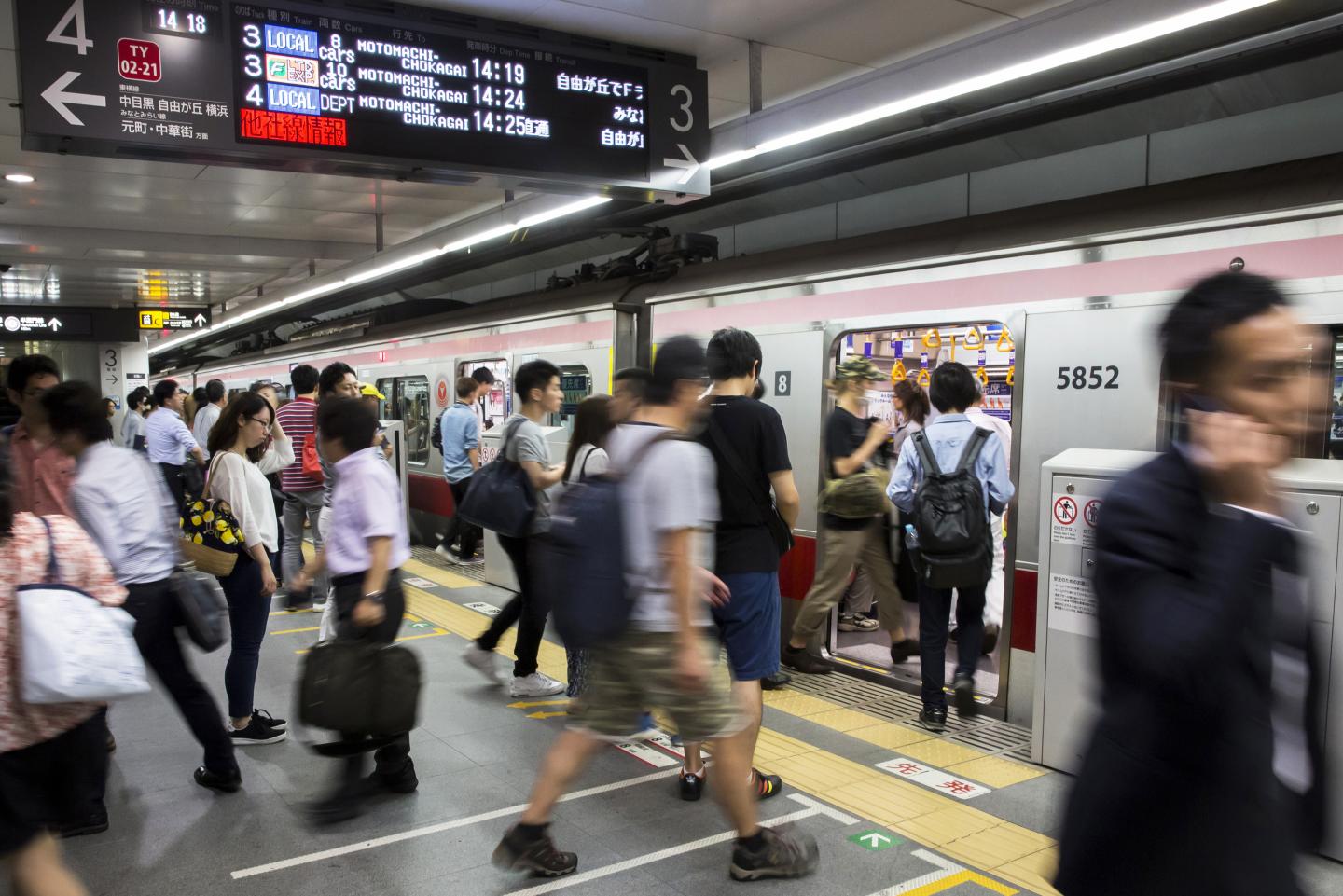
Inside Shibuya Station As Government Promotes Flexible Working Hours Ahead of Olympics
Passengers board a train on the Toyoko line operated by Tokyu Corp. at Shibuya Station in Tokyo, Japan, on Tuesday, July 18, 2017. July 24 marks the first dry run of a 'Telework Day' encouraging people to work from home as the city gears up to host the 2020 Summer Olympics. Authorities are seeking ways to make room for 920,000 spectators expected to visit Tokyo each day during the games. Photographer: Tomohiro Ohsumi/Bloomberg via Getty ImagesTomohiro Ohsumi—Bloomberg via Getty Images
Google source logo
Add Fortune on Google for similar content.

Japan’s trains, including local commuter systems and longer-distance routes that span most of the country, are frequent objects of admiration for their speed, efficiency, and almost excessive timeliness. The system’s overall effectiveness depends in large part on Japan’s unique geography and some very smart alignment between transportation and real estate planning. But on a day-to-day (or minute-to-minute) basis, some fascinating psychological tricks also help keep things running smoothly.

According to CityLab, Japan’s trains rely heavily on so-called “nudge theory,” or small signals that almost unconsciously influence riders’ behavior, keeping foot traffic moving smoothly through crowded stations. These go well beyond the basics of clear boarding indicators, well-designed maps, and fully audible announcements—which too many U.S. transit systems already have trouble executing.

For example, Japanese train systems use calming melodies to signal departures instead of harsh buzzers, which studies have shown prevent injuries by keeping passengers from rushing. Slightly more Machiavellian is the use of ultrasonic sound, inaudible to older passengers, to disperse crowds of potentially disruptive teenagers.

Get Data Sheet, Fortune’s technology newsletter.

The use of subtle nudges also extends to train operators, who are expected to gesture with their hands and state any intended action out loud. That increases mental engagement and decreases operating errors.

Much more serious is the use of calming blue lights on certain parts of platforms, which have been shown to reduce suicide attempts by people jumping in front of trains. Suicide in general is a major social problem in Japan, and suicides by train also cause frequent, serious disruptions to the otherwise smoothly operating system.

Preventing small or large disruptions is crucial to the efficient functioning of mass transit—just ask any New Yorker who has ever boiled with rage when new passengers cram into a subway car without letting exiting riders off first. But for American supporters of mass transit, such refinements may take a back seat to the chronic underinvestment that has left systems including the New York subway and Amtrak an increasingly unsafe and inefficient mess.

About the Author
By David Z. Morris
See full bioRight Arrow Button Icon

Latest in


Most Popular

Fortune Secondary Logo
Rankings
  • 100 Best Companies
  • Fortune 500
  • Global 500
  • Fortune 500 Europe
  • Most Powerful Women
  • World's Most Admired Companies
  • See All Rankings
  • Lists Calendar
Sections
  • Finance
  • Fortune Crypto
  • Features
  • Leadership
  • Health
  • Commentary
  • Success
  • Retail
  • Mpw
  • Tech
  • Lifestyle
  • CEO Initiative
  • Asia
  • Politics
  • Conferences
  • Europe
  • Newsletters
  • Personal Finance
  • Environment
  • Magazine
  • Education
Customer Support
  • Frequently Asked Questions
  • Customer Service Portal
  • Privacy Policy
  • Terms Of Use
  • Single Issues For Purchase
  • International Print
Commercial Services
  • Advertising
  • Fortune Brand Studio
  • Fortune Analytics
  • Fortune Conferences
  • Business Development
  • Group Subscriptions
About Us
  • About Us
  • Press Center
  • Work At Fortune
  • Terms And Conditions
  • Site Map
  • About Us
  • Press Center
  • Work At Fortune
  • Terms And Conditions
  • Site Map
  • Facebook icon
  • Twitter icon
  • LinkedIn icon
  • Instagram icon
  • TikTok icon
  • YouTube icon

    Latest in


    Most Popular

    © 2026 Fortune Media IP Limited. All Rights Reserved. Use of this site constitutes acceptance of our Terms of Use and Privacy Policy | CA Notice at Collection and Privacy Notice | Do Not Sell/Share My Personal Information
    FORTUNE is a trademark of Fortune Media IP Limited, registered in the U.S. and other countries. FORTUNE may receive compensation for some links to products and services on this website. Offers may be subject to change without notice.