A now-viral Google employee memo attacking the tech giant’s diversity initiatives written by a (now-fired) software engineer has sparked a heated debate over corporate culture, gender politics, and freedom of speech—both within Google and Silicon Valley companies in general. The episode also underscores the struggles that women face in STEM and related careers outside of the technology sphere—including in medicine, as highlighted by a survey of more than 2,000 doctors from health care software outfit athenaHealth.
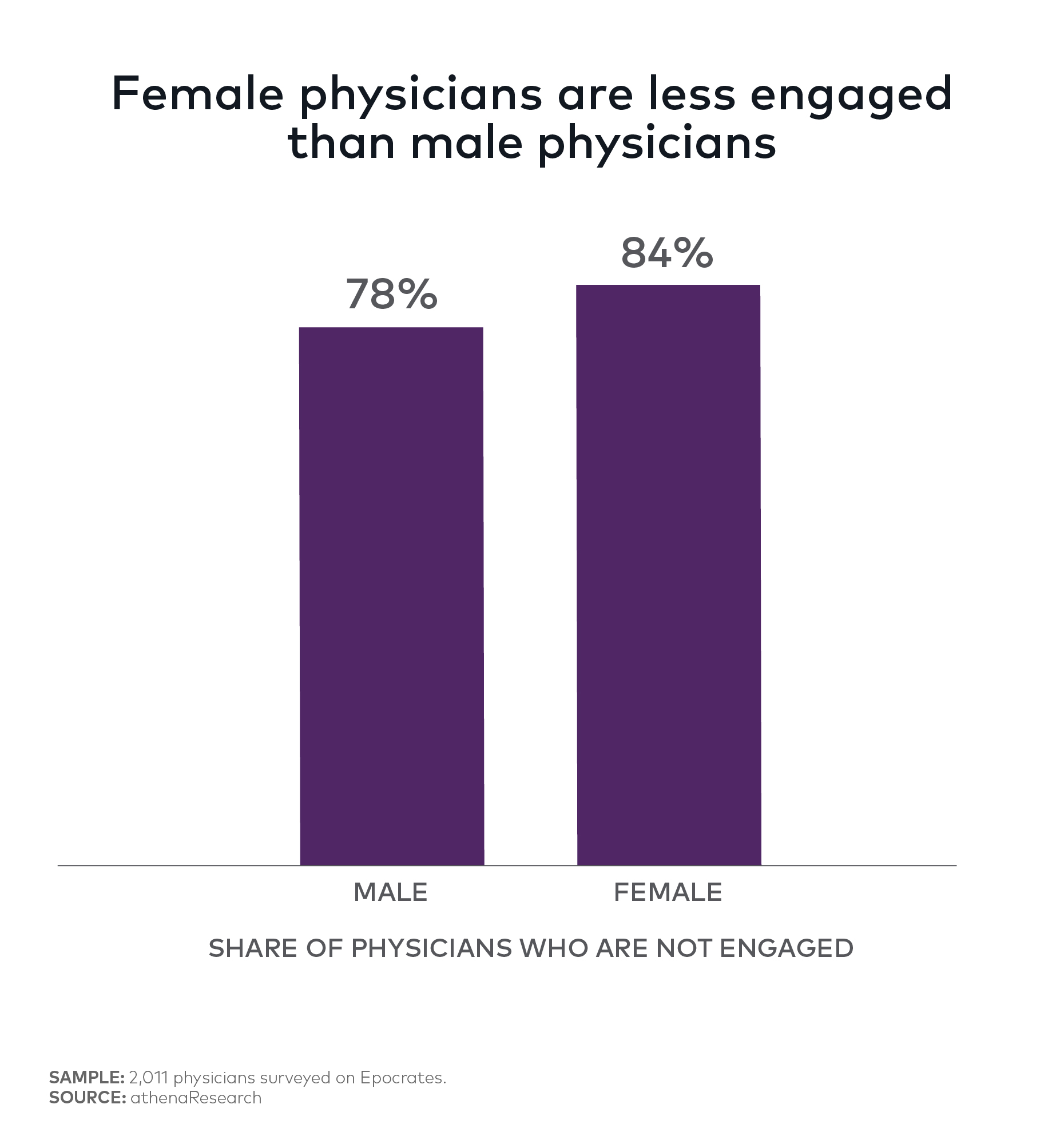
The firm’s research arm athenaInsight finds that female physicians are likely to be less engaged at work—that is, inspired to go beyond expected work ethic or to recommend the job to friends or family—and less likely to stay at the organization that employs them relative to male physicians. (For the record, men aren’t faring much better: 78% of male doctors said they were not engaged at work, versus 84% of the females doctors.)
Click here to subscribe to Brainstorm Health Daily, our brand new newsletter about health innovations.
Medicine is a difficult, time-consuming field that requires extensive and expensive education. Issues like burnout, inadequate compensation relative to the field’s costs, and quality of life all play a part in doctor engagement across the gender continuum.
But, just as in other STEM careers—and contrary to the evolutionary psychology arguments presented in the infamous Google memo—women doctors face additional challenges in the medical field. A panel of female physicians assembled by athenaInsight outlined what they saw as the main drivers of this disparity, including a lack of female mentors, persistent stereotypes about women in the workplace, fewer opportunities for career advancement, and compensation chasms.
“[Consider] women who in their residencies take a break and say, ‘I had a baby,’ or ‘I started a family.’ I’m lucky to have worked with men who are more progressive and don’t look at that as a red flag,” said Dr. Manisha Sharma, director of primary care and community health for CareMore and director at advocacy group Doctors for America. “But I have also been at organizations where older generations see that break as a sign of weakness. They think it means that the job won’t be primary, and it’s still very necessary to fight that.”
Former Trinity Health chief medical officer Dr. Mary Benzik has another theory. “More of the women I know in leadership move that way because there’s something they wanted to right. They felt this is something where I could make a difference,” she says. “The more traditional male leadership is about power and hierarchy. Women will end up in leadership based on their mission.”
The gender gap in medicine, as with STEM overall, is prevalent in both leadership positions and pay. For instance, there’s a nearly $20,000 annual shortfall in in what women academic physicians are paid versus comparable male counterparts.