• Home
  • Latest
  • Fortune 500
  • Finance
  • Tech
  • Leadership
  • Lifestyle
  • Rankings
  • Multimedia

Trendingnow

1

After forcing workers back to the office, Goldman Sachs and JPMorgan Chase are now letting their staff work remotely—but only for the World Cup

2

Markets tumble worldwide as Fed resets expectations: $400 billion wiped off SpaceX stock

3

Current price of oil as of June 23, 2026

1

After forcing workers back to the office, Goldman Sachs and JPMorgan Chase are now letting their staff work remotely—but only for the World Cup

2

Markets tumble worldwide as Fed resets expectations: $400 billion wiped off SpaceX stock

3

Current price of oil as of June 23, 2026
Commentary

Trump’s Appetite for Risk Spells Trouble for US National Security

By
Stephen D. Biddle
Stephen D. Biddle
Down Arrow Button Icon
By
Stephen D. Biddle
Stephen D. Biddle
Down Arrow Button Icon
April 7, 2017, 5:29 PM ET
US-SYRIA-CONFLICT-MILITARY-STRIKE-TRUMP
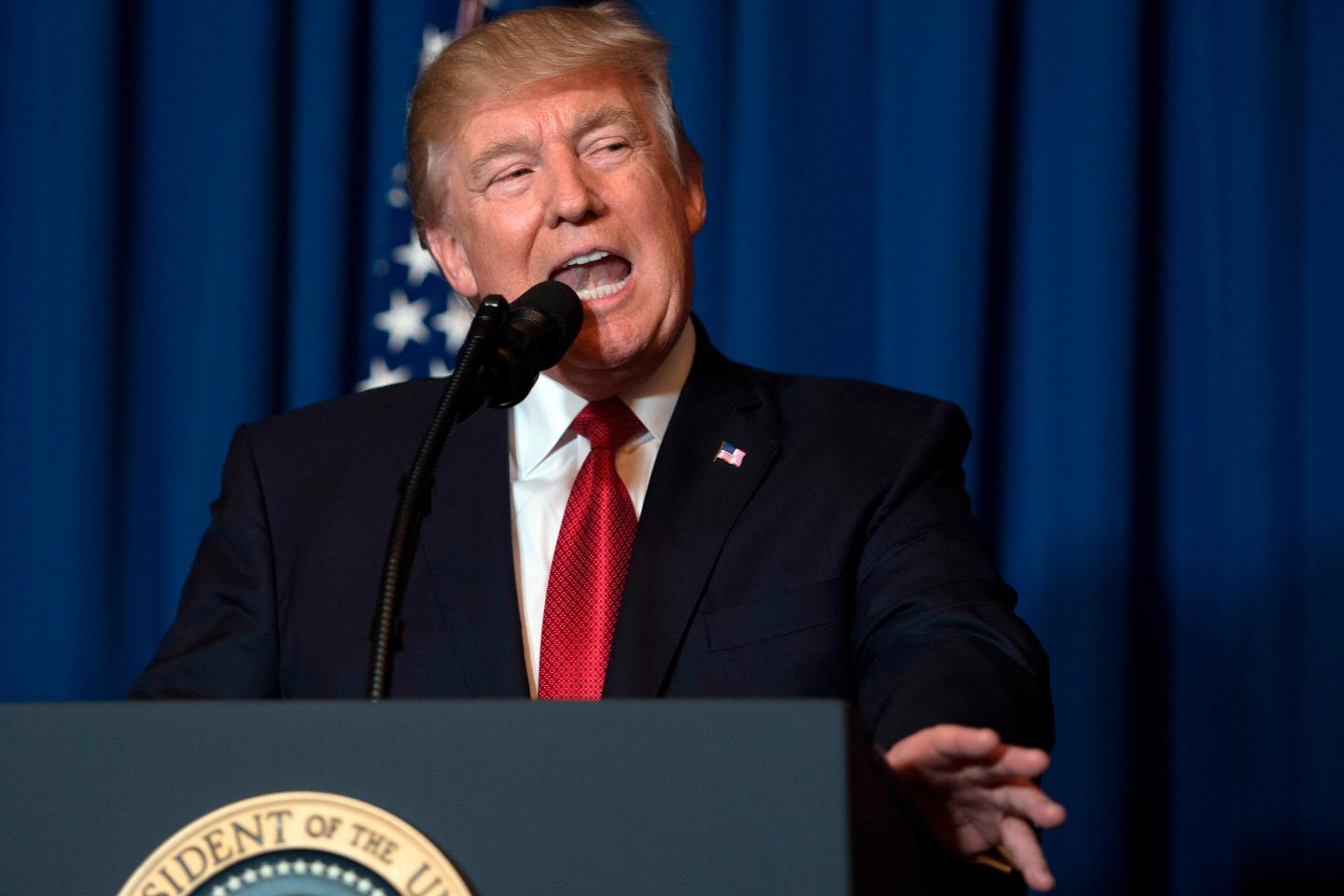
US President Donald Trump delivers a statement on Syria from the Mar-a-Lago estate in West Palm Beach, Florida, on April 6, 2017. Trump ordered a massive military strike against a Syria Thursday in retaliation for a chemical weapons attack they blame on President Bashar al-Assad. A US official said 59 precision guided missiles hit Shayrat Airfield in Syria, where Washington believes Tuesday's deadly attack was launched. / AFP PHOTO / JIM WATSON (Photo credit should read JIM WATSON/AFP/Getty Images)JIM WATSON/AFP/Getty Images
Add Fortune on Google for similar content.

Thursday night’s cruise missile attack on a Syrian airbase will be much debated in coming weeks. Critics will cite the danger of escalation or of ensnarement in a quagmire. Supporters will cite the danger of inaction. Russian and Iranian reactions will be scrutinized. All of this is important, but it misses an arguably bigger issue: how bold and risk-seeking do Americans really want the President to be?

Attacks like Thursday night’s are always gambles. They might work. But they can also fail in ways that could indeed escalate or entrap the United States in a quagmire. Barack Obama was famously cautious and risk-averse – faced with such gambles, he usually chose not to roll the dice, such as in 2013 when the Obama Administration declined to use force following a separate chemical attack in Syria. And this caution shaped all of U.S. Syria policy.

Donald Trump looks much more risk-tolerant. Perhaps as a result of his business background, he seems far more willing to make a bold move in the face of uncertainty. The strategic facts on the ground in Syria today are not significantly different than in 2013 – the real difference is a President who is much more prone to decide quickly and roll the dice when his gut instinct so directs.

This kind of bold move to accept risks can lead to short-term successes – or even a run of them. But as any poker player will tell you, no one’s luck holds forever. Even if the odds are good, if you keep rolling the dice then sooner or later everyone will roll snake-eyes.

For a business leader, this is tolerable – even admirable. After all, the societal consequences of a bad business gamble are usually small. A firm goes broke, some workers lose their jobs, investors take a haircut, but the economy as a whole moves on. Across many thousands of firms, substantial risk-tolerance actually nets out better than nervous risk-aversion: winners outnumber losers, and the country comes out ahead in the end.

For a President, though, the stakes are much higher and the perils much greater.

The Bush Administration rolled the dice by sending a handful of special forces commandoes into Taliban-held Afghanistan in 2001; together with the airstrikes they directed and assistance from Northern Alliance warlords, this gamble worked and toppled the Taliban in just a few weeks. Buoyed by this success, Bush doubled down two years later in Iraq. For a while, bold risk-taking looked like it had rid the world of two dictators, Mullah Omar in Afghanistan and Saddam Hussein in Iraq, at little cost to Americans. Pundits talked about a revolution in military affairs, and the Administration hoped it could re-shape the politics of the entire Mideast. But U.S. luck eventually ran out: both campaigns transformed into grinding insurgencies that soon drove the cost way beyond what most Americans thought the stakes warranted and cost almost 7,000 Americans their lives.

The generals Trump so admires are subject to the same perils. Douglas MacArthur was a hero following his bold, game-changing military gamble in the 1950 Inchon landing. Pundits lauded his courage and derided the cautious plodding of less-bold leaders. But the same risk-tolerance that looked heroic at Inchon then looked foolhardy a few months later at the Yalu when a confident advance designed to put the last nails in the North Korean coffin instead triggered Chinese counter-invasion, skyrocketing casualties, near military disaster, and eventual fruitless stalemate. Sooner or later, every bold risk-taker draws a bad hand. In business, this is bad for a few; in war, it can be disastrous for many, many more.

None of this means that either Presidents or Generals can succeed by declining all gambles. All public policy is decision-making under uncertainty, and inaction has risks, too. Nor was Barack Obama uniformly unwilling to take a gamble, as the Bin Laden raid shows. Maybe Thursday’s gamble will work for Trump.

But Trump looks much more prone to such gambles than his predecessor. And if Thursday’s strike really does deter further gas attacks or rekindle peace talks in Syria, then, this will only reinforce Trump’s proclivity for risk – just as early combat results in 2001-2002 did for George W. Bush before him, and for Douglas MacArthur in 1950.

Trump’s business went bankrupt six times when bold gambles went sour; in commerce, the opportunity to try again eventually worked for Trump the CEO, and he emerged a billionaire. The Trump presidency, however, could easily yield vastly worse outcomes for an entire country when that same bold risk acceptance hits its eventual bad hand. President Trump has his finger on the nuclear button and can send thousands of troops into harm’s way. Maybe Barack Obama erred with excess caution – but do we really want his successor to try out its opposite? We may soon wish for some cautious plodding in the Oval Office.

Stephen D. Biddle is adjunct senior fellow for defense policy at the Council on Foreign Relations (CFR) and professor of political science and international affairs at George Washington University.

About the Author
By Stephen D. Biddle
See full bioRight Arrow Button Icon
Add Fortune on Google for similar content.

Latest in Commentary

Finance
Lorem ipsum dolor sit amet, consectetur adipiscing elit, sed do eiusmod tempor incididunt ut labore et dolore magna aliqua. Ut enim ad minim veniam
By Fortune Editors
October 20, 2025
Finance
Lorem ipsum dolor sit amet, consectetur adipiscing elit, sed do eiusmod tempor incididunt ut labore et dolore magna aliqua. Ut enim ad minim veniam
By Fortune Editors
October 20, 2025
Finance
Lorem ipsum dolor sit amet, consectetur adipiscing elit, sed do eiusmod tempor incididunt ut labore et dolore magna aliqua. Ut enim ad minim veniam
By Fortune Editors
October 20, 2025
Finance
Lorem ipsum dolor sit amet, consectetur adipiscing elit, sed do eiusmod tempor incididunt ut labore et dolore magna aliqua. Ut enim ad minim veniam
By Fortune Editors
October 20, 2025
Finance
Lorem ipsum dolor sit amet, consectetur adipiscing elit, sed do eiusmod tempor incididunt ut labore et dolore magna aliqua. Ut enim ad minim veniam
By Fortune Editors
October 20, 2025
Finance
Lorem ipsum dolor sit amet, consectetur adipiscing elit, sed do eiusmod tempor incididunt ut labore et dolore magna aliqua. Ut enim ad minim veniam
By Fortune Editors
October 20, 2025

Most Popular

Finance
Lorem ipsum dolor sit amet, consectetur adipiscing elit, sed do eiusmod tempor incididunt ut labore et dolore magna aliqua. Ut enim ad minim veniam
By Fortune Editors
October 20, 2025
Finance
Lorem ipsum dolor sit amet, consectetur adipiscing elit, sed do eiusmod tempor incididunt ut labore et dolore magna aliqua. Ut enim ad minim veniam
By Fortune Editors
October 20, 2025
Finance
Lorem ipsum dolor sit amet, consectetur adipiscing elit, sed do eiusmod tempor incididunt ut labore et dolore magna aliqua. Ut enim ad minim veniam
By Fortune Editors
October 20, 2025
Finance
Lorem ipsum dolor sit amet, consectetur adipiscing elit, sed do eiusmod tempor incididunt ut labore et dolore magna aliqua. Ut enim ad minim veniam
By Fortune Editors
October 20, 2025
Finance
Lorem ipsum dolor sit amet, consectetur adipiscing elit, sed do eiusmod tempor incididunt ut labore et dolore magna aliqua. Ut enim ad minim veniam
By Fortune Editors
October 20, 2025
Finance
Lorem ipsum dolor sit amet, consectetur adipiscing elit, sed do eiusmod tempor incididunt ut labore et dolore magna aliqua. Ut enim ad minim veniam
By Fortune Editors
October 20, 2025
Fortune Secondary Logo
Rankings
  • 100 Best Companies
  • Fortune 500
  • Global 500
  • Fortune 500 Europe
  • Most Powerful Women
  • World's Most Admired Companies
  • See All Rankings
  • Lists Calendar
Sections
  • Finance
  • Fortune Crypto
  • Features
  • Leadership
  • Health
  • Commentary
  • Success
  • Retail
  • Mpw
  • Tech
  • Lifestyle
  • CEO Initiative
  • Asia
  • Politics
  • Conferences
  • Europe
  • Newsletters
  • Personal Finance
  • Environment
  • Magazine
  • Education
Customer Support
  • Frequently Asked Questions
  • Customer Service Portal
  • Privacy Policy
  • Terms Of Use
  • Single Issues For Purchase
  • International Print
Commercial Services
  • Advertising
  • Fortune Brand Studio
  • Fortune Analytics
  • Fortune Conferences
  • Business Development
  • Group Subscriptions
About Us
  • About Us
  • Press Center
  • Work At Fortune
  • Terms And Conditions
  • Site Map
  • About Us
  • Press Center
  • Work At Fortune
  • Terms And Conditions
  • Site Map
  • Facebook icon
  • Twitter icon
  • LinkedIn icon
  • Instagram icon
  • Pinterest icon

Latest in Commentary

sb
Commentaryclimate change
The climate policy triangle: why leaders can no longer choose between growth, security and sustainability
By Sebastian BuckupJune 23, 2026
12 hours ago
brett
CommentaryManagement
Middle managers aren’t going extinct—they’re evolving into something more powerful
By Brett HurtJune 23, 2026
21 hours ago
ravi
CommentaryAI agents
Yale School of Management: surveillance pricing is just the beginning. AI agents will be the real test of corporate trust
By Ravi Dhar and Jon IwataJune 23, 2026
22 hours ago
elon
CommentaryElon Musk
Elon Musk’s trillion dollars aren’t real — and that’s the point
By Douglas P. McCormickJune 23, 2026
22 hours ago
gen z
CommentaryCareers
Gen Z: if you want to succeed at work, you need to start friction-maxxing
By Michelle SobelJune 23, 2026
22 hours ago
rp
CommentaryLaw
Cooley CEO: Big Law won’t survive if it treats AI as just an efficiency tool
By Rachel ProffittJune 23, 2026
23 hours ago

Most Popular

After forcing workers back to the office, Goldman Sachs and JPMorgan Chase are now letting their staff work remotely—but only for the World Cup
Success
After forcing workers back to the office, Goldman Sachs and JPMorgan Chase are now letting their staff work remotely—but only for the World Cup
By Orianna Rosa RoyleJune 23, 2026
21 hours ago
Markets tumble worldwide as Fed resets expectations: $400 billion wiped off SpaceX stock
Banking
Markets tumble worldwide as Fed resets expectations: $400 billion wiped off SpaceX stock
By Jim EdwardsJune 23, 2026
23 hours ago
Current price of oil as of June 23, 2026
Personal Finance
Current price of oil as of June 23, 2026
By Joseph HostetlerJune 23, 2026
20 hours ago
Meet the 2 men putting New York's $300 billion pension fund in play for the first time in 20 years
Investing
Meet the 2 men putting New York's $300 billion pension fund in play for the first time in 20 years
By Nick LichtenbergJune 22, 2026
2 days ago
Former U.S. Secret Service agent says bringing your authentic self to work stifles teamwork: 'You don’t get high performers, you get sloppiness'
Success
Former U.S. Secret Service agent says bringing your authentic self to work stifles teamwork: 'You don’t get high performers, you get sloppiness'
By Sydney LakeJune 21, 2026
3 days ago
Texas and Charlotte used to build huge McMansions—now they're copying the California design tricks they once mocked
Real Estate
Texas and Charlotte used to build huge McMansions—now they're copying the California design tricks they once mocked
By Sydney LakeJune 22, 2026
2 days ago

© 2026 Fortune Media IP Limited. All Rights Reserved. Use of this site constitutes acceptance of our Terms of Use and Privacy Policy | CA Notice at Collection and Privacy Notice | Do Not Sell/Share My Personal Information
FORTUNE is a trademark of Fortune Media IP Limited, registered in the U.S. and other countries. FORTUNE may receive compensation for some links to products and services on this website. Offers may be subject to change without notice.