• Home
  • Latest
  • Fortune 500
  • Finance
  • Tech
  • Leadership
  • Lifestyle
  • Rankings
  • Multimedia

Trendingnow

1

U.S. debt is even worse than it seems, and rising Treasury yields are now an 'all-hands-on-deck situation,' top economist warns

2

China's export shock is pushing the global economy to a breaking point, and the U.S. may have to clean up the mess, former trade official says

3

Kevin O'Leary says if you earn $68,000 a year and follow this rule, you'll retire a millionaire

1

U.S. debt is even worse than it seems, and rising Treasury yields are now an 'all-hands-on-deck situation,' top economist warns

2

China's export shock is pushing the global economy to a breaking point, and the U.S. may have to clean up the mess, former trade official says

3

Kevin O'Leary says if you earn $68,000 a year and follow this rule, you'll retire a millionaire
TechFortune 500

Google Artificial Intelligence Guru Says A.I. Won’t Kill Jobs

By
Jonathan Vanian
Jonathan Vanian
Down Arrow Button Icon
By
Jonathan Vanian
Jonathan Vanian
Down Arrow Button Icon
October 10, 2016, 8:38 PM ET
Inside The Google I/O Developers Conference
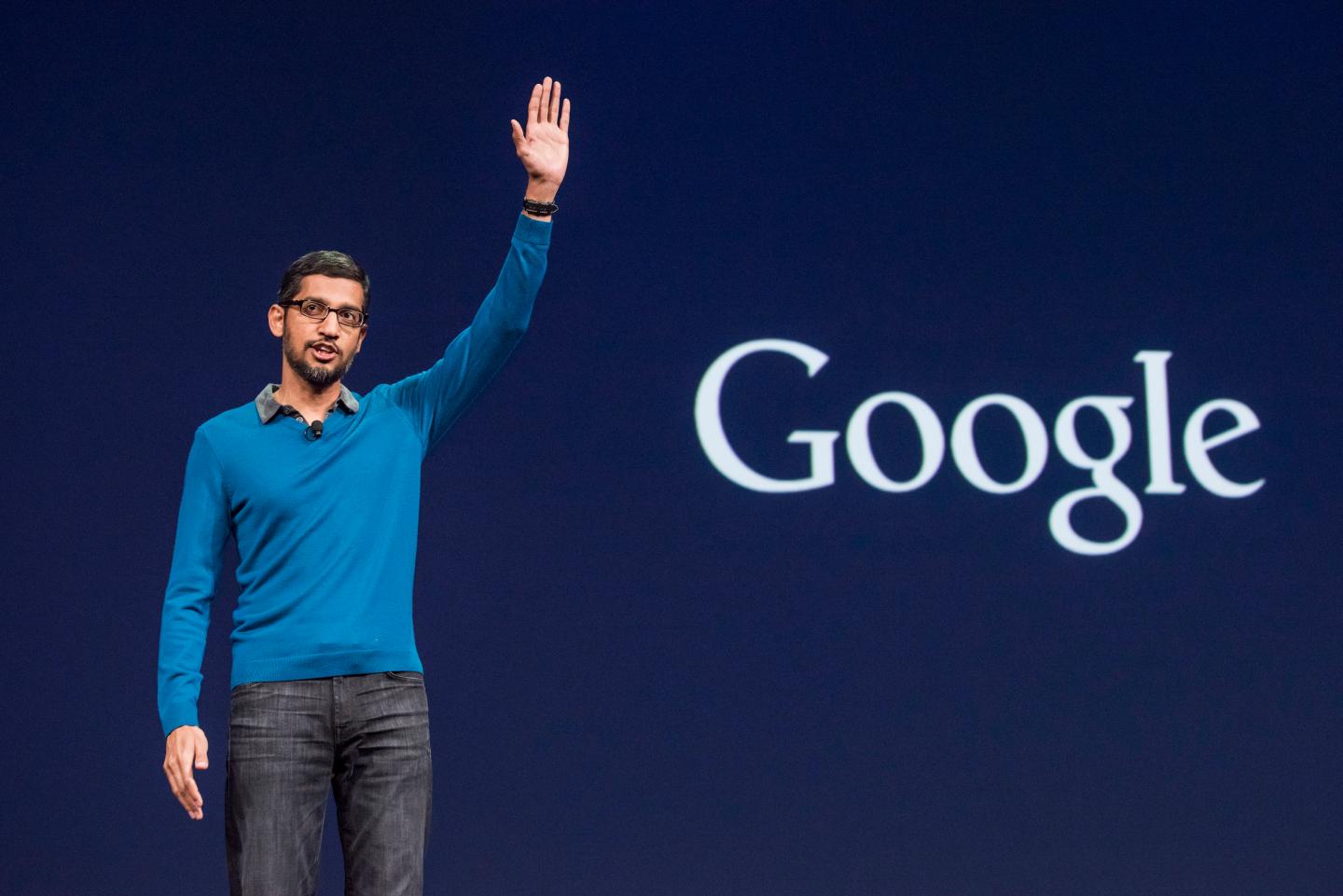
Sundar Pichai, senior vice president of products for Google Inc., speaks during the Google I/O Annual Developers Conference in San Francisco, California, U.S., on Thursday, May 28, 2015. Google Inc. unveiled payment services, security upgrades and access to HBO movies and shows for its popular Android software, seeking to push back against growing competition from rivals such as Apple Inc. Photographer: David Paul Morris/Bloomberg via Getty ImagesDavid Paul Morris—Bloomberg via Getty Images
Google source logo
Add Fortune on Google for similar content.

Computers can more easily recognize cats in photos and translate text because of advances in artificial intelligence. But we’re still decades away from that technology replacing humans at work on a large scale, according to a top Google artificial intelligence executive.

Mustafa Suleyman, co-founder of artificial intelligence startup DeepMind, later acquired by Google, said on Monday that has seen no evidence that advances in A.I. technologies are impacting the workforce. Nevertheless, it’s something that people “should definitely pay attention to” as the technologies continue to mature.

Suleyman predicated that humanity is still “many decades away from encountering that sort of labor replacement at scale.” Instead, the technology is best used to help humans with work-related tasks rather than replace them outright.

Get Data Sheet, Fortune’s technology newsletter.

Suleyman, speaking at an O’Reilly Media technology conference in San Francisco, explained that he co-founded DeepMind in 2010 after working for organizations like the United Nations on climate change issues. Policy researchers were “being overwhelmed by the amount of information we have to navigate the touch problems of climate change,” he said.

DeepMind was created to help solve problems that involve too much data for humans to coherently grasp, he explained. Part of how it helps is through an artificial intelligence technique called deep learning.

Deep learning is a branch of artificial intelligence technologies that involves feeding advanced software systems called neural networks enormous quantities of data. The software can then learn on its own to recognize patterns in the information.

The advent of cloud computing, which lets organizations quickly gain access to computing power and storage on demand, has made it easier for researchers to advance deep learning and use it to teach computers how to understand text and speech and images in pictures.

Now at Google, Suleyman explained how the search giant is incorporating deep learning into some of its own technologies. Deep learning, for example, is used to optimize data centers by reducing the amount of energy used to cool servers when they get hot.

Suleyman said that Google has “developed techniques to safely deploy these systems in a controllable way,” countering fears that A.I. systems are left to run on their own accord. But he did not elaborate on what techniques he was talking about.

For more about artificial intelligence, watch:

Google (GOOG) always keeps “a human in the loop,” he said, to ensure that the A.I. systems to don’t do something human operators wouldn’t want.

“Humans remain the ultimate controller of the systems,” said Suleyman.

About the Author
By Jonathan Vanian
LinkedIn iconTwitter icon

Jonathan Vanian is a former Fortune reporter. He covered business technology, cybersecurity, artificial intelligence, data privacy, and other topics.

See full bioRight Arrow Button Icon
Google source logo
Add Fortune on Google for similar content.

Latest in Tech


Most Popular

Fortune Secondary Logo
Rankings
  • 100 Best Companies
  • Fortune 500
  • Global 500
  • Fortune 500 Europe
  • Most Powerful Women
  • World's Most Admired Companies
  • See All Rankings
  • Lists Calendar
Sections
  • Finance
  • Fortune Crypto
  • Features
  • Leadership
  • Health
  • Commentary
  • Success
  • Retail
  • Mpw
  • Tech
  • Lifestyle
  • CEO Initiative
  • Asia
  • Politics
  • Conferences
  • Europe
  • Newsletters
  • Personal Finance
  • Environment
  • Magazine
  • Education
Customer Support
  • Frequently Asked Questions
  • Customer Service Portal
  • Privacy Policy
  • Terms Of Use
  • Single Issues For Purchase
  • International Print
Commercial Services
  • Advertising
  • Fortune Brand Studio
  • Fortune Analytics
  • Fortune Conferences
  • Business Development
  • Group Subscriptions
About Us
  • About Us
  • Press Center
  • Work At Fortune
  • Terms And Conditions
  • Site Map
  • About Us
  • Press Center
  • Work At Fortune
  • Terms And Conditions
  • Site Map
  • Facebook icon
  • Twitter icon
  • LinkedIn icon
  • Instagram icon
  • TikTok icon
  • YouTube icon

    Latest in Tech


    Most Popular

    © 2026 Fortune Media IP Limited. All Rights Reserved. Use of this site constitutes acceptance of our Terms of Use and Privacy Policy | CA Notice at Collection and Privacy Notice | Do Not Sell/Share My Personal Information
    FORTUNE is a trademark of Fortune Media IP Limited, registered in the U.S. and other countries. FORTUNE may receive compensation for some links to products and services on this website. Offers may be subject to change without notice.