• Home
  • Latest
  • Fortune 500
  • Finance
  • Tech
  • Leadership
  • Lifestyle
  • Rankings
  • Multimedia

Trendingnow

1

Markets tumble worldwide as Fed resets expectations: $400 billion wiped off SpaceX stock

2

After forcing workers back to the office, Goldman Sachs and JPMorgan Chase are now letting their staff work remotely—but only for the World Cup

3

Former U.S. Secret Service agent says bringing your authentic self to work stifles teamwork: 'You don’t get high performers, you get sloppiness'

1

Markets tumble worldwide as Fed resets expectations: $400 billion wiped off SpaceX stock

2

After forcing workers back to the office, Goldman Sachs and JPMorgan Chase are now letting their staff work remotely—but only for the World Cup

3

Former U.S. Secret Service agent says bringing your authentic self to work stifles teamwork: 'You don’t get high performers, you get sloppiness'
Commentary

Killing Free Trade Deals Won’t Magically Bring U.S. Jobs Back

By
Wendy Cutler
Wendy Cutler
Down Arrow Button Icon
By
Wendy Cutler
Wendy Cutler
Down Arrow Button Icon
August 6, 2016, 9:00 AM ET
NZEALAND-NZ-TPP-ECONOMY-TRADE
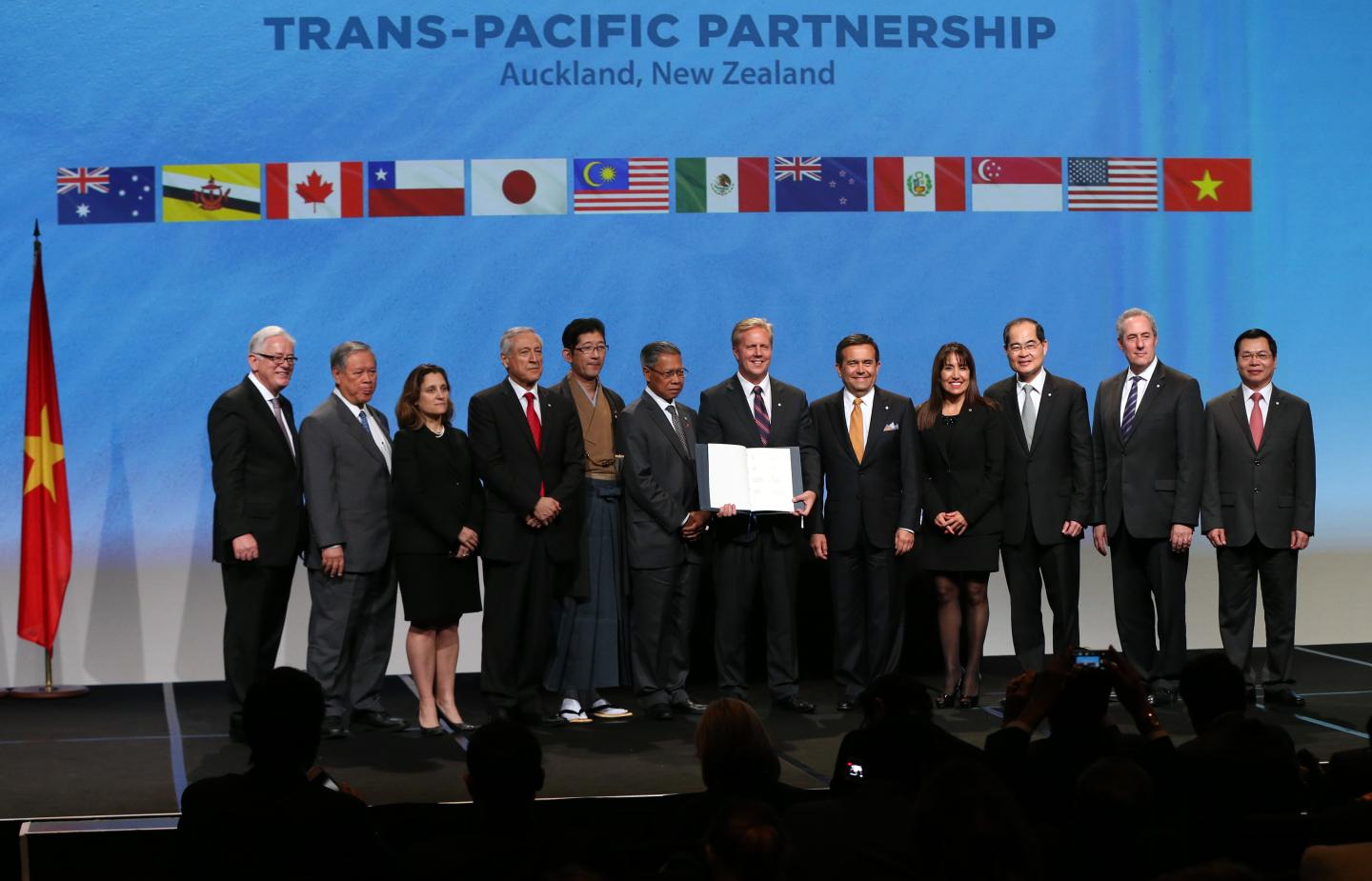
New Zealand Prime Minister John Key (6R) and Ministerial Representatives from 12 countries pose for a photo after signing the Trans-Pacific Partnership agreement in Auckland on February 4, 2016. / AFP / MICHAEL BRADLEY (Photo credit should read MICHAEL BRADLEY/AFP/Getty Images)MICHAEL BRADLEY — AFP/Getty Images
Add Fortune on Google for similar content.

Wendy Cutler, former acting deputy U.S. trade representative, is vice president of the Asia Society Policy Institute in Washington, D.C.

Here’s my nightmare: In 10 years, Asia-Pacific countries are seamlessly trading and cooperating with one another, and the U.S. has been left out. And 2016 will be remembered as the year that the U.S. failed to implement the Trans-Pacific Partnership (TPP).

This outcome isn’t inevitable, but avoiding it will require our country to have an honest, fact-based debate about what trade agreements can and can’t accomplish.

The TPP is not perfect. As one of the agreement’s senior negotiators, I can attest that no one party, the U.S. included, got everything it wanted. That’s the nature of making a deal. But after more than five years of hard negotiations on the TPP, including moments when we walked away from the table, the U.S. achieved a final agreement that reflects an overwhelming majority of American priorities and values.

Yet over the last year, opposition to the TPP has become a centerpiece of the presidential race. By blaming America’s economic woes on free trade, candidates on both the left and the right have fueled the increasingly popular, but misguided, view that if we scrap our existing trade deals and click our heels together, manufacturing jobs will return, the middle class will grow, and income inequality will disappear.

These arguments sound good on TV, but they don’t reflect reality. The strain on the American middle class is not the result of trade agreements. It has far more to do with improvements in productivity, advancements in technology, and insufficient domestic policy responses.

The past 20 years of globalization have created clear winners and losers in our economy, and such yawning inequality cannot be ignored. But pulling back from the world won’t reverse this trend. Instead, what we need is a “competitiveness agenda”: a collection of measures to retrain our workers, rebuild our infrastructure, improve our educational system so our children are prepared to compete in the global economy, and construct an environment that allows innovation and entrepreneurship to thrive.

As President Obama said earlier this week in a joint press conference with Singapore’s Prime Minister Lee Hsien Loong, the U.S. must “make sure that globalization and trade is working for us, not against us.”

Trade agreements can actually help protect our workers. They allow the U.S. to shape the process of globalization by urging others to embrace our commitment to the rule of law, transparency, fairness, and openness, and bind other countries to shared rules banning unfair competition. As our economic ties with other countries deepen, trade agreements can reduce the likelihood of conflict.

The TPP accomplishes all of this, and more. It strengthens U.S. economic ties with the fastest-growing region in the world; provides substantial export opportunities for American firms, including small businesses; and promotes digital trade, an area in which the U.S. holds a competitive edge. If our partners don’t live up to the agreement’s groundbreaking labor and environmental provisions, the TPP allows us to reimpose tariffs. It also simplifies customs procedures, ensures other countries don’t use non-tariff measures to keep U.S. products out of their markets, and institutes high standards for intellectual property, protecting U.S. inventions and ideas.

More than anything else, the TPP will boost economic growth and support high-paying U.S. jobs. That’s not just my view—it’s the consensus of 14 former chairs of the president’s Council of Economic Advisers, dating back to the Gerald Ford administration.


However, some still believe that we could have pushed harder and that the U.S. should attempt to renegotiate the TPP. Let me be clear: Asking our partners to return to the negotiating table to give us more is not a viable option. They would expect concessions that we couldn’t make, and the carefully balanced deal would quickly unravel.

If that were to happen, our trading partners would pursue deals among themselves, excluding the U.S. We would lose our competitive advantage in sector after sector, as we found ourselves denied the tariff benefits extended to others. We would lose the opportunity to push nations to improve their labor and environmental standards. We would allow others to shape the rules of globalization, reflecting their own interests. And—having already gone to the mat for a great deal—we would lose credibility in future negotiations on trade and other global issues like climate change.

In the joint press conference, both Obama and Lee underscored the serious consequences of non-action. Not only would our important relationships in the Asia-Pacific region immediately suffer from America’s backing out of the TPP, but also, as Lee put it, these relationships would be “really damaged for a long time to come.”

My nightmare doesn’t have to become reality. The TPP is a quality agreement that reflects U.S. priorities and values. Let’s not squander this opportunity. There won’t be another.

About the Author
By Wendy Cutler
See full bioRight Arrow Button Icon
Add Fortune on Google for similar content.

Latest in Commentary

Finance
Lorem ipsum dolor sit amet, consectetur adipiscing elit, sed do eiusmod tempor incididunt ut labore et dolore magna aliqua. Ut enim ad minim veniam
By Fortune Editors
October 20, 2025
Finance
Lorem ipsum dolor sit amet, consectetur adipiscing elit, sed do eiusmod tempor incididunt ut labore et dolore magna aliqua. Ut enim ad minim veniam
By Fortune Editors
October 20, 2025
Finance
Lorem ipsum dolor sit amet, consectetur adipiscing elit, sed do eiusmod tempor incididunt ut labore et dolore magna aliqua. Ut enim ad minim veniam
By Fortune Editors
October 20, 2025
Finance
Lorem ipsum dolor sit amet, consectetur adipiscing elit, sed do eiusmod tempor incididunt ut labore et dolore magna aliqua. Ut enim ad minim veniam
By Fortune Editors
October 20, 2025
Finance
Lorem ipsum dolor sit amet, consectetur adipiscing elit, sed do eiusmod tempor incididunt ut labore et dolore magna aliqua. Ut enim ad minim veniam
By Fortune Editors
October 20, 2025
Finance
Lorem ipsum dolor sit amet, consectetur adipiscing elit, sed do eiusmod tempor incididunt ut labore et dolore magna aliqua. Ut enim ad minim veniam
By Fortune Editors
October 20, 2025

Most Popular

Finance
Lorem ipsum dolor sit amet, consectetur adipiscing elit, sed do eiusmod tempor incididunt ut labore et dolore magna aliqua. Ut enim ad minim veniam
By Fortune Editors
October 20, 2025
Finance
Lorem ipsum dolor sit amet, consectetur adipiscing elit, sed do eiusmod tempor incididunt ut labore et dolore magna aliqua. Ut enim ad minim veniam
By Fortune Editors
October 20, 2025
Finance
Lorem ipsum dolor sit amet, consectetur adipiscing elit, sed do eiusmod tempor incididunt ut labore et dolore magna aliqua. Ut enim ad minim veniam
By Fortune Editors
October 20, 2025
Finance
Lorem ipsum dolor sit amet, consectetur adipiscing elit, sed do eiusmod tempor incididunt ut labore et dolore magna aliqua. Ut enim ad minim veniam
By Fortune Editors
October 20, 2025
Finance
Lorem ipsum dolor sit amet, consectetur adipiscing elit, sed do eiusmod tempor incididunt ut labore et dolore magna aliqua. Ut enim ad minim veniam
By Fortune Editors
October 20, 2025
Finance
Lorem ipsum dolor sit amet, consectetur adipiscing elit, sed do eiusmod tempor incididunt ut labore et dolore magna aliqua. Ut enim ad minim veniam
By Fortune Editors
October 20, 2025
Fortune Secondary Logo
Rankings
  • 100 Best Companies
  • Fortune 500
  • Global 500
  • Fortune 500 Europe
  • Most Powerful Women
  • World's Most Admired Companies
  • See All Rankings
  • Lists Calendar
Sections
  • Finance
  • Fortune Crypto
  • Features
  • Leadership
  • Health
  • Commentary
  • Success
  • Retail
  • Mpw
  • Tech
  • Lifestyle
  • CEO Initiative
  • Asia
  • Politics
  • Conferences
  • Europe
  • Newsletters
  • Personal Finance
  • Environment
  • Magazine
  • Education
Customer Support
  • Frequently Asked Questions
  • Customer Service Portal
  • Privacy Policy
  • Terms Of Use
  • Single Issues For Purchase
  • International Print
Commercial Services
  • Advertising
  • Fortune Brand Studio
  • Fortune Analytics
  • Fortune Conferences
  • Business Development
  • Group Subscriptions
About Us
  • About Us
  • Press Center
  • Work At Fortune
  • Terms And Conditions
  • Site Map
  • About Us
  • Press Center
  • Work At Fortune
  • Terms And Conditions
  • Site Map
  • Facebook icon
  • Twitter icon
  • LinkedIn icon
  • Instagram icon
  • Pinterest icon

Latest in Commentary

sb
Commentaryclimate change
The climate policy triangle: why leaders can no longer choose between growth, security and sustainability
By Sebastian BuckupJune 23, 2026
5 hours ago
brett
CommentaryManagement
Middle managers aren’t going extinct—they’re evolving into something more powerful
By Brett HurtJune 23, 2026
14 hours ago
ravi
CommentaryAI agents
Yale School of Management: surveillance pricing is just the beginning. AI agents will be the real test of corporate trust
By Ravi Dhar and Jon IwataJune 23, 2026
15 hours ago
elon
CommentaryElon Musk
Elon Musk’s trillion dollars aren’t real — and that’s the point
By Douglas P. McCormickJune 23, 2026
15 hours ago
gen z
CommentaryCareers
Gen Z: if you want to succeed at work, you need to start friction-maxxing
By Michelle SobelJune 23, 2026
16 hours ago
rp
CommentaryLaw
Cooley CEO: Big Law won’t survive if it treats AI as just an efficiency tool
By Rachel ProffittJune 23, 2026
16 hours ago

Most Popular

Markets tumble worldwide as Fed resets expectations: $400 billion wiped off SpaceX stock
Banking
Markets tumble worldwide as Fed resets expectations: $400 billion wiped off SpaceX stock
By Jim EdwardsJune 23, 2026
16 hours ago
After forcing workers back to the office, Goldman Sachs and JPMorgan Chase are now letting their staff work remotely—but only for the World Cup
Success
After forcing workers back to the office, Goldman Sachs and JPMorgan Chase are now letting their staff work remotely—but only for the World Cup
By Orianna Rosa RoyleJune 23, 2026
14 hours ago
Former U.S. Secret Service agent says bringing your authentic self to work stifles teamwork: 'You don’t get high performers, you get sloppiness'
Success
Former U.S. Secret Service agent says bringing your authentic self to work stifles teamwork: 'You don’t get high performers, you get sloppiness'
By Sydney LakeJune 21, 2026
3 days ago
Current price of oil as of June 22, 2026
Personal Finance
Current price of oil as of June 22, 2026
By Joseph HostetlerJune 22, 2026
2 days ago
Meet the 2 men putting New York's $300 billion pension fund in play for the first time in 20 years
Investing
Meet the 2 men putting New York's $300 billion pension fund in play for the first time in 20 years
By Nick LichtenbergJune 22, 2026
1 day ago
By 7 a.m., Bank of America’s CEO has already read 5 newspapers, his email inbox, and hit the gym—he says if you’re late to meetings, you’re ‘selfish’
Success
By 7 a.m., Bank of America’s CEO has already read 5 newspapers, his email inbox, and hit the gym—he says if you’re late to meetings, you’re ‘selfish’
By Preston ForeJune 22, 2026
1 day ago

© 2026 Fortune Media IP Limited. All Rights Reserved. Use of this site constitutes acceptance of our Terms of Use and Privacy Policy | CA Notice at Collection and Privacy Notice | Do Not Sell/Share My Personal Information
FORTUNE is a trademark of Fortune Media IP Limited, registered in the U.S. and other countries. FORTUNE may receive compensation for some links to products and services on this website. Offers may be subject to change without notice.