• Home
  • Latest
  • Fortune 500
  • Finance
  • Tech
  • Leadership
  • Lifestyle
  • Rankings
  • Multimedia

Trendingnow

1

After forcing workers back to the office, Goldman Sachs and JPMorgan Chase are now letting their staff work remotely—but only for the World Cup

2

The Pentagon said Iran War costs $29 billion, but the real cost is closer to $200 billion—and counting

3

Markets tumble worldwide as Fed resets expectations: $400 billion wiped off SpaceX stock

1

After forcing workers back to the office, Goldman Sachs and JPMorgan Chase are now letting their staff work remotely—but only for the World Cup

2

The Pentagon said Iran War costs $29 billion, but the real cost is closer to $200 billion—and counting

3

Markets tumble worldwide as Fed resets expectations: $400 billion wiped off SpaceX stock
HealthCRISPR

First CRISPR Clinical Trial in Humans Is Approved by Federal Regulators

By
STAT News
STAT News
Down Arrow Button Icon
By
STAT News
STAT News
Down Arrow Button Icon
June 22, 2016, 1:18 PM ET
545861099
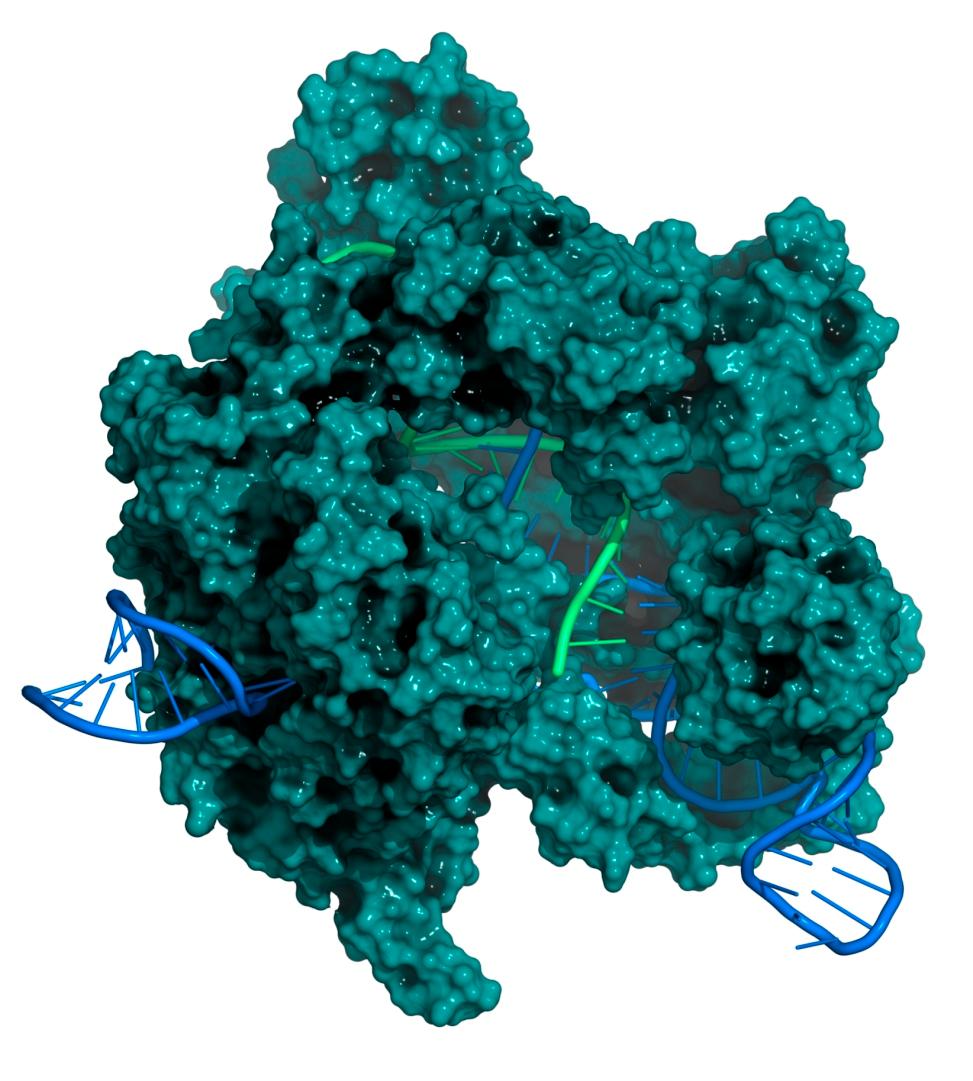
CRISPR-CAS9 gene editing complexImage by MOLEKUUL/SCIENCE PHOTO LIBRARY via Getty Images/Science Photo Libra
Add Fortune on Google for similar content.

A federal biosafety and ethics panel on Tuesday unanimously approved the first study in patients of the genome-editing technology CRISPR-Cas9, in an experiment that would use CRISPR to create genetically altered immune cells to attack three kinds of cancer.

It had been widely expected that the first human use of CRISPR would be a 2017 clinical trial by Editas Medicine (EDIT), which announced last year that it plans to use CRISPR to try to treat a rare form of blindness called Leber congenital amaurosis. Only a few hundred people in the US have that disease. The possibility that a study siccing CRISPR on cancer will happen first suggests that the revolutionary genome-editing technology might be used against common diseases sooner than once thought.

The experiment, proposed by scientists at the University of Pennsylvania, still needs the approval of the medical centers where it would be conducted, as well as from the Food and Drug Administration, which oversees the use of experimental treatments in people. If the study gets those OKs, it would enroll patients with multiple myeloma, melanoma, and sarcoma, and be funded by the Parker Institute for Cancer Immunotherapy, which was launched this year by tech mogul Sean Parker.

“Our preliminary data suggests that we could improve the efficacy of these T cells if we use CRISPR,” Penn’s Dr. Carl June, a pioneer in the use of T cells against cancer, told the National Institute of Health’s Recombinant DNA Advisory Committee (RAC) on Tuesday.

Members of the committee were almost unanimously enthusiastic about the proposal. Dr. Michael Atkins, an oncologist at Georgetown University School of Medicine, called it “a really exciting first-in-human” study, adding that “we’ll learn a lot” from work that could “hopefully form the basis of new [cancer] therapies.” Biochemist Paula Cannon of the University of Southern California called it “innovative,” and said the Penn scientists had adequately addressed the questions she had about the safety of the procedure, including how they would tell whether CRISPR accidentally cuts the wrong genes, a problem called off-target effects.

The proposed early-stage clinical trial with 15 patients would gauge the safety of the experimental therapy and see how feasible it is to manufacture genetically engineered and CRISPR’d T cells, June said. The scientists would remove T cells, which normally target cells that are “foreign,” like bacteria, from patients with multiple myeloma, melanoma, or sarcoma. They would then use CRISPR to genetically modify the T cells so that, infused back into a patient, they can target and destroy tumor cells.

The trial would be conducted at MD Anderson Cancer Center (enrolling nine patients) in Texas, and the University of California, San Francisco (three), as well as Penn (three). Penn would also produce the genetically modified T cells.

In a technique that several companies are competing to commercialize, traditional genetic engineering alters T cells extracted from patients so that the cells produce a “chimeric antigen receptor,” or CAR.

Once the T cells are infused back into patients, that CAR lets the cells find molecules called antigens, which protrude from tumor cells, like a key fitting a lock. If all goes well, the T cells would destroy the tumors. In particular, the T cells would glom onto the antigen NY-ESO-1. Last year, June and his colleagues reportedthat T cells targeting that molecule safely beat back multiple myeloma in 16 out of 20 patients, each of whom received some 2.4 billion genetically-tweaked T cells, June told the committee.

Unfortunately, although that and other studies have found promising results with genetically-engineered T’s, the cells have been shown to work only on some cancers (mostly leukemias and other blood cancers), with disappointing results in solid tumors. Many patients who respond eventually see their cancer return, possibly because tumors begin repelling the T cells.

The Penn trial would use CRISPR to slice out two genes in T cells to hopefully prevent recurrence and help the treatment last longer. One gene is for PD-1, a “checkpoint” molecule that also sits on the surface of many cancer cells. When it binds to a T cell, PD-1 disables that T cell. Solution: edit out the receptor gene so T cells can’t bind to PD-1 and will keep fighting the cancer.

CRISPR’s other target would be the gene for a T cell’s natural receptors, called endogenous TCR. Studies have shown that “if you remove the TCR you get better functioning” of engineered T cells, June said. In his team’s mouse experiments, T cells CRISPR’d to lack both the PD-1 gene and the natural receptor gene reduced the size of lung tumors much more than non-CRISPR’d T cells did. Since CRISPR is not perfect, some PD-1 and TCR genes remain, but at low enough levels to make the T cells attack cancer cells more effectively, according to lab data presented to the committee.

CRISPR’ing out the two genes — in a process expected to take 35 days — “may also increase the persistence” of T cells, Penn’s Dr. Edward Stadtmauer told the committee. T cell “exhaustion” might explain why the benefits of the therapy often fade.

One committee member expressed concern about financial conflicts of interest. June is an inventor of CAR T cells that fight cancer, holds several patents on them, is a scientific advisor to immunotherapy companies including Celldex Therapeutics, and has been a paid speaker for Novartis, which is developing CAR T therapies.

“Penn does have an infamous history in this regard,” said Dr. Lainie Ross of the University of Chicago, referring to a gene therapy study at Penn in which a study volunteer died in 1999 and the lead scientist had a financial interest in the experimental therapy.

The committee was concerned enough about June’s potential conflicts that it debated asking the Penn scientists to “consider” not giving the experimental CRISPR treatment to patients, but to leave that to MD Anderson and UCSF. In the end, it decided only to ask Penn to find ways to “mitigate” conflicts of interest.

This story has been updated to clarify what kind of T cells the proposed study will use.

About the Author
By STAT News
See full bioRight Arrow Button Icon
Add Fortune on Google for similar content.

Latest in Health

Finance
Lorem ipsum dolor sit amet, consectetur adipiscing elit, sed do eiusmod tempor incididunt ut labore et dolore magna aliqua. Ut enim ad minim veniam
By Fortune Editors
October 20, 2025
Finance
Lorem ipsum dolor sit amet, consectetur adipiscing elit, sed do eiusmod tempor incididunt ut labore et dolore magna aliqua. Ut enim ad minim veniam
By Fortune Editors
October 20, 2025
Finance
Lorem ipsum dolor sit amet, consectetur adipiscing elit, sed do eiusmod tempor incididunt ut labore et dolore magna aliqua. Ut enim ad minim veniam
By Fortune Editors
October 20, 2025
Finance
Lorem ipsum dolor sit amet, consectetur adipiscing elit, sed do eiusmod tempor incididunt ut labore et dolore magna aliqua. Ut enim ad minim veniam
By Fortune Editors
October 20, 2025
Finance
Lorem ipsum dolor sit amet, consectetur adipiscing elit, sed do eiusmod tempor incididunt ut labore et dolore magna aliqua. Ut enim ad minim veniam
By Fortune Editors
October 20, 2025
Finance
Lorem ipsum dolor sit amet, consectetur adipiscing elit, sed do eiusmod tempor incididunt ut labore et dolore magna aliqua. Ut enim ad minim veniam
By Fortune Editors
October 20, 2025

Most Popular

Finance
Lorem ipsum dolor sit amet, consectetur adipiscing elit, sed do eiusmod tempor incididunt ut labore et dolore magna aliqua. Ut enim ad minim veniam
By Fortune Editors
October 20, 2025
Finance
Lorem ipsum dolor sit amet, consectetur adipiscing elit, sed do eiusmod tempor incididunt ut labore et dolore magna aliqua. Ut enim ad minim veniam
By Fortune Editors
October 20, 2025
Finance
Lorem ipsum dolor sit amet, consectetur adipiscing elit, sed do eiusmod tempor incididunt ut labore et dolore magna aliqua. Ut enim ad minim veniam
By Fortune Editors
October 20, 2025
Finance
Lorem ipsum dolor sit amet, consectetur adipiscing elit, sed do eiusmod tempor incididunt ut labore et dolore magna aliqua. Ut enim ad minim veniam
By Fortune Editors
October 20, 2025
Finance
Lorem ipsum dolor sit amet, consectetur adipiscing elit, sed do eiusmod tempor incididunt ut labore et dolore magna aliqua. Ut enim ad minim veniam
By Fortune Editors
October 20, 2025
Finance
Lorem ipsum dolor sit amet, consectetur adipiscing elit, sed do eiusmod tempor incididunt ut labore et dolore magna aliqua. Ut enim ad minim veniam
By Fortune Editors
October 20, 2025
Fortune Secondary Logo
Rankings
  • 100 Best Companies
  • Fortune 500
  • Global 500
  • Fortune 500 Europe
  • Most Powerful Women
  • World's Most Admired Companies
  • See All Rankings
  • Lists Calendar
Sections
  • Finance
  • Fortune Crypto
  • Features
  • Leadership
  • Health
  • Commentary
  • Success
  • Retail
  • Mpw
  • Tech
  • Lifestyle
  • CEO Initiative
  • Asia
  • Politics
  • Conferences
  • Europe
  • Newsletters
  • Personal Finance
  • Environment
  • Magazine
  • Education
Customer Support
  • Frequently Asked Questions
  • Customer Service Portal
  • Privacy Policy
  • Terms Of Use
  • Single Issues For Purchase
  • International Print
Commercial Services
  • Advertising
  • Fortune Brand Studio
  • Fortune Analytics
  • Fortune Conferences
  • Business Development
  • Group Subscriptions
About Us
  • About Us
  • Press Center
  • Work At Fortune
  • Terms And Conditions
  • Site Map
  • About Us
  • Press Center
  • Work At Fortune
  • Terms And Conditions
  • Site Map
  • Facebook icon
  • Twitter icon
  • LinkedIn icon
  • Instagram icon
  • Pinterest icon

Latest in Health

mg
CommentaryHealth
The ‘tech neck’ time bomb: why 43 million young Americans could cripple U.S. health care within a generation
By Michael GerlingJune 24, 2026
6 hours ago
UPS workers process boxes in a sorting facility.
North AmericaUPS
UPS is shelling out nearly $50 million on temperature-controlled facilities to meet the booming demand for GLP-1 deliveries
By Sasha RogelbergJune 23, 2026
21 hours ago
dr
HealthCancer
The U.S. cut cancer deaths by 34% since 1991—but not in 458 rural counties
By Arthur Cosby and The ConversationJune 23, 2026
23 hours ago
Woman hides from the sun in front of Big Ben in London
EconomyEurope
‘London isn’t just calling—it’s cooking.’ Europe’s largest economies face over $600 billion in heat-driven losses by 2030
By Tristan BoveJune 23, 2026
1 day ago
Doctor giving patient injection in volunteer clinic
HealthHealth
For the first time ever, no young women in England died of cervical cancer. In the U.S., RFK Jr.’s vaccine skepticism stalls HPV progress
By Catherina GioinoJune 23, 2026
1 day ago
heat
Environmentclimate change
Planet’s heat bill comes due as one billion more people face extreme heat stress than in the 1970s
By Alexa St. John and The Associated PressJune 22, 2026
2 days ago

Most Popular

After forcing workers back to the office, Goldman Sachs and JPMorgan Chase are now letting their staff work remotely—but only for the World Cup
Success
After forcing workers back to the office, Goldman Sachs and JPMorgan Chase are now letting their staff work remotely—but only for the World Cup
By Orianna Rosa RoyleJune 23, 2026
1 day ago
The Pentagon said Iran War costs $29 billion, but the real cost is closer to $200 billion—and counting
Economy
The Pentagon said Iran War costs $29 billion, but the real cost is closer to $200 billion—and counting
By Jacqueline MunisJune 24, 2026
10 hours ago
Markets tumble worldwide as Fed resets expectations: $400 billion wiped off SpaceX stock
Banking
Markets tumble worldwide as Fed resets expectations: $400 billion wiped off SpaceX stock
By Jim EdwardsJune 23, 2026
1 day ago
Current price of oil as of June 23, 2026
Personal Finance
Current price of oil as of June 23, 2026
By Joseph HostetlerJune 23, 2026
1 day ago
Current price of gold as of June 23, 2026
Personal Finance
Current price of gold as of June 23, 2026
By Danny BakstJune 23, 2026
1 day ago
Texas and Charlotte used to build huge McMansions—now they're copying the California design tricks they once mocked
Real Estate
Texas and Charlotte used to build huge McMansions—now they're copying the California design tricks they once mocked
By Sydney LakeJune 22, 2026
2 days ago

© 2026 Fortune Media IP Limited. All Rights Reserved. Use of this site constitutes acceptance of our Terms of Use and Privacy Policy | CA Notice at Collection and Privacy Notice | Do Not Sell/Share My Personal Information
FORTUNE is a trademark of Fortune Media IP Limited, registered in the U.S. and other countries. FORTUNE may receive compensation for some links to products and services on this website. Offers may be subject to change without notice.