• Home
  • Latest
  • Fortune 500
  • Finance
  • Tech
  • Leadership
  • Lifestyle
  • Rankings
  • Multimedia
CommentaryFinance

Glenn Hubbard: Dodd-Frank Doesn’t Work, But This Plan Could

By
Glenn Hubbard
Glenn Hubbard
Down Arrow Button Icon
By
Glenn Hubbard
Glenn Hubbard
Down Arrow Button Icon
June 11, 2016, 9:00 AM ET
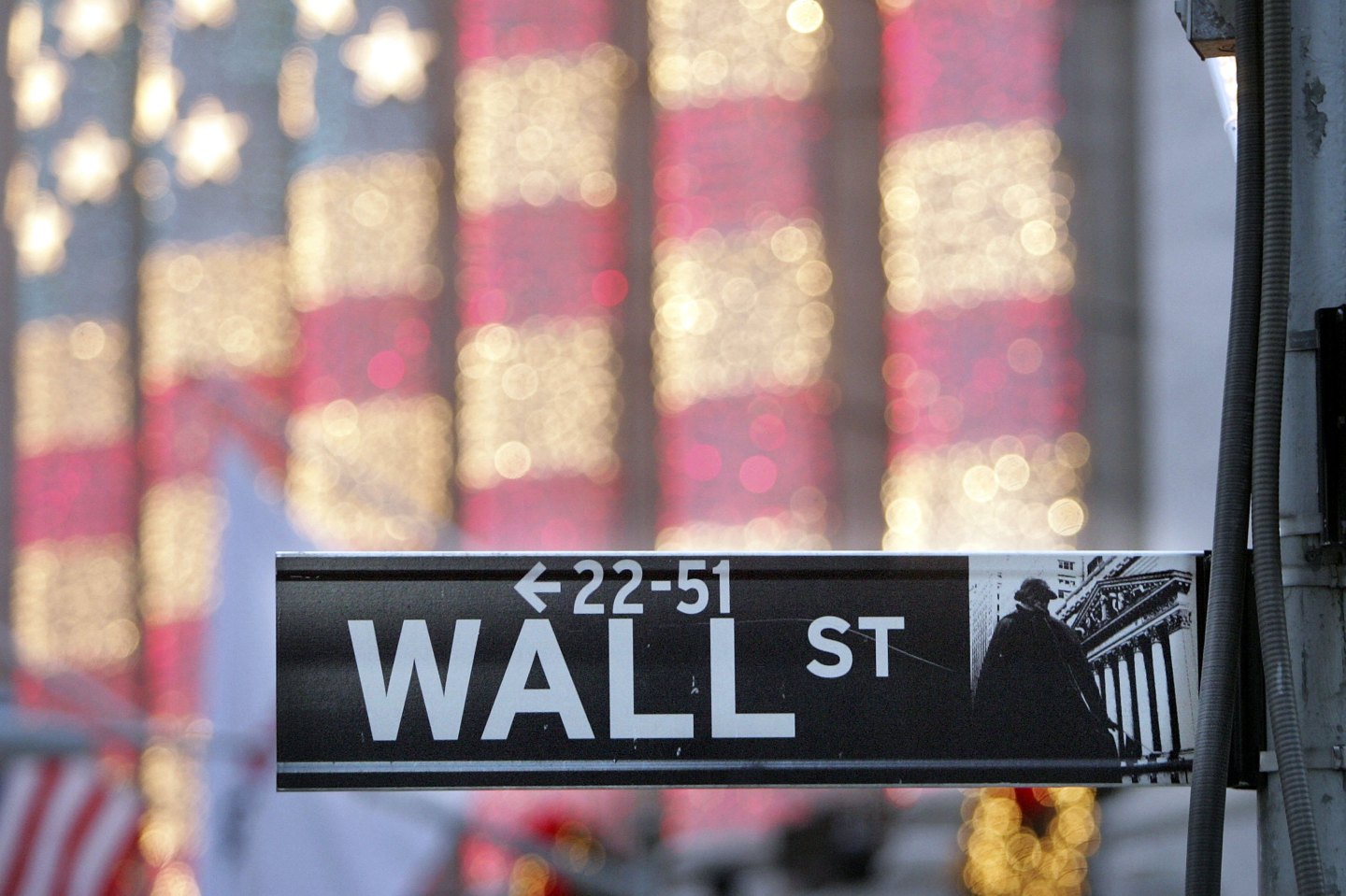
Photograph by Mario Tama—Getty Images

In an important speech before the Economic Club of New York this week, House Financial Services Committee Chairman Jeb Hensarling (R-TX), offered a new approach to financial regulation — an alternative to the Dodd-Frank Act that balances growth and risk-taking with Dodd-Frank’s focus on safety and soundness.

Concerns over credit availability, consumer financial access, and lack of regulatory accountability have led to mounting frustrations with the cost of Dodd-Frank’s regulatory micromanagement and with the idea that the Act’s safeguards against a future crisis are likely weak. The plan outlined by Hensarling recognizes that financial deregulation is not the answer but that regulation must preserve the golden goose of the financial crisis.

Currently, the law’s 2,300-plus pages of regulatory text rests on the foundation that the financial crisis was caused by insufficient regulation. Economists, by contrast, point to sharp asset price increases helped by ultra-low interest rates, risk premia in global capital markets, as well as credit-risk perceptions that were distorted by regulatory reliance on ratings and risk-weightings that suggested financial alchemy, and ultimately contagion across financial institutions leading to fire sales of assets.

However, as the House Financial Services Committee plan observes, Dodd-Frank fails to remedy areas of public anger over the crisis. Financial institutions are still too big to fail, while consumers need more financial protection.

For instance, Dodd-Frank readies a costly bailout system called the Orderly Liquidation Authority to confront a doubling down on too-big-to-fail firms, now called Systemically Important Financial Institutions, or SIFIs. In so doing, the law substitutes regulatory micromanagement for market discipline coupled with a more rigorous means of resolving the failure of a large complex financial institution.

Meanwhile, the Consumer Financial Protection Bureau fails to balance credit availability and financial access with regulatory concerns for consumer protection, while remaining essentially unaccountable to the Congress’ power of the purse, drawing funds from the Federal Reserve with no legislative appropriation.

At the top of the Dodd-Frank regulatory edifice lies the Financial Stability Oversight Council, or FSOC, composed of regulators already responsible for portions of the financial system before and during the financial crisis. Despite public calls for regulatory transparency in the aftermath of the financial crisis, the FSOC acts as prosecutor and judge in designating too-big-to-fail firms and has the power to reorder contractual priority in the financial distress of such a firm.

So the question remains: are we now safer because of Dodd-Frank? The answer is likely ‘no’ for a number of reasons. Dodd-Frank’s restrictions on banks’ roles in market-making has dampened liquidity in bond markets, a potentially serious mistake in the event of escalating asset sales, as we saw during the crisis. The Federal Reserve’s ability to intervene in a future crisis has also been circumscribed by Dodd-Frank.

The proposal outlined by Chairman Hensarling starts with a different foundation from Dodd-Frank in many respects. The law relies on the belief that explicit rules and regulation ex ante make a crisis much less likely, with little flexibility ex post to deal with a crisis if one happens. By contrast, the House proposal is more humble about the ability of regulation to address all problems in a complex and dynamic industry, offering market discipline as a counterweight. The proposal would permit financial institutions with limited leverage and strong core capital, including stocks and reserves,to be subject to less regulatory micromanagement. Such an approach, especially if complemented by a role for contingent convertible bonds, prices of which send important signals about a financial institution’s health.

To be sure, the plan is imperfect; two areas, in particular, deserve further discussion. First, while the plan would repeal Titles I and II of Dodd-Frank to end taxpayer-financed bailouts, strong consideration of a realistic alternative resolution mechanism is needed, as one scholar, Kenneth Scott, at Stanford Law School has suggested. Second, the prospect of contagion means that ex post means of intervention by the Federal Reserve and the Treasury must remain possible in a crisis.

Finally, the Act rightly focuses on the need to foster greater accountability. Such accountability must focus on Wall Street, of course, so that wrongdoing and consumer fraud are punished. But it must also focus on Washington, where Dodd-Frank has weakened regulatory transparency and accountability to Congress both in budget and in trading off costs and benefits of alternative regulatory approaches.

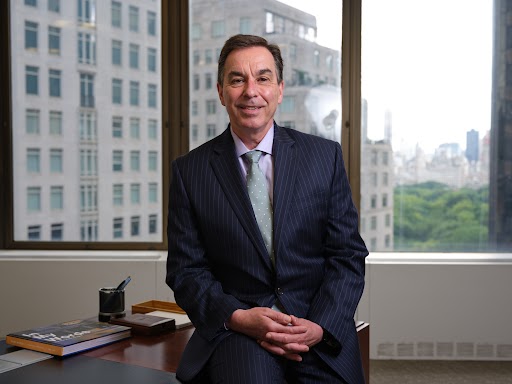
GlennHubbard is dean of Columbia Business School. Previously, he served as chairman of the Council of Economic Advisers under President George W. Bush.
About the Author
By Glenn Hubbard
See full bioRight Arrow Button Icon

Latest in Commentary

Finance
Lorem ipsum dolor sit amet, consectetur adipiscing elit, sed do eiusmod tempor incididunt ut labore et dolore magna aliqua. Ut enim ad minim veniam
By Fortune Editors
October 20, 2025
Finance
Lorem ipsum dolor sit amet, consectetur adipiscing elit, sed do eiusmod tempor incididunt ut labore et dolore magna aliqua. Ut enim ad minim veniam
By Fortune Editors
October 20, 2025
Finance
Lorem ipsum dolor sit amet, consectetur adipiscing elit, sed do eiusmod tempor incididunt ut labore et dolore magna aliqua. Ut enim ad minim veniam
By Fortune Editors
October 20, 2025
Finance
Lorem ipsum dolor sit amet, consectetur adipiscing elit, sed do eiusmod tempor incididunt ut labore et dolore magna aliqua. Ut enim ad minim veniam
By Fortune Editors
October 20, 2025
Finance
Lorem ipsum dolor sit amet, consectetur adipiscing elit, sed do eiusmod tempor incididunt ut labore et dolore magna aliqua. Ut enim ad minim veniam
By Fortune Editors
October 20, 2025
Finance
Lorem ipsum dolor sit amet, consectetur adipiscing elit, sed do eiusmod tempor incididunt ut labore et dolore magna aliqua. Ut enim ad minim veniam
By Fortune Editors
October 20, 2025

Most Popular

Finance
Lorem ipsum dolor sit amet, consectetur adipiscing elit, sed do eiusmod tempor incididunt ut labore et dolore magna aliqua. Ut enim ad minim veniam
By Fortune Editors
October 20, 2025
Finance
Lorem ipsum dolor sit amet, consectetur adipiscing elit, sed do eiusmod tempor incididunt ut labore et dolore magna aliqua. Ut enim ad minim veniam
By Fortune Editors
October 20, 2025
Finance
Lorem ipsum dolor sit amet, consectetur adipiscing elit, sed do eiusmod tempor incididunt ut labore et dolore magna aliqua. Ut enim ad minim veniam
By Fortune Editors
October 20, 2025
Finance
Lorem ipsum dolor sit amet, consectetur adipiscing elit, sed do eiusmod tempor incididunt ut labore et dolore magna aliqua. Ut enim ad minim veniam
By Fortune Editors
October 20, 2025
Finance
Lorem ipsum dolor sit amet, consectetur adipiscing elit, sed do eiusmod tempor incididunt ut labore et dolore magna aliqua. Ut enim ad minim veniam
By Fortune Editors
October 20, 2025
Finance
Lorem ipsum dolor sit amet, consectetur adipiscing elit, sed do eiusmod tempor incididunt ut labore et dolore magna aliqua. Ut enim ad minim veniam
By Fortune Editors
October 20, 2025
Fortune Secondary Logo
Rankings
  • 100 Best Companies
  • Fortune 500
  • Global 500
  • Fortune 500 Europe
  • Most Powerful Women
  • Future 50
  • World’s Most Admired Companies
  • See All Rankings
Sections
  • Finance
  • Fortune Crypto
  • Features
  • Leadership
  • Health
  • Commentary
  • Success
  • Retail
  • Mpw
  • Tech
  • Lifestyle
  • CEO Initiative
  • Asia
  • Politics
  • Conferences
  • Europe
  • Newsletters
  • Personal Finance
  • Environment
  • Magazine
  • Education
Customer Support
  • Frequently Asked Questions
  • Customer Service Portal
  • Privacy Policy
  • Terms Of Use
  • Single Issues For Purchase
  • International Print
Commercial Services
  • Advertising
  • Fortune Brand Studio
  • Fortune Analytics
  • Fortune Conferences
  • Business Development
  • Group Subscriptions
About Us
  • About Us
  • Editorial Calendar
  • Press Center
  • Work At Fortune
  • Diversity And Inclusion
  • Terms And Conditions
  • Site Map
  • About Us
  • Editorial Calendar
  • Press Center
  • Work At Fortune
  • Diversity And Inclusion
  • Terms And Conditions
  • Site Map
  • Facebook icon
  • Twitter icon
  • LinkedIn icon
  • Instagram icon
  • Pinterest icon

Latest in Commentary

kennnedy
CommentaryDrugs
America is handing its mRNA lead to China—and RFK Jr. is to blame
By Jeff CollerMarch 26, 2026
12 hours ago
jerry
CommentaryEducation
The college degree isn’t dead. But the wrong kind could cost you $2 million
By Jerry BalentineMarch 26, 2026
13 hours ago
trump
CommentaryMarkets
We’re no longer in a bull or bear market. We’re in a Trump market — and here’s how to navigate it
By Jeffrey Sonnenfeld and Steven TianMarch 26, 2026
13 hours ago
EuropeLetter from London
Rishi Sunak is giving advice to CEOs on AI. Here are his golden rules
By Kamal AhmedMarch 25, 2026
1 day ago
retirement
CommentaryRetirement
Our retirement system gets a C-plus; policymakers have an opportunity to make it A grade
By Chris MahoneyMarch 25, 2026
2 days ago
david-f
CommentaryVenture Capital
Europe has survived 3 energy shocks in 4 years. The only way out is to stop buying power from its enemies
By David FrykmanMarch 25, 2026
2 days ago

Most Popular

C-Suite
'I didn’t want anybody shooting me': Five Guys CEO gave away $1.5 million bonus to employees over botched BOGO burger birthday celebration
By Fortune EditorsMarch 25, 2026
1 day ago
Success
Palantir’s billionaire CEO says only two kinds of people will succeed in the AI era: trade workers — ‘or you’re neurodivergent’
By Fortune EditorsMarch 24, 2026
2 days ago
Environment
Vail Resorts CEO says it’s time to think beyond the $1,000 ski pass that helped build the empire
By Fortune EditorsMarch 26, 2026
17 hours ago
Commentary
The Treasury just declared the U.S. insolvent. The media missed it
By Fortune EditorsMarch 23, 2026
3 days ago
Success
JPMorgan’s Jamie Dimon says remote work breeds ‘rope-a-dope politics’ and stunts young workers’ growth
By Fortune EditorsMarch 25, 2026
1 day ago
Magazine
The youngest-ever female CEO of a Fortune 500 company is fighting Trump's cuts to keep Medicaid strong
By Fortune EditorsMarch 24, 2026
3 days ago

© 2026 Fortune Media IP Limited. All Rights Reserved. Use of this site constitutes acceptance of our Terms of Use and Privacy Policy | CA Notice at Collection and Privacy Notice | Do Not Sell/Share My Personal Information
FORTUNE is a trademark of Fortune Media IP Limited, registered in the U.S. and other countries. FORTUNE may receive compensation for some links to products and services on this website. Offers may be subject to change without notice.