• Home
  • Latest
  • Fortune 500
  • Finance
  • Tech
  • Leadership
  • Lifestyle
  • Rankings
  • Multimedia

Trendingnow

1

MacKenzie Scott alone accounted for one-third of America's $19.2 billion in megagifts last year

2

Now worth $200 million, Sarah Jessica Parker credits being ‘one of eight kids that struggled financially’ for her hunger, ambition, and work ethic

3

Ray Dalio says the U.S. just had its 'Suez moment'—and history says what comes next could end an empire

1

MacKenzie Scott alone accounted for one-third of America's $19.2 billion in megagifts last year

2

Now worth $200 million, Sarah Jessica Parker credits being ‘one of eight kids that struggled financially’ for her hunger, ambition, and work ethic

3

Ray Dalio says the U.S. just had its 'Suez moment'—and history says what comes next could end an empire
Commentary

The Panama Papers Signal A New Kind of Cyber Attack

By
Rajiv Gupta
Rajiv Gupta
Down Arrow Button Icon
By
Rajiv Gupta
Rajiv Gupta
Down Arrow Button Icon
April 9, 2016, 10:00 AM ET
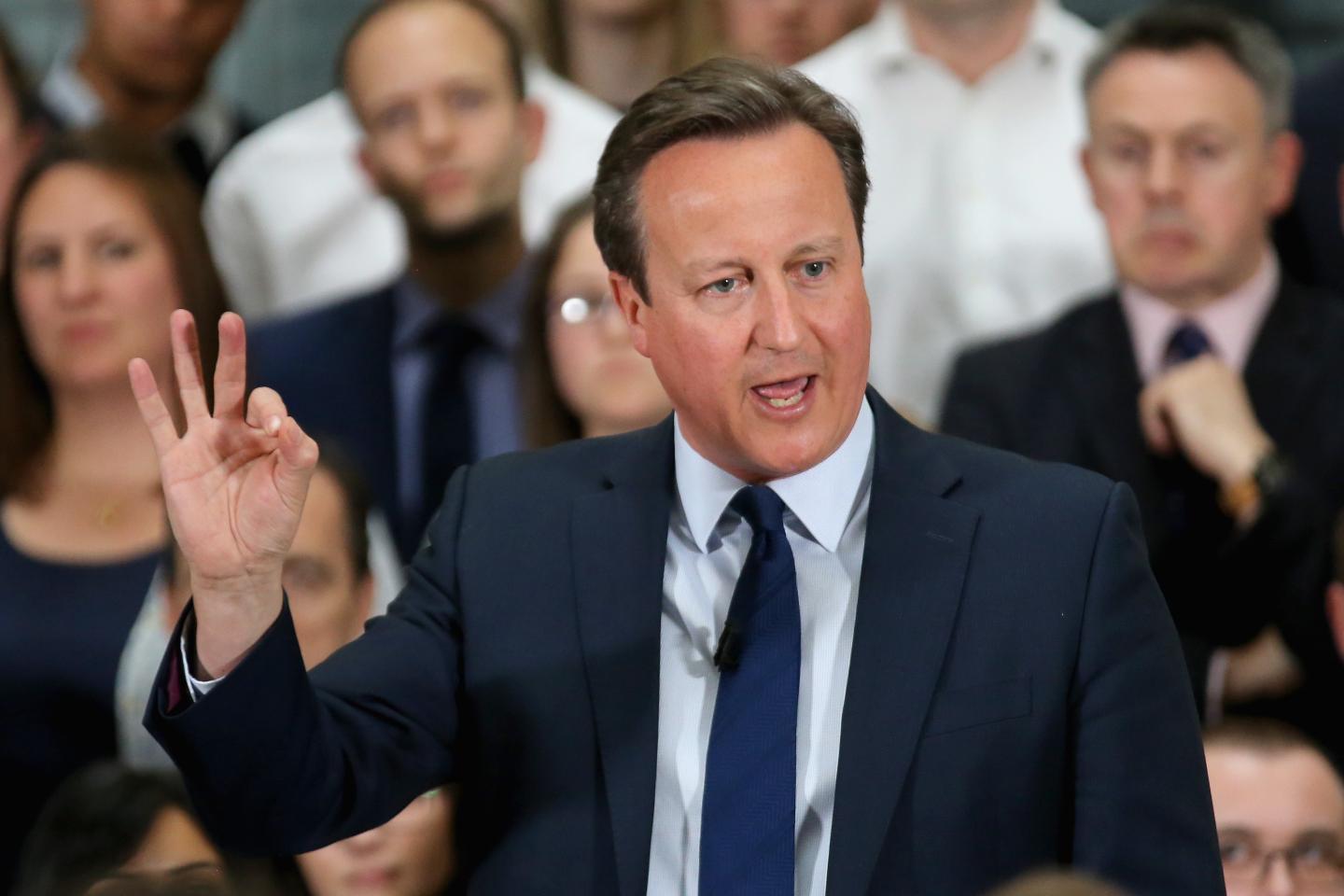
Prime Minister David Cameron holds a Q&A session on the forthcoming European Union referendum with staff of PricewaterhouseCoopers on April 5, 2016 in Birmingham, England. The UK will vote on whether or not to remain in the European Union on June 23, 2016.
Prime Minister David Cameron holds a Q&A session on the forthcoming European Union referendum with staff of PricewaterhouseCoopers on April 5, 2016 in Birmingham, England. The UK will vote on whether or not to remain in the European Union on June 23, 2016.Christopher Furlong 2016 Getty Images
Add Fortune on Google for similar content.

As a trove of leaked documents dubbed the ‘Panamanian Papers’ ripple across several nations, world leaders are feeling the heat. Russian President Vladimir Putin has called the exposure of offshore bank accounts an American plot, while Iceland named a new prime minister and British Prime Minister David Cameron admitted that he profited from an offshore trust. The Panama Papers represent the future of political scandal in the digital age – from the initial hack down to the cloud technology used to analyze the documents. Journalists Bob Woodward and Carl Bernstein, who famously took down Richard Nixon, could hardly have imagined working with millions of pages of confidential documents.

This generation’s Watergate will be conducted through shared folders and chatrooms. Mossack Fonseca, the hacked law firm, embodies the cyber risk to which many organizations have not yet woken up. Hackers are clearly after more than just credit cards and social security numbers. The breach is at once a glimpse into the brave new world of online leaks and a warning that all organizations should assume any sensitive information to be a potential target.

The Panama Papers is 1,500 times the size of Wikileaks’ 2010 disclosure, and the largest leak journalists have ever worked with and one distinctly belonging to the digital era. The sheer amount of data stolen could only logistically happen through an online hack: 11.5 million files totaling 2.6 terabytes equates to loads of books requiring 2,600 pickup trucks! Modern whistleblowers no longer have to sneak documents out of the office in a manila folder. They can extract an entire database to comb through remotely. The data dump of nearly every document from law firm Mossack Fonseca from the past 40 years represents what one journalist calls the Moore’s Law of Leaks, suggesting that disclosure sizes will grow at an exponential rate analogous to that of computing power.

The complex technology and execution behind the Panama Paper’s investigative operation would make any software architect proud. The journalists handling the data employed the latest information technology tools to download, share, and protect a huge database of sensitive information – a feat many companies would be challenged to accomplish. Initial outreach between whistleblower and journalist took place via encrypted messages. The team stored the photos encrypted in the cloud while journalists collaborated on findings in secure chat forums. Maligned by the government as a tool enabling terrorism, the use of encryption throughout this process validates claims of its application protecting privacy and political dissent.

The anonymous whistle-blower’s actions certainly resonate with anti-corruption principles, having revealed illegal and immoral activity from politicians and other public figures. The episode also raises concerns about privacy and the role of “hacktivism,” cyberattacks that are politically or ideologically motivated. Publicly releasing the entire cache of documents, as some have called for, calls into question the right to privacy of Mossack Fonseca clients, especially those who may not have committed illegal activity or do not hold public office. “Hacktivism” inherently takes decision-making away from the legal system. What happens when “hacktivists” act on behalf of principles or entities we consider deplorable or dangerous? Should the abuse of privacy of the innocent be considered unfortunate but necessary collateral damage? The Panama Papers demonstrate a new power for whistle blowers. Their legacies will depend on their judgment in wielding it.

Public figures are not the only ones now worried about their secrets. Mosack Fonsecca essentially exposed all of its sensitive client information, ruining its reputation for confidentiality. In the wake of this failure, every company is likely reevaluating the security of data and who they trust to store it.

It is tempting for organizations to view cybersecurity through a financial lens: social security numbers and trade secrets are valuable to hackers, but other data would not be worth their while to steal. Politically or ideologically motivated hackers are the wild cards of this risk formula. The Panama Papers theft forces organizations to assume that any sensitive information is a potential target for hackers, and that attackers could be driven by incentives other than purely financial. In other words, security’s task expands from guarding “what we think they want” to “what we do not want them to know.”

The greatest uncertainty lies with the data a company does not store itself. Every organization has partners with which it shares sensitive information. The average company exchanges data online with 1,555 partners, and not every partner will satisfy the security requirements that a bank or retailer requires. What makes matters worse is that one partner will often serve multiple corporations. The hack of a single online photo vendor affected customers of nearly all of the top North American drug store brands.

Then there are partners who receive a high concentration of confidential data. Mossack Fonseca stored a treasure trove of individuals’ financial secrets. How many companies store stockpiles of corporate secrets? Whether it is legal documents, intellectual property, or financial data, companies deal with information that would prove very troublesome if it fell into the wrong hands, like competitors or the public. As hackers’ methods and motives grow more complex, they are targeting information beyond the standard personally identifiable information (PII) that can be easily monetized.

Exemplifying this trend, anonymous sources revealed several top US legal firms suffered data breaches, with insiders suspecting hackers may have been after information to prey on many organizations. Mossack Fonseca’s was anything but an anomaly, as one senior partner reported, “Law firms are being deluged with attempts to crack their systems.” If the Target breach showed that hackers can use business partners to gain entry into corporations, these attacks demonstrate that business partners themselves now have information hackers want. In an unrelated incident, criminals hacked newswire services targeting the unreleased financial information in uploaded press releases.

How will the business landscape change in a world where organizations need to worry not only about their own cybersecurity, but that of the company sending out their press releases? Nearly half of companies do not evaluate the risk of vendors before transferring them data, but change may be underway. Law firms report facing more diligent scrutiny of their security capabilities, but all industries should pay attention to the missteps of Mossack Fonseca. The Panamanian firm employed outdated software with critical vulnerabilities, including that for its customer portal.

While the motives behind political leaks can be hard to predict, attacks on basic vulnerabilities are not. It will become harder for companies who handle sensitive information to get away with poor security practices.

The Panama Papers incident points to a brave new world in which no organization is a digital island. Every organization is at potential risk from every one of the bridges that connects it to others, and a cybersecurity lapse across any one of these bridges can become an existential threat.

Rajiv Gupta is CEO of Skyhigh Networks.

About the Author
By Rajiv Gupta
See full bioRight Arrow Button Icon
Add Fortune on Google for similar content.

Latest in Commentary

Finance
Lorem ipsum dolor sit amet, consectetur adipiscing elit, sed do eiusmod tempor incididunt ut labore et dolore magna aliqua. Ut enim ad minim veniam
By Fortune Editors
October 20, 2025
Finance
Lorem ipsum dolor sit amet, consectetur adipiscing elit, sed do eiusmod tempor incididunt ut labore et dolore magna aliqua. Ut enim ad minim veniam
By Fortune Editors
October 20, 2025
Finance
Lorem ipsum dolor sit amet, consectetur adipiscing elit, sed do eiusmod tempor incididunt ut labore et dolore magna aliqua. Ut enim ad minim veniam
By Fortune Editors
October 20, 2025
Finance
Lorem ipsum dolor sit amet, consectetur adipiscing elit, sed do eiusmod tempor incididunt ut labore et dolore magna aliqua. Ut enim ad minim veniam
By Fortune Editors
October 20, 2025
Finance
Lorem ipsum dolor sit amet, consectetur adipiscing elit, sed do eiusmod tempor incididunt ut labore et dolore magna aliqua. Ut enim ad minim veniam
By Fortune Editors
October 20, 2025
Finance
Lorem ipsum dolor sit amet, consectetur adipiscing elit, sed do eiusmod tempor incididunt ut labore et dolore magna aliqua. Ut enim ad minim veniam
By Fortune Editors
October 20, 2025

Most Popular

Finance
Lorem ipsum dolor sit amet, consectetur adipiscing elit, sed do eiusmod tempor incididunt ut labore et dolore magna aliqua. Ut enim ad minim veniam
By Fortune Editors
October 20, 2025
Finance
Lorem ipsum dolor sit amet, consectetur adipiscing elit, sed do eiusmod tempor incididunt ut labore et dolore magna aliqua. Ut enim ad minim veniam
By Fortune Editors
October 20, 2025
Finance
Lorem ipsum dolor sit amet, consectetur adipiscing elit, sed do eiusmod tempor incididunt ut labore et dolore magna aliqua. Ut enim ad minim veniam
By Fortune Editors
October 20, 2025
Finance
Lorem ipsum dolor sit amet, consectetur adipiscing elit, sed do eiusmod tempor incididunt ut labore et dolore magna aliqua. Ut enim ad minim veniam
By Fortune Editors
October 20, 2025
Finance
Lorem ipsum dolor sit amet, consectetur adipiscing elit, sed do eiusmod tempor incididunt ut labore et dolore magna aliqua. Ut enim ad minim veniam
By Fortune Editors
October 20, 2025
Finance
Lorem ipsum dolor sit amet, consectetur adipiscing elit, sed do eiusmod tempor incididunt ut labore et dolore magna aliqua. Ut enim ad minim veniam
By Fortune Editors
October 20, 2025
Fortune Secondary Logo
Rankings
  • 100 Best Companies
  • Fortune 500
  • Global 500
  • Fortune 500 Europe
  • Most Powerful Women
  • World's Most Admired Companies
  • See All Rankings
  • Lists Calendar
Sections
  • Finance
  • Fortune Crypto
  • Features
  • Leadership
  • Health
  • Commentary
  • Success
  • Retail
  • Mpw
  • Tech
  • Lifestyle
  • CEO Initiative
  • Asia
  • Politics
  • Conferences
  • Europe
  • Newsletters
  • Personal Finance
  • Environment
  • Magazine
  • Education
Customer Support
  • Frequently Asked Questions
  • Customer Service Portal
  • Privacy Policy
  • Terms Of Use
  • Single Issues For Purchase
  • International Print
Commercial Services
  • Advertising
  • Fortune Brand Studio
  • Fortune Analytics
  • Fortune Conferences
  • Business Development
  • Group Subscriptions
About Us
  • About Us
  • Press Center
  • Work At Fortune
  • Terms And Conditions
  • Site Map
  • About Us
  • Press Center
  • Work At Fortune
  • Terms And Conditions
  • Site Map
  • Facebook icon
  • Twitter icon
  • LinkedIn icon
  • Instagram icon
  • Pinterest icon

Latest in Commentary

jon
Commentaryphilanthropy
Shell Foundation CEO: climate tech works. Getting it to a billion people who need it is the hard part
By Jonathan BermanJune 26, 2026
15 hours ago
mj
CommentarySuccession
Morgan Stanley on life after selling your business: a roadmap for entrepreneurs
By Mark JansenJune 26, 2026
17 hours ago
nido
Commentary250 Years of Innovation
As an immigrant turned entrepreneur and college president, here is why I celebrate our nation as it turns 250
By Nido R. QubeinJune 25, 2026
2 days ago
Asia’s defense boom is rewiring the global arms supply chain
Commentaryarms, weapons, and defense
Asia’s defense boom is rewiring the global arms supply chain
By Chris OberoiJune 24, 2026
2 days ago
steve
Commentary250 Years of Innovation
Steve Case: America was built by entrepreneurs. Here’s how we keep that edge for the next 250 years
By Steve CaseJune 24, 2026
3 days ago
t
CommentaryWhite House
Trump mistakes the bully pulpit for bullying leadership — history’s villains were never heroes
By Jeffrey Sonnenfeld and Steven TianJune 24, 2026
3 days ago

Most Popular

MacKenzie Scott alone accounted for one-third of America's $19.2 billion in megagifts last year
Success
MacKenzie Scott alone accounted for one-third of America's $19.2 billion in megagifts last year
By Sydney LakeJune 25, 2026
2 days ago
Now worth $200 million, Sarah Jessica Parker credits being ‘one of eight kids that struggled financially’ for her hunger, ambition, and work ethic
Success
Now worth $200 million, Sarah Jessica Parker credits being ‘one of eight kids that struggled financially’ for her hunger, ambition, and work ethic
By Orianna Rosa RoyleJune 24, 2026
3 days ago
Ray Dalio says the U.S. just had its 'Suez moment'—and history says what comes next could end an empire
Economy
Ray Dalio says the U.S. just had its 'Suez moment'—and history says what comes next could end an empire
By Nick LichtenbergJune 26, 2026
21 hours ago
The bond market knows something about the $39 trillion national debt that Washington doesn’t
Economy
The bond market knows something about the $39 trillion national debt that Washington doesn’t
By Eva RoytburgJune 25, 2026
1 day ago
Trump turns on Big Oil donors who spent nearly $100 million to get him elected—now he wants the DOJ to investigate them for price gouging
Economy
Trump turns on Big Oil donors who spent nearly $100 million to get him elected—now he wants the DOJ to investigate them for price gouging
By Tristan BoveJune 25, 2026
1 day ago
The richest 20% are the only ones powering the U.S. economy, says top economist, but their prospects are entirely reliant on teetering stock prices
Economy
The richest 20% are the only ones powering the U.S. economy, says top economist, but their prospects are entirely reliant on teetering stock prices
By Eleanor PringleJune 26, 2026
17 hours ago

© 2026 Fortune Media IP Limited. All Rights Reserved. Use of this site constitutes acceptance of our Terms of Use and Privacy Policy | CA Notice at Collection and Privacy Notice | Do Not Sell/Share My Personal Information
FORTUNE is a trademark of Fortune Media IP Limited, registered in the U.S. and other countries. FORTUNE may receive compensation for some links to products and services on this website. Offers may be subject to change without notice.