• Home
  • Latest
  • Fortune 500
  • Finance
  • Tech
  • Leadership
  • Lifestyle
  • Rankings
  • Multimedia

Trendingnow

1

Jeff Bezos wants the bottom half of earners to pay zero income tax—he says nurses making just $75K should save $12K a year

2

Despite a $500 million net worth, Shaq just finished his fourth degree. He warns graduates: 'Your character will take you further than your resume'

3

Bolt CEO says he let go of his entire HR team for creating problems that didn’t exist: ‘Those problems disappeared when I let them go’ 

1

Jeff Bezos wants the bottom half of earners to pay zero income tax—he says nurses making just $75K should save $12K a year

2

Despite a $500 million net worth, Shaq just finished his fourth degree. He warns graduates: 'Your character will take you further than your resume'

3

Bolt CEO says he let go of his entire HR team for creating problems that didn’t exist: ‘Those problems disappeared when I let them go’ 
CommentaryU.S. innovation

Here’s Proof the U.S. Is on the Verge of Huge Innovations

By
Robert Litan
Robert Litan
Down Arrow Button Icon
By
Robert Litan
Robert Litan
Down Arrow Button Icon
March 1, 2016, 6:30 AM ET
Inside The 2015 Consumer Electronics Show
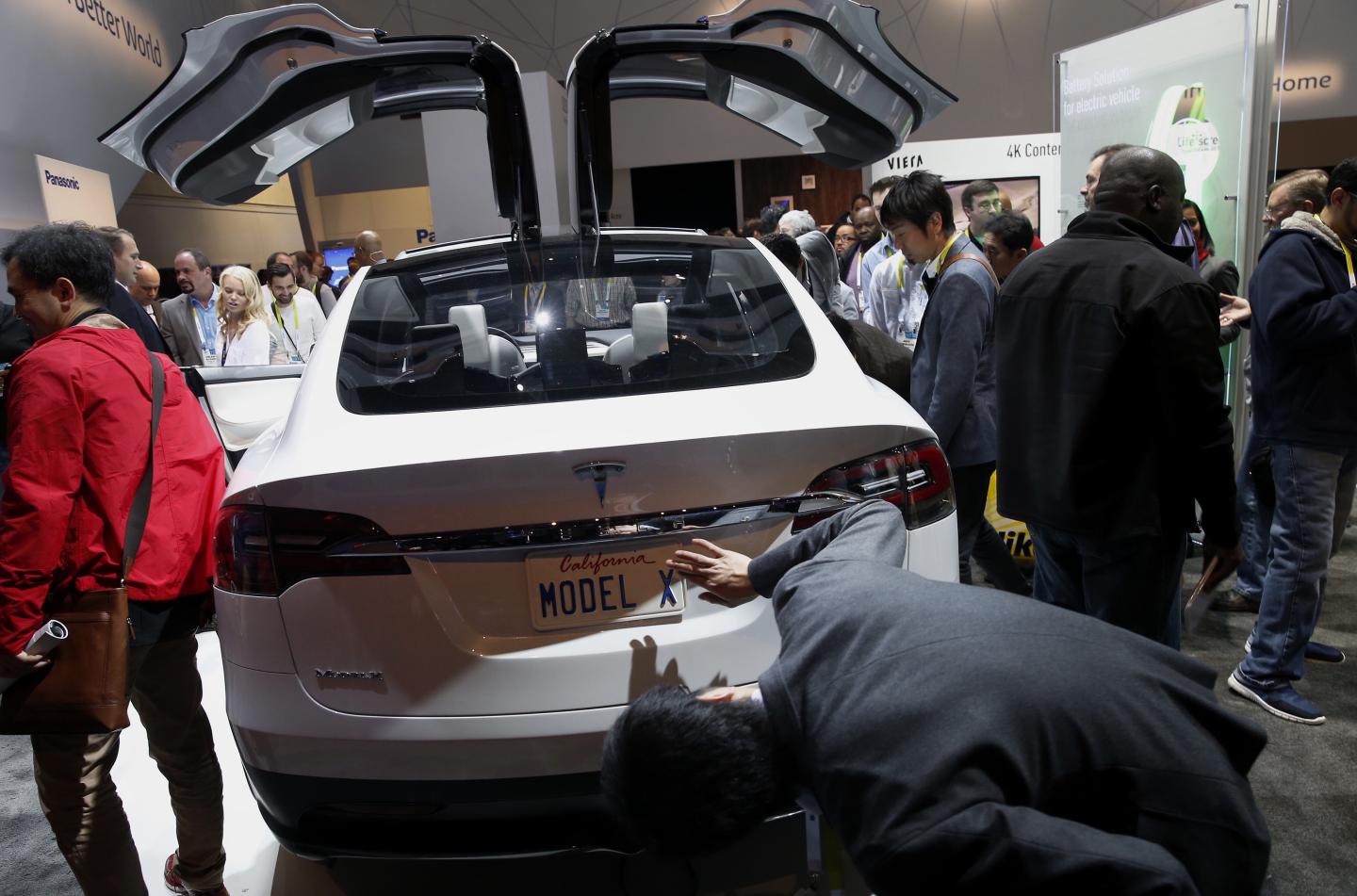
An attendee views the Tesla Motors Inc. Model X vehicle with Panasonic Corp. battery during the 2015 Consumer Electronics Show (CES) in Las Vegas, Nevada, U.S., on Tuesday, Jan. 6, 2015. This year's CES will be packed with a wide array of gadgets such as drones, connected cars, a range of smart home technology designed to make everyday life more convenient and quantum dot televisions, which promise better color and lower electricity use in giant screens. Photographer: Patrick T. Fallon/Bloomberg via Getty ImagesPhotograph by Patrick T. Fallon — Bloomberg via Getty Images

So much of what the presidential candidates and the American people want to accomplish over the next four years and beyond depends on the U.S. economy growing faster, and more inclusively, than it has in recent years. This year’s hot economics book, The Rise and Fall of American Growth, by one of America’s most distinguished macroeconomists, Robert Gordon, casts a pall on whether this is possible, arguing that the U.S. had a golden century of increasing innovation from roughly 1870 to 1970, but this was unique. Since then, the rate of innovation, as measured by the annual growth in productivity (adjusted for additional labor and capital), has slowed markedly, and in Gordon’s view will continue at a slow pace for the foreseeable future, whether or not the ostensibly growth-boosting policy recommendations Gordon advances at the end of the book are implemented.

Gordon’s book was reviewed on by Fortune’s Chris Matthews, so I won’t repeat the main arguments here. Instead, I will provide a cautiously more optimistic view, but coupled with a plea for policy makers to ease the pain of more rapid productivity growth, if it materializes.

One reason for productivity optimism is outlined in a new e-book I have co-authored with former Clinton economic official Bo Cutter and Kauffman Foundation Vice President Dane Stangler, The Good Economy. In it, we share the view of some technology optimists (not all of them living in Silicon Valley) that the U.S. economy is currently experiencing another technological revolution, rivaling the industrial revolutions of the 19th century, and one that ultimately could boost annual long-term growth to as much as 3%, well above recent annual growth rates.

The core of our claim is that the convergence of enormous and continuous advances in computing power, the Internet of Things, broadband speeds, cloud computing, mobile applications, artificial intelligence, robotics and nanotechnology inevitably will unleash a broad range of new, disruptive products and services that none of us can foresee now. This will inevitably lead to faster growth in the future. The transition to more rapid growth will take time, to be sure, but this will not be unusual: electricity took several decades to fundamentally transform the economy and our society.

With a few exceptions, I wouldn’t look to large, established companies, however, to lead any innovation resurgence. That is because large companies specialize in incremental rather than disruptive innovation. The exceptions – Alphabet with its moonshot projects, Toyota and Honda with their hybrid cars, and long ago, AT&T with fiber optic cable and the transistor – are just that, exceptions.

Truly disruptive innovations that can enhance overall productivity in a big way are likely to come from startups (think of the telegraph, the telephone, the automobile, airplanes, computers, much software, Internet search, and air conditioning, all commercialized by startups). It may not be necessary to reverse the 30-year decline in the overall startup rate (the ratio of young companies with at least one employee to all firms) to usher in a more rapid wave of change, although having more startups, or “shots on goal,” would certainly help. The key is the formation and growth of new high-growth companies.

Some of these may come from solo entrepreneurs, such as Tesla CEO Elon Musk or Amazon CEO Jeff Bezos, or entrepreneurial teams, like Sergei Brin and Larry Page. Others may emerge from the growing numbers of “business accelerators,” in which like talent show competitions “American Idol” or “The Voice” the sponsors pick the most promising founders or founding teams, give them mentors, coaches and exposure to their peers, and provide them with some amount of startup funding. Evidence suggests that the really good accelerators — like Y Combinator in Silicon Valley or Tech Stars in multiple locations — enable startup participants to find more early stage financing and to grow.

Another promising development is the recent emergence of “tech studios” – Betaworks in New York, Pioneer Square Labs in Seattle, and FoundryDc in the nation’s capital. In this model, one or more successful entrepreneurs with deep knowledge in one or several industry “verticals” recruits scientists, technologists or other industry specialists, puts them together in a congenial, but typically intense atmosphere (not unlike some accelerators, but for longer, sustained periods) and pays them a salary, much as they would receive if they had gone to work for Bell Labs or any current in-house corporate R&D facility, and possibly some upside incentives (equity or options) in the companies that may be formed around their ideas.

Whether through solo entrepreneurs, entrepreneurial teams, companies boosted by accelerators, or firms generated by high tech studies, the convergence of multiple parallel technologies is likely to lead to more rapid innovation than the pessimists predict. That’s the good news. The potentially bad news is that faster innovation means more technology-induced labor market churn, and thus more displacement of the kind that has led to so much worker anxiety much in evidence during the Presidential campaign so far. If the nation adopts the kind of populist remedies being mentioned by some of the candidates – such as a return to trade protectionism in this country, or a halt to further trade liberalization which could lead to a slow backsliding toward more protection by all countries – then the pace innovation almost certainly would be lower than the optimistic trajectory outlined here, and correspondingly there may be less innovation-induced worker displacement.

But given the positive long-run impacts of more rapid innovation on standards of living, moving backward should not be welcomed. The far better approach is to strengthen the social safety net to better protect workers from the economic losses they suffer on account of both technological progress and open trade. One clear solution is a system of wage insurance, which has features attractive to both political parties, and was endorsed by President Obama in his State of the Union address this year.

There is too much gloom and doom being bandied about, by candidates and the innovation pessimists. The better response is to prepare to be surprised on innovation upside, and to address the very real concerns about those who may be displaced in the process.

Robert Litan has directed economic research at the Brookings Institution, the Kauffman Foundation and Bloomberg Government. His latest book is The Good Economy.

About the Author
By Robert Litan
See full bioRight Arrow Button Icon

Latest in Commentary

Finance
Lorem ipsum dolor sit amet, consectetur adipiscing elit, sed do eiusmod tempor incididunt ut labore et dolore magna aliqua. Ut enim ad minim veniam
By Fortune Editors
October 20, 2025
Finance
Lorem ipsum dolor sit amet, consectetur adipiscing elit, sed do eiusmod tempor incididunt ut labore et dolore magna aliqua. Ut enim ad minim veniam
By Fortune Editors
October 20, 2025
Finance
Lorem ipsum dolor sit amet, consectetur adipiscing elit, sed do eiusmod tempor incididunt ut labore et dolore magna aliqua. Ut enim ad minim veniam
By Fortune Editors
October 20, 2025
Finance
Lorem ipsum dolor sit amet, consectetur adipiscing elit, sed do eiusmod tempor incididunt ut labore et dolore magna aliqua. Ut enim ad minim veniam
By Fortune Editors
October 20, 2025
Finance
Lorem ipsum dolor sit amet, consectetur adipiscing elit, sed do eiusmod tempor incididunt ut labore et dolore magna aliqua. Ut enim ad minim veniam
By Fortune Editors
October 20, 2025
Finance
Lorem ipsum dolor sit amet, consectetur adipiscing elit, sed do eiusmod tempor incididunt ut labore et dolore magna aliqua. Ut enim ad minim veniam
By Fortune Editors
October 20, 2025

Most Popular

Finance
Lorem ipsum dolor sit amet, consectetur adipiscing elit, sed do eiusmod tempor incididunt ut labore et dolore magna aliqua. Ut enim ad minim veniam
By Fortune Editors
October 20, 2025
Finance
Lorem ipsum dolor sit amet, consectetur adipiscing elit, sed do eiusmod tempor incididunt ut labore et dolore magna aliqua. Ut enim ad minim veniam
By Fortune Editors
October 20, 2025
Finance
Lorem ipsum dolor sit amet, consectetur adipiscing elit, sed do eiusmod tempor incididunt ut labore et dolore magna aliqua. Ut enim ad minim veniam
By Fortune Editors
October 20, 2025
Finance
Lorem ipsum dolor sit amet, consectetur adipiscing elit, sed do eiusmod tempor incididunt ut labore et dolore magna aliqua. Ut enim ad minim veniam
By Fortune Editors
October 20, 2025
Finance
Lorem ipsum dolor sit amet, consectetur adipiscing elit, sed do eiusmod tempor incididunt ut labore et dolore magna aliqua. Ut enim ad minim veniam
By Fortune Editors
October 20, 2025
Finance
Lorem ipsum dolor sit amet, consectetur adipiscing elit, sed do eiusmod tempor incididunt ut labore et dolore magna aliqua. Ut enim ad minim veniam
By Fortune Editors
October 20, 2025
Fortune Secondary Logo
Rankings
  • 100 Best Companies
  • Fortune 500
  • Global 500
  • Fortune 500 Europe
  • Most Powerful Women
  • World's Most Admired Companies
  • See All Rankings
  • Lists Calendar
Sections
  • Finance
  • Fortune Crypto
  • Features
  • Leadership
  • Health
  • Commentary
  • Success
  • Retail
  • Mpw
  • Tech
  • Lifestyle
  • CEO Initiative
  • Asia
  • Politics
  • Conferences
  • Europe
  • Newsletters
  • Personal Finance
  • Environment
  • Magazine
  • Education
Customer Support
  • Frequently Asked Questions
  • Customer Service Portal
  • Privacy Policy
  • Terms Of Use
  • Single Issues For Purchase
  • International Print
Commercial Services
  • Advertising
  • Fortune Brand Studio
  • Fortune Analytics
  • Fortune Conferences
  • Business Development
  • Group Subscriptions
About Us
  • About Us
  • Press Center
  • Work At Fortune
  • Terms And Conditions
  • Site Map
  • About Us
  • Press Center
  • Work At Fortune
  • Terms And Conditions
  • Site Map
  • Facebook icon
  • Twitter icon
  • LinkedIn icon
  • Instagram icon
  • Pinterest icon

Latest in Commentary

brotman
CommentaryVenture Capital
I’ve spent 25 years in venture capital. Here’s how it quietly shut ordinary Americans out of the AI wealth boom—and what could fix it
By Steve BrotmanMay 22, 2026
13 hours ago
cox
CommentarySuccession
McKinsey studied 200 family business successions. The biggest problem wasn’t the heir — it was the outgoing CEO
By Acha Leke and Chaitali MukherjeeMay 22, 2026
14 hours ago
himanshu
CommentaryLayoffs
I’ve led companies through every major tech disruption. AI washing is the same mistake, every time
By Himanshu PalsuleMay 22, 2026
16 hours ago
trump
CommentaryWhite House
Trump Accounts have a bigger problem than billionaire stock donations
By Jin Huang and Stephen RollMay 21, 2026
2 days ago
brigham
CommentaryRailroads
The U.S. freight network is broken by design. One merger could start fixing it
By Brigham A. McCownMay 21, 2026
2 days ago
Elon Musk sits with his fists together, looking up.
Commentaryspace
SpaceX will be worth trillions, but the space station that made it possible is worth even more — if we don’t squander it
By Tejpaul BhatiaMay 20, 2026
2 days ago

Most Popular

Jeff Bezos wants the bottom half of earners to pay zero income tax—he says nurses making just $75K should save $12K a year
Success
Jeff Bezos wants the bottom half of earners to pay zero income tax—he says nurses making just $75K should save $12K a year
By Preston ForeMay 21, 2026
1 day ago
Despite a $500 million net worth, Shaq just finished his fourth degree. He warns graduates: 'Your character will take you further than your resume'
Success
Despite a $500 million net worth, Shaq just finished his fourth degree. He warns graduates: 'Your character will take you further than your resume'
By Preston ForeMay 20, 2026
2 days ago
Bolt CEO says he let go of his entire HR team for creating problems that didn’t exist: ‘Those problems disappeared when I let them go’ 
Workplace Culture
Bolt CEO says he let go of his entire HR team for creating problems that didn’t exist: ‘Those problems disappeared when I let them go’ 
By Preston ForeMay 19, 2026
3 days ago
Pay transparency is exposing a bigger problem: Most companies can't explain why they pay what they pay
Workplace Culture
Pay transparency is exposing a bigger problem: Most companies can't explain why they pay what they pay
By Sydney LakeMay 20, 2026
2 days ago
McKinsey partner says up to 50% of work hours could be transformed within the next 5 years
AI
McKinsey partner says up to 50% of work hours could be transformed within the next 5 years
By Emma BurleighMay 21, 2026
1 day ago
Indeed chief economist says we’re entering an era of ‘great mismatch’ thanks to a generational imbalance of workers
Success
Indeed chief economist says we’re entering an era of ‘great mismatch’ thanks to a generational imbalance of workers
By Emma BurleighMay 22, 2026
9 hours ago

© 2026 Fortune Media IP Limited. All Rights Reserved. Use of this site constitutes acceptance of our Terms of Use and Privacy Policy | CA Notice at Collection and Privacy Notice | Do Not Sell/Share My Personal Information
FORTUNE is a trademark of Fortune Media IP Limited, registered in the U.S. and other countries. FORTUNE may receive compensation for some links to products and services on this website. Offers may be subject to change without notice.