• Home
  • Latest
  • Fortune 500
  • Finance
  • Tech
  • Leadership
  • Lifestyle
  • Rankings
  • Multimedia

Trendingnow

1

MacKenzie Scott alone accounted for one-third of America's $19.2 billion in megagifts last year

2

Now worth $200 million, Sarah Jessica Parker credits being ‘one of eight kids that struggled financially’ for her hunger, ambition, and work ethic

3

Ray Dalio says the U.S. just had its 'Suez moment'—and history says what comes next could end an empire

1

MacKenzie Scott alone accounted for one-third of America's $19.2 billion in megagifts last year

2

Now worth $200 million, Sarah Jessica Parker credits being ‘one of eight kids that struggled financially’ for her hunger, ambition, and work ethic

3

Ray Dalio says the U.S. just had its 'Suez moment'—and history says what comes next could end an empire
LeadershipGlobalization

Here’s Why Walmart Stumbled on The Road to China

By
Robert Salomon
Robert Salomon
Down Arrow Button Icon
By
Robert Salomon
Robert Salomon
Down Arrow Button Icon
February 21, 2016, 11:20 AM ET
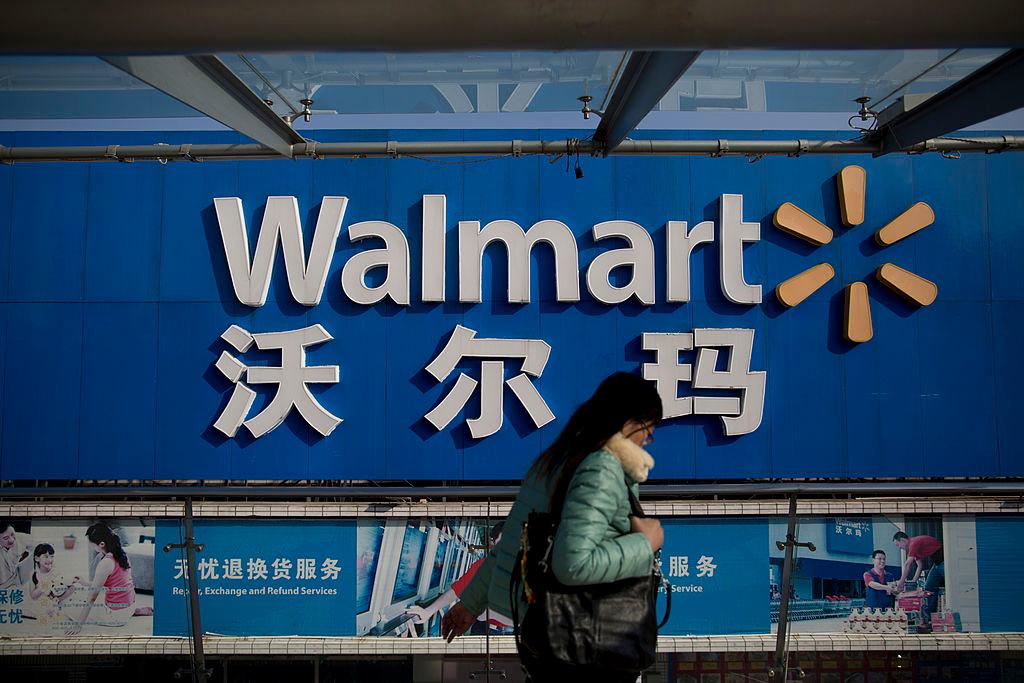
walmart china
walmart chinaBloomberg via Getty Images
Add Fortune on Google for similar content.

Managers tend to speak optimistically about the prospects of globalization, and for good reason. Globalization has fostered an increasingly interconnected world, with more than $30 trillion in goods and services traded and more than $1 trillion in corporate investment each year. Advances in information technology and transportation have helped facilitate globalization—connecting developed and developing worlds, lifting some 400 million people out of poverty along the way.

Nations are now inextricably linked through global trade and investment. There is no turning back. Accordingly, managers often view globalization as a powerful and inevitable force, and they tend to treat it with reverence—speaking of it as if it were a breakthrough technology, the wave of the future that will change the world, if not their companies’ fortunes. And they tend to think of themselves as the champions of globalization, akin to explorers embarking on a mission to discover and conquer far-off, unexplored lands.

Managers express their optimism for globalization in terms of the profitability it can generate for their companies. They salivate at the potential for double-digit sales growth. They are seduced by opportunities that promise to slash costs by half or more, simply by shifting operations overseas. And they lead their companies on journeys to global markets in search of untapped and untold riches.

However, opportunity and reality do not always coincide. Although globalization certainly holds promise, it is also rife with hazards. It presents risks that managers fail to appreciate and that they often overlook. Sadly, in the high-stakes world of global strategy, companies regularly fail to convert potential into profits. Most companies are poorly positioned to capitalize on globalization’s potential, and many are spectacularly unsuccessful in their attempts to globalize.

China provides the setting for a classic cautionary tale about globalization. Given a population of more than 1.3 billion

people and the market potential that goes hand in hand with a consumer base of that size, the prospect of expanding to China is enough to make any manager’s eyes light up. The potential is seemingly limitless.

But on further inspection, it becomes clear that China poses tremendous challenges for Western companies. The first obstacle is economic. Though China has made tremendous strides and enjoyed incredible growth since opening its markets to global trade and investment in 1979, the development of its economic institutions and its infrastructure has lagged behind that in the West. The second obstacle is cultural. Chinese consumers, for example, tend to be very different from those in the West, which makes it difficult for Western companies to appeal to local consumer tastes. The third obstacle is political. Western companies struggle to skillfully navigate China’s complex web of local and national political organizations. All of these factors led G.E.’s CEO Jeff Immelt to conclude: “China is big, but it is hard.”

Walmart has learned these lessons the hard way. Walmart’s ongoing troubles in China, since opening its first superstore in Shenzhen in 1996, reflect a fundamental misunderstanding of China’s political, economic, and cultural environments.

The American retailer has struggled to understand Chinese consumers and Chinese culture. Chinese consumers, unlike those in the U.S., differ widely from city to city in their needs. Walmart therefore struggles to find the right product mix to offer in the 117 cities and 25 provinces in which it operates. This makes it challenging to sell a core set of products nationwide.

Walmart has also suffered from troubled relationships with politicians—both local and national. The company has had its fair share of run-ins with the law. On one occasion the Chinese government fined Walmart for violating local and national laws and even forced it to close stores temporarily for purported product violations. Walmart paid the fines, even though the company believed the claims to be unfounded.

Yet the company’s greatest challenge remains an economic infrastructure that is problematic and underdeveloped. China simply cannot accommodate one of Walmart’s greatest strengths: an ultra-efficient and technologically advanced supply chain. The company did not anticipate that scaling up its business model there would present so many problems. Walmart’s struggles highlight the difficulties inherent in transferring a competitive advantage rooted in supply-chain efficiency—that is, logistics—to a country lacking a sophisticated technological and physical infrastructure.

Although China has led the globe in infrastructure investment over the past several years, outside of its largest cities (e.g., Shanghai, Beijing, Tianjin, Guangzhou, and Shenzhen), its infrastructure remains more than problematic. The efficient transport of goods from one region to another is a challenge because of China’s sheer physical size, and because its air, ground, and rail infrastructure does not meet developed country standards. Not surprisingly, Walmart’s China business has struggled to generate profits, and it has consistently underperformed in this huge and potentially lucrative market.

The lesson in all of this is that, when it comes to globalization, managers are not just optimists; all too often, they are unbridled optimists. They habitually overestimate the benefits of globalization and underestimate its costs. In evaluating globalization opportunities, managers often forget the other side of the opportunity equation: risk. Risk goes hand in hand with opportunity, and managers fail to accurately account for the risks they face in global markets.

Managers often make dangerous assumptions about what it takes to succeed in global markets. They tend to assume that their current business model, one they successfully and profitably exploit in their home country, will translate simply and effectively to other countries, yielding similar levels of profitability. These same managers fail to account for real and salient differences between nations, and fail to consider how those differences generate operational risks that may negatively impact their business. Unfortunately, they end up learning the hard way that the risk borne out of cross-country differences can overwhelm even the best-laid globalization plans. And Walmart is no exception.

To improve the practice of global business and to make better global expansion decisions, managers need a more sophisticated understanding of the economic, political, and cultural environments in the countries in which they intend to operate. They must appreciate how nations differ economically, politically, and culturally, and how those differences manifest as increasing risks (and costs). They then need to incorporate those risks into their existing strategy and financial decision models.

Robert Salomon is a professor of International Management and Faculty Scholar at NYU’s Stern School of Business and has researched globalization and global strategy for nearly 20 years. This article is excerpted from his book, Global Vision: How Companies Can Overcome the Pitfalls of Globalization. Published by Palgrave Macmillan; reproduced by permission.

About the Author
By Robert Salomon
See full bioRight Arrow Button Icon
Add Fortune on Google for similar content.

Latest in Leadership

Finance
Lorem ipsum dolor sit amet, consectetur adipiscing elit, sed do eiusmod tempor incididunt ut labore et dolore magna aliqua. Ut enim ad minim veniam
By Fortune Editors
October 20, 2025
Finance
Lorem ipsum dolor sit amet, consectetur adipiscing elit, sed do eiusmod tempor incididunt ut labore et dolore magna aliqua. Ut enim ad minim veniam
By Fortune Editors
October 20, 2025
Finance
Lorem ipsum dolor sit amet, consectetur adipiscing elit, sed do eiusmod tempor incididunt ut labore et dolore magna aliqua. Ut enim ad minim veniam
By Fortune Editors
October 20, 2025
Finance
Lorem ipsum dolor sit amet, consectetur adipiscing elit, sed do eiusmod tempor incididunt ut labore et dolore magna aliqua. Ut enim ad minim veniam
By Fortune Editors
October 20, 2025
Finance
Lorem ipsum dolor sit amet, consectetur adipiscing elit, sed do eiusmod tempor incididunt ut labore et dolore magna aliqua. Ut enim ad minim veniam
By Fortune Editors
October 20, 2025
Finance
Lorem ipsum dolor sit amet, consectetur adipiscing elit, sed do eiusmod tempor incididunt ut labore et dolore magna aliqua. Ut enim ad minim veniam
By Fortune Editors
October 20, 2025

Most Popular

Finance
Lorem ipsum dolor sit amet, consectetur adipiscing elit, sed do eiusmod tempor incididunt ut labore et dolore magna aliqua. Ut enim ad minim veniam
By Fortune Editors
October 20, 2025
Finance
Lorem ipsum dolor sit amet, consectetur adipiscing elit, sed do eiusmod tempor incididunt ut labore et dolore magna aliqua. Ut enim ad minim veniam
By Fortune Editors
October 20, 2025
Finance
Lorem ipsum dolor sit amet, consectetur adipiscing elit, sed do eiusmod tempor incididunt ut labore et dolore magna aliqua. Ut enim ad minim veniam
By Fortune Editors
October 20, 2025
Finance
Lorem ipsum dolor sit amet, consectetur adipiscing elit, sed do eiusmod tempor incididunt ut labore et dolore magna aliqua. Ut enim ad minim veniam
By Fortune Editors
October 20, 2025
Finance
Lorem ipsum dolor sit amet, consectetur adipiscing elit, sed do eiusmod tempor incididunt ut labore et dolore magna aliqua. Ut enim ad minim veniam
By Fortune Editors
October 20, 2025
Finance
Lorem ipsum dolor sit amet, consectetur adipiscing elit, sed do eiusmod tempor incididunt ut labore et dolore magna aliqua. Ut enim ad minim veniam
By Fortune Editors
October 20, 2025
Fortune Secondary Logo
Rankings
  • 100 Best Companies
  • Fortune 500
  • Global 500
  • Fortune 500 Europe
  • Most Powerful Women
  • World's Most Admired Companies
  • See All Rankings
  • Lists Calendar
Sections
  • Finance
  • Fortune Crypto
  • Features
  • Leadership
  • Health
  • Commentary
  • Success
  • Retail
  • Mpw
  • Tech
  • Lifestyle
  • CEO Initiative
  • Asia
  • Politics
  • Conferences
  • Europe
  • Newsletters
  • Personal Finance
  • Environment
  • Magazine
  • Education
Customer Support
  • Frequently Asked Questions
  • Customer Service Portal
  • Privacy Policy
  • Terms Of Use
  • Single Issues For Purchase
  • International Print
Commercial Services
  • Advertising
  • Fortune Brand Studio
  • Fortune Analytics
  • Fortune Conferences
  • Business Development
  • Group Subscriptions
About Us
  • About Us
  • Press Center
  • Work At Fortune
  • Terms And Conditions
  • Site Map
  • About Us
  • Press Center
  • Work At Fortune
  • Terms And Conditions
  • Site Map
  • Facebook icon
  • Twitter icon
  • LinkedIn icon
  • Instagram icon
  • Pinterest icon

Latest in Leadership

lb
PoliticsCongress
Leon Black says Epstein’s network included Elon Musk, Sergey Brin and Peter Thiel, while saying ‘I knew Jekyll. I didn’t know Hyde’
By Joey Cappelletti and The Associated PressJune 26, 2026
2 hours ago
John Collison, president and co-founder of Stripe
SuccessJobs
Stripe cofounder says Gen Z will need two college majors to compete thanks to AI—and investing legend Charlie Munger called it first
By Emma BurleighJune 26, 2026
3 hours ago
young woman looking frustrated while working on her laptop at home
SuccessCareers
Gen Z’s hiring hell is real: 1 in 3 employers admit they’re replacing entry-level roles with AI—and tech and manufacturing jobs are most at risk
By Preston ForeJune 26, 2026
3 hours ago
Fortune 500 Power Moves: Which executives gained and lost power this week
C-SuiteFortune 500 Power Moves
Fortune 500 Power Moves: Which executives gained and lost power this week
By Fortune EditorsJune 26, 2026
5 hours ago
Marketing leaders speak at Fortune's Fuel Up event in Cannes. (L-R) Natalia Ball, Mars Pet Nutrition; Zena Arnold, Sephora; Tati Lindenberg, Unilever; Laura Jones, Instacart; Ruth Umoh, Fortune
RetailCMO
The new CMO playbook: how marketers are balancing broader remits and tighter budgets
By Sam BirchallJune 26, 2026
6 hours ago
mj
CommentarySuccession
Morgan Stanley on life after selling your business: a roadmap for entrepreneurs
By Mark JansenJune 26, 2026
7 hours ago

Most Popular

MacKenzie Scott alone accounted for one-third of America's $19.2 billion in megagifts last year
Success
MacKenzie Scott alone accounted for one-third of America's $19.2 billion in megagifts last year
By Sydney LakeJune 25, 2026
1 day ago
Now worth $200 million, Sarah Jessica Parker credits being ‘one of eight kids that struggled financially’ for her hunger, ambition, and work ethic
Success
Now worth $200 million, Sarah Jessica Parker credits being ‘one of eight kids that struggled financially’ for her hunger, ambition, and work ethic
By Orianna Rosa RoyleJune 24, 2026
2 days ago
Ray Dalio says the U.S. just had its 'Suez moment'—and history says what comes next could end an empire
Economy
Ray Dalio says the U.S. just had its 'Suez moment'—and history says what comes next could end an empire
By Nick LichtenbergJune 26, 2026
11 hours ago
Trump turns on Big Oil donors who spent nearly $100 million to get him elected—now he wants the DOJ to investigate them for price gouging
Economy
Trump turns on Big Oil donors who spent nearly $100 million to get him elected—now he wants the DOJ to investigate them for price gouging
By Tristan BoveJune 25, 2026
22 hours ago
The bond market knows something about the $39 trillion national debt that Washington doesn’t
Economy
The bond market knows something about the $39 trillion national debt that Washington doesn’t
By Eva RoytburgJune 25, 2026
21 hours ago
Current price of oil as of June 25, 2026
Personal Finance
Current price of oil as of June 25, 2026
By Joseph HostetlerJune 25, 2026
1 day ago

© 2026 Fortune Media IP Limited. All Rights Reserved. Use of this site constitutes acceptance of our Terms of Use and Privacy Policy | CA Notice at Collection and Privacy Notice | Do Not Sell/Share My Personal Information
FORTUNE is a trademark of Fortune Media IP Limited, registered in the U.S. and other countries. FORTUNE may receive compensation for some links to products and services on this website. Offers may be subject to change without notice.