• Home
  • Latest
  • Fortune 500
  • Finance
  • Tech
  • Leadership
  • Lifestyle
  • Rankings
  • Multimedia

Trendingnow

1

The Pentagon said Iran War costs $29 billion, but the real cost is closer to $200 billion—and counting

2

After forcing workers back to the office, Goldman Sachs and JPMorgan Chase are now letting their staff work remotely—but only for the World Cup

3

Amazon's record Prime Day masks a darker truth: Americans are spending more and getting less

1

The Pentagon said Iran War costs $29 billion, but the real cost is closer to $200 billion—and counting

2

After forcing workers back to the office, Goldman Sachs and JPMorgan Chase are now letting their staff work remotely—but only for the World Cup

3

Amazon's record Prime Day masks a darker truth: Americans are spending more and getting less
LeadershipBig Meat

Nebraska’s Livestock Market Faces Death by Big Meat Lobbying

By
Leah Douglas
Leah Douglas
Down Arrow Button Icon
By
Leah Douglas
Leah Douglas
Down Arrow Button Icon
February 5, 2016, 2:40 PM ET
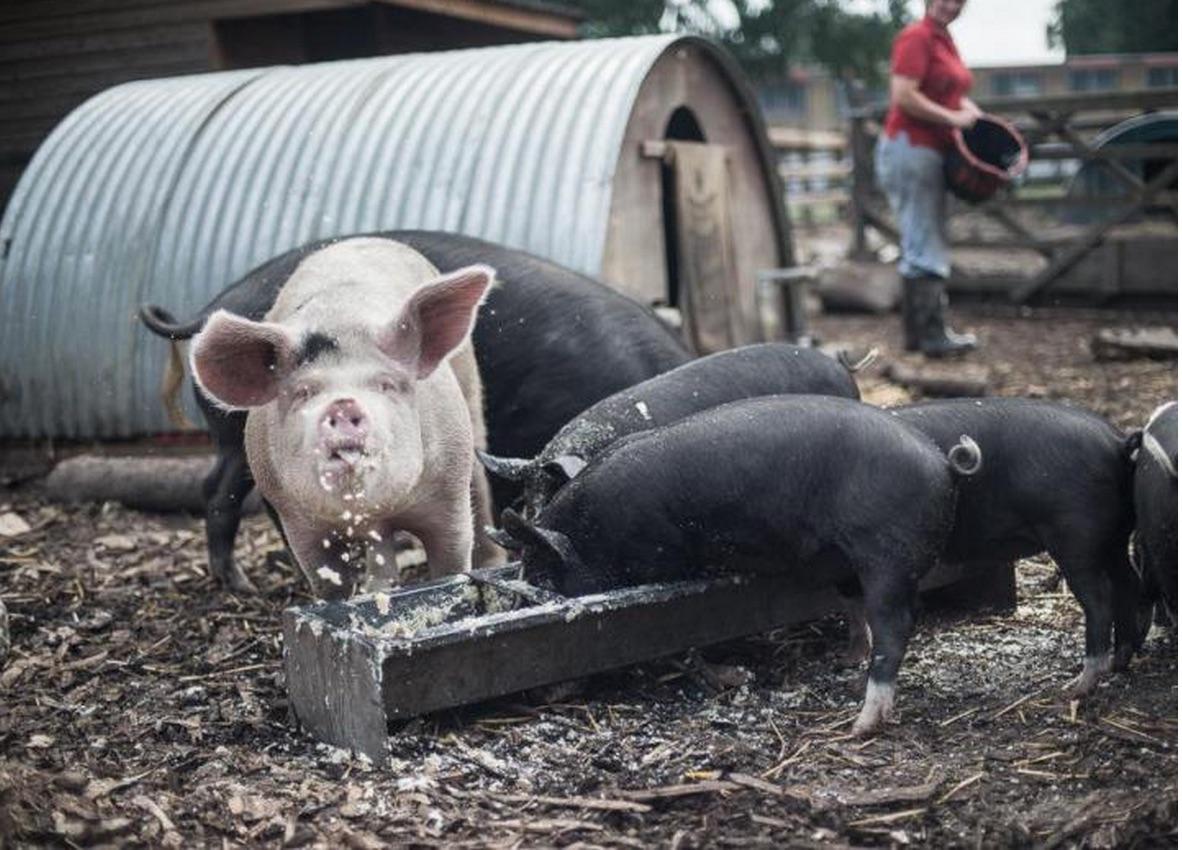
Pigs eating swill.
Pigs eating swill.Photo by Stepney City Farm
Add Fortune on Google for similar content.

Few images are more emblematic of the American heartland than that of farmers taking their livestock to market. But if Nebraska Governor Pete Ricketts signs a bill passed last month by his state’s legislature, one of the last of the country’s traditional open livestock markets may soon close forever. The bill would remove one of the few safeguards that allow farmers to sell their livestock in a transparent and competitive way.

For decades, nine agricultural states had laws on the books protecting farmers from vertical integration and monopoly power in livestock farming. Those laws took the form of “packer bans,” and basically prohibited slaughterhouse operators from owning livestock and land. The goal was to force those corporations to buy the animals they slaughter in open and competitive markets, at fair market prices.

But over the past 10 years, America’s big meatpacking corporations have successfully pushed to overturn most of those laws. A turning point occurred in 2003, when the Eighth Circuit Court ruled that Iowa’s packer ban violated the Commerce Clause of the Constitution by discriminating against out-of-state corporations. A similar argument was used to overturn South Dakota’s packer ban that same year. Today, the Competitive Livestock Markets Act in Nebraska is the only strong packer ban that remains.

Today, Nebraska’s packer ban is set to be overturned. LB176, first introduced in January 2015 by State Senator Ken Schilz, would allow corporations to own hogs. Two weeks ago, the state’s legislators voted to advance LB176 to a final reading before sending it to the governor’s desk.

“Nebraska is the last state in the union with a cash market,” says State Senator Al Davis, who voted against the bill. “What happens in Nebraska is going to have an impact on the whole nation.”

The bill is not expected to immediately change the mechanics of Nebraska hog farming in a radical way. On the contrary, most of the same farmers who now raise hogs would continue to raise hogs. But they would do so as “contract growers” for multinational corporations, rather than as independent farm businesses. Under the contract model, farmers raise animals that are technically owned by the meatpackers, and then transport the animals back to the packer when they’re ready for slaughter.

Senator Davis notes that contract farming has become more prevalent in livestock states where packer bans have been overturned, and that the experience in those states shows that the contract model can be dangerous for farmers.

He says that many farmers who sign these contracts “think, ‘this is going to be a great thing.” But farmers often must take on huge loans to pay for the infrastructure required to meet packers’ demands for large herds. And the process by which farmers are paid is highly opaque, with little opportunity for farmers to negotiate a higher price.

When a farmer “can’t market your hogs in any other way besides going through a big corporate entity, you’re going to have to take the price that they offered,” Davis says.

When LB176 was first introduced by Nebraska’s unicameral legislature in 2015 the bill failed to advance beyond the floor debate. This year, the bill advanced to a final reading by a vote of 32-12.

Many opponents of the bill have focused on the role played by Smithfield, the country’s largest pork producer. “This bill was not brought by farmers. It was brought by Smithfield Foods,” says State Senator David Schnoor, who voted against LB176. In the highly consolidated pork industry, Smithfield is one of just four companies—the others being Tyson, JBS, and Cargill—that control 65% of the market. In many regions, only one or two companies dominate.

Lobbying records show that over the course of the first three quarters of 2015, Smithfield spent $46,222 on lobbying Nebraska legislators. Included in those efforts was lobbying in support of LB176. Then in December 2015, Smithfield made $12,450 in donations to 19 state senators who would later vote on LB176. Of those senators, 18 voted to pass the bill. And Smithfield’s tracks in Nebraska extend beyond LB176: the company also made a $10,000 contribution to Governor Ricketts’ gubernatorial campaign in 2014.

Critics of the bill have highlighted Smithfield’s close ties to the Chinese government. In 2013, Smithfield was bought by Shuanghui, a Chinese company now known as WH Group, the largest pork producer in the world. Shuanghui paid nearly $7 billion for Smithfield in the then largest ever acquisition of an American company by a Chinese firm. China’s government bank financed Shuanghui’s acquisition of Smithfield with a $4 billion loan.

Since the acquisition, advocates and policy-makers have expressed concern that this company—which controls 1 in 4 hogs in the United States—wields too much power over this market, and over farm politics in many states.

Many farmers and legislators are worried about the impact LB176 will have on the long-term landscape of farming in Nebraska. “My big fear of course is that this is not just a push for hogs, but also for cattle,” says Senator Davis, voicing a common concern among opponents of the bill. Dave Wright, president of the Independent Cattlemen of Nebraska, echoes his worry. “Senator Schilz was quite clear that he wants [to overturn the packer ban for] cattle next,” Wright says. “This is just a stepping-stone.”

In the coming weeks, LB176 will undergo a final reading before heading to the governor to sign. In the final reading process, the bill can’t be amended but could be sent back to a prior stage of debate for the addition of amendments. If the bill passes, as many observers think it will, the hog industry in Nebraska will continue to exist; it may just be controlled by a foreign-owned corporation.

About the Author
By Leah Douglas
See full bioRight Arrow Button Icon
Add Fortune on Google for similar content.

Latest in Leadership

Finance
Lorem ipsum dolor sit amet, consectetur adipiscing elit, sed do eiusmod tempor incididunt ut labore et dolore magna aliqua. Ut enim ad minim veniam
By Fortune Editors
October 20, 2025
Finance
Lorem ipsum dolor sit amet, consectetur adipiscing elit, sed do eiusmod tempor incididunt ut labore et dolore magna aliqua. Ut enim ad minim veniam
By Fortune Editors
October 20, 2025
Finance
Lorem ipsum dolor sit amet, consectetur adipiscing elit, sed do eiusmod tempor incididunt ut labore et dolore magna aliqua. Ut enim ad minim veniam
By Fortune Editors
October 20, 2025
Finance
Lorem ipsum dolor sit amet, consectetur adipiscing elit, sed do eiusmod tempor incididunt ut labore et dolore magna aliqua. Ut enim ad minim veniam
By Fortune Editors
October 20, 2025
Finance
Lorem ipsum dolor sit amet, consectetur adipiscing elit, sed do eiusmod tempor incididunt ut labore et dolore magna aliqua. Ut enim ad minim veniam
By Fortune Editors
October 20, 2025
Finance
Lorem ipsum dolor sit amet, consectetur adipiscing elit, sed do eiusmod tempor incididunt ut labore et dolore magna aliqua. Ut enim ad minim veniam
By Fortune Editors
October 20, 2025

Most Popular

Finance
Lorem ipsum dolor sit amet, consectetur adipiscing elit, sed do eiusmod tempor incididunt ut labore et dolore magna aliqua. Ut enim ad minim veniam
By Fortune Editors
October 20, 2025
Finance
Lorem ipsum dolor sit amet, consectetur adipiscing elit, sed do eiusmod tempor incididunt ut labore et dolore magna aliqua. Ut enim ad minim veniam
By Fortune Editors
October 20, 2025
Finance
Lorem ipsum dolor sit amet, consectetur adipiscing elit, sed do eiusmod tempor incididunt ut labore et dolore magna aliqua. Ut enim ad minim veniam
By Fortune Editors
October 20, 2025
Finance
Lorem ipsum dolor sit amet, consectetur adipiscing elit, sed do eiusmod tempor incididunt ut labore et dolore magna aliqua. Ut enim ad minim veniam
By Fortune Editors
October 20, 2025
Finance
Lorem ipsum dolor sit amet, consectetur adipiscing elit, sed do eiusmod tempor incididunt ut labore et dolore magna aliqua. Ut enim ad minim veniam
By Fortune Editors
October 20, 2025
Finance
Lorem ipsum dolor sit amet, consectetur adipiscing elit, sed do eiusmod tempor incididunt ut labore et dolore magna aliqua. Ut enim ad minim veniam
By Fortune Editors
October 20, 2025
Fortune Secondary Logo
Rankings
  • 100 Best Companies
  • Fortune 500
  • Global 500
  • Fortune 500 Europe
  • Most Powerful Women
  • World's Most Admired Companies
  • See All Rankings
  • Lists Calendar
Sections
  • Finance
  • Fortune Crypto
  • Features
  • Leadership
  • Health
  • Commentary
  • Success
  • Retail
  • Mpw
  • Tech
  • Lifestyle
  • CEO Initiative
  • Asia
  • Politics
  • Conferences
  • Europe
  • Newsletters
  • Personal Finance
  • Environment
  • Magazine
  • Education
Customer Support
  • Frequently Asked Questions
  • Customer Service Portal
  • Privacy Policy
  • Terms Of Use
  • Single Issues For Purchase
  • International Print
Commercial Services
  • Advertising
  • Fortune Brand Studio
  • Fortune Analytics
  • Fortune Conferences
  • Business Development
  • Group Subscriptions
About Us
  • About Us
  • Press Center
  • Work At Fortune
  • Terms And Conditions
  • Site Map
  • About Us
  • Press Center
  • Work At Fortune
  • Terms And Conditions
  • Site Map
  • Facebook icon
  • Twitter icon
  • LinkedIn icon
  • Instagram icon
  • Pinterest icon

Latest in Leadership

Getting past the pilot: Why so many AI test projects have trouble scaling
SuccessBrainstorm Tech
Getting past the pilot: Why so many AI test projects have trouble scaling
By Alexei OreskovicJune 24, 2026
3 hours ago
How ‘Ozempic face’ is pushing Gen X, already the biggest Botox and filler consumers, to the facelift table a decade early
HealthGen X
How ‘Ozempic face’ is pushing Gen X, already the biggest Botox and filler consumers, to the facelift table a decade early
By Mia OsmonbekovJune 24, 2026
5 hours ago
Why Zohran Mamdani’s big night as the Democratic party’s new kingmaker matters for every Fortune 500 CEO in every city and state
PoliticsPolitics
Why Zohran Mamdani’s big night as the Democratic party’s new kingmaker matters for every Fortune 500 CEO in every city and state
By Catherina GioinoJune 24, 2026
5 hours ago
Warren leans in to talk to Scott
PoliticsHousing
Congress’s landmark housing bill could backfire on millions of renters
By Jacqueline MunisJune 24, 2026
5 hours ago
CEO of $8 billion Flexport blasts remote work as ‘white-collar fraud’ and a ‘total fantasy’ for highly paid employees
C-Suiteremote work
CEO of $8 billion Flexport blasts remote work as ‘white-collar fraud’ and a ‘total fantasy’ for highly paid employees
By Marco Quiroz-GutierrezJune 24, 2026
7 hours ago
How Home Depot is rebuilding retailing with AI
NewslettersCIO Intelligence
How Home Depot is rebuilding retailing with AI
By John KellJune 24, 2026
8 hours ago

Most Popular

The Pentagon said Iran War costs $29 billion, but the real cost is closer to $200 billion—and counting
Economy
The Pentagon said Iran War costs $29 billion, but the real cost is closer to $200 billion—and counting
By Jacqueline MunisJune 24, 2026
18 hours ago
After forcing workers back to the office, Goldman Sachs and JPMorgan Chase are now letting their staff work remotely—but only for the World Cup
Success
After forcing workers back to the office, Goldman Sachs and JPMorgan Chase are now letting their staff work remotely—but only for the World Cup
By Orianna Rosa RoyleJune 23, 2026
2 days ago
Amazon's record Prime Day masks a darker truth: Americans are spending more and getting less
Retail
Amazon's record Prime Day masks a darker truth: Americans are spending more and getting less
By Nick LichtenbergJune 24, 2026
11 hours ago
Ray Dalio just finished a 10-day trip to China. He says global leaders know America ‘doesn’t have what it takes to fight to maintain its empire’
Asia
Ray Dalio just finished a 10-day trip to China. He says global leaders know America ‘doesn’t have what it takes to fight to maintain its empire’
By Nick LichtenbergJune 24, 2026
12 hours ago
Now worth $200 million, Sarah Jessica Parker credits being ‘one of eight kids that struggled financially’ for her hunger, ambition, and work ethic
Success
Now worth $200 million, Sarah Jessica Parker credits being ‘one of eight kids that struggled financially’ for her hunger, ambition, and work ethic
By Orianna Rosa RoyleJune 24, 2026
18 hours ago
Current price of oil as of June 23, 2026
Personal Finance
Current price of oil as of June 23, 2026
By Joseph HostetlerJune 23, 2026
2 days ago

© 2026 Fortune Media IP Limited. All Rights Reserved. Use of this site constitutes acceptance of our Terms of Use and Privacy Policy | CA Notice at Collection and Privacy Notice | Do Not Sell/Share My Personal Information
FORTUNE is a trademark of Fortune Media IP Limited, registered in the U.S. and other countries. FORTUNE may receive compensation for some links to products and services on this website. Offers may be subject to change without notice.