• Home
  • Latest
  • Fortune 500
  • Finance
  • Tech
  • Leadership
  • Lifestyle
  • Rankings
  • Multimedia
Finance

How Market Punditry Causes Irrational Behavior

By
Eleanor Bloxham
Eleanor Bloxham
Down Arrow Button Icon
By
Eleanor Bloxham
Eleanor Bloxham
Down Arrow Button Icon
January 13, 2016, 2:51 PM ET
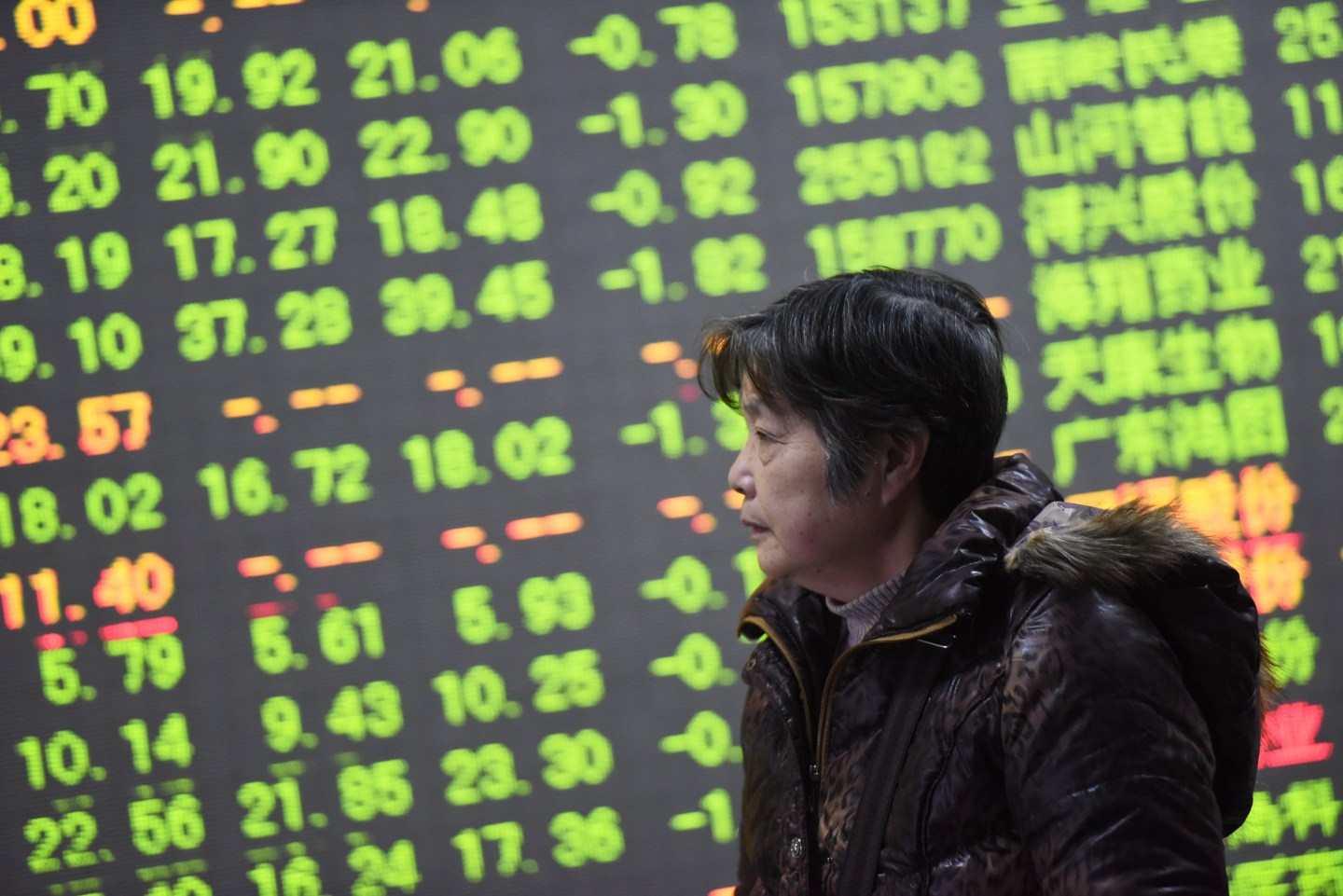
Shanghai Composite Index Drops Nearly 4%
HANGZHOU, CHINA - NOVEMBER 27: (CHINA OUT) A investor observes stock market at an exchange hall on November 27, 2015 in Hangzhou, China. The Shanghai Composite Index has dropped nearly 4 percent before the close of stock trading Friday afternoon and it seemed that it would tumble below 3,500 points. (Photo by ChinaFotoPress/ChinaFotoPress via Getty Images)Photograph by ChinaFotoPress via Getty Images

Perhaps you’ve had this experience: You go over to your friends’ place for a fun evening, but every time their infant makes a small gurgle or a burp, the new parents rush to the crib to see what’s going on and then return with wild speculations as to the cause.

The stock market is that newborn, and many people act like new parents desperate to interpret it.

Every day a parade of pundits comes up with pet theories about what’s behind minute changes in stock prices. And many people avidly listen. Yet when there is a flash crash, it can take the SEC months to figure out what happened. Deep down, we all know the markets are opaque.

Making things worse, lurking superstitions that events at the start of the Gregorian calendar magically presage the future have amplified the recent punditry. Like forgetting to eat black-eyed peas on January 1, some people have wondered, “Will the market’s drop the first week of trading mean the year is a bust?”

Not only does the fascination with daily, dramatic movements raise doubts about human rationality, the dramatic movements themselves raise questions about the sanity of compensation programs that pay executives in stock. Certainly, no one CEO is responsible for the erratic markets. So why should a CEO suffer from the market’s jitters—or benefit from its irrational exuberance?

Before institutional money managers got hold of the idea that CEOs should share their pain (an idea that is no doubt of some psychological comfort to them), executives were paid bonuses based on operational metrics that they could control and that actually added long term value to the company.

But no more. And now with boards hoodwinked about the value of stock price-based incentives (and motivated by irrational tax breaks for using stock), it seems to be a difficult habit to break. We should try to, however. Just like the market plunge distracted our attention from the real economy at the start of the year, tying pay to stock prices creates a distraction that many CEOs would prefer to avoid. It also creates incentives for corrupt behavior: Research from Harvard and Columbia shows that executives regularly benefit by making trades in company stock ahead of important regulatory filings.

In the long term, the issue is not just the problems created by tying pay to stock prices. It is also how our obsession with minute events distracts us from more important concerns. The Chinese economy has been wobbling for some time; our political process is crackers; wages remain stagnant; and oil price volatility will continue to create disruption in its wake.

These are more important issues than whether a certain stock is up 25 cents on Thursday at 2 p.m. And those that concentrate on daily, weekly, monthly or even annual price changes unwittingly feed into the short-term mindsets that those same people often rail against because they hurt our economy.

If you look over the last 10 years, even after recent losses, the S&P 500 is up more than 50%. During that same time, an employee who managed to remain employed through the recession and earned nine 2.5% raises is earning just 25% more now. An analysis by the Economic Policy Institute shows that “workers’ share of corporate income hasn’t recovered” since the recession. And lagging wages impact demand. As economist Joseph Stiglitz wrote at the beginning of the year, “The world faces a deficiency of aggregate demand, brought on by a combination of growing inequality and a mindless wave of fiscal austerity.”

Isn’t that an important conversation to have?

We are seeing possible cracks in earnings. In December, the Wall Street Journal reported that the “financial obfuscation of the dot-com era is making a comeback: Hundreds of U.S. companies are trumpeting adjusted net income, adjusted sales and ‘adjusted Ebitda.’”

There’s an old story about where those behaviors end:

An analyst walks into a bar and sees a CEO slumped over his drink.
“What’s wrong?” asks the analyst.
“Our revenues are dropping and expenses are rising,” the CEO moans.
“Yes,” says the analyst. “That’s been the case for quite a while. But your earnings have still gone up. So what’s wrong now?”
“Well,” says the CEO, “this time, I can’t make the earnings look like they are going up.”
The analyst pauses. “OK. Now you have me worried,” he says.

This is only so funny. According to a recent Pew Research study, trust in large corporations is low among all age segments—and a lack of trust hurts the economy.

So how can we bridge the trust gap—and return our attention to real issues? We can start at home. Each day, we wrestle down the jumble in our email inboxes. Similarly, we need to scrap the noise about price movements and other distracting data that prevent our focus on more important questions.

By placing our attention on what matters, we can begin to move toward more rational behavior.

Eleanor Bloxham is CEO of The Value Alliance and Corporate Governance Alliance (http://www.thevaluealliance.com), an independent board education and advisory firm she founded in 1999. She has been a regular contributor to Fortune since April 2010 and is the author of two books on corporate governance and valuation.


About the Author
By Eleanor Bloxham
See full bioRight Arrow Button Icon

Latest in Finance

Finance
Lorem ipsum dolor sit amet, consectetur adipiscing elit, sed do eiusmod tempor incididunt ut labore et dolore magna aliqua. Ut enim ad minim veniam
By Fortune Editors
October 20, 2025
Finance
Lorem ipsum dolor sit amet, consectetur adipiscing elit, sed do eiusmod tempor incididunt ut labore et dolore magna aliqua. Ut enim ad minim veniam
By Fortune Editors
October 20, 2025
Finance
Lorem ipsum dolor sit amet, consectetur adipiscing elit, sed do eiusmod tempor incididunt ut labore et dolore magna aliqua. Ut enim ad minim veniam
By Fortune Editors
October 20, 2025
Finance
Lorem ipsum dolor sit amet, consectetur adipiscing elit, sed do eiusmod tempor incididunt ut labore et dolore magna aliqua. Ut enim ad minim veniam
By Fortune Editors
October 20, 2025
Finance
Lorem ipsum dolor sit amet, consectetur adipiscing elit, sed do eiusmod tempor incididunt ut labore et dolore magna aliqua. Ut enim ad minim veniam
By Fortune Editors
October 20, 2025
Finance
Lorem ipsum dolor sit amet, consectetur adipiscing elit, sed do eiusmod tempor incididunt ut labore et dolore magna aliqua. Ut enim ad minim veniam
By Fortune Editors
October 20, 2025

Most Popular

Finance
Lorem ipsum dolor sit amet, consectetur adipiscing elit, sed do eiusmod tempor incididunt ut labore et dolore magna aliqua. Ut enim ad minim veniam
By Fortune Editors
October 20, 2025
Finance
Lorem ipsum dolor sit amet, consectetur adipiscing elit, sed do eiusmod tempor incididunt ut labore et dolore magna aliqua. Ut enim ad minim veniam
By Fortune Editors
October 20, 2025
Finance
Lorem ipsum dolor sit amet, consectetur adipiscing elit, sed do eiusmod tempor incididunt ut labore et dolore magna aliqua. Ut enim ad minim veniam
By Fortune Editors
October 20, 2025
Finance
Lorem ipsum dolor sit amet, consectetur adipiscing elit, sed do eiusmod tempor incididunt ut labore et dolore magna aliqua. Ut enim ad minim veniam
By Fortune Editors
October 20, 2025
Finance
Lorem ipsum dolor sit amet, consectetur adipiscing elit, sed do eiusmod tempor incididunt ut labore et dolore magna aliqua. Ut enim ad minim veniam
By Fortune Editors
October 20, 2025
Finance
Lorem ipsum dolor sit amet, consectetur adipiscing elit, sed do eiusmod tempor incididunt ut labore et dolore magna aliqua. Ut enim ad minim veniam
By Fortune Editors
October 20, 2025
Fortune Secondary Logo
Rankings
  • 100 Best Companies
  • Fortune 500
  • Global 500
  • Fortune 500 Europe
  • Most Powerful Women
  • Future 50
  • World’s Most Admired Companies
  • See All Rankings
Sections
  • Finance
  • Fortune Crypto
  • Features
  • Leadership
  • Health
  • Commentary
  • Success
  • Retail
  • Mpw
  • Tech
  • Lifestyle
  • CEO Initiative
  • Asia
  • Politics
  • Conferences
  • Europe
  • Newsletters
  • Personal Finance
  • Environment
  • Magazine
  • Education
Customer Support
  • Frequently Asked Questions
  • Customer Service Portal
  • Privacy Policy
  • Terms Of Use
  • Single Issues For Purchase
  • International Print
Commercial Services
  • Advertising
  • Fortune Brand Studio
  • Fortune Analytics
  • Fortune Conferences
  • Business Development
  • Group Subscriptions
About Us
  • About Us
  • Editorial Calendar
  • Press Center
  • Work At Fortune
  • Diversity And Inclusion
  • Terms And Conditions
  • Site Map
  • About Us
  • Editorial Calendar
  • Press Center
  • Work At Fortune
  • Diversity And Inclusion
  • Terms And Conditions
  • Site Map
  • Facebook icon
  • Twitter icon
  • LinkedIn icon
  • Instagram icon
  • Pinterest icon

Latest in Finance

Middle EastIran
Israel strikes Iran’s nuclear facilities as Tehran vows retaliation ‘will no longer be an eye for an eye’
By Jon Gambrell, David Rising and The Associated PressMarch 27, 2026
25 minutes ago
InnovationDrones
The Army and Amazon are creating an online storefront to buy drones as the technology transforms the battlefield
By Jason MaMarch 27, 2026
35 minutes ago
Real Estateaffordable housing
Affordable housing is stuck in limbo thanks to a ‘Made in USA’ law that nobody can figure out how to follow
By Charlotte Kramon and The Associated PressMarch 27, 2026
37 minutes ago
Middle EastIran
The Iran war could drag into 2027, analyst warns. The economic fallout is just getting started
By Jason MaMarch 27, 2026
2 hours ago
U.S. President Donald Trump reacts during a Cabinet meeting in the Cabinet Room of the White House on March 26, 2026 in Washington, DC.
EnergyIran
The big stock market correction that Trump can’t talk his way out of is official
By Eva RoytburgMarch 27, 2026
3 hours ago
CryptoCrypto Playbook
Crypto is entering its ‘collared-shirt’ era says Andreessen Horowitz partner Guy Wuollet
By Jeff John RobertsMarch 27, 2026
3 hours ago

Most Popular

C-Suite
'I didn’t want anybody shooting me': Five Guys CEO gave away $1.5 million bonus to employees over botched BOGO burger birthday celebration
By Fortune EditorsMarch 25, 2026
2 days ago
Environment
Vail Resorts CEO says it’s time to think beyond the $1,000 ski pass that helped build the empire
By Fortune EditorsMarch 26, 2026
1 day ago
AI
Exclusive: Anthropic acknowledges testing new AI model representing ‘step change’ in capabilities, after accidental data leak reveals its existence
By Fortune EditorsMarch 26, 2026
16 hours ago
Success
Palantir’s billionaire CEO says only two kinds of people will succeed in the AI era: trade workers — ‘or you’re neurodivergent’
By Fortune EditorsMarch 24, 2026
3 days ago
Commentary
The Treasury just declared the U.S. insolvent. The media missed it
By Fortune EditorsMarch 23, 2026
4 days ago
Success
The scientist who helped create AI says it’s only 'a matter of time' before every single job is wiped out—even safer trade jobs like plumbing
By Fortune EditorsMarch 26, 2026
1 day ago

© 2026 Fortune Media IP Limited. All Rights Reserved. Use of this site constitutes acceptance of our Terms of Use and Privacy Policy | CA Notice at Collection and Privacy Notice | Do Not Sell/Share My Personal Information
FORTUNE is a trademark of Fortune Media IP Limited, registered in the U.S. and other countries. FORTUNE may receive compensation for some links to products and services on this website. Offers may be subject to change without notice.