The COP21 climate agreement reached on Saturday in Paris looks more like a bureaucratic cop out than a serious commitment to combat climate change.
While delegates at the Paris conference from all 195 nations may have agreed over the weekend to a new “framework” of cooperation to reduce carbon emissions, there is no guarantee their respective governments will ever ratify the deal. Indeed, for many of the world’s biggest emitters of carbon, namely—the United States—the agreement is practically dead on arrival amid fierce internal political opposition.
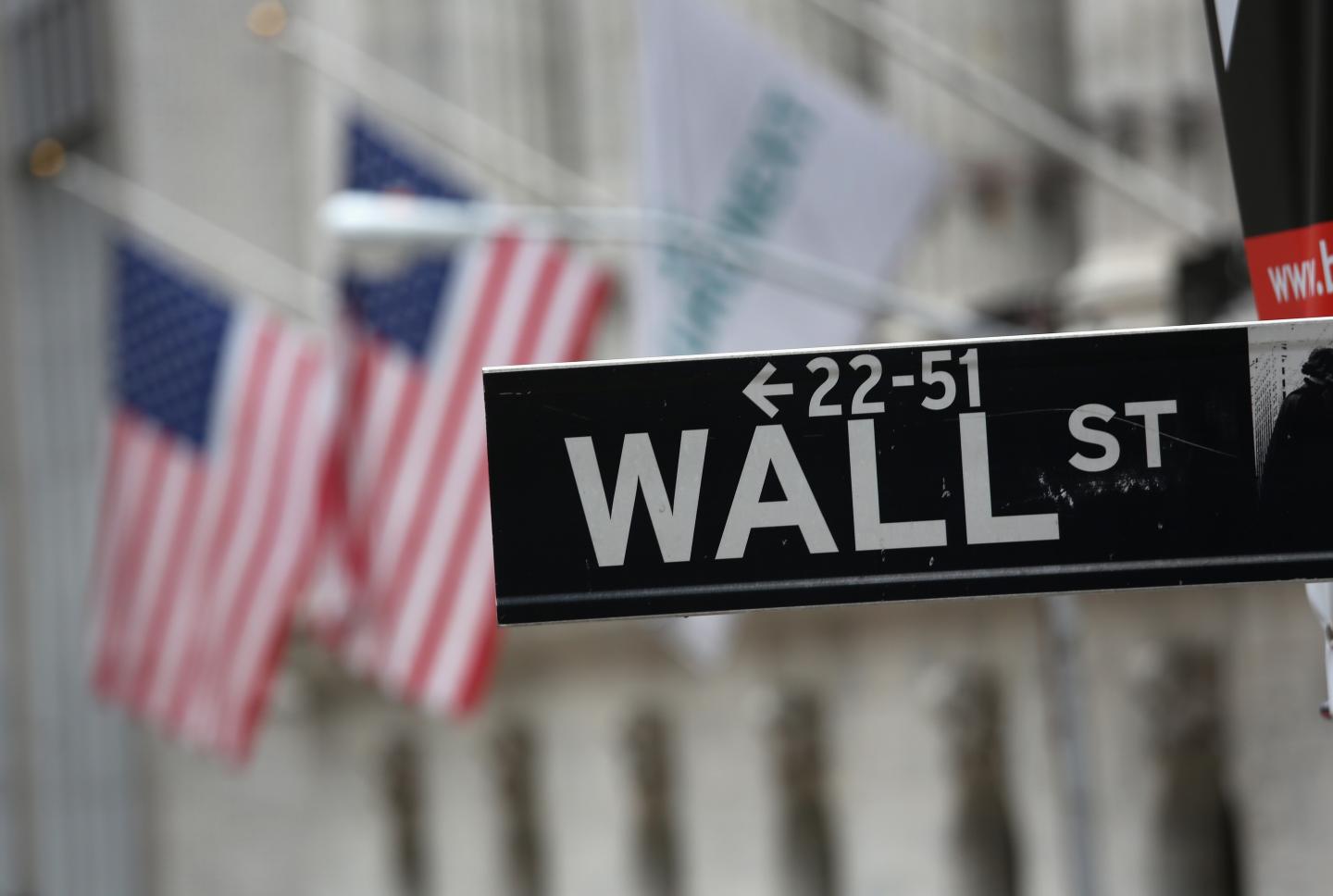
But as the U.S. government fiddles while the earth heats up, an unlikely hero is emerging from the shadows that may end up saving the day—Wall Street. From green investment portfolios to ecofriendly shareholders, Wall Street is helping to divert capital away from the polluters of the world to cleaner—and, in many cases, more lucrative—alternatives.
There are a lot of things to dislike about the COP21 agreement, but its single biggest problem is that it is a non-binding resolution. This means that the agreement would need to be ratified at the national level, which, for many of the world’s biggest polluters, isn’t going to happen. Nowhere is this more of a problem than in the United States, where the head of state and the majority of the nation’s legislature hail from opposing political parties. The Republican-led Congress has made it quite clear that they oppose any agreement made by President Obama’s negotiators in Paris.
“The president is making promises he can’t keep, writing checks he can’t cash, and stepping over the middle class to take credit for an ‘agreement’ that is subject to being shredded in 13 months,” Majority Leader Mitch McConnell, the senior Republican in the Senate, told reporters over the weekend.
Having the agreement “shredded” seems a bit dramatic. In reality, the climate deal will probably die a much slower and uneventful death, hopelessly stuck in the U.S. legislature forever.
“Despite this administration’s desperate effort to demonstrate an international agreement on climate change, the announcement of a final climate deal from Paris is no more significant to the United States than the Kyoto Protocol announcement 18 years ago,” Sen. Jim Inhofe, chairman of the U.S. Senate Environment and Public Works (EPW) Committee, said in a statement over the weekend.
The Kyoto Protocol was the first major international agreement aimed at tackling climate change. While the Clinton administration signed that agreement in 1997, it was never submitted to the Republican-controlled Senate for ratification. The agreement never had the force of law and was never adhered to by what was then the world’s biggest emitter of greenhouse gases.
The Republicans aren’t the only ones at fault here. The Democrats controlled congress several times over the last two decades and yet they too failed to pass Kyoto. Indeed, from 2009 to 2011, the Democratic Party controlled the White House and both houses of Congress and still did nothing. The economy was in the tank at the time, so it is understandable why Kyoto wasn’t at the top of the agenda. Nevertheless, when the time came to act, even Democrats were unwilling to get their hands dirty.
So, the chances of the U.S. government actually committing to COP21 anytime in the near future seems like a long shot. Though the U.S. is no longer the largest emitter of greenhouse gases as it was during Kyoto, its support for the agreement is considered critical. There are massive funding requirements in COP21 that cannot be met without the U.S. participation. Failure to fund the program fully would compromise one of the main tenets of the agreement, which is to help poorer nations move away from cheap carbon energy to fuel their growth. The money is also needed to help offset the environmental damage expected to occur over the next few decades from the rise in temperatures connected with carbon emissions. Despite all this, it is still highly unlikely that the U.S. government will move to enact COP21. With the U.S. not in the game, the whole treaty could come crashing down.
But where governments fail to act, the people almost always step in to close the gap. The environmental movement that began in the late 1960s and early 1970s has made enormous strides in combating the negative consequences of industrialization through the use of collective action. But the movement has largely failed to curb greenhouse gas emissions, especially in the U.S. The problem is simply too big and too widespread to be tackled alone—it needs an ally to sidestep government and to fight off all the money and power opposing change.
There are only a few institutions that yield enough power to bring about the kind of social change necessary to make a difference. If it were a few hundred years ago, the people could have turned to the Church for help. But in today’s capitalist-driven society, the Church has been replaced by Wall Street. It has the money, resources, and power to make companies and politicians sit up and listen. By redirecting capital away from polluters and toward cleaner companies, Wall Street can change the conversation in board rooms. Environmental concerns will no longer be cast off to some dark corner of the public relations department; rather, it would be central to attract investors.
After all, Wall Street’s money doesn’t come from the sky—it is the people’s money. It’s their savings, investments, pensions, and retirement funds. Investors are demanding a more active role in the way their money is used and are increasingly asking their money managers to focus on companies that reflect their “values.” Environmental concerns play a big role in this corner of the investment universe, known as “impact investing,” and the market is growing fast.
“Stop for a minute and think about the consumer trends that are driving demand for Toms versus other brands of shoes, or Whole Foods versus other types of stores, or Tesla versus other kinds of automobiles, Andy Sieg, the head of Global Wealth & Retirement Solutions at Bank of America Merrill Lynch, told Fortune. “This same zeitgeist, these same consumer trends and consumer demands are coming to financial services. It is a wave that we’re just beginning to see hit the beach, but it’s one that we are taking extremely seriously at Merrill Lynch and US Trust.”
Assets held in impact investing strategies, including those based on environmental, social, and governance (ESG) principles, increased by a factor of eight between 2012 and 2014, to $5 trillion, according to recent estimates from The Forum for Sustainable and Responsible Investment (US SIF). While this is but a sliver of the trillions of dollars in assets under management in the U.S., it represents a healthy chunk of the market. There are funds and indices that focus on an array of social causes, but we are starting to see the development of funds that specifically target one or two issues, such as combating global climate change.
For example, US Trust, Bank of America Private Wealth Management announced on Monday morning that it was launching a new investment strategy specifically geared to investors who want to take a more active role in the climate conversation. The Carbon Reserve Free Strategy, or CRF, creates a portfolio of investments that excludes companies that own, extract, distribute, and/or process carbon reserves. This eliminates investments across the utilities and energy sectors and diverts it to those companies with greener records.
The market for such products will continue to grow as the more environmentally conscious Gen X and “Millennial” generations move up the wealth track.
“When we survey millennials about how they think about their portfolios in the context of broader factors in the world, 75% tell us they view their investments explicitly as a manifestation of their broader social values,” Sieg said.
It’s unclear what kind of impact all this money will end up having on carbon polluters and the global climate crisis. If there is enough momentum, especially from several large asset managers like Blackrock or Vanguard, to steer clear from carbon-laced companies, the impact could be serious for a number of investment sectors. This could affect auto companies like GM, Ford, Mercedes Benz, BMW, and Volkswagen, as well as energy companies such as ExxonMobil, Chevron, and Royal Dutch Shell.
Now, not all these companies are created equal. The more carbon heavy the company, the bigger the discount it will trade versus its peers. For example, Ford announced last week it was investing some $4.5 billion to develop 13 new models of electric cars by 2020. The auto giant anticipates that more than 40% of the company’s models by then will be electric. Audi, which is part of the Volkswagen family, is going a step further, promising that all of its cars sold in North America will be electric by 2025.
Climate change is real, but the COP21 agreement won’t solve the problem. Indeed, if anything, it gives the world a false sense of security. Real change will come through advances in technology fueled by the markets. It’s time to get real about what works and what doesn’t and encourage investment and resources in areas that can really make a difference.