• Home
  • Latest
  • Fortune 500
  • Finance
  • Tech
  • Leadership
  • Lifestyle
  • Rankings
  • Multimedia

Trendingnow

1

After forcing workers back to the office, Goldman Sachs and JPMorgan Chase are now letting their staff work remotely—but only for the World Cup

2

Markets tumble worldwide as Fed resets expectations: $400 billion wiped off SpaceX stock

3

Current price of oil as of June 23, 2026

1

After forcing workers back to the office, Goldman Sachs and JPMorgan Chase are now letting their staff work remotely—but only for the World Cup

2

Markets tumble worldwide as Fed resets expectations: $400 billion wiped off SpaceX stock

3

Current price of oil as of June 23, 2026
Commentaryclimate change

Why Prince Charles is Right to Link the Syrian War to Climate Change

By
Shahrzad Mohtadi
Shahrzad Mohtadi
,
Mark Cane
Mark Cane
,
Richard Seager
Richard Seager
,
Yochanan Kushnir
Yochanan Kushnir
, and
Colin Kelley
Colin Kelley
Down Arrow Button Icon
By
Shahrzad Mohtadi
Shahrzad Mohtadi
,
Mark Cane
Mark Cane
,
Richard Seager
Richard Seager
,
Yochanan Kushnir
Yochanan Kushnir
, and
Colin Kelley
Colin Kelley
Down Arrow Button Icon
December 5, 2015, 10:30 AM ET
FRANCE-CLIMATE-WARMING-COP21
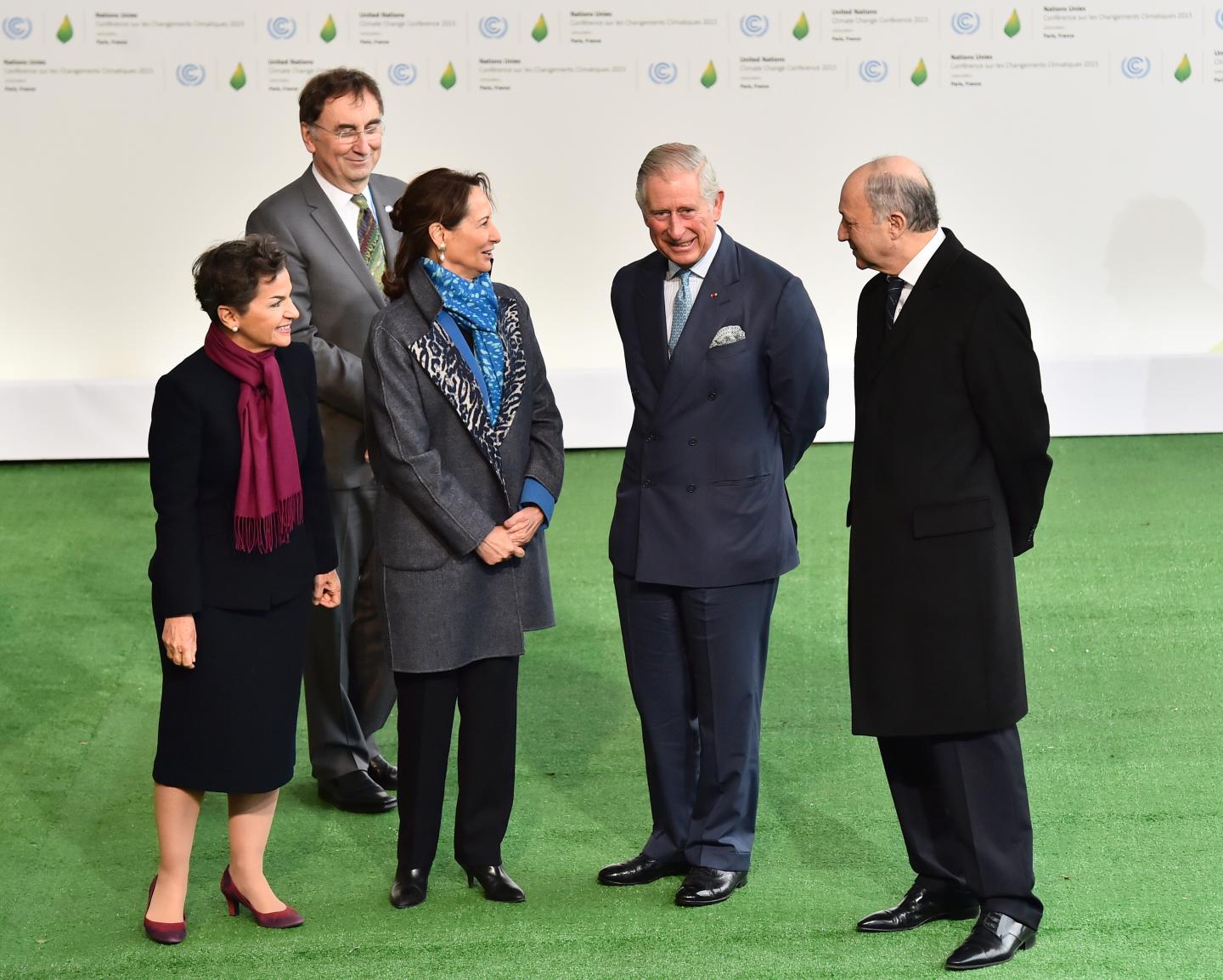
UN climate chief Christiana Figueres (L), French Minister for Ecology, Sustainable Development and Energy Segolene Royale (3rd L), and French Foreign Minister Laurent Fabius (R), greet britain's prince Charles, upon his arrival for the opening of the UN conference on climate change, on November 30, 2015 at Le Bourget, on the outskirts of the French capital Paris. More than 150 world leaders are meeting under heightened security, for the 21st Session of the Conference of the Parties to the United Nations Framework Convention on Climate Change (COP21/CMP11), also known as Paris 2015 from November 30 to December 11. Man at back is unidentified. AFP PHOTO / POOL/ LOIC VENANCE / AFP / LOIC VENANCE (Photo credit should read LOIC VENANCE/AFP/Getty Images)Photograph by Loic Venance — AFP/Getty Images
Add Fortune on Google for similar content.

Prince Charles is the latest public figure to identify climate change as having contributed to the unraveling of stability in Syria, leading to the havoc we see beyond its borders today. He joins the ranks of other national and world leaders, including President Obama, who have linked climate change to the turmoil in Syria.

And as the Paris climate negotiations continue this week, this case should be an example for those looking to see the visible effects of climate change and natural disasters on fragile societies. Prince Charles, Secretary Kerry, President Obama and many others were spot on when they recognized that a drought made more severe by climate change, occurring in a country already heavily strained, was one important factor contributing to the onset of the Syrian war.

As the authors of one of the key scientific papers underpinning this claim, we wish to summarize this case to the reader: After decades of water mismanagement and inefficient farming practices, Syria experienced a drought from 2007-10 more severe than previously seen. Those in the country’s breadbasket region of the northeast were largely crippled by crop failure, and the persistence of the drought forced many to relocate from their rural villages to the outskirts of Syria’s cities.

Read more: Blaming Terrorism on Climate Change Isn’t Just Stupid—It’s Dangerous

Many of these urban areas were experiencing a recent influx of Iraqi refugees, who were fleeing their own hardships. The peripheries of these cities were mazes of illegal settlements and severe overcrowding, with poor infrastructure, deep unemployment, and rampant crime; these areas were also utterly neglected by the Assad regime. The permanence with which these newly disenfranchised populations migrated is also telling of the extreme situations from which they fled, be it war or drought. Discontent festered until the flashpoint in Dara’a in March 2011, igniting into a conflict that unbeknownst to many, soon became a raging civil war.

While we cannot say that this drought was surely caused by manmade climate change, we do know that this severe of a drought was made two to three times more likely by the greenhouse gases humans have added to the atmosphere. Our conclusion is supported by 1) climate observations of the past 80 years, which show a downward trend in rainfall and an upward trend in temperature (telltale causes of drought); 2) climate modeling, which predicts that the region dries as the greenhouse gases in the atmosphere increase; and 3) theoretical results showing that this region will be increasingly dominated by atmospheric motions that inhibit rainfall.

Climate change greatly increased the chances of extreme drought, but let us be clear in saying the drought in Syria was not the sole cause of the uprising. It was an additional stressor that made the pre-existing bad situation in Syria even worse. As our paper describes:

“The migration in response to the severe and prolonged drought exacerbated a number of the factors often cited as contributing to the unrest, which include unemployment, corruption, and rampant inequality. The conflict literature supports the idea that rapid demographic change encourages instability. Whether it was a primary or substantial factor is impossible to know, but drought can lead to devastating consequences when coupled with preexisting acute vulnerability, caused by poor policies and unsustainable land use practices in Syria’s case and perpetuated by the slow and ineffective response of the Assad regime.”

Climate change need not need to be the only factor implicated in a conflict for it to matter. Authorities who are unwilling or unable to recognize the societal impacts of climate change are also likely to be unresponsive to alleviating other economic, political or societal stressors and, when put together, this can result in the sort of instability seen in Syria.

Mark Cane, Richard Seager and Yochanan Kushnir are professors at Columbia University’s Lamont-Doherty Earth Observatory. Colin Kelley is a postdoctoral research fellow at the University of California, Santa Barbara. Shahrzad Mohtadi is a graduate of Columbia University’s School of International and Public Affairs.

About the Authors
By Shahrzad Mohtadi
See full bioRight Arrow Button Icon
By Mark Cane
See full bioRight Arrow Button Icon
By Richard Seager
See full bioRight Arrow Button Icon
By Yochanan Kushnir
See full bioRight Arrow Button Icon
By Colin Kelley
See full bioRight Arrow Button Icon
Add Fortune on Google for similar content.

Latest in Commentary

Finance
Lorem ipsum dolor sit amet, consectetur adipiscing elit, sed do eiusmod tempor incididunt ut labore et dolore magna aliqua. Ut enim ad minim veniam
By Fortune Editors
October 20, 2025
Finance
Lorem ipsum dolor sit amet, consectetur adipiscing elit, sed do eiusmod tempor incididunt ut labore et dolore magna aliqua. Ut enim ad minim veniam
By Fortune Editors
October 20, 2025
Finance
Lorem ipsum dolor sit amet, consectetur adipiscing elit, sed do eiusmod tempor incididunt ut labore et dolore magna aliqua. Ut enim ad minim veniam
By Fortune Editors
October 20, 2025
Finance
Lorem ipsum dolor sit amet, consectetur adipiscing elit, sed do eiusmod tempor incididunt ut labore et dolore magna aliqua. Ut enim ad minim veniam
By Fortune Editors
October 20, 2025
Finance
Lorem ipsum dolor sit amet, consectetur adipiscing elit, sed do eiusmod tempor incididunt ut labore et dolore magna aliqua. Ut enim ad minim veniam
By Fortune Editors
October 20, 2025
Finance
Lorem ipsum dolor sit amet, consectetur adipiscing elit, sed do eiusmod tempor incididunt ut labore et dolore magna aliqua. Ut enim ad minim veniam
By Fortune Editors
October 20, 2025

Most Popular

Finance
Lorem ipsum dolor sit amet, consectetur adipiscing elit, sed do eiusmod tempor incididunt ut labore et dolore magna aliqua. Ut enim ad minim veniam
By Fortune Editors
October 20, 2025
Finance
Lorem ipsum dolor sit amet, consectetur adipiscing elit, sed do eiusmod tempor incididunt ut labore et dolore magna aliqua. Ut enim ad minim veniam
By Fortune Editors
October 20, 2025
Finance
Lorem ipsum dolor sit amet, consectetur adipiscing elit, sed do eiusmod tempor incididunt ut labore et dolore magna aliqua. Ut enim ad minim veniam
By Fortune Editors
October 20, 2025
Finance
Lorem ipsum dolor sit amet, consectetur adipiscing elit, sed do eiusmod tempor incididunt ut labore et dolore magna aliqua. Ut enim ad minim veniam
By Fortune Editors
October 20, 2025
Finance
Lorem ipsum dolor sit amet, consectetur adipiscing elit, sed do eiusmod tempor incididunt ut labore et dolore magna aliqua. Ut enim ad minim veniam
By Fortune Editors
October 20, 2025
Finance
Lorem ipsum dolor sit amet, consectetur adipiscing elit, sed do eiusmod tempor incididunt ut labore et dolore magna aliqua. Ut enim ad minim veniam
By Fortune Editors
October 20, 2025
Fortune Secondary Logo
Rankings
  • 100 Best Companies
  • Fortune 500
  • Global 500
  • Fortune 500 Europe
  • Most Powerful Women
  • World's Most Admired Companies
  • See All Rankings
  • Lists Calendar
Sections
  • Finance
  • Fortune Crypto
  • Features
  • Leadership
  • Health
  • Commentary
  • Success
  • Retail
  • Mpw
  • Tech
  • Lifestyle
  • CEO Initiative
  • Asia
  • Politics
  • Conferences
  • Europe
  • Newsletters
  • Personal Finance
  • Environment
  • Magazine
  • Education
Customer Support
  • Frequently Asked Questions
  • Customer Service Portal
  • Privacy Policy
  • Terms Of Use
  • Single Issues For Purchase
  • International Print
Commercial Services
  • Advertising
  • Fortune Brand Studio
  • Fortune Analytics
  • Fortune Conferences
  • Business Development
  • Group Subscriptions
About Us
  • About Us
  • Press Center
  • Work At Fortune
  • Terms And Conditions
  • Site Map
  • About Us
  • Press Center
  • Work At Fortune
  • Terms And Conditions
  • Site Map
  • Facebook icon
  • Twitter icon
  • LinkedIn icon
  • Instagram icon
  • Pinterest icon

Latest in Commentary

sb
Commentaryclimate change
The climate policy triangle: why leaders can no longer choose between growth, security and sustainability
By Sebastian BuckupJune 23, 2026
12 hours ago
brett
CommentaryManagement
Middle managers aren’t going extinct—they’re evolving into something more powerful
By Brett HurtJune 23, 2026
21 hours ago
ravi
CommentaryAI agents
Yale School of Management: surveillance pricing is just the beginning. AI agents will be the real test of corporate trust
By Ravi Dhar and Jon IwataJune 23, 2026
22 hours ago
elon
CommentaryElon Musk
Elon Musk’s trillion dollars aren’t real — and that’s the point
By Douglas P. McCormickJune 23, 2026
22 hours ago
gen z
CommentaryCareers
Gen Z: if you want to succeed at work, you need to start friction-maxxing
By Michelle SobelJune 23, 2026
23 hours ago
rp
CommentaryLaw
Cooley CEO: Big Law won’t survive if it treats AI as just an efficiency tool
By Rachel ProffittJune 23, 2026
23 hours ago

Most Popular

After forcing workers back to the office, Goldman Sachs and JPMorgan Chase are now letting their staff work remotely—but only for the World Cup
Success
After forcing workers back to the office, Goldman Sachs and JPMorgan Chase are now letting their staff work remotely—but only for the World Cup
By Orianna Rosa RoyleJune 23, 2026
22 hours ago
Markets tumble worldwide as Fed resets expectations: $400 billion wiped off SpaceX stock
Banking
Markets tumble worldwide as Fed resets expectations: $400 billion wiped off SpaceX stock
By Jim EdwardsJune 23, 2026
24 hours ago
Current price of oil as of June 23, 2026
Personal Finance
Current price of oil as of June 23, 2026
By Joseph HostetlerJune 23, 2026
21 hours ago
Meet the 2 men putting New York's $300 billion pension fund in play for the first time in 20 years
Investing
Meet the 2 men putting New York's $300 billion pension fund in play for the first time in 20 years
By Nick LichtenbergJune 22, 2026
2 days ago
Former U.S. Secret Service agent says bringing your authentic self to work stifles teamwork: 'You don’t get high performers, you get sloppiness'
Success
Former U.S. Secret Service agent says bringing your authentic self to work stifles teamwork: 'You don’t get high performers, you get sloppiness'
By Sydney LakeJune 21, 2026
3 days ago
Texas and Charlotte used to build huge McMansions—now they're copying the California design tricks they once mocked
Real Estate
Texas and Charlotte used to build huge McMansions—now they're copying the California design tricks they once mocked
By Sydney LakeJune 22, 2026
2 days ago

© 2026 Fortune Media IP Limited. All Rights Reserved. Use of this site constitutes acceptance of our Terms of Use and Privacy Policy | CA Notice at Collection and Privacy Notice | Do Not Sell/Share My Personal Information
FORTUNE is a trademark of Fortune Media IP Limited, registered in the U.S. and other countries. FORTUNE may receive compensation for some links to products and services on this website. Offers may be subject to change without notice.