• Home
  • Latest
  • Fortune 500
  • Finance
  • Tech
  • Leadership
  • Lifestyle
  • Rankings
  • Multimedia

Trendingnow

1

FedEx CEO says we are in the middle of the biggest supply chain shift he’s seen in 35 years: ‘We are the referendum’

2

Buffett says AI giants are ‘playing a game they don’t want to play’ in the AI race, reveals he was behind Berkshire’s $31 billion bet on Google

3

Trump's 'American Flag Blue' in the Lincoln Memorial pool is already gray — and the Olympic canoer 'vandal' is fighting his arrest

1

FedEx CEO says we are in the middle of the biggest supply chain shift he’s seen in 35 years: ‘We are the referendum’

2

Buffett says AI giants are ‘playing a game they don’t want to play’ in the AI race, reveals he was behind Berkshire’s $31 billion bet on Google

3

Trump's 'American Flag Blue' in the Lincoln Memorial pool is already gray — and the Olympic canoer 'vandal' is fighting his arrest
CommentarySpace race

Why Jeff Bezos Has Entered the Space Race

By
Loizos Heracleous
Loizos Heracleous
Down Arrow Button Icon
By
Loizos Heracleous
Loizos Heracleous
Down Arrow Button Icon
November 30, 2015, 11:30 AM ET
122017973
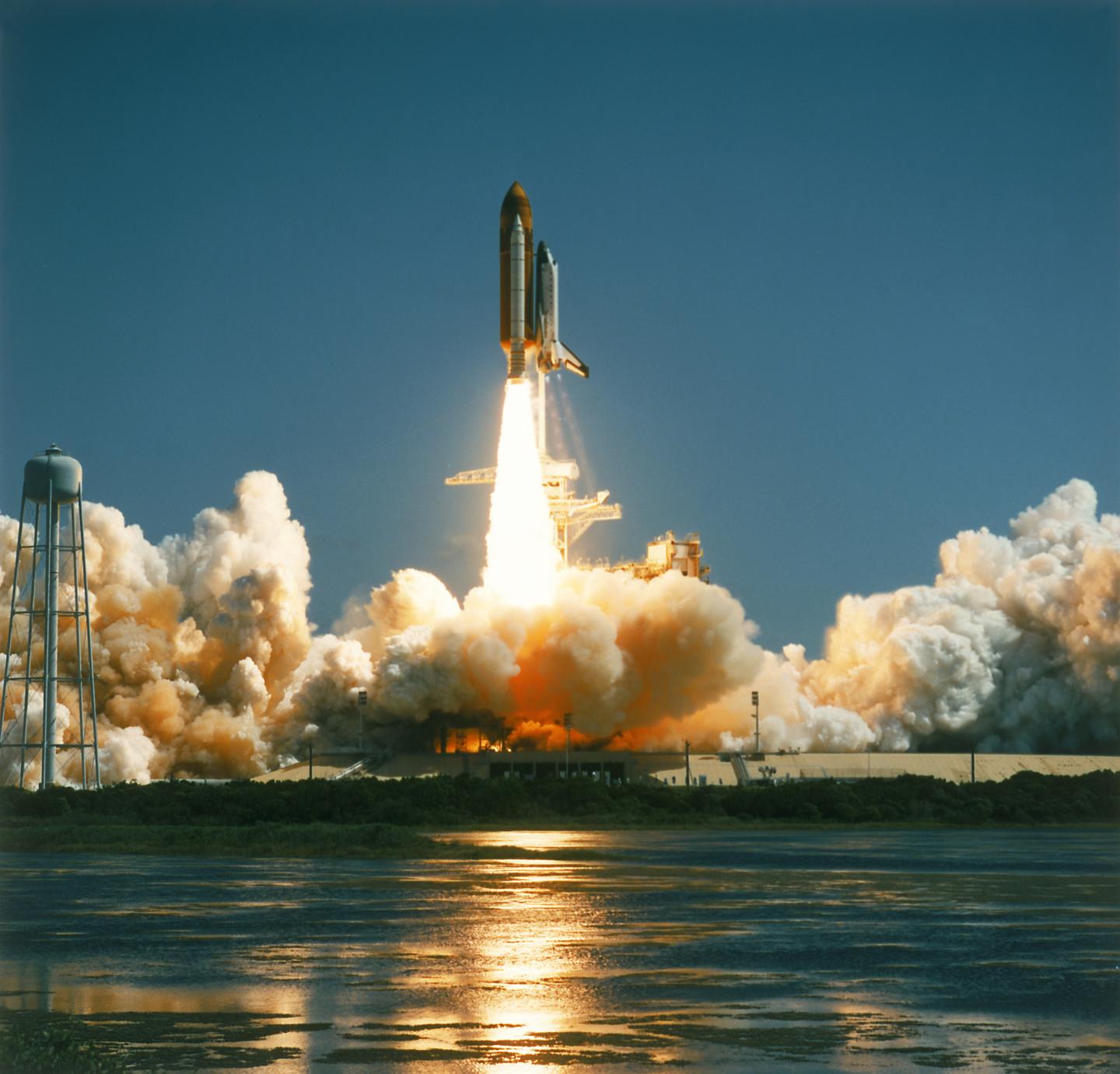
Shuttle Taking OffPhotograph Edward Slater -- Getty Images
Add Fortune on Google for similar content.

Jeff Bezos may not have gone where no man has gone before, but in successfully landing its New Shephard rocket back on Earth, his rocket company Blue Origins has pipped ahead of rivals in the race to make space commercially viable. It’s a significant coup in the latest incarnation of the space race. And it may have given pause to Elon Musk, the founder of rival SpaceX.

Even though New Shepard’s suborbital landing is simpler than landing a rocket back from Earth orbit, as is SpaceX’s goal, it is still a significant feat. At present, all rockets being launched into space are either destroyed or abandoned after take-off. So the race to make them reusable is the next crucial step toward making space flight commercially viable and routine.

Today’s space race is far different from the days when Neil Armstrong landed on the moon. The emergence of Blue Origin and SpaceX is as much a reflection of a less regulated space industry as the conviction and vision of the individuals who are investing billions in pursuit of bigger objectives. Originally spurred by government seed funding from NASA, space exploration has become big business – and commercial space activity is expected to double over the next decade from today’s $250 billion.

A joint effort
What’s more, today’s space race is less of a competition with only one possible winner. This is a race of consortia that often includes both private entities and multiple government agencies. It brings together commercial, scientific and military interests.

In many ways it is driven by a perceived need to expand the human presence beyond a single planet – not just commercial interests. The next step is journeying to Mars. Thus, the ultimate goal of the space race 2.0 is couched in existential ideas of survival. And, while we develop the capability to travel and settle on other planets, there will be several winners along the way.

The pattern of success will resemble commercial competition, with its ebbs and flows and changes in fortunes, rather than a duel between two superpowers with a clear symbolic goalpost. So Bezos might have the limelight right now, but Musk will likely regain it soon; undoubtedly followed by others who enter the race.

The winners along the way will be the states and companies with the foresight and finance to develop the commercial applications of space activities. The offerings will create new markets and make an impact on the way we lead our lives.

Democratizing space exploration
The space exploration industry is morphing. It used to be a traditional hierarchical model where commercial entities were suppliers to state agencies that conceived of, led and carried out missions. In recent years it has been moving toward a network model where collaboration across commercial as well as state entities is crucial. And, as we are increasingly seeing, commercial entities can launch their own missions.

In particular it is the low-orbit missions that are being given over to companies. Once-dominant government space agencies are now focusing their resources on the bigger prize of deep space exploration such as NASA’s planned mission to Mars. The emergence of companies such as SpaceX, Blue Origin, and Orbital ATK for example has been spurred by government seed funding awarded through NASA to ferry supplies and astronauts to the International Space Station, which also reduces NASA’s reliance on Russia in this regard.

The commercial space sector stands on the shoulders of giants. There is no doubt of the debt that is due to original state investments, which developed the technology, infrastructure and human capital that is now drawn on by commercial space companies. There is also no doubt that regulation, while overbearing and constraining at times, has been there for good reason. Recent accidents such as those suffered by SpaceX and Orbital are reminders that space travel is difficult, dangerous and unpredictable.

Yet, there is no substitute for the entrepreneurial spark, energy and ambition that drives commercial space companies – and that will ultimately lead to a multitude of space-related offerings that today seem like pipe dreams.

The spoils of space
The space industry’s shift from a tightly regulated domain with high barriers to entry and a select few competitors towards a more deregulated, easier to enter and hotly contested field is ultimately good for humanity. This shift applies evolutionary principles (variation, selection and retention within a competitive context as the most efficient way to select winners and allocate resources) to an industry that some, including Stephen Hawking, have called a “life insurance” for the survival of the human race.

The benefits do not just relate to profit and species survival. Space exploration feeds the human spirit. Nothing has captured the world’s imagination more than the original space race, when humans set foot on the moon. Space feeds that human propensity to push frontiers and go beyond what had previously seemed possible. It is partly for this reason that critiques and pessimism regarding the commercial viability of this industry miss the point. If we seek to justify space exploration with short-term returns on investment calculations, we will never have the green light or the opportunity to go beyond earth.

In the longer term, the commercial benefits will likely accrue, particularly when the puzzle of how to safely and reliably re-use launch rockets from Earth’s orbit is solved. Asteroid mining, space tourism, faster cross-continent earth transport, more efficient and expanded scientific, entertainment and military applications, and all sorts of services yet to emerge, will become possible and commercially viable. And business is increasingly leading the way.

Loizos Heracleous is a professor of strategy at the University of Warwick. This piece originally appeared on The Conversation. The Conversation

About the Author
By Loizos Heracleous
See full bioRight Arrow Button Icon
Add Fortune on Google for similar content.

Latest in Commentary

Finance
Lorem ipsum dolor sit amet, consectetur adipiscing elit, sed do eiusmod tempor incididunt ut labore et dolore magna aliqua. Ut enim ad minim veniam
By Fortune Editors
October 20, 2025
Finance
Lorem ipsum dolor sit amet, consectetur adipiscing elit, sed do eiusmod tempor incididunt ut labore et dolore magna aliqua. Ut enim ad minim veniam
By Fortune Editors
October 20, 2025
Finance
Lorem ipsum dolor sit amet, consectetur adipiscing elit, sed do eiusmod tempor incididunt ut labore et dolore magna aliqua. Ut enim ad minim veniam
By Fortune Editors
October 20, 2025
Finance
Lorem ipsum dolor sit amet, consectetur adipiscing elit, sed do eiusmod tempor incididunt ut labore et dolore magna aliqua. Ut enim ad minim veniam
By Fortune Editors
October 20, 2025
Finance
Lorem ipsum dolor sit amet, consectetur adipiscing elit, sed do eiusmod tempor incididunt ut labore et dolore magna aliqua. Ut enim ad minim veniam
By Fortune Editors
October 20, 2025
Finance
Lorem ipsum dolor sit amet, consectetur adipiscing elit, sed do eiusmod tempor incididunt ut labore et dolore magna aliqua. Ut enim ad minim veniam
By Fortune Editors
October 20, 2025

Most Popular

Finance
Lorem ipsum dolor sit amet, consectetur adipiscing elit, sed do eiusmod tempor incididunt ut labore et dolore magna aliqua. Ut enim ad minim veniam
By Fortune Editors
October 20, 2025
Finance
Lorem ipsum dolor sit amet, consectetur adipiscing elit, sed do eiusmod tempor incididunt ut labore et dolore magna aliqua. Ut enim ad minim veniam
By Fortune Editors
October 20, 2025
Finance
Lorem ipsum dolor sit amet, consectetur adipiscing elit, sed do eiusmod tempor incididunt ut labore et dolore magna aliqua. Ut enim ad minim veniam
By Fortune Editors
October 20, 2025
Finance
Lorem ipsum dolor sit amet, consectetur adipiscing elit, sed do eiusmod tempor incididunt ut labore et dolore magna aliqua. Ut enim ad minim veniam
By Fortune Editors
October 20, 2025
Finance
Lorem ipsum dolor sit amet, consectetur adipiscing elit, sed do eiusmod tempor incididunt ut labore et dolore magna aliqua. Ut enim ad minim veniam
By Fortune Editors
October 20, 2025
Finance
Lorem ipsum dolor sit amet, consectetur adipiscing elit, sed do eiusmod tempor incididunt ut labore et dolore magna aliqua. Ut enim ad minim veniam
By Fortune Editors
October 20, 2025
Fortune Secondary Logo
Rankings
  • 100 Best Companies
  • Fortune 500
  • Global 500
  • Fortune 500 Europe
  • Most Powerful Women
  • World's Most Admired Companies
  • See All Rankings
  • Lists Calendar
Sections
  • Finance
  • Fortune Crypto
  • Features
  • Leadership
  • Health
  • Commentary
  • Success
  • Retail
  • Mpw
  • Tech
  • Lifestyle
  • CEO Initiative
  • Asia
  • Politics
  • Conferences
  • Europe
  • Newsletters
  • Personal Finance
  • Environment
  • Magazine
  • Education
Customer Support
  • Frequently Asked Questions
  • Customer Service Portal
  • Privacy Policy
  • Terms Of Use
  • Single Issues For Purchase
  • International Print
Commercial Services
  • Advertising
  • Fortune Brand Studio
  • Fortune Analytics
  • Fortune Conferences
  • Business Development
  • Group Subscriptions
About Us
  • About Us
  • Press Center
  • Work At Fortune
  • Terms And Conditions
  • Site Map
  • About Us
  • Press Center
  • Work At Fortune
  • Terms And Conditions
  • Site Map
  • Facebook icon
  • Twitter icon
  • LinkedIn icon
  • Instagram icon
  • Pinterest icon

Latest in Commentary

dollar
CommentaryCurrency
The dollar’s demise has been predicted for 55 years. The BCG Institute says it’s still overstated
By Philipp Carlsson-Szlezak, Nikolaus Lang and Paul SwartzJuly 17, 2026
4 hours ago
Europe optimized its supply chains for cost. Now it must pay for resilience  
Commentarysupply chains
Europe optimized its supply chains for cost. Now it must pay for resilience  
By Richard SaynorJuly 16, 2026
23 hours ago
tony
Commentarydisruption
Genesys CEO: We can see firsthand how AI is changing — not replacing — work
By Tony BatesJuly 16, 2026
1 day ago
d
CommentaryParenting
New School economist: Trump Accounts will widen America’s wealth gaps
By Darrick HamiltonJuly 16, 2026
1 day ago
cape
CommentaryWorld Cup
The legend of Cape Verde: How an island of half a million built the best team at the World Cup
By André MartinJuly 16, 2026
1 day ago
sb
Commentarynational debt
The national debt is over 100% of GDP and most of Congress is ignoring wishes to rein it in. It’s time to amend the Constitution
By Steve H. Hanke and David M. WalkerJuly 15, 2026
2 days ago

Most Popular

FedEx CEO says we are in the middle of the biggest supply chain shift he’s seen in 35 years: ‘We are the referendum’
C-Suite
FedEx CEO says we are in the middle of the biggest supply chain shift he’s seen in 35 years: ‘We are the referendum’
By Fortune EditorsJuly 15, 2026
2 days ago
Buffett says AI giants are ‘playing a game they don’t want to play’ in the AI race, reveals he was behind Berkshire’s $31 billion bet on Google
Big Tech
Buffett says AI giants are ‘playing a game they don’t want to play’ in the AI race, reveals he was behind Berkshire’s $31 billion bet on Google
By Mia OsmonbekovJuly 16, 2026
19 hours ago
Trump's 'American Flag Blue' in the Lincoln Memorial pool is already gray — and the Olympic canoer 'vandal' is fighting his arrest
Politics
Trump's 'American Flag Blue' in the Lincoln Memorial pool is already gray — and the Olympic canoer 'vandal' is fighting his arrest
By Matthew Daly and The Associated PressJuly 16, 2026
1 day ago
26 Meta employees accuse Mark Zuckerberg of using AI to target 8,000 layoffs against workers on medical, parental or family leave
Law
26 Meta employees accuse Mark Zuckerberg of using AI to target 8,000 layoffs against workers on medical, parental or family leave
By Barbara Ortutay, Alexandra Olson and The Associated PressJuly 15, 2026
2 days ago
U.S. companies have finally gotten $71 billion in tariff refunds, but they’re using it to offset inflation caused by the Iran war
Economy
U.S. companies have finally gotten $71 billion in tariff refunds, but they’re using it to offset inflation caused by the Iran war
By Sasha RogelbergJuly 17, 2026
7 hours ago
JPMorgan CEO Jamie Dimon says 300,000 workers are needed to rebuild American shipbuilding—with jobs paying $100,000 without a college degree
Success
JPMorgan CEO Jamie Dimon says 300,000 workers are needed to rebuild American shipbuilding—with jobs paying $100,000 without a college degree
By Preston ForeJuly 16, 2026
23 hours ago

© 2026 Fortune Media IP Limited. All Rights Reserved. Use of this site constitutes acceptance of our Terms of Use and Privacy Policy | CA Notice at Collection and Privacy Notice | Do Not Sell/Share My Personal Information
FORTUNE is a trademark of Fortune Media IP Limited, registered in the U.S. and other countries. FORTUNE may receive compensation for some links to products and services on this website. Offers may be subject to change without notice.