• Home
  • Latest
  • Fortune 500
  • Finance
  • Tech
  • Leadership
  • Lifestyle
  • Rankings
  • Multimedia

Trendingnow

1

After forcing workers back to the office, Goldman Sachs and JPMorgan Chase are now letting their staff work remotely—but only for the World Cup

2

The Pentagon said Iran War costs $29 billion, but the real cost is closer to $200 billion—and counting

3

Current price of oil as of June 23, 2026

1

After forcing workers back to the office, Goldman Sachs and JPMorgan Chase are now letting their staff work remotely—but only for the World Cup

2

The Pentagon said Iran War costs $29 billion, but the real cost is closer to $200 billion—and counting

3

Current price of oil as of June 23, 2026
CommentaryBudget

The Problem With Carly Fiorina’s Zero-Based Budgeting Plan

By
Cynthia Firey Eakin
Cynthia Firey Eakin
and
Bethany Cianciolo
Bethany Cianciolo
Down Arrow Button Icon
By
Cynthia Firey Eakin
Cynthia Firey Eakin
and
Bethany Cianciolo
Bethany Cianciolo
Down Arrow Button Icon
November 23, 2015, 12:54 PM ET
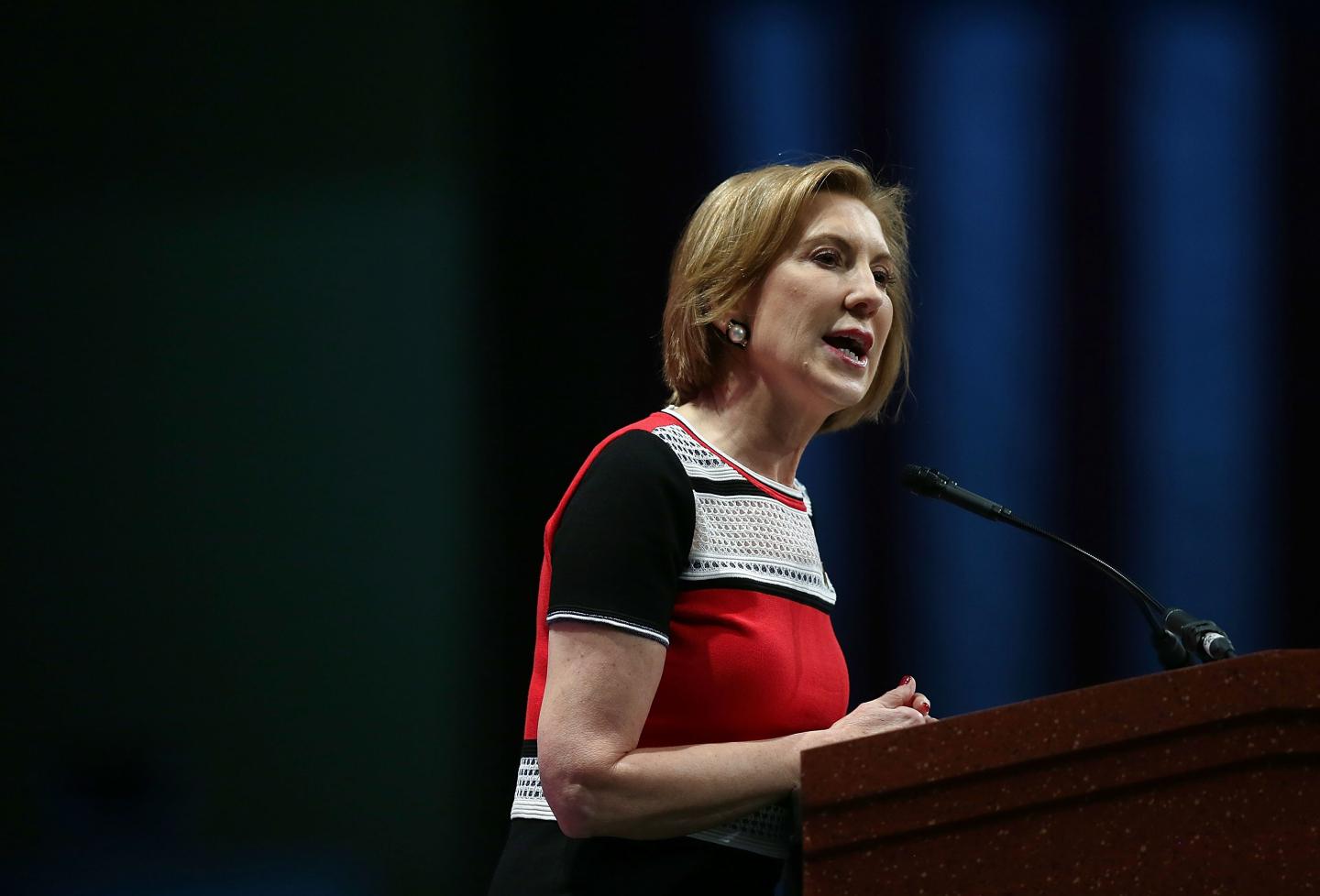
Republican Candidates Speak At Sunshine Summit In Orlando
ORLANDO, FL - NOVEMBER 14: Republican presidential candidate Carly Fiorina speaks during the Sunshine Summit conference being held at the Rosen Shingle Creek on November 14, 2015 in Orlando, Florida. The summit brought Republican presidential candidates in front of the Republican voters. (Photo by Joe Raedle/Getty Images)Photograph by Joe Raedle via Getty Images
Add Fortune on Google for similar content.

If I’m elected president… I’m going to institute zero-based budgeting, which assesses every program every year, and eliminates those programs that are obsolete.

This was Jimmy Carter’s presidential campaign promise in 1976. Thirty-nine years later, presidential candidate Carly Fiorina is once again promising economy and efficiency in government spending through zero-based budgeting.

What, then, is zero-based budgeting, and is it really the cure-all—as it’s portrayed to be—for our government’s spending woes?

Zero-based budgeting: nuts and bolts

Budgets, whether they be simple household budgets or massive governmental budgets, are used to control spending.

Most of us start our household budget by reviewing what we spent last year and then adding or subtracting from our prior spending based on what we expect to happen in the future.

For example, we might expect to use the same amount of gasoline in the future, but, since prices are declining, we reduce the last year’s budgeted amount to reflect the price decline. The underlying assumption is that we will be participating in the same activities at the same levels as we did last year, with only small changes.

This is called “incremental budgeting” and is widely used in both business and government because the budgeting process is straightforward, and the resulting budget is easy to understand.

Unfortunately, in government the incremental method is often accompanied by a “use-it-or-lose-it” mentality. If a department head doesn’t use all of her department’s budget by year end, she will likely have a smaller one next year. Research suggests that this mentality is responsible for the well-documented year-end spending sprees by governmental agencies, and that this spending often goes toward lower-priority, lower-quality projects.

On the other hand, zero-based budgeting assumes nothing. It was designed to control spending by questioning the value of all activities, measuring the effectiveness and efficiency of each, and eliminating those that cannot be justified.

To achieve this end, zero-based budgeting starts all budgets from scratch. This means that every expenditure begins at zero and undergoes scrutiny every year to determine whether the purpose and amount of the expense is appropriate.

As applied to our household budget, instead of simply adjusting the budget line for the decline in gas prices, we would start the gasoline budget by asking whether we need to drive at all and work our way up from there.

When used in government, zero-based budgeting requires that every program, agency, and department justify every activity and every expense, every year. Presumably, there is no “use-it-or-lose-it” mentality and no incentive to use up last year’s budget as a way to get more next year.

It’s nothing new

As shown by the opening quotations, zero-based budgeting is not new in business or in government.

It gained attention in 1970 when Peter Pyhrr wrote about Texas Instruments’ (TXN) experience with it in the Harvard Business Review. As governor of Georgia, Jimmy Carter first implemented the budgeting process for his state’s budget. In 1976, President Carter brought the method to the federal government.

The zero-based budgeting process at the federal level required many steps and resulted in massive amounts of information and paperwork. Each agency within the government was required to identify logical “decision units” within its budget. Each unit would then create a “decision package” that included its proposed expenditures along with measures of efficiency and effectiveness.

The package included the unit’s budget request, which had to be made at four different funding levels ranging from the minimum required for viability of the program to a level high enough to provide additional services. All decision packages within a manager’s control were then ranked and advanced up the administrative ladder for additional review, revision and prioritization.

Zero-based budgeting proved to be complicated and time-consuming and did not result in cost savings. It was abandoned by President Ronald Reagan early in his first term.

Aside from the time commitment and complexity, because it requires a fresh look each year, zero-based budgeting is focused on the short run and is difficult to apply to long-run decisions and continuing functions of government like public education and entitlement programs. It also creates competition and conflict among departments and agencies over resource allocation.

Most importantly, even after all of the decision units, packages and justifications are made, in the end, Congress and the president remain responsible for deciding whether to keep or eliminate programs. Regardless of the budgeting process used, their decisions are subject to the pressures of constituents, campaign contributors and lobbyists.

Since the late 1970s, some states and local governmental units have flirted with modifications of zero-based budgeting.

One modification is to use zero-based budgeting on one part of the budget, and the incremental method on the rest. In this case, a department might be given 80% of its past budget, while using zero-based budgeting to justify any additional amounts. Another modification is to use zero-based budgeting every few years as a periodic review of the unit.

In 2009 and again in 2012, New Hampshire used zero-base agency reviews for its state budget analysis and planning. The process included a review of agency missions, legal requirements, organizational charts, and alternatives to existing practices. The state budget director reported that the reviews helped streamline agency responsibilities.

Still, most governmental units rely on the incremental method because the resulting budget is simple to understand, and less labor-intensive to create.

Zero-based budgeting in business

Along with a renewed focus on zero-based budgeting in government, proponents point to a renewed interest in the method in the business sector.

Companies that cannot raise prices to improve profits might be attracted to zero-based budgeting as a way to control costs. Other businesses want a fresh view of company operations and might turn to zero-based budgeting as a way to evaluate everything from the ground up.

However, zero-based budgeting may not the best method for every company. For example, those that are more innovative may be willing to take chances and spend on projects that may not be viewed as the most cost-effective.

In its focus on the short run, zero-based budgeting may inhibit long-run strategic planning. It is complex and costly to implement and demands a real change in company-wide thinking and a long-term commitment from senior management. For all of the talk of its resurgence in business, Bain’s 2015 survey of management tools reports about 10% of the over 13,000 businesses it surveys use zero-based budgeting. However, the survey also indicates a 75% satisfaction rate among those companies.

CFO lists six companies that use zero-based budgeting: Coca-Cola (KO), Kellogg (K), Campbell Soup (CPB), ConAgra (CAG), Boston Scientific (BSX), and Tribune Publishing. The most recent quarterly financial statements of these six companies indicate that Kellogg has not yet adopted the method, and, of the other five, three reported decreases in operating costs of 1.6% to 3.5%, and two reported increases of 2.1% to 2.9%.

Could it curb government spending?

Prior experience and disadvantages aside, zero-based budgeting appeals to a serious desire to free the governmental budgeting process from old assumptions and not let past spending control the future.

In any form, zero-based budgeting is a complex, time-consuming, and costly process. New proposals to adopt zero-based budgeting should clearly state how past mistakes will be avoided and must be accompanied by a thoughtful analysis of whether the benefits will be worth the cost.

Finally, and most importantly, Congress and the president must be committed to ignore political pressures and to respect the outcomes of the budgeting process. If, in the end, they are unwilling to do that, it really doesn’t matter which process is used.


Cynthia Firey Eakin is an associate professor of accounting at the University of the Pacific. This piece was originally published on The Conversation.
The Conversation

About the Authors
By Cynthia Firey Eakin
See full bioRight Arrow Button Icon
By Bethany Cianciolo
See full bioRight Arrow Button Icon
Add Fortune on Google for similar content.

Latest in Commentary

Finance
Lorem ipsum dolor sit amet, consectetur adipiscing elit, sed do eiusmod tempor incididunt ut labore et dolore magna aliqua. Ut enim ad minim veniam
By Fortune Editors
October 20, 2025
Finance
Lorem ipsum dolor sit amet, consectetur adipiscing elit, sed do eiusmod tempor incididunt ut labore et dolore magna aliqua. Ut enim ad minim veniam
By Fortune Editors
October 20, 2025
Finance
Lorem ipsum dolor sit amet, consectetur adipiscing elit, sed do eiusmod tempor incididunt ut labore et dolore magna aliqua. Ut enim ad minim veniam
By Fortune Editors
October 20, 2025
Finance
Lorem ipsum dolor sit amet, consectetur adipiscing elit, sed do eiusmod tempor incididunt ut labore et dolore magna aliqua. Ut enim ad minim veniam
By Fortune Editors
October 20, 2025
Finance
Lorem ipsum dolor sit amet, consectetur adipiscing elit, sed do eiusmod tempor incididunt ut labore et dolore magna aliqua. Ut enim ad minim veniam
By Fortune Editors
October 20, 2025
Finance
Lorem ipsum dolor sit amet, consectetur adipiscing elit, sed do eiusmod tempor incididunt ut labore et dolore magna aliqua. Ut enim ad minim veniam
By Fortune Editors
October 20, 2025

Most Popular

Finance
Lorem ipsum dolor sit amet, consectetur adipiscing elit, sed do eiusmod tempor incididunt ut labore et dolore magna aliqua. Ut enim ad minim veniam
By Fortune Editors
October 20, 2025
Finance
Lorem ipsum dolor sit amet, consectetur adipiscing elit, sed do eiusmod tempor incididunt ut labore et dolore magna aliqua. Ut enim ad minim veniam
By Fortune Editors
October 20, 2025
Finance
Lorem ipsum dolor sit amet, consectetur adipiscing elit, sed do eiusmod tempor incididunt ut labore et dolore magna aliqua. Ut enim ad minim veniam
By Fortune Editors
October 20, 2025
Finance
Lorem ipsum dolor sit amet, consectetur adipiscing elit, sed do eiusmod tempor incididunt ut labore et dolore magna aliqua. Ut enim ad minim veniam
By Fortune Editors
October 20, 2025
Finance
Lorem ipsum dolor sit amet, consectetur adipiscing elit, sed do eiusmod tempor incididunt ut labore et dolore magna aliqua. Ut enim ad minim veniam
By Fortune Editors
October 20, 2025
Finance
Lorem ipsum dolor sit amet, consectetur adipiscing elit, sed do eiusmod tempor incididunt ut labore et dolore magna aliqua. Ut enim ad minim veniam
By Fortune Editors
October 20, 2025
Fortune Secondary Logo
Rankings
  • 100 Best Companies
  • Fortune 500
  • Global 500
  • Fortune 500 Europe
  • Most Powerful Women
  • World's Most Admired Companies
  • See All Rankings
  • Lists Calendar
Sections
  • Finance
  • Fortune Crypto
  • Features
  • Leadership
  • Health
  • Commentary
  • Success
  • Retail
  • Mpw
  • Tech
  • Lifestyle
  • CEO Initiative
  • Asia
  • Politics
  • Conferences
  • Europe
  • Newsletters
  • Personal Finance
  • Environment
  • Magazine
  • Education
Customer Support
  • Frequently Asked Questions
  • Customer Service Portal
  • Privacy Policy
  • Terms Of Use
  • Single Issues For Purchase
  • International Print
Commercial Services
  • Advertising
  • Fortune Brand Studio
  • Fortune Analytics
  • Fortune Conferences
  • Business Development
  • Group Subscriptions
About Us
  • About Us
  • Press Center
  • Work At Fortune
  • Terms And Conditions
  • Site Map
  • About Us
  • Press Center
  • Work At Fortune
  • Terms And Conditions
  • Site Map
  • Facebook icon
  • Twitter icon
  • LinkedIn icon
  • Instagram icon
  • Pinterest icon

Latest in Commentary

steve
Commentary250 Years of Innovation
Steve Case: America was built by entrepreneurs. Here’s how we keep that edge for the next 250 years
By Steve CaseJune 24, 2026
8 hours ago
t
CommentaryWhite House
Trump mistakes the bully pulpit for bullying leadership — history’s villains were never heroes
By Jeffrey Sonnenfeld and Steven TianJune 24, 2026
9 hours ago
mg
CommentaryHealth
The ‘tech neck’ time bomb: why 43 million young Americans could cripple U.S. health care within a generation
By Michael GerlingJune 24, 2026
9 hours ago
sb
Commentaryclimate change
The climate policy triangle: why leaders can no longer choose between growth, security and sustainability
By Sebastian BuckupJune 23, 2026
23 hours ago
brett
CommentaryManagement
Middle managers aren’t going extinct—they’re evolving into something more powerful
By Brett HurtJune 23, 2026
1 day ago
ravi
CommentaryAI agents
Yale School of Management: surveillance pricing is just the beginning. AI agents will be the real test of corporate trust
By Ravi Dhar and Jon IwataJune 23, 2026
1 day ago

Most Popular

After forcing workers back to the office, Goldman Sachs and JPMorgan Chase are now letting their staff work remotely—but only for the World Cup
Success
After forcing workers back to the office, Goldman Sachs and JPMorgan Chase are now letting their staff work remotely—but only for the World Cup
By Orianna Rosa RoyleJune 23, 2026
1 day ago
The Pentagon said Iran War costs $29 billion, but the real cost is closer to $200 billion—and counting
Economy
The Pentagon said Iran War costs $29 billion, but the real cost is closer to $200 billion—and counting
By Jacqueline MunisJune 24, 2026
14 hours ago
Current price of oil as of June 23, 2026
Personal Finance
Current price of oil as of June 23, 2026
By Joseph HostetlerJune 23, 2026
1 day ago
Current price of gold as of June 23, 2026
Personal Finance
Current price of gold as of June 23, 2026
By Danny BakstJune 23, 2026
1 day ago
Texas and Charlotte used to build huge McMansions—now they're copying the California design tricks they once mocked
Real Estate
Texas and Charlotte used to build huge McMansions—now they're copying the California design tricks they once mocked
By Sydney LakeJune 22, 2026
2 days ago
Markets tumble worldwide as Fed resets expectations: $400 billion wiped off SpaceX stock
Banking
Markets tumble worldwide as Fed resets expectations: $400 billion wiped off SpaceX stock
By Jim EdwardsJune 23, 2026
1 day ago

© 2026 Fortune Media IP Limited. All Rights Reserved. Use of this site constitutes acceptance of our Terms of Use and Privacy Policy | CA Notice at Collection and Privacy Notice | Do Not Sell/Share My Personal Information
FORTUNE is a trademark of Fortune Media IP Limited, registered in the U.S. and other countries. FORTUNE may receive compensation for some links to products and services on this website. Offers may be subject to change without notice.