• Home
  • Latest
  • Fortune 500
  • Finance
  • Tech
  • Leadership
  • Lifestyle
  • Rankings
  • Multimedia

Trendingnow

1

After forcing workers back to the office, Goldman Sachs and JPMorgan Chase are now letting their staff work remotely—but only for the World Cup

2

The Pentagon said Iran War costs $29 billion, but the real cost is closer to $200 billion—and counting

3

Current price of oil as of June 23, 2026

1

After forcing workers back to the office, Goldman Sachs and JPMorgan Chase are now letting their staff work remotely—but only for the World Cup

2

The Pentagon said Iran War costs $29 billion, but the real cost is closer to $200 billion—and counting

3

Current price of oil as of June 23, 2026
CommentaryEconomy

Startup CEO Loves Tech but Fears Millions Will Be Jobless

By
Rick Wartzman
Rick Wartzman
and
Bethany Cianciolo
Bethany Cianciolo
Down Arrow Button Icon
By
Rick Wartzman
Rick Wartzman
and
Bethany Cianciolo
Bethany Cianciolo
Down Arrow Button Icon
November 14, 2015, 11:30 AM ET
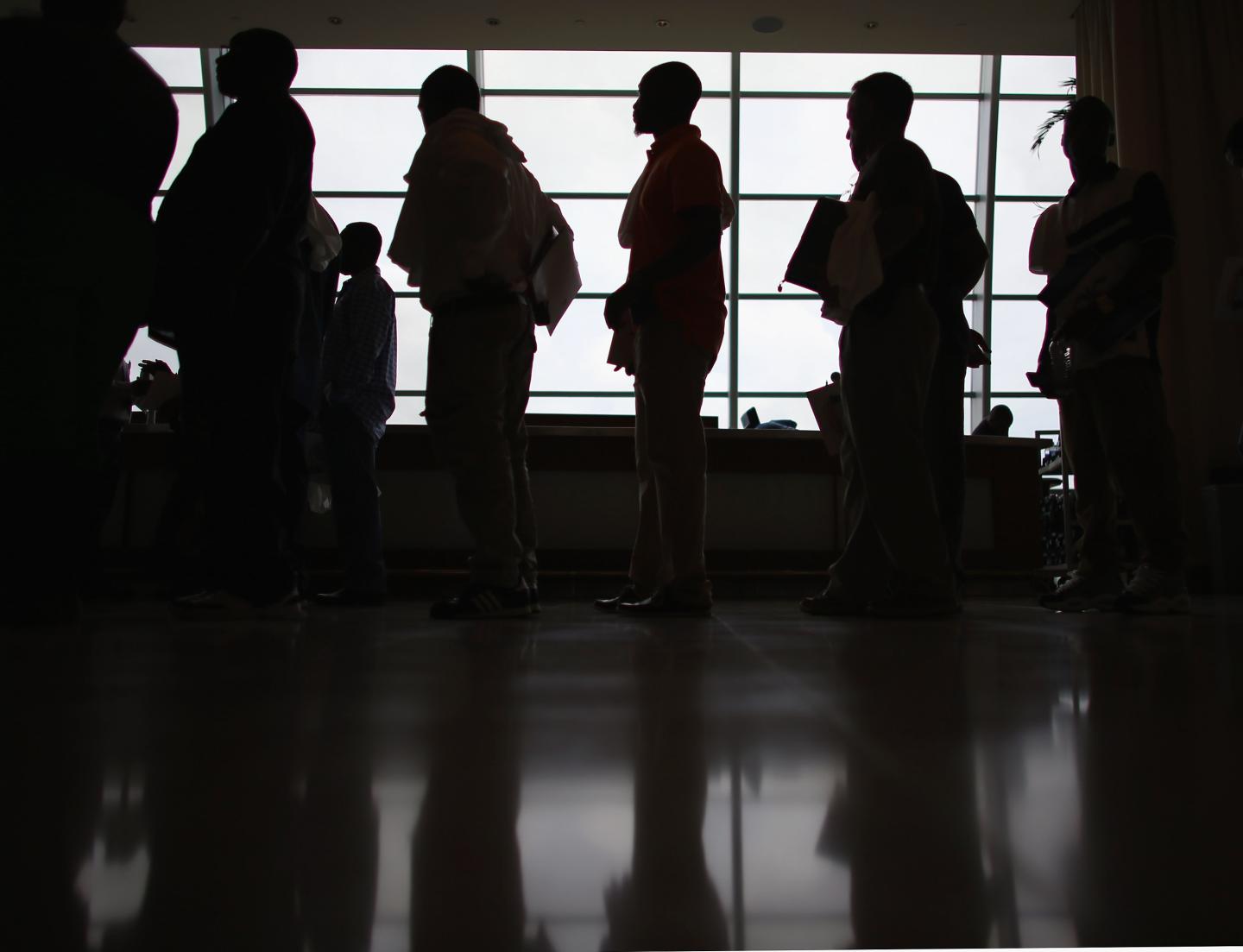
Job Fair Held At Sun Life Stadium In Miami
MIAMI, FL - MAY 02: People looking for work stand in line to apply for a job during a job fair at the Miami Dolphins Sun Life stadium on May 2, 2013 in Miami, Florida. If voters approve a hotel tax hike to fund stadium renovations the jobs would be available. If not, the Dolphins management is indicating they would not be able to renovate the stadium nor create the jobs. (Photo by Joe Raedle/Getty Images)Photograph by Joe Raedle — Getty Images
Add Fortune on Google for similar content.

Like many entrepreneurs shaking up the world of work, Zipcar co-founder and former CEO Robin Chase talks enthusiastically about the myriad virtues of the “collaborative economy.” Unlike most, she also worries about those who will invariably struggle to make ends meet as things change.

“I have these two hats that I put on,” Chase says of her simultaneous embrace of technological change and concerns about what it may bring.

At the Global Drucker Forum in Vienna last week, Chase called for a “basic income” for all citizens—enough to provide a decent place to live, food on the table, and healthcare.

It is an idea with a long and rich history that defies easy partisan pigeonholing. Chase touched on the need for such a “long-term answer” in her book Peers Inc, and she is now becoming increasingly outspoken about offering such a safety net in scores of speaking appearances across the globe.


Chase is not at all a pessimist. She celebrates the way that companies like Apple (AAPL) and Google (GOOG) have produced tremendous value by opening up their platforms to legions of independent app developers. And she is excited about the opportunities being generated by platform creators such as Airbnb, which have turned excess capacity—in its case, people’s spare bedrooms—into peer-to-peer networks that are now competing with traditional corporate giants.

Chase is confident that these new business structures are rapidly accelerating and, before long, capitalism as we’ve known it will be totally remade. “I see what is happening and the pace of what is happening,” she says.

In all of this, Chase finds amazing benefits. With each new platform on which people can share and collaborate, society wastes a lot less stuff. Consumers are treated to far more choices. And workers participating in this new ecosystem have a chance to enjoy more freedom, fulfillment, and flexibility than they do in many old-line occupations.

Yet Chase doesn’t leave it there. She readily acknowledges—indeed emphasizes—that many of those displaced from their current jobs by this oncoming wave will have great difficulty in landing new employment. Others will earn far less money than they used to.

“Hordes of people will be left behind,” she says.

Technology, meanwhile, is exacerbating both the pluses and minuses. For example, in the sector Chase knows best—transportation—she believes that self-driving cars will be fairly commonplace within a decade or so. (She is also the co-founder and chairman of Veniam, which builds and operates wireless networks of vehicles and of other moving things.)

Combine that with a system of shared vehicles, which are constantly on the move, and one set of results is bound to be wonderful: fewer accidents, unclogged roads, cities freed up of parking problems, and declining air pollution.

But another is troubling. There will be little or no demand for truck drivers, bus drivers, and cabbies (or Uber drivers, for that matter). Car manufacturing, Chase says, will plummet over time. Millions of people will be cast out of their jobs.

One school of thought is that most of them will get new jobs, some of which we can’t even imagine today. “People say that one door closes and another opens,” Chase notes.

But to her, that’s largely a “pipe dream.” Many will not easily find employment. And, as much as Chase touts the power of platforms, she says it’s ridiculous to assume that workers with limited skills will, in the face of such large-scale automation, be able to quickly uncover wholly new ways to earn a living by selling crafts on Etsy or plugging in to some other such outlet.

In this regard, Chase is an outlier—though not unique. Tech executives don’t tend to spend a lot of time discussing what some call the “precariat”—a class of workers whose lives are marked by incessant instability and insecurity. When the entrepreneur and investor Marc Andreessen was asked recently at the Fortune Global Forum about whether technology is exacerbating income inequality, he snapped: “Did I stumble into an International Workers Party conference?”

I must confess that when I heard Chase speak from the stage in Vienna, I felt like I was listening to Walter Reuther, the head of the United Auto Workers, making a plea for a “guaranteed annual wage” in 1955.

Chase, whose position has been influenced by the research and advocacy of Scott Santens, suggests that $1,000 a month might be an appropriate amount for a basic income. But she concedes that in some locations, significantly more would be required for people to be able to obtain even the bare essentials.

The bigger issue is how such a policy might be paid for, and whether the public has the stomach for it. Chase is encouraged by what’s happening with basic-income proposals in Finland, Switzerland, and a few other spots. But in many places—the United States, among them—it’s virtually impossible to see how something like this could move forward in the current political climate. In any event, the U.S. tax system would likely need a total overhaul to accommodate the kind of cash assistance that Chase supports.

At this stage, Chase hopes that, if nothing else, American cities may be able to run some basic-income pilots, giving the nation as a whole a chance to engage in a serious conversation about the concept. “Let’s talk about this now,” she says.

With the collaborative economy, Chase is convinced—and quite convincing—that “we can have way more happiness. People can follow their passions.” She’d simply like them to be able to afford an occasional sandwich, too.


Rick Wartzman is the executive director of the Drucker Institute at Claremont Graduate University. The author or editor of five books, he is currently writing a narrative history of how the social contract between employer and employee in America has changed since the end of World War II.

About the Authors
By Rick Wartzman
See full bioRight Arrow Button Icon
By Bethany Cianciolo
See full bioRight Arrow Button Icon
Add Fortune on Google for similar content.

Latest in Commentary

Finance
Lorem ipsum dolor sit amet, consectetur adipiscing elit, sed do eiusmod tempor incididunt ut labore et dolore magna aliqua. Ut enim ad minim veniam
By Fortune Editors
October 20, 2025
Finance
Lorem ipsum dolor sit amet, consectetur adipiscing elit, sed do eiusmod tempor incididunt ut labore et dolore magna aliqua. Ut enim ad minim veniam
By Fortune Editors
October 20, 2025
Finance
Lorem ipsum dolor sit amet, consectetur adipiscing elit, sed do eiusmod tempor incididunt ut labore et dolore magna aliqua. Ut enim ad minim veniam
By Fortune Editors
October 20, 2025
Finance
Lorem ipsum dolor sit amet, consectetur adipiscing elit, sed do eiusmod tempor incididunt ut labore et dolore magna aliqua. Ut enim ad minim veniam
By Fortune Editors
October 20, 2025
Finance
Lorem ipsum dolor sit amet, consectetur adipiscing elit, sed do eiusmod tempor incididunt ut labore et dolore magna aliqua. Ut enim ad minim veniam
By Fortune Editors
October 20, 2025
Finance
Lorem ipsum dolor sit amet, consectetur adipiscing elit, sed do eiusmod tempor incididunt ut labore et dolore magna aliqua. Ut enim ad minim veniam
By Fortune Editors
October 20, 2025

Most Popular

Finance
Lorem ipsum dolor sit amet, consectetur adipiscing elit, sed do eiusmod tempor incididunt ut labore et dolore magna aliqua. Ut enim ad minim veniam
By Fortune Editors
October 20, 2025
Finance
Lorem ipsum dolor sit amet, consectetur adipiscing elit, sed do eiusmod tempor incididunt ut labore et dolore magna aliqua. Ut enim ad minim veniam
By Fortune Editors
October 20, 2025
Finance
Lorem ipsum dolor sit amet, consectetur adipiscing elit, sed do eiusmod tempor incididunt ut labore et dolore magna aliqua. Ut enim ad minim veniam
By Fortune Editors
October 20, 2025
Finance
Lorem ipsum dolor sit amet, consectetur adipiscing elit, sed do eiusmod tempor incididunt ut labore et dolore magna aliqua. Ut enim ad minim veniam
By Fortune Editors
October 20, 2025
Finance
Lorem ipsum dolor sit amet, consectetur adipiscing elit, sed do eiusmod tempor incididunt ut labore et dolore magna aliqua. Ut enim ad minim veniam
By Fortune Editors
October 20, 2025
Finance
Lorem ipsum dolor sit amet, consectetur adipiscing elit, sed do eiusmod tempor incididunt ut labore et dolore magna aliqua. Ut enim ad minim veniam
By Fortune Editors
October 20, 2025
Fortune Secondary Logo
Rankings
  • 100 Best Companies
  • Fortune 500
  • Global 500
  • Fortune 500 Europe
  • Most Powerful Women
  • World's Most Admired Companies
  • See All Rankings
  • Lists Calendar
Sections
  • Finance
  • Fortune Crypto
  • Features
  • Leadership
  • Health
  • Commentary
  • Success
  • Retail
  • Mpw
  • Tech
  • Lifestyle
  • CEO Initiative
  • Asia
  • Politics
  • Conferences
  • Europe
  • Newsletters
  • Personal Finance
  • Environment
  • Magazine
  • Education
Customer Support
  • Frequently Asked Questions
  • Customer Service Portal
  • Privacy Policy
  • Terms Of Use
  • Single Issues For Purchase
  • International Print
Commercial Services
  • Advertising
  • Fortune Brand Studio
  • Fortune Analytics
  • Fortune Conferences
  • Business Development
  • Group Subscriptions
About Us
  • About Us
  • Press Center
  • Work At Fortune
  • Terms And Conditions
  • Site Map
  • About Us
  • Press Center
  • Work At Fortune
  • Terms And Conditions
  • Site Map
  • Facebook icon
  • Twitter icon
  • LinkedIn icon
  • Instagram icon
  • Pinterest icon

Latest in Commentary

steve
Commentary250 Years of Innovation
Steve Case: America was built by entrepreneurs. Here’s how we keep that edge for the next 250 years
By Steve CaseJune 24, 2026
5 hours ago
t
CommentaryWhite House
Trump mistakes the bully pulpit for bullying leadership — history’s villains were never heroes
By Jeffrey Sonnenfeld and Steven TianJune 24, 2026
6 hours ago
mg
CommentaryHealth
The ‘tech neck’ time bomb: why 43 million young Americans could cripple U.S. health care within a generation
By Michael GerlingJune 24, 2026
6 hours ago
sb
Commentaryclimate change
The climate policy triangle: why leaders can no longer choose between growth, security and sustainability
By Sebastian BuckupJune 23, 2026
20 hours ago
brett
CommentaryManagement
Middle managers aren’t going extinct—they’re evolving into something more powerful
By Brett HurtJune 23, 2026
1 day ago
ravi
CommentaryAI agents
Yale School of Management: surveillance pricing is just the beginning. AI agents will be the real test of corporate trust
By Ravi Dhar and Jon IwataJune 23, 2026
1 day ago

Most Popular

After forcing workers back to the office, Goldman Sachs and JPMorgan Chase are now letting their staff work remotely—but only for the World Cup
Success
After forcing workers back to the office, Goldman Sachs and JPMorgan Chase are now letting their staff work remotely—but only for the World Cup
By Orianna Rosa RoyleJune 23, 2026
1 day ago
The Pentagon said Iran War costs $29 billion, but the real cost is closer to $200 billion—and counting
Economy
The Pentagon said Iran War costs $29 billion, but the real cost is closer to $200 billion—and counting
By Jacqueline MunisJune 24, 2026
11 hours ago
Current price of oil as of June 23, 2026
Personal Finance
Current price of oil as of June 23, 2026
By Joseph HostetlerJune 23, 2026
1 day ago
Markets tumble worldwide as Fed resets expectations: $400 billion wiped off SpaceX stock
Banking
Markets tumble worldwide as Fed resets expectations: $400 billion wiped off SpaceX stock
By Jim EdwardsJune 23, 2026
1 day ago
Current price of gold as of June 23, 2026
Personal Finance
Current price of gold as of June 23, 2026
By Danny BakstJune 23, 2026
1 day ago
Texas and Charlotte used to build huge McMansions—now they're copying the California design tricks they once mocked
Real Estate
Texas and Charlotte used to build huge McMansions—now they're copying the California design tricks they once mocked
By Sydney LakeJune 22, 2026
2 days ago

© 2026 Fortune Media IP Limited. All Rights Reserved. Use of this site constitutes acceptance of our Terms of Use and Privacy Policy | CA Notice at Collection and Privacy Notice | Do Not Sell/Share My Personal Information
FORTUNE is a trademark of Fortune Media IP Limited, registered in the U.S. and other countries. FORTUNE may receive compensation for some links to products and services on this website. Offers may be subject to change without notice.