• Home
  • Latest
  • Fortune 500
  • Finance
  • Tech
  • Leadership
  • Lifestyle
  • Rankings
  • Multimedia

Trendingnow

1

After forcing workers back to the office, Goldman Sachs and JPMorgan Chase are now letting their staff work remotely—but only for the World Cup

2

The Pentagon said Iran War costs $29 billion, but the real cost is closer to $200 billion—and counting

3

Markets tumble worldwide as Fed resets expectations: $400 billion wiped off SpaceX stock

1

After forcing workers back to the office, Goldman Sachs and JPMorgan Chase are now letting their staff work remotely—but only for the World Cup

2

The Pentagon said Iran War costs $29 billion, but the real cost is closer to $200 billion—and counting

3

Markets tumble worldwide as Fed resets expectations: $400 billion wiped off SpaceX stock
CommentaryTurkey

What Turkey’s election surprise says about the troubled country

By
Steven A. Cook
Steven A. Cook
Down Arrow Button Icon
By
Steven A. Cook
Steven A. Cook
Down Arrow Button Icon
November 2, 2015, 3:55 PM ET
TURKEY-POLITICS-VOTE
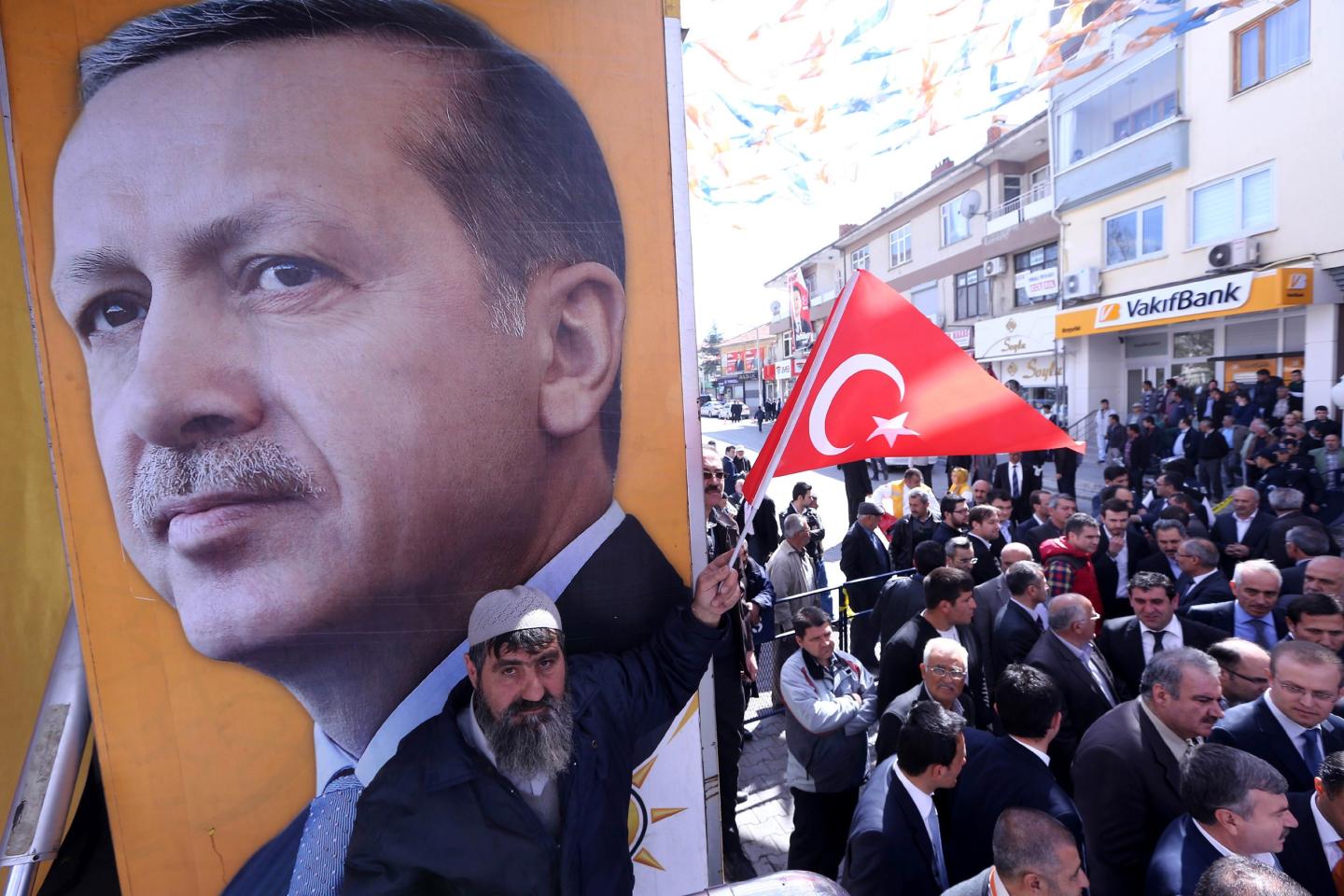
A man waves a Turkish flag in front of a portrait of Turkish Prime Minister Recep Tayyip Erdogan during a campaign meeting of the Justice and Development Party in the Beysehir district of Konya province in central Turkey on March 26, 2014. AFP PHOTO/ADEM ALTAN (Photo credit should read ADEM ALTAN/AFP/Getty Images)Photograph by Adem Altan — AFP/Getty Images
Add Fortune on Google for similar content.

Just five months after failing to secure a parliamentary majority for the first time since 2002, Turkey’s Justice and Development Party (AKP) came roaring back on Sunday with 49.4% of the popular vote and a renewed mandate to govern without any coalition partners. Going into the elections, all the polling indicated that the AKP would garner about 40% of the vote, which would force it to seek coalition partners to form a government. This was precisely the outcome of the June elections, after which the inability of the AKP and Turkey’s other main parties to agree on a government produced a “hung parliament” and Sunday’s re-run elections. There are already questions about the AKP’s turnaround, improving almost ten percentage points in an environment where the country is once again at war with the terrorists of the Kurdistan Workers’ Party (PKK), where the self-declared Islamic State has perpetrated horrific bombings taking the lives of 134 Turks since July, and where the economy has been on the slide. Opponents of the AKP and critics of President Recep Tayyip Erdogan, who sabotaged coalition talks in June because he did not like the election results, suspect the outcome was manipulated. Erdogan and AKP party officials insist that voters opted for stability during increasingly uncertain times. Regardless, neither Erdogan nor the AKP have answers for the multiple crises buffeting the country.

The most obvious and pressing problem for the new Turkish government is security. For the better part of the last 18 months, Turkey avoided direct confrontation with the Islamic State, fearing retaliation on the streets of Turkish cities. Ankara was also wary of the American strategy to fight the group in Iraq first without addressing what Turkish officials have long believed to be the root cause of the Islamic State problem—the regime of Syria’s Bashar al-Assad, which has created the kind of chaos in which the Islamic State has thrived. The Turks also determined that Kurdish nationalism and the consonant political gains that Syrian, Iraqi, and Turkish Kurds have made was a greater threat to their sovereignty than the Islamic State’s nihilism.

Despite this caution, Turkey now confronts simultaneous conflicts with the PKK and the Islamic State. After a year of intensive American diplomacy, Ankara’s decision last July to provide the United States and coalition forces access to air bases close to the Islamic State’s territory has made Turkey a target. The threat is considerable given the fact that almost five years after the conflict in neighboring Syria began, the Islamic State (and other extremist groups) has built networks and infrastructure along the Turkish-Syrian border. Consequently, there are likely to be more Islamic State-related attacks in Turkish cities. As for the PKK, since 1984 Turkish security forces have been unable to bring the conflict with that group to an end. There is no reason to believe they will be successful now. Barring a return to the on-again, off-again negotiations that the Turkish government and the PKK launched in 2013, the violence is likely to continue.

Despite continuing questions about security, Turkey’s markets soared and the lira reversed its slide against the dollar the morning after AKP’s resounding victory. Investors had grown accustomed to the political stability that Erdogan and successive AKP governments have provided over the last 13 years. The optimism of the markets may be short lived, however. Other than the continuity and stability that investors seem to be betting on in the short run, Turkey’s economic challenges remain exactly what they were the day before Turks cast their ballots.

Turkey’s economy is expected to grow 2.8% in 2015 and barely improve in the following five years. Unemployment has consistently hovered around 10%, though it has been as high as 14% in 2009 and as low as 7.8% in 2012. Youth unemployment is double the national average. Yet the biggest question coming out of the election relates to economic policymaking and management. Will the former deputy prime minister, Ali Babacan, who was unable to run in the June elections due to an AKP by-law (since relaxed) that prevents him from sitting in parliament for three consecutive terms, return to his former position to anchor the economy? Babacan in particular has a sterling reputation and his reappointment would certainly boost investor confidence.

The other major economic issue is the independence of Turkey’s Central Bank. Erdogan has lashed out whenever the Bank’s officials have broached the idea of raising interest rates. From his perspective, low interest rates are an important component of the AKP’s electoral success because cheap money drives growth, which makes people wealthier, and, to the extent that Turks vote with their wallets, Erdogan and the AKP benefit. This in turn advances the president’s effort to transform Turkish society. Central Bank officials have resisted Erdogan’s pressure when they were forced to raise interbank rates in January 2014, though they seemed to heed his demands that those rates come down quickly. It seems entirely possible that the AKP and Erdogan will use the mandate Turks gave them on Sunday to chip away at the Central Bank’s independence.

Of broader concern are Turkey’s deep divisions. Erdogan and the AKP originally came to power on a broad coalition of Turks from different sectors of society. After the 2007 elections in which the party won 47% of the vote when pious Turks, Kurds, liberals, big businesses, and average Turks voted for the AKP in what was then unprecedented numbers, Erdogan sought electoral success through confrontation and polarization. His success has produced an environment in which there are two mutually incomprehensible societies living side by side. Erdogan and the AKP have governed those who support them and sought to intimidate the others. Turks have not experienced this kind of tension and mistrust since the violence that broke out between leftist and rightist political groups in 1976 and that lasted for four years, taking the lives of anywhere between 4,500 and 5,000 Turks.

There is little reason to believe that Sunday’s elections have put an end to Turkey’s troubles. The AKP seems intent on pressing its political advantage and imposing its worldview on the country despite the fact that approximately half the population disagrees with that vision. Security remains a significant and ongoing problem, which will continue to weigh on international investors. In 2002, the AKP was elected to resolve a similar set of problems. The irony of Turkey’s present situation is that Erdogan and the AKP exacerbated these very problems in order to reestablish their dominant position in the political arena. Despite outward signs of a robust and healthy political system, Sunday’s election disguises a troubled country.

Steven A. Cook is the Eni Enrico Mattei Senior Fellow for Middle East and Africa Studies at the Council on Foreign Relations. Oxford University Press will publish his upcoming book, Thwarted Dreams: Violence and Authoritarianism in the New Middle East, in 2016.

About the Author
By Steven A. Cook
See full bioRight Arrow Button Icon
Add Fortune on Google for similar content.

Latest in Commentary

Finance
Lorem ipsum dolor sit amet, consectetur adipiscing elit, sed do eiusmod tempor incididunt ut labore et dolore magna aliqua. Ut enim ad minim veniam
By Fortune Editors
October 20, 2025
Finance
Lorem ipsum dolor sit amet, consectetur adipiscing elit, sed do eiusmod tempor incididunt ut labore et dolore magna aliqua. Ut enim ad minim veniam
By Fortune Editors
October 20, 2025
Finance
Lorem ipsum dolor sit amet, consectetur adipiscing elit, sed do eiusmod tempor incididunt ut labore et dolore magna aliqua. Ut enim ad minim veniam
By Fortune Editors
October 20, 2025
Finance
Lorem ipsum dolor sit amet, consectetur adipiscing elit, sed do eiusmod tempor incididunt ut labore et dolore magna aliqua. Ut enim ad minim veniam
By Fortune Editors
October 20, 2025
Finance
Lorem ipsum dolor sit amet, consectetur adipiscing elit, sed do eiusmod tempor incididunt ut labore et dolore magna aliqua. Ut enim ad minim veniam
By Fortune Editors
October 20, 2025
Finance
Lorem ipsum dolor sit amet, consectetur adipiscing elit, sed do eiusmod tempor incididunt ut labore et dolore magna aliqua. Ut enim ad minim veniam
By Fortune Editors
October 20, 2025

Most Popular

Finance
Lorem ipsum dolor sit amet, consectetur adipiscing elit, sed do eiusmod tempor incididunt ut labore et dolore magna aliqua. Ut enim ad minim veniam
By Fortune Editors
October 20, 2025
Finance
Lorem ipsum dolor sit amet, consectetur adipiscing elit, sed do eiusmod tempor incididunt ut labore et dolore magna aliqua. Ut enim ad minim veniam
By Fortune Editors
October 20, 2025
Finance
Lorem ipsum dolor sit amet, consectetur adipiscing elit, sed do eiusmod tempor incididunt ut labore et dolore magna aliqua. Ut enim ad minim veniam
By Fortune Editors
October 20, 2025
Finance
Lorem ipsum dolor sit amet, consectetur adipiscing elit, sed do eiusmod tempor incididunt ut labore et dolore magna aliqua. Ut enim ad minim veniam
By Fortune Editors
October 20, 2025
Finance
Lorem ipsum dolor sit amet, consectetur adipiscing elit, sed do eiusmod tempor incididunt ut labore et dolore magna aliqua. Ut enim ad minim veniam
By Fortune Editors
October 20, 2025
Finance
Lorem ipsum dolor sit amet, consectetur adipiscing elit, sed do eiusmod tempor incididunt ut labore et dolore magna aliqua. Ut enim ad minim veniam
By Fortune Editors
October 20, 2025
Fortune Secondary Logo
Rankings
  • 100 Best Companies
  • Fortune 500
  • Global 500
  • Fortune 500 Europe
  • Most Powerful Women
  • World's Most Admired Companies
  • See All Rankings
  • Lists Calendar
Sections
  • Finance
  • Fortune Crypto
  • Features
  • Leadership
  • Health
  • Commentary
  • Success
  • Retail
  • Mpw
  • Tech
  • Lifestyle
  • CEO Initiative
  • Asia
  • Politics
  • Conferences
  • Europe
  • Newsletters
  • Personal Finance
  • Environment
  • Magazine
  • Education
Customer Support
  • Frequently Asked Questions
  • Customer Service Portal
  • Privacy Policy
  • Terms Of Use
  • Single Issues For Purchase
  • International Print
Commercial Services
  • Advertising
  • Fortune Brand Studio
  • Fortune Analytics
  • Fortune Conferences
  • Business Development
  • Group Subscriptions
About Us
  • About Us
  • Press Center
  • Work At Fortune
  • Terms And Conditions
  • Site Map
  • About Us
  • Press Center
  • Work At Fortune
  • Terms And Conditions
  • Site Map
  • Facebook icon
  • Twitter icon
  • LinkedIn icon
  • Instagram icon
  • Pinterest icon

Latest in Commentary

steve
Commentary250 Years of Innovation
Steve Case: America was built by entrepreneurs. Here’s how we keep that edge for the next 250 years
By Steve CaseJune 24, 2026
3 hours ago
t
CommentaryWhite House
Trump mistakes the bully pulpit for bullying leadership — history’s villains were never heroes
By Jeffrey Sonnenfeld and Steven TianJune 24, 2026
3 hours ago
mg
CommentaryHealth
The ‘tech neck’ time bomb: why 43 million young Americans could cripple U.S. health care within a generation
By Michael GerlingJune 24, 2026
4 hours ago
sb
Commentaryclimate change
The climate policy triangle: why leaders can no longer choose between growth, security and sustainability
By Sebastian BuckupJune 23, 2026
18 hours ago
brett
CommentaryManagement
Middle managers aren’t going extinct—they’re evolving into something more powerful
By Brett HurtJune 23, 2026
1 day ago
ravi
CommentaryAI agents
Yale School of Management: surveillance pricing is just the beginning. AI agents will be the real test of corporate trust
By Ravi Dhar and Jon IwataJune 23, 2026
1 day ago

Most Popular

After forcing workers back to the office, Goldman Sachs and JPMorgan Chase are now letting their staff work remotely—but only for the World Cup
Success
After forcing workers back to the office, Goldman Sachs and JPMorgan Chase are now letting their staff work remotely—but only for the World Cup
By Orianna Rosa RoyleJune 23, 2026
1 day ago
The Pentagon said Iran War costs $29 billion, but the real cost is closer to $200 billion—and counting
Economy
The Pentagon said Iran War costs $29 billion, but the real cost is closer to $200 billion—and counting
By Jacqueline MunisJune 24, 2026
8 hours ago
Markets tumble worldwide as Fed resets expectations: $400 billion wiped off SpaceX stock
Banking
Markets tumble worldwide as Fed resets expectations: $400 billion wiped off SpaceX stock
By Jim EdwardsJune 23, 2026
1 day ago
Current price of oil as of June 23, 2026
Personal Finance
Current price of oil as of June 23, 2026
By Joseph HostetlerJune 23, 2026
1 day ago
Texas and Charlotte used to build huge McMansions—now they're copying the California design tricks they once mocked
Real Estate
Texas and Charlotte used to build huge McMansions—now they're copying the California design tricks they once mocked
By Sydney LakeJune 22, 2026
2 days ago
Current price of gold as of June 23, 2026
Personal Finance
Current price of gold as of June 23, 2026
By Danny BakstJune 23, 2026
1 day ago

© 2026 Fortune Media IP Limited. All Rights Reserved. Use of this site constitutes acceptance of our Terms of Use and Privacy Policy | CA Notice at Collection and Privacy Notice | Do Not Sell/Share My Personal Information
FORTUNE is a trademark of Fortune Media IP Limited, registered in the U.S. and other countries. FORTUNE may receive compensation for some links to products and services on this website. Offers may be subject to change without notice.