• Home
  • Latest
  • Fortune 500
  • Finance
  • Tech
  • Leadership
  • Lifestyle
  • Rankings
  • Multimedia
CommentaryU.S. oil

Why lifting America’s ban on oil exports won’t matter

By
Fred Beach
Fred Beach
Down Arrow Button Icon
By
Fred Beach
Fred Beach
Down Arrow Button Icon
October 3, 2015, 11:00 AM ET
Water Wranglers Gush With New Oilfield Work
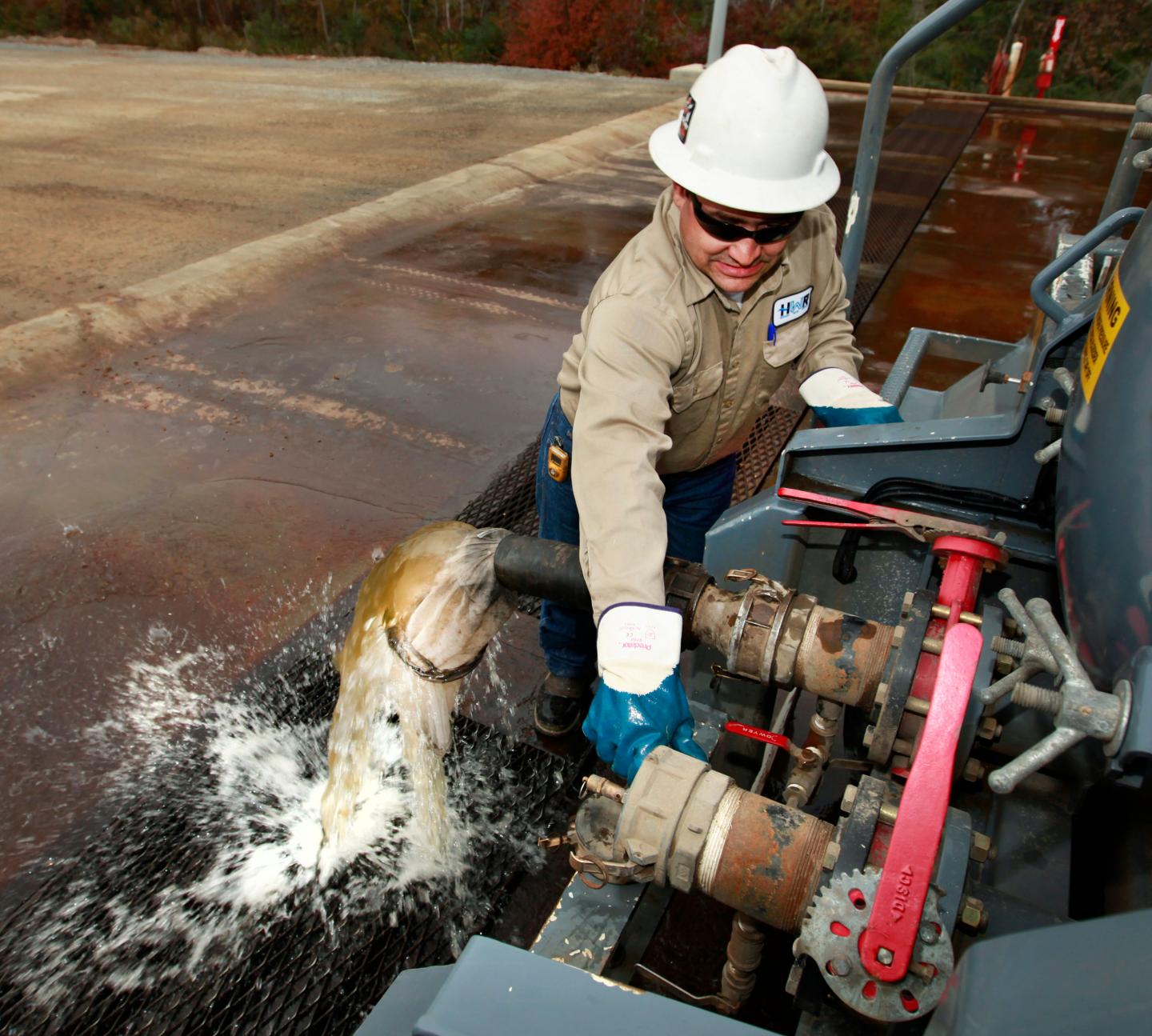
Anthony Schillings opens a valve to unload water from his truck into a Heckmann Water Resources (HWR) treatment plant that separates oil, sediment and water mixed during the hydraulic fracturing process, near Carthage, Texas, U.S., on Friday, Dec. 9, 2011. Water-service companies help manage the chemical-tainted water that's a byproduct of oil and natural gas drilling and production; cleaning and recycling it for re-use, and hauling it away for disposal. Photographer: Jason Janik/Bloomberg via Getty ImagesJason Janik/Bloomberg—Getty Images

Now that the U.S. will lift international sanctions on the export of Iranian petroleum, it seems ironic that America still maintains its own self-imposed, decades-old restrictions on the export of domestically produced petroleum.

That could change soon, depending how Congress votes on a bill that aims to lift the restrictions that have been in place for more than 40 years. The House recently voted to lift the 40-year-old ban on oil exports. The measure now shifts to the Senate, where it faces steep hurdles to passage. Producers and other supporters argue that lifting the ban on oil exports would help streamline U.S. petroleum production and stimulate America’s economy, while consumer groups say it would raise gas prices.

Whatever the outcome, it may not matter much in the long run.

The U.S. hasn’t been a significant exporter of petroleum since the late 1940s, and, aside from a brief interruption more than 20 years ago, its consumption has continued to grow. In other words, America consumes more oil than it can produce.

U.S. producers and refiners can argue about who stands to gain or lose from a lifting of decades-old restrictions on oil exports, but as long as the U.S. remains a net importer of petroleum, an unfettered global market will produce only niche areas where export of U.S. crude makes any economic sense.

Let’s take a look back. Since 1920, well before Congress passed the Energy Policy and Conservation Act, intended to reduce oil exports and increase national security, the U.S. has only exported an average of about 5 million barrels per month – roughly 2% of current domestic production, a review of the Energy Information Administration (EIA) data shows. More specifically, the data show that for the 15 years preceding the 1973 and 1975 legislation, over U.S. crude oil exports were practically non-existent.

This changed in the late 1970s. From 1977 to 1980, U.S. exports grew rapidly, and the total volume exported during the ensuing 20 years was higher than any equivalent period in history. From the macro perspective, it would appear that policies aimed at reducing oil exports had the exact opposite of the intended effect. The years following passage of the EPCA were actually promising with respect to reducing petroleum imports. From 1978 to 1983, US petroleum consumption dropped from 18 million barrels per day (MMBD) to slightly below 16 MMBD, and imports dropped from 8 MMBD to 4 MMBD. If ever there was a time to claim policy success, this was it.

Unfortunately, the principal cause for these interrelated declines was the 1981 to 1982 economic recession, which many believe was brought on by a steep hike in global oil prices caused by the 1979 Iranian revolution. That bit of irony aside, the decline in consumption and imports was short lived – both quickly resumed their seemingly inexorable climb through 2005. So, for another two decades, the EPCA clearly was not having its desired effect.

The efficacy of the EPCA as an agent for enhancing US energy security has been no better. The EIA data show that following the perturbation caused by the recession of the early 1980s, petroleum imports again grew rapidly, from about 30% of U.S. consumption in 1983 to 60% by 2005.

There are many ways to measure energy security, but it’s difficult to make a case that we became more energy independent while doubling the percentage of imported oil over a 20-year span.

During the first 30 years following implementation of the EPCA, U.S. oil exports and domestic consumption of oil actually increased, while America’s homegrown production of oil and and overall security declined (through higher imports).

It would be a bit over the top to suggest that the data indicate the EPCA has not only been a gross failure but arguably exacerbated the problem it was meant to solve. But this would be giving the policy far more credit than it deserves.

A fairer assessment of the data indicates that the policy has had no real impact at all. From that standpoint, why not lift the ban? It hasn’t made much difference anyway.
Fred Beach is Assistant Director for Energy Policy at the Energy Institute, The University of Texas at Austin. He also teaches in both the McCombs School of Business and the Cockrell School of Engineering.


About the Author
By Fred Beach
See full bioRight Arrow Button Icon

Latest in Commentary

Finance
Lorem ipsum dolor sit amet, consectetur adipiscing elit, sed do eiusmod tempor incididunt ut labore et dolore magna aliqua. Ut enim ad minim veniam
By Fortune Editors
October 20, 2025
Finance
Lorem ipsum dolor sit amet, consectetur adipiscing elit, sed do eiusmod tempor incididunt ut labore et dolore magna aliqua. Ut enim ad minim veniam
By Fortune Editors
October 20, 2025
Finance
Lorem ipsum dolor sit amet, consectetur adipiscing elit, sed do eiusmod tempor incididunt ut labore et dolore magna aliqua. Ut enim ad minim veniam
By Fortune Editors
October 20, 2025
Finance
Lorem ipsum dolor sit amet, consectetur adipiscing elit, sed do eiusmod tempor incididunt ut labore et dolore magna aliqua. Ut enim ad minim veniam
By Fortune Editors
October 20, 2025
Finance
Lorem ipsum dolor sit amet, consectetur adipiscing elit, sed do eiusmod tempor incididunt ut labore et dolore magna aliqua. Ut enim ad minim veniam
By Fortune Editors
October 20, 2025
Finance
Lorem ipsum dolor sit amet, consectetur adipiscing elit, sed do eiusmod tempor incididunt ut labore et dolore magna aliqua. Ut enim ad minim veniam
By Fortune Editors
October 20, 2025

Most Popular

Finance
Lorem ipsum dolor sit amet, consectetur adipiscing elit, sed do eiusmod tempor incididunt ut labore et dolore magna aliqua. Ut enim ad minim veniam
By Fortune Editors
October 20, 2025
Finance
Lorem ipsum dolor sit amet, consectetur adipiscing elit, sed do eiusmod tempor incididunt ut labore et dolore magna aliqua. Ut enim ad minim veniam
By Fortune Editors
October 20, 2025
Finance
Lorem ipsum dolor sit amet, consectetur adipiscing elit, sed do eiusmod tempor incididunt ut labore et dolore magna aliqua. Ut enim ad minim veniam
By Fortune Editors
October 20, 2025
Finance
Lorem ipsum dolor sit amet, consectetur adipiscing elit, sed do eiusmod tempor incididunt ut labore et dolore magna aliqua. Ut enim ad minim veniam
By Fortune Editors
October 20, 2025
Finance
Lorem ipsum dolor sit amet, consectetur adipiscing elit, sed do eiusmod tempor incididunt ut labore et dolore magna aliqua. Ut enim ad minim veniam
By Fortune Editors
October 20, 2025
Finance
Lorem ipsum dolor sit amet, consectetur adipiscing elit, sed do eiusmod tempor incididunt ut labore et dolore magna aliqua. Ut enim ad minim veniam
By Fortune Editors
October 20, 2025
Fortune Secondary Logo
Rankings
  • 100 Best Companies
  • Fortune 500
  • Global 500
  • Fortune 500 Europe
  • Most Powerful Women
  • World's Most Admired Companies
  • See All Rankings
  • Lists Calendar
Sections
  • Finance
  • Fortune Crypto
  • Features
  • Leadership
  • Health
  • Commentary
  • Success
  • Retail
  • Mpw
  • Tech
  • Lifestyle
  • CEO Initiative
  • Asia
  • Politics
  • Conferences
  • Europe
  • Newsletters
  • Personal Finance
  • Environment
  • Magazine
  • Education
Customer Support
  • Frequently Asked Questions
  • Customer Service Portal
  • Privacy Policy
  • Terms Of Use
  • Single Issues For Purchase
  • International Print
Commercial Services
  • Advertising
  • Fortune Brand Studio
  • Fortune Analytics
  • Fortune Conferences
  • Business Development
  • Group Subscriptions
About Us
  • About Us
  • Press Center
  • Work At Fortune
  • Terms And Conditions
  • Site Map
  • About Us
  • Press Center
  • Work At Fortune
  • Terms And Conditions
  • Site Map
  • Facebook icon
  • Twitter icon
  • LinkedIn icon
  • Instagram icon
  • Pinterest icon

Latest in Commentary

krishna
Commentaryregulation
The U.S. has 1,200 AI bills and no good test for any of them
By Jeffrey Sonnenfeld, Gary Marcus and Stephen HenriquesMay 15, 2026
27 minutes ago
gene
Commentarybatteries
I helped design the original Tesla battery. Here’s how America can lead the world again
By Gene BerdichevskyMay 14, 2026
21 hours ago
newman
Commentaryphilanthropy
Newman’s Own Foundation CEO on steward ownership: succession when you don’t want to sell
By Alex AmouyelMay 14, 2026
21 hours ago
abel
CommentaryBerkshire Hathaway
I’m a Berkshire Hathaway investor and I was wrong about Greg Abel. Here’s why he’s a better fit than Buffett right now
By Vitaliy KatsenelsonMay 14, 2026
23 hours ago
trump
Commentarynational debt
The deficit just grew by $955 billion in 7 months. It’s time for a constitutional fix to control the budget
By Steve H. Hanke and David M. WalkerMay 14, 2026
1 day ago
250
Commentary250 Years of Innovation
For 250 years, America didn’t just invent the future—it built it. That connection is breaking. Here’s how to restore it
By Eric Kutcher, Shubham Singhal, Olivia White and Scott BlackburnMay 13, 2026
2 days ago

Most Popular

Despite having a $165 million net worth, Scarlett Johansson says work-life balance doesn’t exist—and the first step to success is admitting that
Success
Despite having a $165 million net worth, Scarlett Johansson says work-life balance doesn’t exist—and the first step to success is admitting that
By Preston ForeMay 13, 2026
2 days ago
The Bezos family just donated $100 million to help achieve one of Mayor Zohran Mamdani’s top campaign promises
Politics
The Bezos family just donated $100 million to help achieve one of Mayor Zohran Mamdani’s top campaign promises
By Jake AngeloMay 12, 2026
3 days ago
Nearly 50,000 Lake Tahoe residents have to find a new power source after their energy source looks to redirect lines to data centers
Travel & Leisure
Nearly 50,000 Lake Tahoe residents have to find a new power source after their energy source looks to redirect lines to data centers
By Catherina GioinoMay 12, 2026
3 days ago
The airplane fuel shortage is a myth propagated by airlines who want to cancel unprofitable flights, says private jet CEO
Energy
The airplane fuel shortage is a myth propagated by airlines who want to cancel unprofitable flights, says private jet CEO
By Jim EdwardsMay 14, 2026
1 day ago
Steve Jobs had a 'beer test' he used for interviews at Apple—if he didn’t want to drink with you, you didn’t get the job
Success
Steve Jobs had a 'beer test' he used for interviews at Apple—if he didn’t want to drink with you, you didn’t get the job
By Orianna Rosa RoyleMay 14, 2026
1 day ago
Current price of oil as of May 14, 2026
Personal Finance
Current price of oil as of May 14, 2026
By Joseph HostetlerMay 14, 2026
21 hours ago

© 2026 Fortune Media IP Limited. All Rights Reserved. Use of this site constitutes acceptance of our Terms of Use and Privacy Policy | CA Notice at Collection and Privacy Notice | Do Not Sell/Share My Personal Information
FORTUNE is a trademark of Fortune Media IP Limited, registered in the U.S. and other countries. FORTUNE may receive compensation for some links to products and services on this website. Offers may be subject to change without notice.