• Home
  • Latest
  • Fortune 500
  • Finance
  • Tech
  • Leadership
  • Lifestyle
  • Rankings
  • Multimedia

Trendingnow

1

Now worth $200 million, Sarah Jessica Parker credits being ‘one of eight kids that struggled financially’ for her hunger, ambition, and work ethic

2

The Pentagon said Iran War costs $29 billion, but the real cost is closer to $200 billion—and counting

3

Amazon's record Prime Day masks a darker truth: Americans are spending more and getting less

1

Now worth $200 million, Sarah Jessica Parker credits being ‘one of eight kids that struggled financially’ for her hunger, ambition, and work ethic

2

The Pentagon said Iran War costs $29 billion, but the real cost is closer to $200 billion—and counting

3

Amazon's record Prime Day masks a darker truth: Americans are spending more and getting less
Finance

Emerging markets are leaving the U.S. in the dust on healthcare

By
Chris Matthews
Chris Matthews
Down Arrow Button Icon
By
Chris Matthews
Chris Matthews
Down Arrow Button Icon
September 29, 2015, 2:27 PM ET
Obamacare's 6-Million Target Hit As Exchange Sees Visits Surge
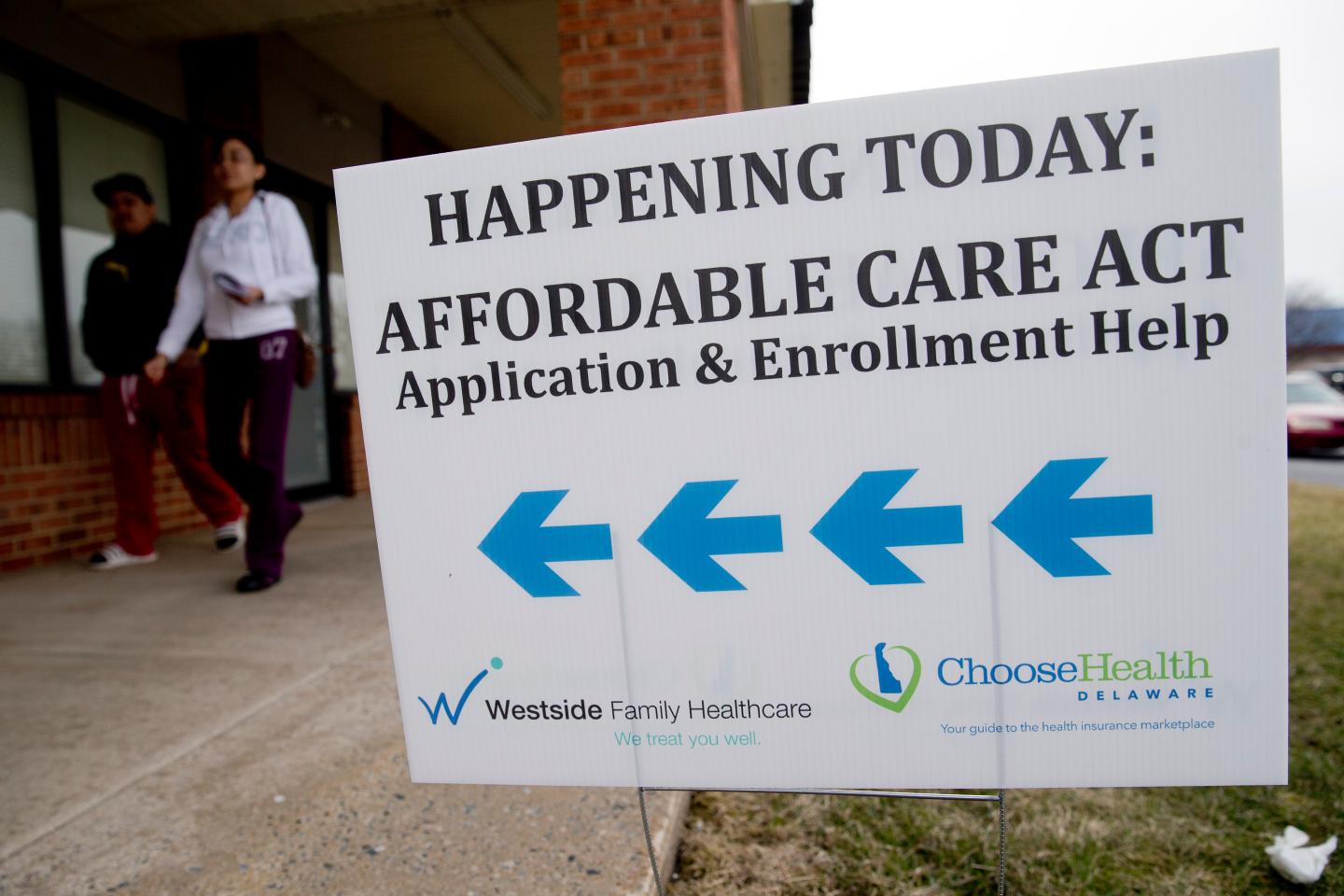
An Affordable Care Act application and enrollment help sign stands outside a Westside Family Healthcare center in Bear, Delaware, U.S., on Thursday, March 27, 2014. Six million Americans have signed up for private health plans under Obamacare, President Barack Obama said, a symbolic milestone for a government that has struggled to get the law off the ground. Photographer: Andrew Harrer/Bloomberg via Getty ImagesPhotograph by Andrew Harrer — Bloomberg via Getty Images
Add Fortune on Google for similar content.

Universal healthcare is having a moment. In The New York Times last Thursday, The Rockefeller Foundation placed a full-page ad declaring its support for 267 economists from 44 countries who have argued that universal health coverage policies are morally urgent and economically efficient. Among the most famous signatories of the declaration was former Treasury Secretary Larry Summers, who in an op-ed in the Financial Times wrote that providing universal health coverage could exceed the costs of doing so by a factor of 10.

Relatively poor countries are making huge strides in delivering basic healthcare to their citizens. Countries like Indonesia (with a GDP of roughly $3,500 per capita, vs. the United States’ $53,000) have launched ambitious plans to achieve universal coverage; in Indonesia’s case, by 2019. And middle-income countries, like Brazil, Saudi Arabia, and Costa Rica, have achieved universal health coverage for its citizens.

The U.S., meanwhile, looks like a laggard by comparison. Despite the successes that Obamacare has had in reducing the number of Americans who lack coverage, 10.4% of the U.S. population, or 33 million people, remain uninsured. Though increases in healthcare costs have slowed in recent years, the government projects that the United States will spend nearly 20% of GDP on healthcare by 2024.

This is a problem for U.S. businesses. According to Harvard Business School’s U.S. Competitiveness Project, which annually surveys thousands of Harvard Business School graduates, rising healthcare costs are one of the biggest obstacles to success for entrepreneurs in America. “Only health care costs stood out as a major disadvantage” for business owners in the U.S. in comparison to their economic rivals, according to the report. “This result presumably reflects the availability of government-sponsored health care in other countries. It supports the growing concern that America’s employer-based health care system has created ‘job lock’ for some aspiring entrepreneurs, who hesitate to leave employers that provide health care coverage.” Government-sponsored healthcare also spreads the costs of an aging society and fast-rising prices across the nation as a whole, rather than leaving business to foot the bill, as the employer-based system does.

Back in 2009, just before the United States became consumed with the debate over healthcare reform, Atul Gawande of the New Yorker published a piece on the concept of “path dependency” in healthcare. Believers in this idea say that small accidents of history make a big difference in how systems and institutions evolve. He writes:

In the battles between Betamax and VHS video recorders, Mac and P.C. computers, the QWERTY typewriter keyboard and alternative designs, [researchers] found that small, early events played a far more critical role in the market outcome than did the question of which design was better…

When a social policy entails major setup costs and large numbers of people who must devote time and resources to developing expertise, early choices become difficult to reverse. And if the choices involve what economists call “increasing returns”—where the benefits of a policy increase as more people organize their activities around it—those early decisions become self-reinforcing. America’s transportation system developed this way. The century-old decision to base it on gasoline-powered automobiles led to a gigantic manufacturing capacity, along with roads, repair facilities, and fuelling stations that now make it exceedingly difficult to do things differently.

Six years later, this line of thinking seems prophetic. Obamacare reforms have made some strides in getting Medicare and private insurers to move from paying for the amount of healthcare services rendered to paying based on the value delivered. But such cost controls have merely slowed things down, and they have done nothing to bridge the yawning gap in healthcare efficiency in the United States versus pretty much all of its economic rivals. Our bloated system is just about as bloated as before; it’s just that the government is subsidizing the coverage of more people within that system.

Meanwhile, policy proposals coming from Repulicans and Democrats alike show less appetite for radical reform than before the Obamacare debate even began. The Republican Party has learned from John McCain’s disastrous desire in 2008 to move the country away from employer-sponsored healthcare, and Republican presidential candidates are offering no details on how they would replace what we now have. The proposals coming from the Democratic side are in the form of price controls on prescription drugs. While this might help tamp down costs, it isn’t the kind of radical reform that might address America’s inefficient healthcare system.

All of this is happening in a environment in which rising economic powers, like Indonesia and Brazil, are recognizing, like Larry Summers does, the long-term benefits of setting up universal health coverage early in the development process. The U.S. may end up paying dearly for the accidents of history that produced its bloated and inefficient healthcare system for years to come.

About the Author
By Chris Matthews
See full bioRight Arrow Button Icon
Add Fortune on Google for similar content.

Latest in Finance

Finance
Lorem ipsum dolor sit amet, consectetur adipiscing elit, sed do eiusmod tempor incididunt ut labore et dolore magna aliqua. Ut enim ad minim veniam
By Fortune Editors
October 20, 2025
Finance
Lorem ipsum dolor sit amet, consectetur adipiscing elit, sed do eiusmod tempor incididunt ut labore et dolore magna aliqua. Ut enim ad minim veniam
By Fortune Editors
October 20, 2025
Finance
Lorem ipsum dolor sit amet, consectetur adipiscing elit, sed do eiusmod tempor incididunt ut labore et dolore magna aliqua. Ut enim ad minim veniam
By Fortune Editors
October 20, 2025
Finance
Lorem ipsum dolor sit amet, consectetur adipiscing elit, sed do eiusmod tempor incididunt ut labore et dolore magna aliqua. Ut enim ad minim veniam
By Fortune Editors
October 20, 2025
Finance
Lorem ipsum dolor sit amet, consectetur adipiscing elit, sed do eiusmod tempor incididunt ut labore et dolore magna aliqua. Ut enim ad minim veniam
By Fortune Editors
October 20, 2025
Finance
Lorem ipsum dolor sit amet, consectetur adipiscing elit, sed do eiusmod tempor incididunt ut labore et dolore magna aliqua. Ut enim ad minim veniam
By Fortune Editors
October 20, 2025

Most Popular

Finance
Lorem ipsum dolor sit amet, consectetur adipiscing elit, sed do eiusmod tempor incididunt ut labore et dolore magna aliqua. Ut enim ad minim veniam
By Fortune Editors
October 20, 2025
Finance
Lorem ipsum dolor sit amet, consectetur adipiscing elit, sed do eiusmod tempor incididunt ut labore et dolore magna aliqua. Ut enim ad minim veniam
By Fortune Editors
October 20, 2025
Finance
Lorem ipsum dolor sit amet, consectetur adipiscing elit, sed do eiusmod tempor incididunt ut labore et dolore magna aliqua. Ut enim ad minim veniam
By Fortune Editors
October 20, 2025
Finance
Lorem ipsum dolor sit amet, consectetur adipiscing elit, sed do eiusmod tempor incididunt ut labore et dolore magna aliqua. Ut enim ad minim veniam
By Fortune Editors
October 20, 2025
Finance
Lorem ipsum dolor sit amet, consectetur adipiscing elit, sed do eiusmod tempor incididunt ut labore et dolore magna aliqua. Ut enim ad minim veniam
By Fortune Editors
October 20, 2025
Finance
Lorem ipsum dolor sit amet, consectetur adipiscing elit, sed do eiusmod tempor incididunt ut labore et dolore magna aliqua. Ut enim ad minim veniam
By Fortune Editors
October 20, 2025
Fortune Secondary Logo
Rankings
  • 100 Best Companies
  • Fortune 500
  • Global 500
  • Fortune 500 Europe
  • Most Powerful Women
  • World's Most Admired Companies
  • See All Rankings
  • Lists Calendar
Sections
  • Finance
  • Fortune Crypto
  • Features
  • Leadership
  • Health
  • Commentary
  • Success
  • Retail
  • Mpw
  • Tech
  • Lifestyle
  • CEO Initiative
  • Asia
  • Politics
  • Conferences
  • Europe
  • Newsletters
  • Personal Finance
  • Environment
  • Magazine
  • Education
Customer Support
  • Frequently Asked Questions
  • Customer Service Portal
  • Privacy Policy
  • Terms Of Use
  • Single Issues For Purchase
  • International Print
Commercial Services
  • Advertising
  • Fortune Brand Studio
  • Fortune Analytics
  • Fortune Conferences
  • Business Development
  • Group Subscriptions
About Us
  • About Us
  • Press Center
  • Work At Fortune
  • Terms And Conditions
  • Site Map
  • About Us
  • Press Center
  • Work At Fortune
  • Terms And Conditions
  • Site Map
  • Facebook icon
  • Twitter icon
  • LinkedIn icon
  • Instagram icon
  • Pinterest icon

Latest in Finance

A pedestrian walks past a Gucci luxury fashion store at a shopping district on June 24, 2026, in Shenzhen, Guangdong Province, China.
RetailLuxury
Rich consumers taking GLP-1s are rebuying their wardrobes and eating smaller, fancier dishes—it’s a factor saving the luxury sector right now
By Eleanor PringleJune 25, 2026
1 hour ago
Top CD rates today, June 25, 2026: Lock in up to up to 4.40%
Personal FinanceCertificates of Deposit (CDs)
Top CD rates today, June 25, 2026: Lock in up to up to 4.40%
By Glen Luke FlanaganJune 25, 2026
2 hours ago
Today’s top high-yield savings rates: Up to 5.00% on June 25, 2026
Personal FinanceSavings accounts
Today’s top high-yield savings rates: Up to 5.00% on June 25, 2026
By Glen Luke FlanaganJune 25, 2026
2 hours ago
Micron drives global rally tech stock rally as traders abandon their fear of an AI bubble
InvestingMarkets
Micron drives global rally tech stock rally as traders abandon their fear of an AI bubble
By Jim EdwardsJune 25, 2026
2 hours ago
What bubble? JPMorgan says the $5.5 trillion AI capex explosion is profitable–for now
AIFinance
What bubble? JPMorgan says the $5.5 trillion AI capex explosion is profitable–for now
By Sheryl EstradaJune 25, 2026
2 hours ago
Man in a suit and tie
InvestingAmazon
Bill Ackman, David Tepper, and other billionaire fund managers are quietly piling into Amazon
By Amanda GerutJune 25, 2026
5 hours ago

Most Popular

Now worth $200 million, Sarah Jessica Parker credits being ‘one of eight kids that struggled financially’ for her hunger, ambition, and work ethic
Success
Now worth $200 million, Sarah Jessica Parker credits being ‘one of eight kids that struggled financially’ for her hunger, ambition, and work ethic
By Orianna Rosa RoyleJune 24, 2026
1 day ago
The Pentagon said Iran War costs $29 billion, but the real cost is closer to $200 billion—and counting
Economy
The Pentagon said Iran War costs $29 billion, but the real cost is closer to $200 billion—and counting
By Jacqueline MunisJune 24, 2026
1 day ago
Amazon's record Prime Day masks a darker truth: Americans are spending more and getting less
Retail
Amazon's record Prime Day masks a darker truth: Americans are spending more and getting less
By Nick LichtenbergJune 24, 2026
21 hours ago
Ray Dalio just finished a 10-day trip to China. He says global leaders know America ‘doesn’t have what it takes to fight to maintain its empire’
Asia
Ray Dalio just finished a 10-day trip to China. He says global leaders know America ‘doesn’t have what it takes to fight to maintain its empire’
By Nick LichtenbergJune 24, 2026
23 hours ago
After forcing workers back to the office, Goldman Sachs and JPMorgan Chase are now letting their staff work remotely—but only for the World Cup
Success
After forcing workers back to the office, Goldman Sachs and JPMorgan Chase are now letting their staff work remotely—but only for the World Cup
By Orianna Rosa RoyleJune 23, 2026
2 days ago
Trump’s international student crackdown kicked off a domino effect that could shave nearly $500 billion off the economy
Economy
Trump’s international student crackdown kicked off a domino effect that could shave nearly $500 billion off the economy
By Tristan BoveJune 24, 2026
18 hours ago

© 2026 Fortune Media IP Limited. All Rights Reserved. Use of this site constitutes acceptance of our Terms of Use and Privacy Policy | CA Notice at Collection and Privacy Notice | Do Not Sell/Share My Personal Information
FORTUNE is a trademark of Fortune Media IP Limited, registered in the U.S. and other countries. FORTUNE may receive compensation for some links to products and services on this website. Offers may be subject to change without notice.