As an oncologist whose life’s work has been to develop tailored cancer treatments, I find it frustrating that most patients are still being treated without full insight into what is causing their disease to grow and spread. The five-year survival rate for all common cancers in which there is metastatic disease (spreading) is well under 50% with conventional treatments, and for some diseases, like pancreatic cancer, it is as low as 7%.
I led the clinical development of Gleevec, a targeted drug that stops a mutation that causes chronic myeloid leukemia (CML). This therapy converted a disease with a three- to five-year life expectancy into one where most patients have a normal life span. Now studies are underway to determine when patients can stop taking the drug and continue to do well. It’s an exciting model for cancer drug development, and the plummeting cost of whole genome sequencing has and will continue to create more success stories in precision medicine.
But getting to the point where genetically tailored treatment is a reality for all patients requires a considerable reevaluation of how we share knowledge.
Today, for the few patients who are lucky enough to have their tumor genomes analyzed by sequencing, it can still take months of painstaking analysis—and tens of thousands of dollars—to find the mutations behind that cancer’s growth and then determine an optimal treatment. Even when this is done, the genomic data alone is insufficient to determine how effective a recommended therapy will be.
A tech executive I met through my work at the Knight Cancer Institute at Oregon Health & Science University is a lucky, living prototype of what is possible with precision medicine. But his experience also reflects the challenges.
After 23 years of battling a rare and unidentifiable form of kidney cancer, Eric Dishman, the head of Intel’s (INTC) health care group, was running out of options. He was fortunate enough to have his DNA sequenced, but afterward it took another six months of shipping hard drives of the resulting data across the country for a team of oncologists, computer scientists, and data experts to devise a treatment plan based on his molecular makeup. Following that treatment plan, within months he was miraculously cancer-free and on the path to a kidney transplant that saved his life. The experience motivated Eric to reach out to me to find better ways to deliver precision medicine.
Intel and the Knight Cancer Institute are now united in challenging the global medical and technology communities to achieve cancer precision medicine for patients—in one day’s time—by 2020.
Success would mean transforming how care is delivered so that treatment teams could analyze patients’ cancer cells through genome sequencing and molecular imaging, and then tailor a precision treatment plan within 24 hours.
Today, even at the most advanced cancer centers, this process is largely manual. It’s fraught with a lack of standards and analytics tools and limited by scattered data pools. Making progress will require monumental improvements in clinical workflows, computing efficiency, and how research insights are shared.
In large part, precision medicine is a data science. To maximize accuracy, doctors and researchers need to perform advanced computational analysis on massive data sets to discover which medication or combinations of medications will work best.
Celebrated success stories show the potential. A Washington University researcher’s leukemia repeatedly relapsed and was resistant to treatment until colleagues sequenced his tumor DNA and found a key mutation that responded to a drug that put his disease into remission. A boy in Wisconsin had a mysterious brain infection; sequencing pinpointed an antibiotic that saved his life. A child’s birth defect was completely unknown to science until his tech-savvy parents found similar cases around the world and mobilized genetic researchers to find a way to better control his seizure-like symptoms. Unfortunately, far too few people have access to or can afford these potentially life-saving analyses.
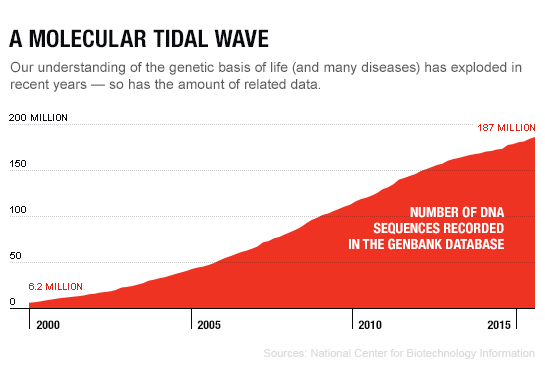
As the cost of DNA sequencing continues to drop and molecular imaging becomes more commonplace, public and private databases with associated clinical outcome data will grow. These databases will consolidate the currently scattered pieces needed to complete the puzzle of identifying an individual patient’s ideal treatment. These data sets are so large—sequencing one person’s genome creates up to 1 terabyte of data, or the equivalent of 200,000 MP3 songs—that it is impractical to transfer them from one institution to another.
To support the Knight Cancer Institute and Intel’s “all in one day” vision, we developed a prototype collaborative cancer precision medicine platform capable of orchestrating this research across multiple institutions. This first-of-its-kind platform provides access to existing public and private computing clouds and standardizes research findings so that data can be more easily shared.
In contrast to traditional siloed approaches, our prototype is a distributed model, so medical centers can connect over a secure network to benefit from one another’s data without moving it. This is important because it enables computation at each data site, with secure and anonymized results delivered back to the authorized requester. Each partner can maintain control of its patients’ data, while the shareable cancer-treatment knowledge base grows, improving outcomes for patients around the world.
We launched a pilot of this system in August 2015 and will announce in the first quarter of 2016 that two other large cancer institutions will join us to extend capability. At this scale, doctors anywhere will be able to sit at their computers and access genomic and clinical data on millions of cancer patients, allowing them to design the best and most effective treatments for each. Eventually it will be possible to create collaborative precision medicine clouds for diseases such as diabetes, Alzheimer’s, and autism.
Ultimately precision medicine will only be as precise as available data allows. To better understand complex diseases like cancer, the medical and tech industries must collaborate to make the growing wealth of public and private genetic data sets accessible for patient benefit. If we achieve success—and we will—we can turn a process that’s agonizing and uncertain for countless millions of people into a predictable, highly tailored, one-day diagnosis and treatment recommendation. We may not be able to end disease in our lifetimes, but we can vastly improve our response to it.
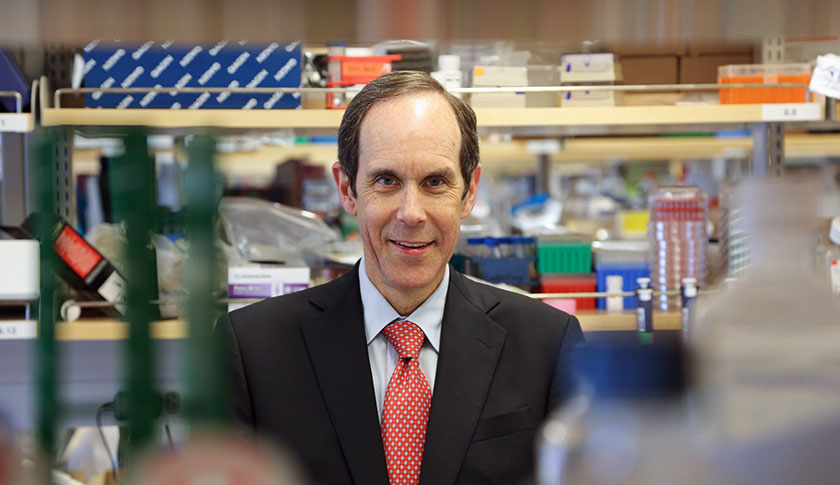
Brian Druker, MD, director of the Knight Cancer Institute at Oregon Health & Science University, won a 2009 Lasker Award for his groundbreaking research in the treatment of chronic myeloid leukemia.
A version of this article appears in the October 1, 2015 issue of Fortune magazine with the headline “A better way to treat cancer.”