• Home
  • Latest
  • Fortune 500
  • Finance
  • Tech
  • Leadership
  • Lifestyle
  • Rankings
  • Multimedia

Trendingnow

1

Jeff Bezos wants the bottom half of earners to pay zero income tax—he says nurses making just $75K should save $12K a year

2

Uber CEO says rideshare 'freed up' his son from having to get a driver’s license—and he's one of many Gen Zers who aren’t willing to drive

3

Inside the 'stealth wealth' playbook: How Silicon Valley's elite buy multimillion-dollar mansions without leaving a paper trail

1

Jeff Bezos wants the bottom half of earners to pay zero income tax—he says nurses making just $75K should save $12K a year

2

Uber CEO says rideshare 'freed up' his son from having to get a driver’s license—and he's one of many Gen Zers who aren’t willing to drive

3

Inside the 'stealth wealth' playbook: How Silicon Valley's elite buy multimillion-dollar mansions without leaving a paper trail
CommentaryCybersecurity

What China’s Xi Jinping’s U.S. visit means for cybersecurity

By
Alan Wolff
Alan Wolff
Down Arrow Button Icon
By
Alan Wolff
Alan Wolff
Down Arrow Button Icon
September 21, 2015, 10:52 AM ET
Barack Obama, Xi Jinping
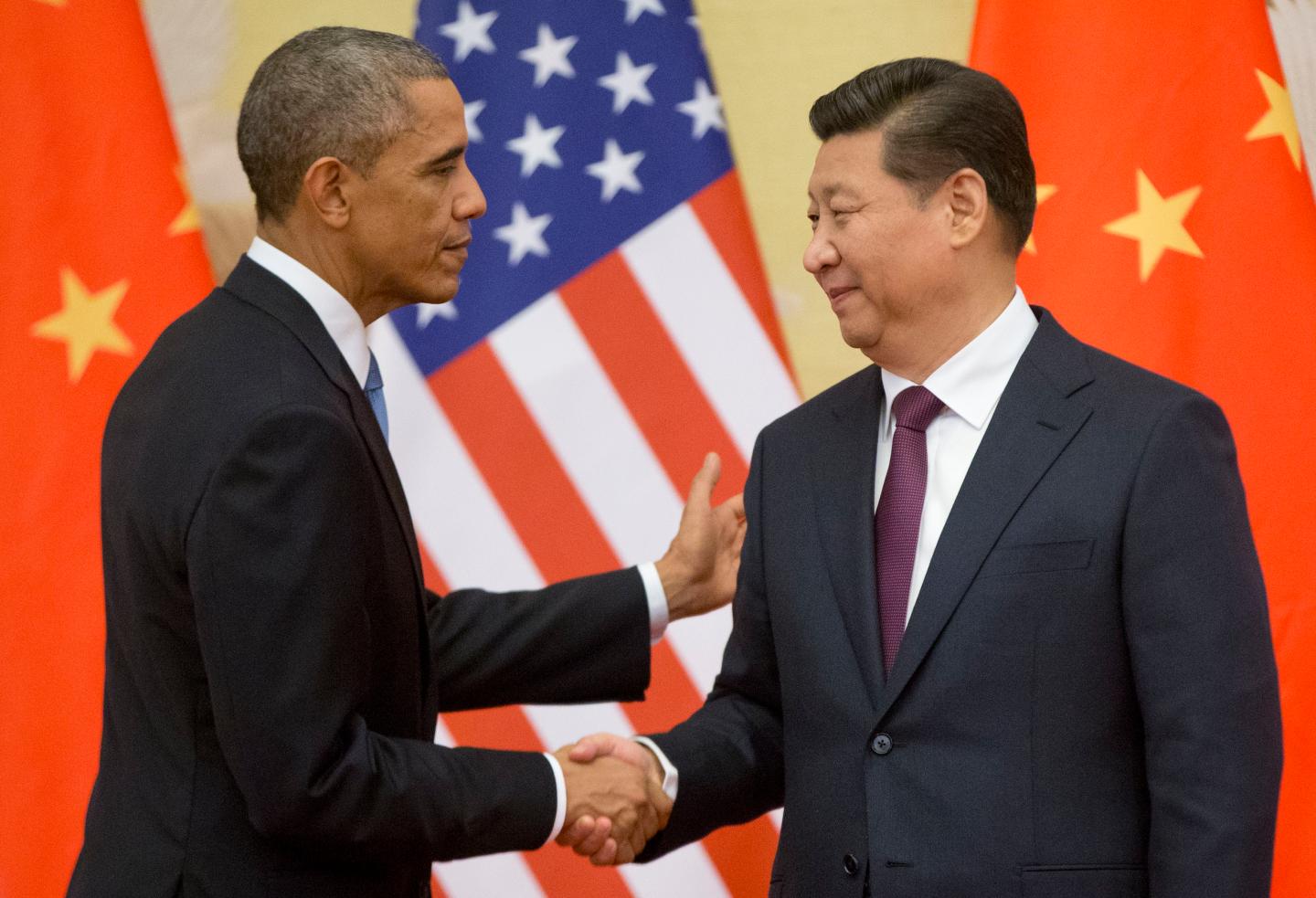
U.S. President Barack Obama, left, and Chinese President Xi Jinping shake hands following the conclusion of their joint news conference at the Great Hall of the People in Beijing, Wednesday, Nov. 12, 2014. (AP Photo/Pablo Martinez Monsivais)Photograph by Pablo Martinez Monsivais — AP

When Chinese President Xi Jinping arrives Tuesday on his first state visit to the U.S., the two leaders will have only a very few hours together to discuss substantive issues. There are a slew of vital geopolitical matters that need to be addressed, but the list of subjects that American businesses would like raised is even longer and in many ways equally important. It would take a marathon session — think back to the 1980s with Ronald Reagan and Mikhail Gorbachev in Reykjavik — to resolve even one key issue, let alone the plenitude of areas of concerns. And that is just the American list. China has trade and investment issues with the United States as well.

To say that the relationship is very complicated is an understatement. The two economies have become highly interdependent. When China’s growth slows, the U.S. stock market swoons. China is a major market, sometimes the major market, for a range of American industries – for large commercial aircraft, integrated circuits, and capital equipment, to name a few. It is also the primary source of supply for everything from vitamin C to smart phones, and much in between that fills many of our big box retail stores. For China, America is one of its largest markets. Our universities are centers for training for their top engineers as well as for many in their next generation. We are a model for innovation and entrepreneurship, even with some residual tarnish from the global financial crisis that they blame the U.S. for (blame we are willing to share credit for with China).

What does China want from the United States? Unrestricted access to American technology; relaxation, if not removal, of controls on sensitive high tech U.S. exports; unrestricted ability to make acquisitions of U.S. companies; substantial changes in trade remedy laws to lessen their impact. On the American side, the agenda is even longer. For the Obama administration, ranking the commercial issues is not easy, as American businesses have a very varied and long agenda, depending on individual industries’ and companies’ experience in and with China. Ninety-four American CEOs signed a recent joint letter asking for a strong and meaningful bilateral investment treaty (BIT). That is a task that has to date taken years. “Strong and meaningful” is a term whose definition needs to be filled out as the Chinese economy differs in several respects from that of Rwanda, the most recent U.S. investment treaty country.

Cyber theft and the protection of intellectual property is a key American private sector interest. While cyber attacks come from many sources, a number come from China.

These are numerous and considered serious. There are a wide variety of major issues under the heading of protection of intellectual property, including the protection of trade secrets and avoiding forced as well as induced technology transfer as a condition of investment in China.

The U.S. and China are negotiating what could become the first arms control deal for cyberspace, where each country would agree that it will not be the first to use cyberweapons to cripple the other’s critical infrastructure during peace time.

An agreement on cyber warfare is expected during Xi Jinping’s visit this week, though it won’t cover commercial cyber theft. It is in China’s interest to respect private intellectual property rights if it wants to move beyond being described as the world’s factory: if it wants would want to move from “made in China,” where goods are largely produced under foreign companies’ control, to “made by China,” where Chinese companies own the brains behind the manufacturing and design of goods.

Whether this “indigenization” is accomplished through natural growth, including, as in Europe and America a substantial role for foreign investment and an open market, or through extensive state intervention sponsoring national and local champions, will have vastly different effects on foreign business. For any government willing to use them, there are a wide array of tools that can be used to foster industrial policy aims, from application of competition law, setting national product standards, preferential public procurement, measures imposed in the name of national security, to more subtle forms of tilting the playing field, such as guiding state-owned enterprises to adhere to government policy rather than commercial considerations when they buy and sell. These subjects warrant attention as well.

A number of American industries face stiff competition from China that is aided by depreciation of China’s currency. Some are more concerned with industrial policies that always create overcapacity and cause market distortion: think solar panels. All would like to see Chinese domestic consumer demand increase, which has to be an important Chinese government objective as well. With Chinese growth slowing, a paramount issue for President Obama and American business will be learning what the direction of Chinese policy will be – toward greater opening of its market in the tradition of Deng Xiaoping, or much less welcome alternatives.

The choices that China makes are not just of passing interest. They are likely to affect the shape of the American economy for years to come.

Alan Wolff practices law with the global law firm, Dentons, in Washington DC. He is also Chairman of the National Foreign Trade Council and served as U.S. Deputy Trade Representative. The views expressed here are personal.

About the Author
By Alan Wolff
See full bioRight Arrow Button Icon

Latest in Commentary

Finance
Lorem ipsum dolor sit amet, consectetur adipiscing elit, sed do eiusmod tempor incididunt ut labore et dolore magna aliqua. Ut enim ad minim veniam
By Fortune Editors
October 20, 2025
Finance
Lorem ipsum dolor sit amet, consectetur adipiscing elit, sed do eiusmod tempor incididunt ut labore et dolore magna aliqua. Ut enim ad minim veniam
By Fortune Editors
October 20, 2025
Finance
Lorem ipsum dolor sit amet, consectetur adipiscing elit, sed do eiusmod tempor incididunt ut labore et dolore magna aliqua. Ut enim ad minim veniam
By Fortune Editors
October 20, 2025
Finance
Lorem ipsum dolor sit amet, consectetur adipiscing elit, sed do eiusmod tempor incididunt ut labore et dolore magna aliqua. Ut enim ad minim veniam
By Fortune Editors
October 20, 2025
Finance
Lorem ipsum dolor sit amet, consectetur adipiscing elit, sed do eiusmod tempor incididunt ut labore et dolore magna aliqua. Ut enim ad minim veniam
By Fortune Editors
October 20, 2025
Finance
Lorem ipsum dolor sit amet, consectetur adipiscing elit, sed do eiusmod tempor incididunt ut labore et dolore magna aliqua. Ut enim ad minim veniam
By Fortune Editors
October 20, 2025

Most Popular

Finance
Lorem ipsum dolor sit amet, consectetur adipiscing elit, sed do eiusmod tempor incididunt ut labore et dolore magna aliqua. Ut enim ad minim veniam
By Fortune Editors
October 20, 2025
Finance
Lorem ipsum dolor sit amet, consectetur adipiscing elit, sed do eiusmod tempor incididunt ut labore et dolore magna aliqua. Ut enim ad minim veniam
By Fortune Editors
October 20, 2025
Finance
Lorem ipsum dolor sit amet, consectetur adipiscing elit, sed do eiusmod tempor incididunt ut labore et dolore magna aliqua. Ut enim ad minim veniam
By Fortune Editors
October 20, 2025
Finance
Lorem ipsum dolor sit amet, consectetur adipiscing elit, sed do eiusmod tempor incididunt ut labore et dolore magna aliqua. Ut enim ad minim veniam
By Fortune Editors
October 20, 2025
Finance
Lorem ipsum dolor sit amet, consectetur adipiscing elit, sed do eiusmod tempor incididunt ut labore et dolore magna aliqua. Ut enim ad minim veniam
By Fortune Editors
October 20, 2025
Finance
Lorem ipsum dolor sit amet, consectetur adipiscing elit, sed do eiusmod tempor incididunt ut labore et dolore magna aliqua. Ut enim ad minim veniam
By Fortune Editors
October 20, 2025
Fortune Secondary Logo
Rankings
  • 100 Best Companies
  • Fortune 500
  • Global 500
  • Fortune 500 Europe
  • Most Powerful Women
  • World's Most Admired Companies
  • See All Rankings
  • Lists Calendar
Sections
  • Finance
  • Fortune Crypto
  • Features
  • Leadership
  • Health
  • Commentary
  • Success
  • Retail
  • Mpw
  • Tech
  • Lifestyle
  • CEO Initiative
  • Asia
  • Politics
  • Conferences
  • Europe
  • Newsletters
  • Personal Finance
  • Environment
  • Magazine
  • Education
Customer Support
  • Frequently Asked Questions
  • Customer Service Portal
  • Privacy Policy
  • Terms Of Use
  • Single Issues For Purchase
  • International Print
Commercial Services
  • Advertising
  • Fortune Brand Studio
  • Fortune Analytics
  • Fortune Conferences
  • Business Development
  • Group Subscriptions
About Us
  • About Us
  • Press Center
  • Work At Fortune
  • Terms And Conditions
  • Site Map
  • About Us
  • Press Center
  • Work At Fortune
  • Terms And Conditions
  • Site Map
  • Facebook icon
  • Twitter icon
  • LinkedIn icon
  • Instagram icon
  • Pinterest icon

Latest in Commentary

Richard McCathron is President & CEO, Hippo.
CommentaryInsurance
I’m leading a $100 million corporate turnaround. Here’s why I learned to distrust the growth mindset
By Richard McCathronMay 25, 2026
3 hours ago
David Bennahum
CommentaryMedia
I was one of the internet’s first influencers. AI just killed the whole category — and created something better
By David S. BennahumMay 24, 2026
1 day ago
employees
CommentarySuccession
Millions of business owners are about to retire. They should sell to their employees
By Matt Helmer and Maxwell JohnsonMay 23, 2026
2 days ago
Ashley Yetman
Commentarydisruption
Everyone is blaming AI for the death of ‘craft.’ Take a good look in the mirror
By Ashley YetmanMay 23, 2026
2 days ago
clay
CommentaryLoneliness
I’ve spent 25 years studying loneliness. AI is about to make it much worse
By Clay RoutledgeMay 23, 2026
2 days ago
ambrose
CommentaryRobotics
Former NASA Robotics Chief: America is building the wrong kind of robots — and China knows it
By Robert AmbroseMay 23, 2026
2 days ago

Most Popular

Jeff Bezos wants the bottom half of earners to pay zero income tax—he says nurses making just $75K should save $12K a year
Success
Jeff Bezos wants the bottom half of earners to pay zero income tax—he says nurses making just $75K should save $12K a year
By Preston ForeMay 21, 2026
4 days ago
Uber CEO says rideshare 'freed up' his son from having to get a driver’s license—and he's one of many Gen Zers who aren’t willing to drive
Lifestyle
Uber CEO says rideshare 'freed up' his son from having to get a driver’s license—and he's one of many Gen Zers who aren’t willing to drive
By Sasha RogelbergMay 24, 2026
24 hours ago
Inside the 'stealth wealth' playbook: How Silicon Valley's elite buy multimillion-dollar mansions without leaving a paper trail
Real Estate
Inside the 'stealth wealth' playbook: How Silicon Valley's elite buy multimillion-dollar mansions without leaving a paper trail
By Sydney LakeMay 24, 2026
1 day ago
Indeed chief economist says we’re entering an era of ‘great mismatch’ thanks to a generational imbalance of workers
Success
Indeed chief economist says we’re entering an era of ‘great mismatch’ thanks to a generational imbalance of workers
By Emma BurleighMay 22, 2026
3 days ago
This 39-year-old quit his lineman job during the pandemic and built a $50 million company in his backyard
Success
This 39-year-old quit his lineman job during the pandemic and built a $50 million company in his backyard
By Nick LichtenbergMay 23, 2026
2 days ago
Bolt CEO says he let go of his entire HR team for creating problems that didn’t exist: ‘Those problems disappeared when I let them go’ 
Workplace Culture
Bolt CEO says he let go of his entire HR team for creating problems that didn’t exist: ‘Those problems disappeared when I let them go’ 
By Preston ForeMay 19, 2026
6 days ago

© 2026 Fortune Media IP Limited. All Rights Reserved. Use of this site constitutes acceptance of our Terms of Use and Privacy Policy | CA Notice at Collection and Privacy Notice | Do Not Sell/Share My Personal Information
FORTUNE is a trademark of Fortune Media IP Limited, registered in the U.S. and other countries. FORTUNE may receive compensation for some links to products and services on this website. Offers may be subject to change without notice.