• Home
  • Latest
  • Fortune 500
  • Finance
  • Tech
  • Leadership
  • Lifestyle
  • Rankings
  • Multimedia

Trendingnow

1

Anne Hathaway says she was spammed with ChatGPT-written thank you notes after hiring for a recent role: ‘Nobody on that list gets that job’

2

The affordability crisis is so bad that, for the first time ever, both mom and dad are working full-time in most American families

3

Current price of oil as of June 18, 2026

1

Anne Hathaway says she was spammed with ChatGPT-written thank you notes after hiring for a recent role: ‘Nobody on that list gets that job’

2

The affordability crisis is so bad that, for the first time ever, both mom and dad are working full-time in most American families

3

Current price of oil as of June 18, 2026
Arts & EntertainmentCommentary

Research explains the appeal of Donald Trump

By
Jon D Morris
Jon D Morris
,
Taylor Wen
Taylor Wen
, and
The Conversation
The Conversation
Down Arrow Button Icon
By
Jon D Morris
Jon D Morris
,
Taylor Wen
Taylor Wen
, and
The Conversation
The Conversation
Down Arrow Button Icon
September 15, 2015, 2:07 PM ET
Add Fortune on Google for similar content.

Politics and advertising are closely intertwined. Like a good advertisement, a good politician needs to present a compelling case for why the voter should check his or her box on the ballot over all the other options.

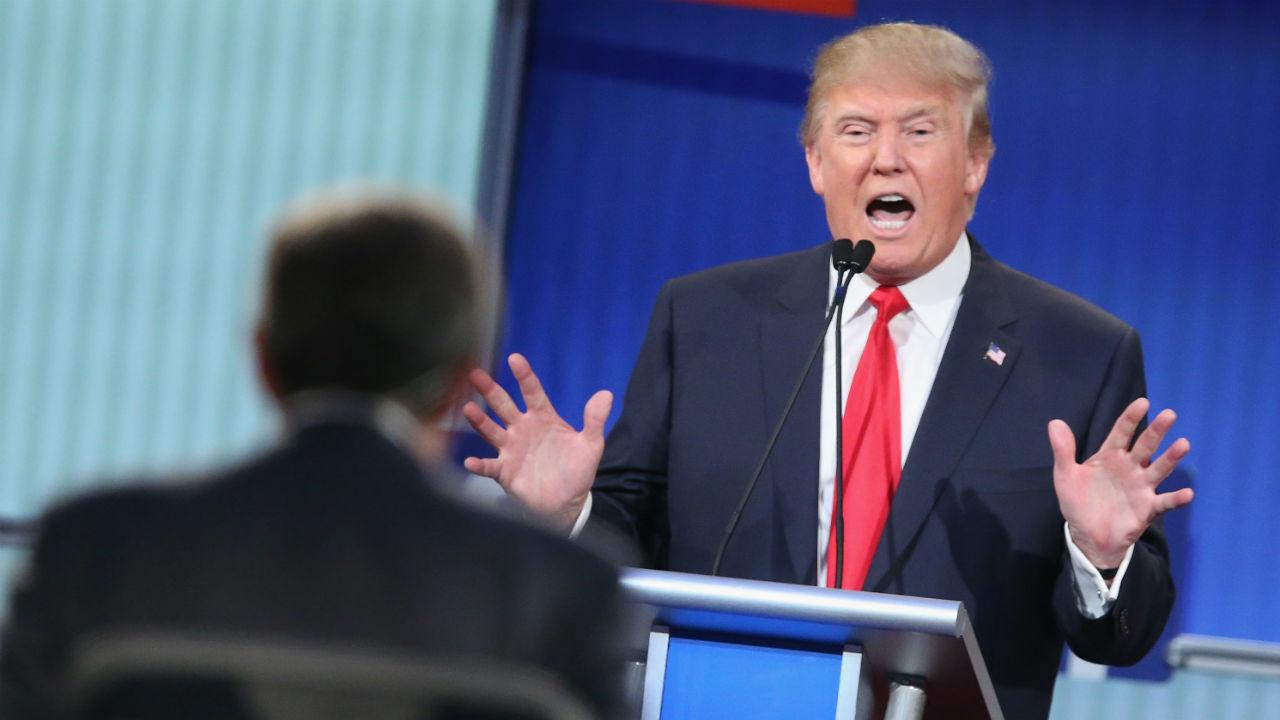
Many good ads or politicians will make a direct appeal to viewers’ emotions – and of all the candidates in recent memory, Donald Trump may be the best at doing this.

While some pundits and late-night comedians have eviscerated Trump’s campaign, calling it all flair and no substance, this might not matter to voters. Whether you’re trying to get someone to buy a product or vote for a candidate, studies have shown that appealing to emotion is nearly twice as effective as presenting facts or appearing believable.

As academics who study what makes advertisements successful and engaging, we believe Trump’s allure can be boiled down to three key factors, one of which – empowerment – encourages voters to actually work on his behalf.

Emotions influence behavior

But first, some background on the current understanding of emotional response in people.

Studies have shown that humans interpret what they hear and see through an emotional lens that is made up of three mechanisms: appeal, engagement and empowerment.

In a world where we’re bombarded with stimuli, from advertisements to buzzing phones, these mechanisms influence what we pay attention to, and how we react.

  • Appeal is simply the degree to which we judge something to be positive or negative.
  • Engagement is fairly self-explanatory: the extent to which an object or idea produces active or passive feelings – in other words, the level of emotional intensity it produces.
  • Lastly – and maybe most important – is empowerment, which is the amount of control someone feels in a given situation.

Until recently, researchers didn’t seem all too interested in empowerment. The lack of interest seems to have stemmed from a misunderstanding about this dimension, and insufficient empirical support of its effects.

And while appeal and engagement are pretty self-explanatory, empowerment is a bit more abstract. When we ask people how they feel, they can easily describe their current emotional state as either positive or negative and, to some extent, how intense that emotion feels.

In contrast, people can have a tough time delineating their feelings of empowerment, because being “in control” can’t exactly be expressed or felt in a direct or obvious way.

But this doesn’t mean that empowerment is irrelevant. Think about the emotions anger and fear. They’re both low in appeal (no one wants to feel angry or fearful) but have high levels of engagement.

So what makes these two emotions so distinctive from each other? Empowerment. When you’re scared, you feel like you’re not in control. But when you’re angry, you feel the irresistible urge to speak out and take action.

Empowerment’s potency

When it comes to the emotional appeal of an advertisement or politician, empowerment may be more important than we think.

We recently conducted a study on empowerment, and presented it at the Association in Education in Journalism and Mass Communications (AEJMC) conference this past August.

Analyzing an array visual ads and public service announcements, the research indicated that appeals to fear (like images of dead bodies on a battlefield) were associated with feelings of uncertainty and a lack of control.

People felt a sense of danger and became acutely aware of the cruelties of war, but didn’t feel like there was anything they could do about it. Therefore, they reported low empowerment.

In contrast, messages focusing on anger (like a PSA showing a healthy body being harmed by secondhand smoke) evoked appraisals of certainty and individual control among viewers, who felt a sense of responsibility to take action and help the victims. Therefore, people expressed high empowerment on the emotional response measure.

But perhaps most importantly, the study also showed that empowerment is in some situations a better predictor of behavioral intentions than appeal or engagement. In other words, high levels of empowerment trigger action, since people are motivated to seek solutions to the problems presented.

The findings revealed an important fact: feeling in control is highly related to people’s attitudes and behaviors on social, political and health-related issues.

In the case of communicating to the public – whether through television or social media – this study recommended that speakers and messengers attempt to tap into empowerment’s potency, using rhetoric and imagery that make audiences feel in control and able to enact change.

In most cases, that means appealing to or eliciting a sense of anger or indignation.

The Trump effect

It goes without saying that there’s a level of manipulation involved. The speaker must be adept at formulating a persona and message that resonates with audiences. Whether or not the message is grounded in reality – well, that’s almost beside the point.

Enter Donald Trump, who seems to have an innate mastery of this process. He is an ad-man’s dream, a political consultant’s perfect plaything.

Maybe he honed these skills during his years on network television; either way, he’s shown the ability to easily appeal to and engage with audiences, which he’ll do directly (“I will be the greatest jobs president that God ever created”) or indirectly (“the other candidates are dull and weak”).

But it’s the third and key element – empowerment – where he shines.

He’s able to consistently evoke issues in a way that makes people feel anger, rather than fear. (Some of his opponents use fear; for example, at the Conservative Political Action Conference, Ted Cruz told the crowd that the IRS “would start going after Christian schools, Christian charities, and…Christian churches.”)

And though Trump frequently raises issues that could elicit fear – terrorism, crime, economic collapse – he does so with indignation, which suggests that the audience should feel that way, too.

He’s angry, but not fearful.

That’s why he’s said that he favors soldiers that have been wounded over those that were captured: to Trump, surrendering under any circumstance connotes fear.

Then there’s Trump’s solution to the illegal immigrants who are supposedly overrunning the country: “throw the bums out, build a wall.”

As for China, he’ll argue that China is “stealing” jobs from the US (there’s the indignation) – and if he were in office, he wouldn’t let the nation “have its way with us.”

Furthermore, the feelings of anger he evokes lead to action on his behalf. Outraged voters are all too eager to post his videos on Facebook, retweet his tweets and promote his candidacy to friends and family.

Note what’s going on here: he simplifies complex issues, framing them in a way that’s intended to get a rise out of voters and infuriate them. But he presents solutions (often simplified, often unfeasible) in a way that comes across as clear – even obvious – and has the added benefit of making him appear in control.

In the end, it’s a calculated image that makes him an incredibly appealing candidate.

Look at what happens when you hold empowerment and engagement high for a person or product, while varying the level of appeal.

ADSAM-model
Click to enlarge.Courtesy of Jon D Morris and Taylor Wen

When moving a person’s appeal from “low” to “high,” a shift occurs in the way they’re described.At the lower end, they’re called angry and defiant. But then, as their appeal rises, they become aggressive, daring and bold. Near the top, they’re described as masterful.And when appeal’s at its highest?

Victorious.

Jon D Morris is Professor of Advertising at University of Florida, and Taylor Wen is PhD Candidate in Communications at University of Florida.

This article was originally published on The Conversation. Read the original article.
The Conversation

About the Authors
By Jon D Morris
See full bioRight Arrow Button Icon
By Taylor Wen
See full bioRight Arrow Button Icon
By The Conversation
See full bioRight Arrow Button Icon
Add Fortune on Google for similar content.

Latest in Arts & Entertainment

Finance
Lorem ipsum dolor sit amet, consectetur adipiscing elit, sed do eiusmod tempor incididunt ut labore et dolore magna aliqua. Ut enim ad minim veniam
By Fortune Editors
October 20, 2025
Finance
Lorem ipsum dolor sit amet, consectetur adipiscing elit, sed do eiusmod tempor incididunt ut labore et dolore magna aliqua. Ut enim ad minim veniam
By Fortune Editors
October 20, 2025
Finance
Lorem ipsum dolor sit amet, consectetur adipiscing elit, sed do eiusmod tempor incididunt ut labore et dolore magna aliqua. Ut enim ad minim veniam
By Fortune Editors
October 20, 2025
Finance
Lorem ipsum dolor sit amet, consectetur adipiscing elit, sed do eiusmod tempor incididunt ut labore et dolore magna aliqua. Ut enim ad minim veniam
By Fortune Editors
October 20, 2025
Finance
Lorem ipsum dolor sit amet, consectetur adipiscing elit, sed do eiusmod tempor incididunt ut labore et dolore magna aliqua. Ut enim ad minim veniam
By Fortune Editors
October 20, 2025
Finance
Lorem ipsum dolor sit amet, consectetur adipiscing elit, sed do eiusmod tempor incididunt ut labore et dolore magna aliqua. Ut enim ad minim veniam
By Fortune Editors
October 20, 2025

Most Popular

Finance
Lorem ipsum dolor sit amet, consectetur adipiscing elit, sed do eiusmod tempor incididunt ut labore et dolore magna aliqua. Ut enim ad minim veniam
By Fortune Editors
October 20, 2025
Finance
Lorem ipsum dolor sit amet, consectetur adipiscing elit, sed do eiusmod tempor incididunt ut labore et dolore magna aliqua. Ut enim ad minim veniam
By Fortune Editors
October 20, 2025
Finance
Lorem ipsum dolor sit amet, consectetur adipiscing elit, sed do eiusmod tempor incididunt ut labore et dolore magna aliqua. Ut enim ad minim veniam
By Fortune Editors
October 20, 2025
Finance
Lorem ipsum dolor sit amet, consectetur adipiscing elit, sed do eiusmod tempor incididunt ut labore et dolore magna aliqua. Ut enim ad minim veniam
By Fortune Editors
October 20, 2025
Finance
Lorem ipsum dolor sit amet, consectetur adipiscing elit, sed do eiusmod tempor incididunt ut labore et dolore magna aliqua. Ut enim ad minim veniam
By Fortune Editors
October 20, 2025
Finance
Lorem ipsum dolor sit amet, consectetur adipiscing elit, sed do eiusmod tempor incididunt ut labore et dolore magna aliqua. Ut enim ad minim veniam
By Fortune Editors
October 20, 2025
Fortune Secondary Logo
Rankings
  • 100 Best Companies
  • Fortune 500
  • Global 500
  • Fortune 500 Europe
  • Most Powerful Women
  • World's Most Admired Companies
  • See All Rankings
  • Lists Calendar
Sections
  • Finance
  • Fortune Crypto
  • Features
  • Leadership
  • Health
  • Commentary
  • Success
  • Retail
  • Mpw
  • Tech
  • Lifestyle
  • CEO Initiative
  • Asia
  • Politics
  • Conferences
  • Europe
  • Newsletters
  • Personal Finance
  • Environment
  • Magazine
  • Education
Customer Support
  • Frequently Asked Questions
  • Customer Service Portal
  • Privacy Policy
  • Terms Of Use
  • Single Issues For Purchase
  • International Print
Commercial Services
  • Advertising
  • Fortune Brand Studio
  • Fortune Analytics
  • Fortune Conferences
  • Business Development
  • Group Subscriptions
About Us
  • About Us
  • Press Center
  • Work At Fortune
  • Terms And Conditions
  • Site Map
  • About Us
  • Press Center
  • Work At Fortune
  • Terms And Conditions
  • Site Map
  • Facebook icon
  • Twitter icon
  • LinkedIn icon
  • Instagram icon
  • Pinterest icon

Latest in Arts & Entertainment

Jalen Brunson
Arts & EntertainmentSports
The Knicks’ playoff run that ended in a championship and parade is worth at least $380 million to New York City
By Catherina GioinoJune 18, 2026
17 hours ago
Anne Hathaway says she was spammed with ChatGPT-written thank you notes after hiring for a recent role: ‘Nobody on that list gets that job’
SuccessThe Interview Playbook
Anne Hathaway says she was spammed with ChatGPT-written thank you notes after hiring for a recent role: ‘Nobody on that list gets that job’
By Orianna Rosa RoyleJune 18, 2026
1 day ago
knicks
Arts & EntertainmentNew York City
The Knicks have won 3 NBA titles, but their first parade was held up for 55 years by a budget crisis and a rejected $372 expense report
By Jennifer Peltz and The Associated PressJune 17, 2026
2 days ago
y
Arts & EntertainmentHollywood
Meet the YouTubers remaking Hollywood, one Gen Z box-office smash at a time
By The Associated PressJune 17, 2026
2 days ago
Exclusive: Universal beat Disney as Hollywood’s maker of the most expensive movie of all time 
Arts & EntertainmentNBC Universal
Exclusive: Universal beat Disney as Hollywood’s maker of the most expensive movie of all time 
By Christian SyltJune 17, 2026
2 days ago
butter
RetailFashion
Welcome to the summer of ‘Butter Yellow,’ the shade of consumer anxiety
By Nick LichtenbergJune 16, 2026
3 days ago

Most Popular

Anne Hathaway says she was spammed with ChatGPT-written thank you notes after hiring for a recent role: ‘Nobody on that list gets that job’
Success
Anne Hathaway says she was spammed with ChatGPT-written thank you notes after hiring for a recent role: ‘Nobody on that list gets that job’
By Orianna Rosa RoyleJune 18, 2026
1 day ago
The affordability crisis is so bad that, for the first time ever, both mom and dad are working full-time in most American families
Economy
The affordability crisis is so bad that, for the first time ever, both mom and dad are working full-time in most American families
By Jacqueline MunisJune 17, 2026
2 days ago
Current price of oil as of June 18, 2026
Personal Finance
Current price of oil as of June 18, 2026
By Joseph HostetlerJune 18, 2026
1 day ago
Hundreds of Stanford students walked out of their grad ceremony to protest Google CEO’s commencement speech. It wasn’t all about AI
Big Tech
Hundreds of Stanford students walked out of their grad ceremony to protest Google CEO’s commencement speech. It wasn’t all about AI
By Tristan BoveJune 15, 2026
4 days ago
Microsoft boss Steve Ballmer publicly dismissed Chrome as a 'rounding error'—but Google’s CEO says he used the jab as fuel to win the browser-wars
Success
Microsoft boss Steve Ballmer publicly dismissed Chrome as a 'rounding error'—but Google’s CEO says he used the jab as fuel to win the browser-wars
By Preston ForeJune 17, 2026
2 days ago
Current price of gold as of June 18, 2026
Personal Finance
Current price of gold as of June 18, 2026
By Danny BakstJune 18, 2026
1 day ago

© 2026 Fortune Media IP Limited. All Rights Reserved. Use of this site constitutes acceptance of our Terms of Use and Privacy Policy | CA Notice at Collection and Privacy Notice | Do Not Sell/Share My Personal Information
FORTUNE is a trademark of Fortune Media IP Limited, registered in the U.S. and other countries. FORTUNE may receive compensation for some links to products and services on this website. Offers may be subject to change without notice.