• Home
  • Latest
  • Fortune 500
  • Finance
  • Tech
  • Leadership
  • Lifestyle
  • Rankings
  • Multimedia

Trendingnow

1

Now worth $200 million, Sarah Jessica Parker credits being ‘one of eight kids that struggled financially’ for her hunger, ambition, and work ethic

2

MacKenzie Scott alone accounted for one-third of America's $19.2 billion in megagifts last year

3

Amazon's record Prime Day masks a darker truth: Americans are spending more and getting less

1

Now worth $200 million, Sarah Jessica Parker credits being ‘one of eight kids that struggled financially’ for her hunger, ambition, and work ethic

2

MacKenzie Scott alone accounted for one-third of America's $19.2 billion in megagifts last year

3

Amazon's record Prime Day masks a darker truth: Americans are spending more and getting less
Commentary

How regional trade agreements can spark a fight over Feta cheese

By
Alan Wolff
Alan Wolff
and
Bethany Cianciolo
Bethany Cianciolo
Down Arrow Button Icon
By
Alan Wolff
Alan Wolff
and
Bethany Cianciolo
Bethany Cianciolo
Down Arrow Button Icon
August 25, 2015, 2:00 PM ET
542830837
Photograph by Getty Images/Moment RF
Add Fortune on Google for similar content.

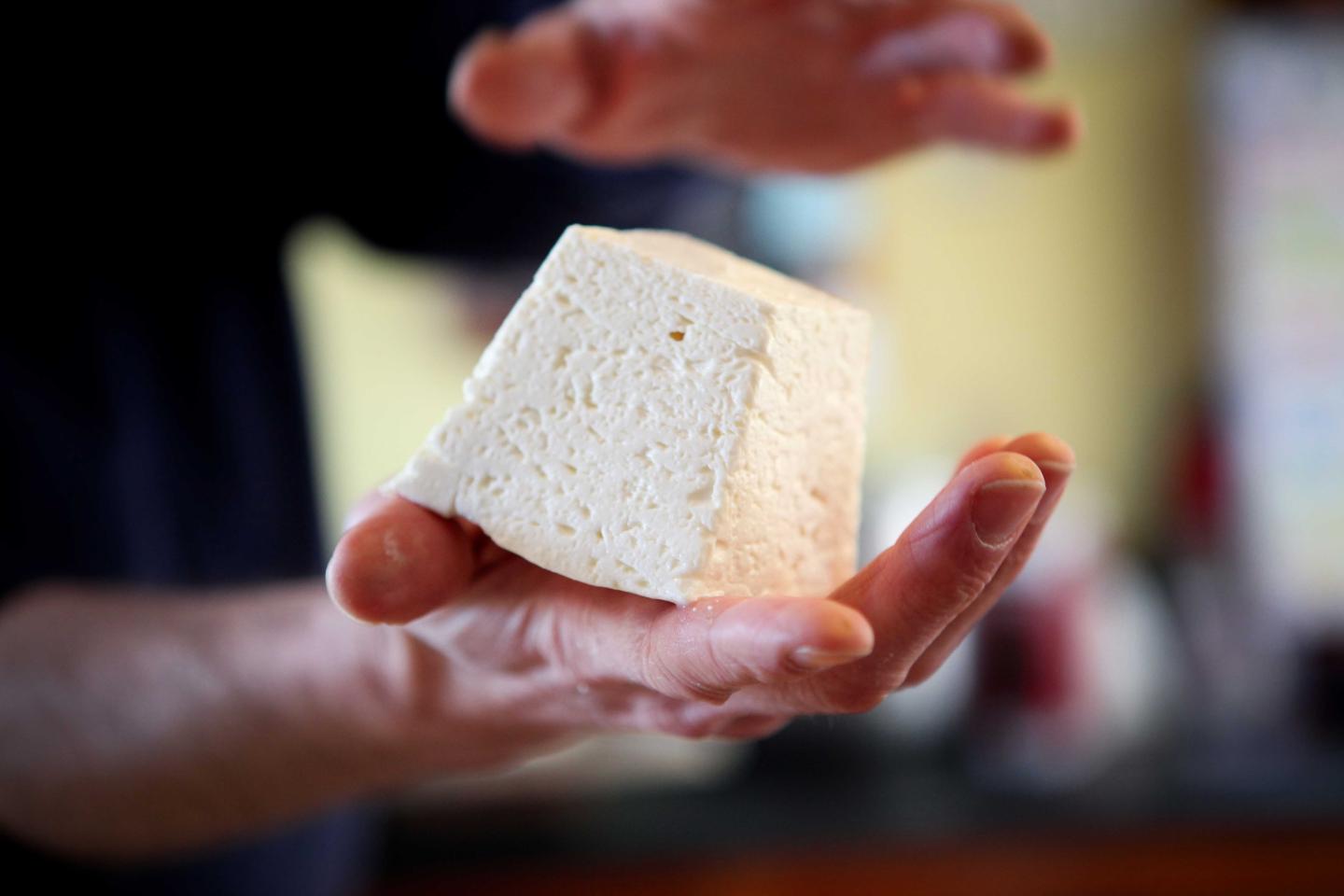
Most of us know that swiss cheese sold in the United States is not actually made in Switzerland. Retailers and the public consider the name to be generic; for Americans, it denotes a kind of cheese, not where it was made. This is also true for feta cheese sold in the U.S., which is mostly produced in America, not in Greece.

However, this is not the way that the European Union wants to see many competing products presented. So in its 2013 trade agreement with Canada the EU got Canada to agree that only feta made in Greece could be called “feta.” If that rule weren’t quirky enough, the agreement that involves so-called “geographical indications” or GIs also allowed non-Greek companies to call their cheese feta only if they had been producing and marketing their cheese as feta before October 18, 2013.

This arrangement poses a problem for the U.S. dairy industry. While the provision was made to protect those already in this business, new producers trying to sell their feta would be barred from entering the Canadian market unless they called their product “feta-like” or a similar term. This locking-in of existing names would extend to nearly a few hundred agricultural products that could only originate in 28 member states of the European Union.

The United States was not party to the negotiations, but the agreement between Canada and the EU ripples across global markets and economies without their say. It also highlights a major difference between agreements that are near-global, under the auspices of the World Trade Organization (WTO), and regional arrangements. The sub-global agreements affect the trade of nonparticipants without their being consulted or consenting. Not every geographical indication (GI), which is what these designations are called, is one that either an average American consumer or our country’s negotiators would agree was appropriate. (In fact, the EU member states themselves had a row with Greece over its exclusive use of the name “feta” that took years of litigation to settle).

So it’s no surprise that as world leaders negotiate a Pacific Rim trade deal involving nearly 40% of the world’s economy, officials are hoping to limit GIs. In the Trans Pacific Partnership (TPP) talks, the tack being taken is damage limitation. Under the Trans-Pacific Partnership (TPP) agreement, officials are reportedly proposing to create a domestic process so that those who oppose having more GIs be given an opportunity to show that a term is really generic.

There is another origin problem — this one inherent in all regional trade arrangements. The participants to any bilateral or otherwise less than global deal will want, to the extent that they can, to limit the benefits to themselves, and not to free-riders. This calls for rules of origin that can get highly complex (and restrictive). For textiles, the U.S. is very insistent on a “yarn-forward” rule, meaning that a substantial percentage of the yarn, fabric and final article of clothing must originate from the parties to the agreement. This means that Vietnam cannot source, for many garments, fabric and yarn from nonparties, such as China, if it wants to get duty-free entry into the other TPP markets for the clothing it sews and assembles. That has been known for a long time and the negotiations are largely finished.

What arose as a surprise at the last round of talks in Maui was that the auto sector would have a similar problem – and it did, in spades. Mexico, Canada and the United States had agreed 20 years ago to have free trade in autos and auto parts so long as nearly two-thirds of the content came from the three signatories to the North American Free Trade Agreement (NAFTA). In the TPP agreement, Japan has been pushing wanted an origin rule that allows its carmakers to continue with existing sourcing, apparently a substantial portion of which, at least for one carmaker, would come from outside the 12 TPP countries (such as from Thailand).

So it wanted an origin rule effectively much lower than the level that NAFTA provides.

This was agreeable to the U.S., but Canada and Mexico balked. Intensive discussions since the July talks in Maui have focused on resolving this issue.

In a perfect world trading system, agreements would be global, and there would be no added complications introduced by regional trade agreements. But there is no consensus at the World Trade Organization for either new rules applying to all members or on broad trade agreements. The one current potential exception is the newly expanded Information Technology Agreement that would cover 90% of world trade in covered products, so that the free-rider problem is marginalized and the duty-free trade will be applied to all products regardless of where they come from. The stalemate at the WTO leaves countries that want to move forward having to do so on a regional basis, and that means applying rules of origin to restrict, insofar as is practical, the benefits to the parties. In a world of global supply chains and global markets, this often makes little sense for producers or for consumers. But until a much broader international consensus emerges at the WTO, regional agreements will continue to proliferate.

Alan Wolff practices international trade law with Dentons in Washington, D.C. He is Chairman of the National Foreign Trade Council (NFTC) and served as a U.S. Deputy Trade Representative.

About the Authors
By Alan Wolff
See full bioRight Arrow Button Icon
By Bethany Cianciolo
See full bioRight Arrow Button Icon
Add Fortune on Google for similar content.

Latest in Commentary

Finance
Lorem ipsum dolor sit amet, consectetur adipiscing elit, sed do eiusmod tempor incididunt ut labore et dolore magna aliqua. Ut enim ad minim veniam
By Fortune Editors
October 20, 2025
Finance
Lorem ipsum dolor sit amet, consectetur adipiscing elit, sed do eiusmod tempor incididunt ut labore et dolore magna aliqua. Ut enim ad minim veniam
By Fortune Editors
October 20, 2025
Finance
Lorem ipsum dolor sit amet, consectetur adipiscing elit, sed do eiusmod tempor incididunt ut labore et dolore magna aliqua. Ut enim ad minim veniam
By Fortune Editors
October 20, 2025
Finance
Lorem ipsum dolor sit amet, consectetur adipiscing elit, sed do eiusmod tempor incididunt ut labore et dolore magna aliqua. Ut enim ad minim veniam
By Fortune Editors
October 20, 2025
Finance
Lorem ipsum dolor sit amet, consectetur adipiscing elit, sed do eiusmod tempor incididunt ut labore et dolore magna aliqua. Ut enim ad minim veniam
By Fortune Editors
October 20, 2025
Finance
Lorem ipsum dolor sit amet, consectetur adipiscing elit, sed do eiusmod tempor incididunt ut labore et dolore magna aliqua. Ut enim ad minim veniam
By Fortune Editors
October 20, 2025

Most Popular

Finance
Lorem ipsum dolor sit amet, consectetur adipiscing elit, sed do eiusmod tempor incididunt ut labore et dolore magna aliqua. Ut enim ad minim veniam
By Fortune Editors
October 20, 2025
Finance
Lorem ipsum dolor sit amet, consectetur adipiscing elit, sed do eiusmod tempor incididunt ut labore et dolore magna aliqua. Ut enim ad minim veniam
By Fortune Editors
October 20, 2025
Finance
Lorem ipsum dolor sit amet, consectetur adipiscing elit, sed do eiusmod tempor incididunt ut labore et dolore magna aliqua. Ut enim ad minim veniam
By Fortune Editors
October 20, 2025
Finance
Lorem ipsum dolor sit amet, consectetur adipiscing elit, sed do eiusmod tempor incididunt ut labore et dolore magna aliqua. Ut enim ad minim veniam
By Fortune Editors
October 20, 2025
Finance
Lorem ipsum dolor sit amet, consectetur adipiscing elit, sed do eiusmod tempor incididunt ut labore et dolore magna aliqua. Ut enim ad minim veniam
By Fortune Editors
October 20, 2025
Finance
Lorem ipsum dolor sit amet, consectetur adipiscing elit, sed do eiusmod tempor incididunt ut labore et dolore magna aliqua. Ut enim ad minim veniam
By Fortune Editors
October 20, 2025
Fortune Secondary Logo
Rankings
  • 100 Best Companies
  • Fortune 500
  • Global 500
  • Fortune 500 Europe
  • Most Powerful Women
  • World's Most Admired Companies
  • See All Rankings
  • Lists Calendar
Sections
  • Finance
  • Fortune Crypto
  • Features
  • Leadership
  • Health
  • Commentary
  • Success
  • Retail
  • Mpw
  • Tech
  • Lifestyle
  • CEO Initiative
  • Asia
  • Politics
  • Conferences
  • Europe
  • Newsletters
  • Personal Finance
  • Environment
  • Magazine
  • Education
Customer Support
  • Frequently Asked Questions
  • Customer Service Portal
  • Privacy Policy
  • Terms Of Use
  • Single Issues For Purchase
  • International Print
Commercial Services
  • Advertising
  • Fortune Brand Studio
  • Fortune Analytics
  • Fortune Conferences
  • Business Development
  • Group Subscriptions
About Us
  • About Us
  • Press Center
  • Work At Fortune
  • Terms And Conditions
  • Site Map
  • About Us
  • Press Center
  • Work At Fortune
  • Terms And Conditions
  • Site Map
  • Facebook icon
  • Twitter icon
  • LinkedIn icon
  • Instagram icon
  • Pinterest icon

Latest in Commentary

nido
Commentary250 Years of Innovation
As an immigrant turned entrepreneur and college president, here is why I celebrate our nation as it turns 250
By Nido R. QubeinJune 25, 2026
6 hours ago
Asia’s defense boom is rewiring the global arms supply chain
Commentaryarms, weapons, and defense
Asia’s defense boom is rewiring the global arms supply chain
By Chris OberoiJune 24, 2026
20 hours ago
steve
Commentary250 Years of Innovation
Steve Case: America was built by entrepreneurs. Here’s how we keep that edge for the next 250 years
By Steve CaseJune 24, 2026
1 day ago
t
CommentaryWhite House
Trump mistakes the bully pulpit for bullying leadership — history’s villains were never heroes
By Jeffrey Sonnenfeld and Steven TianJune 24, 2026
1 day ago
mg
CommentaryHealth
The ‘tech neck’ time bomb: why 43 million young Americans could cripple U.S. health care within a generation
By Michael GerlingJune 24, 2026
1 day ago
sb
Commentaryclimate change
The climate policy triangle: why leaders can no longer choose between growth, security and sustainability
By Sebastian BuckupJune 23, 2026
2 days ago

Most Popular

Now worth $200 million, Sarah Jessica Parker credits being ‘one of eight kids that struggled financially’ for her hunger, ambition, and work ethic
Success
Now worth $200 million, Sarah Jessica Parker credits being ‘one of eight kids that struggled financially’ for her hunger, ambition, and work ethic
By Orianna Rosa RoyleJune 24, 2026
1 day ago
MacKenzie Scott alone accounted for one-third of America's $19.2 billion in megagifts last year
Success
MacKenzie Scott alone accounted for one-third of America's $19.2 billion in megagifts last year
By Sydney LakeJune 25, 2026
10 hours ago
Amazon's record Prime Day masks a darker truth: Americans are spending more and getting less
Retail
Amazon's record Prime Day masks a darker truth: Americans are spending more and getting less
By Nick LichtenbergJune 24, 2026
1 day ago
Ray Dalio just finished a 10-day trip to China. He says global leaders know America ‘doesn’t have what it takes to fight to maintain its empire’
Asia
Ray Dalio just finished a 10-day trip to China. He says global leaders know America ‘doesn’t have what it takes to fight to maintain its empire’
By Nick LichtenbergJune 24, 2026
1 day ago
After forcing workers back to the office, Goldman Sachs and JPMorgan Chase are now letting their staff work remotely—but only for the World Cup
Success
After forcing workers back to the office, Goldman Sachs and JPMorgan Chase are now letting their staff work remotely—but only for the World Cup
By Orianna Rosa RoyleJune 23, 2026
2 days ago
Trump’s international student crackdown kicked off a domino effect that could shave nearly $500 billion off the economy
Economy
Trump’s international student crackdown kicked off a domino effect that could shave nearly $500 billion off the economy
By Tristan BoveJune 24, 2026
23 hours ago

© 2026 Fortune Media IP Limited. All Rights Reserved. Use of this site constitutes acceptance of our Terms of Use and Privacy Policy | CA Notice at Collection and Privacy Notice | Do Not Sell/Share My Personal Information
FORTUNE is a trademark of Fortune Media IP Limited, registered in the U.S. and other countries. FORTUNE may receive compensation for some links to products and services on this website. Offers may be subject to change without notice.