• Home
  • Latest
  • Fortune 500
  • Finance
  • Tech
  • Leadership
  • Lifestyle
  • Rankings
  • Multimedia
Commentarytrans-pacific partnership

What China’s currency devaluation means for the world’s trade deals

By
Alan Wolff
Alan Wolff
Down Arrow Button Icon
By
Alan Wolff
Alan Wolff
Down Arrow Button Icon
August 19, 2015, 3:07 PM ET
China Scraps Yuan Peg To US dollar
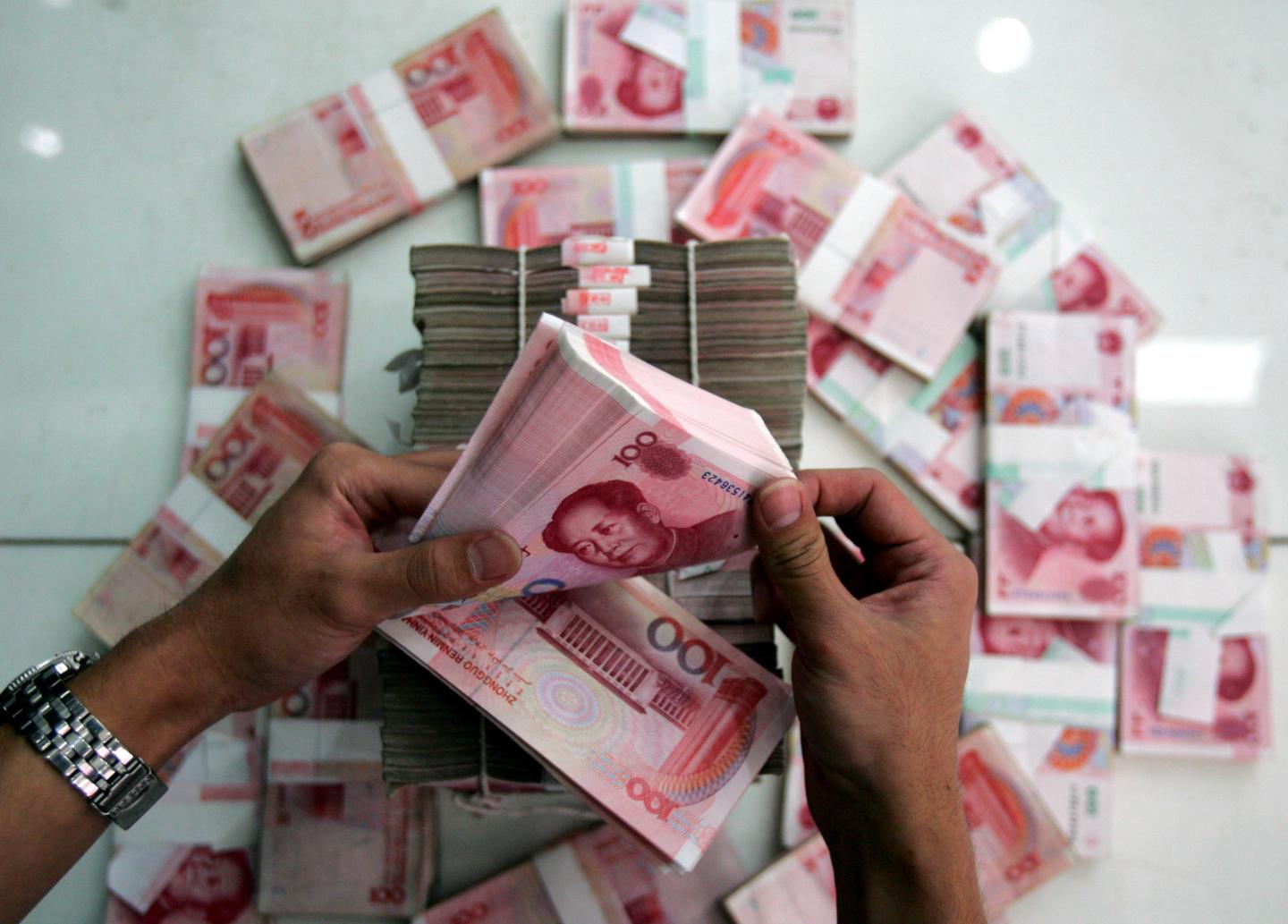
A clerk counts stacks of Chinese yuan at a bank on July 22, 2005 in Beijing, China. Photograph by China Photos/Getty Images

With the sudden depreciation of China’s renminbi, it’s worth looking at the link between currency values and trade agreements. China’s currency last week dropped by a cumulative 4.4% against the U.S. dollar, making Chinese exports cheaper and imports into China more expensive by that amount.

The effect on trade can be substantial. With the U.S. average tariff on industrial goods well under 2%, this change in China’s currency value easily swamps most U.S. tariffs. And given the fact that the U.S. dollar was already strong, this move is an added disadvantage to U.S. exports headed for China compared to exports from other countries.

As world leaders continue negotiating what’s poised to be a landmark trade deal across the Pacific Rim, some U.S. lawmakers have responded with criticism: “Today’s provocative act by the Chinese government to lower the value of the yuan is just the latest in a long history of cheating,” said Republican U.S. Sen. Lindsey Graham, who along with Democratic New York Sen. Chuck Schumer had sought to include a tough provision against currency manipulation in the Trans-Pacific Partnership Agreement (TPP).
China is not a part of the TPP negotiations, but the trade deal has an open architecture — other countries can negotiate accession to the agreement anytime after the current 12 participants conclude the deal. For this reason, and because there was Congressional concern voiced last Spring over currency manipulation during consideration of trade legislation, China’s action has freshened the focus on the linkage of currency values to trade.

The subject is controversial. There is no international (or domestic) agreement on what constitutes currency manipulation. Countries such as Brazil have criticized the U.S. Federal Reserve’s monetary policies (designed to stimulate U.S. economic recovery) for weakening the greenback U.S. auto companies have complained about Japanese currency manipulation, although the U.S. Treasury has not cited direct intervention in the currency markets (or even indirect intervention – taking the yen’s value down) while Prime Minister Abe has been in office. China’s case is also complicated. The value of the RMB had been rising against the dollar over the last two decades – by over 30%. In May, the International Monetary Fund declared that it no longer considered the RMB to be undervalued.

China’s latest currency move has drawn muted responses from the IMF and U.S. Treasury. As quoted in The New York Times, the IMF said “China’s new plan for determining the value of the renminbi ‘appears a welcome step as it should allow market forces to have a greater role.’ But the IMF also carefully noted that “the exact impact will depend on how the new mechanism is implemented in practice.” The U.S. Treasury’s statement followed a similar line.

Nonetheless, Congress, in the recently passed trade promotion authority, set out as a principal that any trade deal the U.S. negotiates will have zero tolerance for currency manipulation.This negotiating objective, and a companion provision dealing with unfair currency practices, are applicable to TPP.

To be responsive to this Congressional mandate, the U.S. Treasury is working with its TPP country counterparts on a currency understanding. This would provide that finance officials and central bankers meet to promote greater accountability with respect to currency values and to avoid exchange rate manipulation. The proposal is envisaged as a forum for addressing these questions without binding dispute settlement being available to settle differences.

This does not go as far as many in Congress seek, but it is a step in the direction of giving some substance to what in fact has been the international trade rule on exchange rates since 1947: countries are not to undermine their trade commitments by actions they take on exchange rates.

Alan Wolff practices law at Dentons in Washington D.C. He is chairman of the National Foreign Trade Council (NFTC), and a former U.S. Deputy Trade Representative.

About the Author
By Alan Wolff
See full bioRight Arrow Button Icon

Latest in Commentary

Finance
Lorem ipsum dolor sit amet, consectetur adipiscing elit, sed do eiusmod tempor incididunt ut labore et dolore magna aliqua. Ut enim ad minim veniam
By Fortune Editors
October 20, 2025
Finance
Lorem ipsum dolor sit amet, consectetur adipiscing elit, sed do eiusmod tempor incididunt ut labore et dolore magna aliqua. Ut enim ad minim veniam
By Fortune Editors
October 20, 2025
Finance
Lorem ipsum dolor sit amet, consectetur adipiscing elit, sed do eiusmod tempor incididunt ut labore et dolore magna aliqua. Ut enim ad minim veniam
By Fortune Editors
October 20, 2025
Finance
Lorem ipsum dolor sit amet, consectetur adipiscing elit, sed do eiusmod tempor incididunt ut labore et dolore magna aliqua. Ut enim ad minim veniam
By Fortune Editors
October 20, 2025
Finance
Lorem ipsum dolor sit amet, consectetur adipiscing elit, sed do eiusmod tempor incididunt ut labore et dolore magna aliqua. Ut enim ad minim veniam
By Fortune Editors
October 20, 2025
Finance
Lorem ipsum dolor sit amet, consectetur adipiscing elit, sed do eiusmod tempor incididunt ut labore et dolore magna aliqua. Ut enim ad minim veniam
By Fortune Editors
October 20, 2025

Most Popular

Finance
Lorem ipsum dolor sit amet, consectetur adipiscing elit, sed do eiusmod tempor incididunt ut labore et dolore magna aliqua. Ut enim ad minim veniam
By Fortune Editors
October 20, 2025
Finance
Lorem ipsum dolor sit amet, consectetur adipiscing elit, sed do eiusmod tempor incididunt ut labore et dolore magna aliqua. Ut enim ad minim veniam
By Fortune Editors
October 20, 2025
Finance
Lorem ipsum dolor sit amet, consectetur adipiscing elit, sed do eiusmod tempor incididunt ut labore et dolore magna aliqua. Ut enim ad minim veniam
By Fortune Editors
October 20, 2025
Finance
Lorem ipsum dolor sit amet, consectetur adipiscing elit, sed do eiusmod tempor incididunt ut labore et dolore magna aliqua. Ut enim ad minim veniam
By Fortune Editors
October 20, 2025
Finance
Lorem ipsum dolor sit amet, consectetur adipiscing elit, sed do eiusmod tempor incididunt ut labore et dolore magna aliqua. Ut enim ad minim veniam
By Fortune Editors
October 20, 2025
Finance
Lorem ipsum dolor sit amet, consectetur adipiscing elit, sed do eiusmod tempor incididunt ut labore et dolore magna aliqua. Ut enim ad minim veniam
By Fortune Editors
October 20, 2025
Fortune Secondary Logo
Rankings
  • 100 Best Companies
  • Fortune 500
  • Global 500
  • Fortune 500 Europe
  • Most Powerful Women
  • World's Most Admired Companies
  • See All Rankings
  • Lists Calendar
Sections
  • Finance
  • Fortune Crypto
  • Features
  • Leadership
  • Health
  • Commentary
  • Success
  • Retail
  • Mpw
  • Tech
  • Lifestyle
  • CEO Initiative
  • Asia
  • Politics
  • Conferences
  • Europe
  • Newsletters
  • Personal Finance
  • Environment
  • Magazine
  • Education
Customer Support
  • Frequently Asked Questions
  • Customer Service Portal
  • Privacy Policy
  • Terms Of Use
  • Single Issues For Purchase
  • International Print
Commercial Services
  • Advertising
  • Fortune Brand Studio
  • Fortune Analytics
  • Fortune Conferences
  • Business Development
  • Group Subscriptions
About Us
  • About Us
  • Press Center
  • Work At Fortune
  • Terms And Conditions
  • Site Map
  • About Us
  • Press Center
  • Work At Fortune
  • Terms And Conditions
  • Site Map
  • Facebook icon
  • Twitter icon
  • LinkedIn icon
  • Instagram icon
  • Pinterest icon

Latest in Commentary

The Strait of Hormuz crisis shows energy security is now a boardroom issue
Commentaryoil and gas
The Strait of Hormuz crisis shows energy security is now a boardroom issue
By Victor NianMay 10, 2026
19 minutes ago
trump
CommentaryWhite House
Trump thinks he’s flying to Beijing with leverage. China spent 6 years making sure he doesn’t have any
By Steve H. HankeMay 10, 2026
11 hours ago
joaquin
Commentary250 Years of Innovation
Johnson & Johnson CEO: America’s innovation advantage starts with health 
By Joaquin DuatoMay 9, 2026
1 day ago
reed
CommentaryRetirement
Tim Cook and Reed Hastings just showed every CEO how to leave gracefully
By Paul HardartMay 9, 2026
2 days ago
golf
Commentarybooks
How playing golf alone can make you better at your job
By Gary BelskyMay 8, 2026
2 days ago
naomi
Commentarymental health
Naomi Osaka: the things I didn’t do to succeed
By Naomi OsakaMay 8, 2026
2 days ago

Most Popular

'Employers are increasingly turning to degree and GPA' in hiring: Recruiters retreat from ‘talent is everywhere,’ double down on top colleges
Future of Work
'Employers are increasingly turning to degree and GPA' in hiring: Recruiters retreat from ‘talent is everywhere,’ double down on top colleges
By Jake AngeloMay 9, 2026
1 day ago
‘This is the way’: Elon Musk endorses Warren Buffett’s famed 5-minute plan to fix the national debt
Economy
‘This is the way’: Elon Musk endorses Warren Buffett’s famed 5-minute plan to fix the national debt
By Jacqueline MunisMay 10, 2026
9 hours ago
Ted Cruz says the quiet part out loud: Trump accounts are Social Security personal accounts as GOP senator reveals 'dirty little secret'
Politics
Ted Cruz says the quiet part out loud: Trump accounts are Social Security personal accounts as GOP senator reveals 'dirty little secret'
By Jason MaMay 9, 2026
1 day ago
OpenAI CEO Sam Altman says Gen Z and millennials are using ChatGPT like a 'life advisor'—but college students might be one step ahead
Tech
OpenAI CEO Sam Altman says Gen Z and millennials are using ChatGPT like a 'life advisor'—but college students might be one step ahead
By Sydney LakeMay 10, 2026
9 hours ago
Red flag test: former CEO explains why he rejects job candidates who say they can start right away
Success
Red flag test: former CEO explains why he rejects job candidates who say they can start right away
By Orianna Rosa RoyleMay 9, 2026
1 day ago
Trump thinks he's flying to Beijing with leverage. China spent 6 years making sure he doesn't have any
Commentary
Trump thinks he's flying to Beijing with leverage. China spent 6 years making sure he doesn't have any
By Steve H. HankeMay 10, 2026
11 hours ago

© 2026 Fortune Media IP Limited. All Rights Reserved. Use of this site constitutes acceptance of our Terms of Use and Privacy Policy | CA Notice at Collection and Privacy Notice | Do Not Sell/Share My Personal Information
FORTUNE is a trademark of Fortune Media IP Limited, registered in the U.S. and other countries. FORTUNE may receive compensation for some links to products and services on this website. Offers may be subject to change without notice.